
Theft By Deception In California: Elements, Penalties, Defenses
Understanding how California defines, prosecutes, and punishes theft by deception, and what defenses may be available.
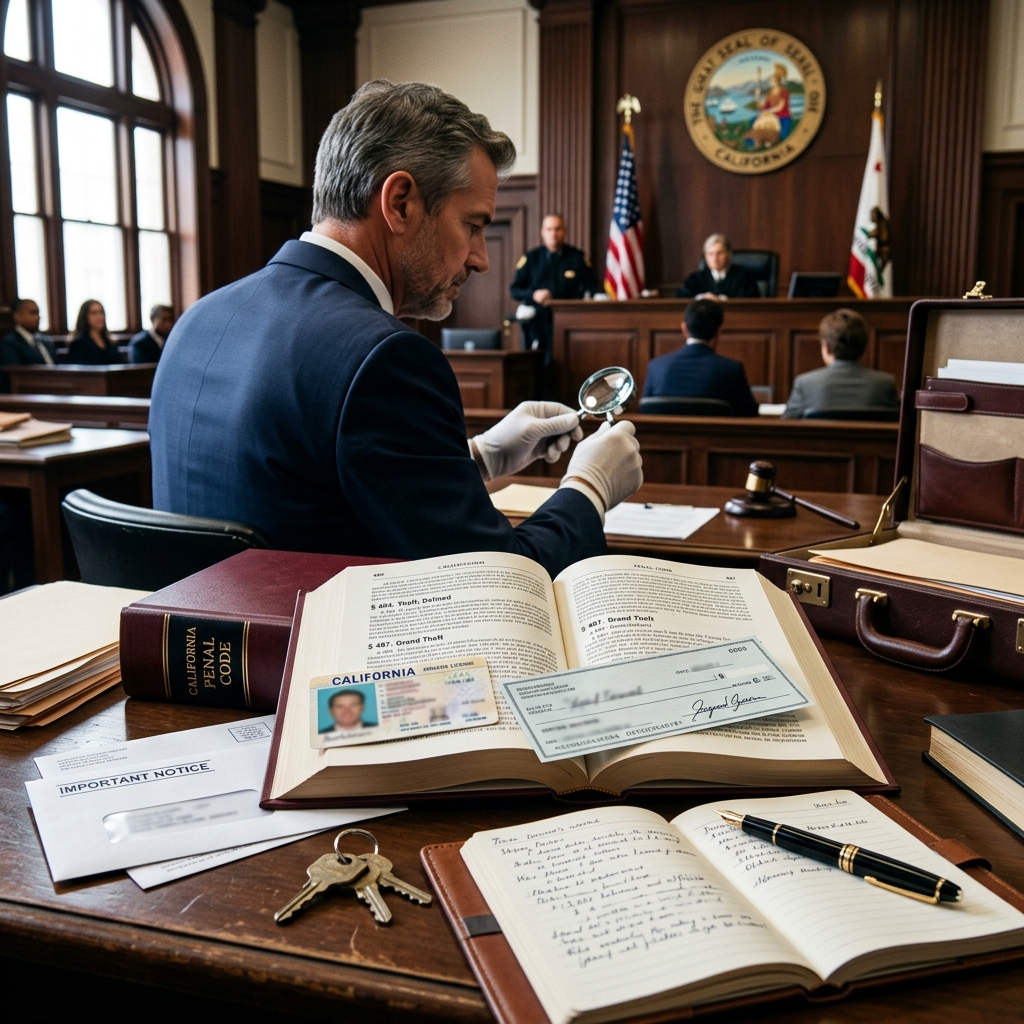
In California, what many people call theft by deception is legally known as obtaining property by false pretenses and is primarily governed by Penal Code section 532. This crime focuses on situations where a person is induced to hand over money, labor, or property because they were tricked, misled, or intentionally given false information.
This article explains how theft by deception works under California law, what prosecutors must prove, how it is punished, and what defenses may be available. It is meant for general information and not as legal advice.
What Counts as Theft by Deception in California?
California distinguishes theft by deception from classic theft or shoplifting because the victim voluntarily parts with their property, but only after relying on a lie or fraudulent promise. Instead of physically taking something behind the victim’s back, the offender uses trickery or misrepresentation to get the victim to hand it over.
Legal Definition Under Penal Code 532
Under California Penal Code 532, a person commits theft by false pretenses when they knowingly and designedly, using a false or fraudulent representation or pretense, defraud another person of money, labor, or property. The same statute also covers obtaining credit or services in a similar manner.
In simpler terms, the law applies when someone:
- Knowingly makes a false statement or promise, or conceals important facts;
- Intends that another person rely on that misrepresentation;
- Successfully causes the other person to turn over money, property, or labor; and
- Has an intent to deprive the owner of that money, property, or labor.
Common Forms of Deception
The law is broad and covers many types of dishonest conduct.
- False statements of fact – Claiming something is true when the person knows it is false, such as lying about ownership, condition, or value of an item.
- Fraudulent promises – Making a promise to do something (like repay a loan or deliver goods) with no actual intention of following through.
- Concealing important information – Withholding material facts that make a statement misleading, especially when there is a duty to speak.
- Fake tokens or documents – Using bogus checks, counterfeit documents, or other false writings to support the misrepresentation.
- Misstating financial status – Falsely representing wealth, creditworthiness, or business standing to obtain money or credit.
Key Elements the Prosecution Must Prove
To secure a conviction for theft by deception, prosecutors must show several specific elements beyond a reasonable doubt. If any element is missing, the defendant should not be found guilty of this particular offense.
Core Elements of the Crime
| Element | What It Means |
|---|---|
| Intentional deception | The defendant must knowingly and purposely use a false pretense or representation to mislead another person. |
| Purpose of obtaining property or labor | The deception must be aimed at getting the victim to hand over money, property, credit, or services. |
| Reliance by the victim | The victim must actually rely on the misrepresentation when deciding to transfer the property or provide labor. |
| Proof of the false pretense | The law requires specific types of evidence showing the false pretense, such as writings or witness testimony. |
Evidence Required to Prove False Pretenses
California imposes special rules on how a false pretense can be proven in court. A conviction generally cannot rest only on spoken words unless certain additional proof exists. Acceptable forms of evidence include:
- A written note or memorandum of the false pretense signed or written by the defendant;
- A false token, such as counterfeit money, a forged document, or other physical item used to mislead;
- Testimony from two witnesses who heard the false representation;
- Testimony from one witness plus corroborating circumstances or evidence that support the witness’s account.
These requirements make theft by deception more complex to prove than some other theft offenses, and they often provide room for defense arguments.
Relationship to General Theft and Fraud Statutes
Theft by deception is one part of California’s broader law on theft and fraud. Understanding how it fits with other statutes helps clarify the possible charges a defendant may face.
Connection to Penal Code 484 (General Theft)
Penal Code 484 defines theft generally and includes unlawful taking of property as well as fraudulent appropriation of property entrusted to someone. Theft by deception is treated as a form of theft where the taking occurs through fraud, deceit, or trickery rather than physical taking alone.
In practice, a person accused of theft by deception may be charged under Penal Code 532, Penal Code 484, or related theft provisions, depending on the facts.
Distinguishing Deception From Other Theft Types
- Larceny: Involves physically taking property without consent, often secretly. Deception is not necessary.
- Embezzlement: Occurs when property is lawfully entrusted to someone and then fraudulently appropriated for their own use.
- Theft by trick: The victim gives up possession, but not ownership, based on deceit. The property is meant to be returned or used for a limited purpose.
- Theft by false pretenses: The victim intends to transfer ownership outright, but only because of lies or fraud.
These distinctions matter because they affect how a case is charged, what evidence is relevant, and which defenses are available.
Petty Theft vs. Grand Theft by Deception
California classifies theft offenses largely based on the value of the property and the type of property taken. Theft by deception follows the same petty versus grand theft structure.
Property Value and Classification
| Type of Theft | Value / Property | Typical Classification |
|---|---|---|
| Petty theft by deception | Generally property worth $950 or less, excluding certain items like cars and firearms. | Misdemeanor |
| Grand theft by deception | Property worth more than $950, or specific property such as firearms or vehicles. | “Wobbler” (may be charged as misdemeanor or felony) |
Penalties for Theft by Deception
Because theft by deception is punished like other theft crimes, the consequences depend on whether the case is petty theft or grand theft and whether it is filed as a misdemeanor or felony.
- Petty theft (misdemeanor)
- Up to six months in county jail;
- Fines up to $1,000;
- Possible probation, restitution to the victim, and other court-ordered conditions.
- Grand theft (misdemeanor or felony)
- As a misdemeanor, up to one year in county jail;
- As a felony, potential state prison term of 16 months, 2 years, or 3 years;
- Substantial fines, restitution, and a felony record if convicted as a felony.
Judges may also consider aggravating and mitigating factors, such as the defendant’s prior record, vulnerability of the victim, and whether the offense involved a pattern of fraudulent conduct.
Possible Legal Defenses to Theft by Deception
Because theft by deception centers on intent and reliance on false representations, several defenses focus on undermining those elements. An experienced criminal defense attorney will tailor the strategy to the particular facts, but common defenses include the following.
Lack of Intent to Deceive
If the defendant did not intend to trick or defraud the victim, then a necessary element of the offense is missing. For example, a person might make a statement they believed was true at the time, even if it later turned out to be incorrect.
Key points for this defense include:
- The defendant held a genuine belief in what they said;
- There was no plan to gain property through deception;
- Any mistake was honest and reasonable rather than reckless or deliberate.
Mistake of Fact
Related to lack of intent is the doctrine of mistake of fact. If the defendant reasonably misunderstood a situation or facts and acted based on that misunderstanding, the law may treat the conduct differently. For instance, a person may overstate the value of property because they relied on incorrect information, not because they intended to defraud.
Insufficient Evidence of False Pretenses
As discussed above, Penal Code 532 requires specific forms of proof for a false pretense. A defense may argue that the prosecution has not provided:
- Any signed writing or memorandum by the defendant describing the pretense;
- A false token or tangible item that demonstrates the deception;
- Testimony from two witnesses or from one witness with corroborating evidence.
If the only evidence is uncorroborated oral statements, the court may be required to acquit.
No Reliance by the Alleged Victim
Another defense focuses on whether the alleged victim actually relied on the misrepresentation. The law generally requires that the lie or false promise be a substantial factor in causing the victim to hand over their property.
Defense arguments may include:
- The victim made the decision for independent reasons unrelated to the alleged lie;
- The victim did not believe the misrepresentation and acted despite doubts;
- Other information or advice broke the chain of reliance.
Ownership and Consent Issues
In any theft case, the prosecution must prove that the property belonged to someone else and that the transfer was not legally authorized. If the defendant had a legitimate claim of right or believed they were entitled to the property, this can complicate a theft-by-deception charge.
Practical Steps If You Are Accused
Facing an accusation of theft by deception is serious because it can result in a criminal record, jail time, and financial consequences. While each situation is unique, some general practical considerations include:
- Do not make assumptions about the law – Theft by deception is more complex than many realize, especially regarding proof of false pretenses and intent.
- Preserve documents and communications – Emails, text messages, contracts, and receipts can be critical in showing what was actually promised and understood.
- Seek legal counsel quickly – A criminal defense attorney can explain the specific charges, potential exposure, and viable defenses.
- Avoid discussing the case with others – Statements to the alleged victim, law enforcement, or third parties may be used in court.
This article is not a substitute for advice tailored to your circumstances. Only a licensed attorney can provide legal counsel in an actual case.
Frequently Asked Questions About Theft by Deception
Is theft by deception always a felony?
No. Theft by deception can be charged as either petty theft or grand theft, and grand theft itself may be filed as a misdemeanor or a felony. The classification depends largely on the value and nature of the property and the defendant’s criminal history.
Do verbal lies alone qualify as false pretenses?
Verbal misrepresentations can form part of theft by deception, but California law limits convictions based solely on spoken words. Without a writing, false token, or sufficient witness testimony and corroboration, verbal lies by themselves may not satisfy Penal Code 532’s evidentiary requirements.
How is theft by deception different from fraud in civil law?
Civil fraud typically involves lawsuits for money damages between private parties, while theft by deception is a criminal offense prosecuted by the state. The elements of fraud overlap with false pretenses, but criminal cases involve different burdens of proof, procedures, and potential penalties such as jail or prison terms.
Can a business be a victim of theft by deception?
Yes. Both individuals and businesses can be victims. The statute covers defrauding “any other person,” which includes entities that provide money, property, labor, credit, or services in reliance on false representations.
Does repaying the money later erase the crime?
Making restitution may help in sentencing or plea negotiations, but it does not automatically eliminate criminal liability. The offense focuses on the deception and obtaining property through fraud. However, repayment can sometimes be considered a mitigating factor by prosecutors and judges.
References
- Penal Code § 532 PC – Fraud — California Legislative Information. 2023-01-01. https://leginfo.legislature.ca.gov/faces/codes_displaySection.xhtml?lawCode=PEN§ionNum=532
- 532 PC – Theft by False Pretenses – California Law — Shouse Law Group. 2024-01-01. https://www.shouselaw.com/ca/defense/penal-code/532/
- California Penal Code Section 532 PC: Theft By False Pretenses — Los Angeles Criminal Lawyer. 2023-06-15. https://www.losangelescriminallawyer.pro/california-penal-code-section-532-pc-theft-by-false-pretenses.html
- PC 484 | Larceny and Theft — FindLaw. 2022-05-10. https://codes.findlaw.com/ca/penal-code/pen-sect-484/
- PC 484 | Theft By Fraud, Deceit Or Trick — Lueck Law. 2023-09-01. https://www.luecklaw.com/pc-484-larceny-and-theft/
- Theft by False Pretenses Law in California – Penal Code 532 PC — Keg Lawyers. 2023-03-20. https://www.keglawyers.com/theft-by-false-pretenses-penal-code-532
- Theft by False Pretenses Under California Law — Criminal Lawyers San Diego. 2022-11-05. https://www.criminallawyersandiego.com/theft-charges/theft-by-false-pretenses/
Similar Articles








Read full bio of medha deb




