
The Hidden Toll of Minor Offenses: Rethinking Policing
How low-level arrest disparities fracture community trust and demand reform.
The Illusion of Urban Progressivism and Law Enforcement
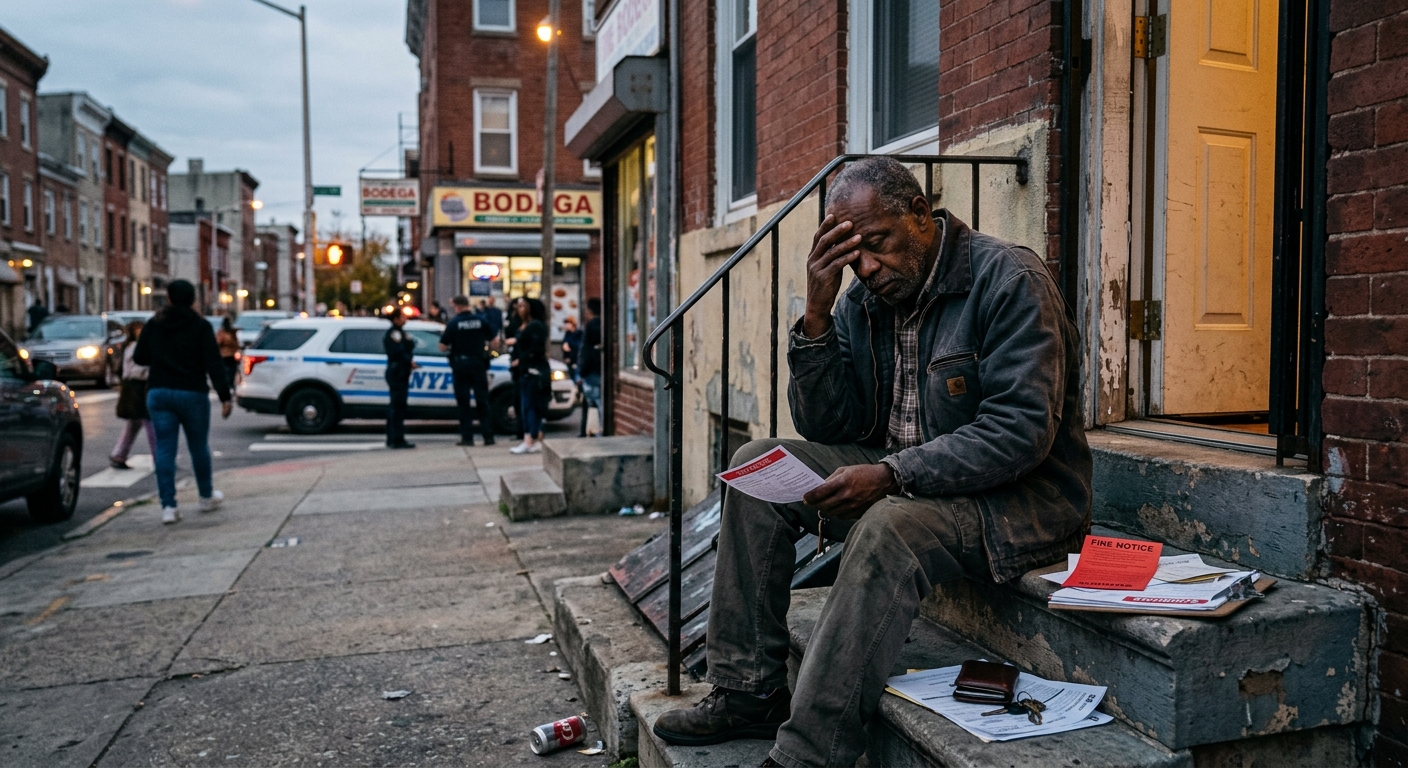
Across the United States, major metropolitan areas continually boast about their progressive values, robust local economies, and top-tier quality of life metrics. City councils pass sweeping resolutions affirming their commitment to equity, while tourism boards market these destinations as inclusive havens. However, beneath the polished veneer of many urban centers lies a deeply fractured criminal justice system that systematically targets the most vulnerable populations. The narrative of an inclusive, forward-thinking society frequently clashes with the grim reality of street-level law enforcement, where communities of color, the unhoused, and disenfranchised youth bear the overwhelming brunt of police activity. The intense focus on low-level offenses—infractions that carry minimal fines but maximum societal disruption—has effectively created a tale of two cities in metropolises nationwide.
To understand the full scope of this systemic crisis, one must peel back the layers of everyday policing tactics. Far from the high-profile criminal investigations that dominate evening news broadcasts, the vast majority of police interactions stem from minor, non-violent infractions. These encounters, while ostensibly meant to maintain public order and safety, often serve as entry points into a labyrinthine and profoundly punitive justice system, leaving lasting scars on marginalized neighborhoods and perpetuating a cycle of systemic disadvantage.
The Heavy Burden of Minor Infractions
Low-level offenses typically encompass non-violent actions such as loitering, disorderly conduct, trespassing, minor traffic violations, and curfew breaches. In theory, the strict enforcement of these laws is designed to preserve community harmony and prevent neighborhood decay. In practice, however, they provide law enforcement officers with broad, largely unchecked discretionary power, often resulting in aggressive policing tactics directed at specific demographics. Unlike severe felonies, which require substantial evidence and thorough investigation, minor infractions are highly subjective. What one officer views as an instance of “disorderly conduct,” another might see as a normal, constitutionally protected public gathering.
The consequences of being cited or arrested for a low-level offense extend far beyond a single night in a municipal holding cell or a seemingly small fine. For many individuals struggling to make ends meet, an unexpected fine of a few hundred dollars is financially catastrophic. When these fines cannot be paid promptly, they accrue steep interest and administrative fees, inevitably leading to arrest warrants, driver’s license suspensions, and a vicious cycle of debt and incarceration that effectively criminalizes poverty. A seemingly benign ticket for jaywalking or an expired vehicle registration can cost an individual their employment, their housing, and their familial stability. The systemic use of low-level arrests functions not as a meaningful deterrent to violent crime, but as a relentless engine for institutionalizing economic inequality.
The Disproportionate Impact on Minorities
The enforcement of low-level offenses is not distributed equally across urban landscapes. Extensive data analysis from cities across the nation, including comprehensive investigations by the U.S. Department of Justice into municipal police departments like that of Minneapolis, reveals staggering racial disparities. Black and Native American residents are consistently targeted for minor infractions at rates exponentially higher than their white counterparts.
These disparities are not accidental anomalies; they are the predictable outcome of heavily concentrated police presence in specific, historically redlined neighborhoods. When police resources are disproportionately deployed in communities of color, the mathematical likelihood of residents being cited for everyday behaviors skyrockets. Consider the realities of disparate enforcement:
- Subjective Enforcement: Minorities are frequently stopped for highly discretionary offenses, such as “interfering with pedestrian traffic” or “loitering.” These same behaviors are rarely scrutinized or enforced in affluent, predominantly white neighborhoods.
- Pretextual Stops: Low-level traffic infractions, like a broken taillight, window tint, or failure to signal perfectly, are heavily utilized as pretexts to search vehicles and individuals from marginalized backgrounds. This practice heavily skews arrest demographics.
- Systemic Bias: Implicit and explicit biases within law enforcement agencies contribute to the perception of minorities as inherently more suspicious, driving the aggressive enforcement of minor municipal codes.
Youth and the Unhoused: Pushed to the Margins
Beyond racial demographics, the rigid enforcement of minor offenses severely impacts youth and the unhoused population. For young people, particularly youth of color, the criminalization of normal adolescent behavior through strict curfew enforcement or aggressive school-based policing introduces them to the justice system at an alarmingly early age. Instead of relying on community-based interventions, counseling, or family support mechanisms, cities consistently utilize law enforcement as the primary tool for behavioral correction. This dynamic reinforces the “school-to-prison pipeline,” permanently marking juveniles with records that can hinder their educational access and employment prospects for years to come.
Similarly, the unhoused population faces the daily threat of criminalization simply for existing in public spaces. Ordinances against sleeping in parks, public urination when facilities are unavailable, or passive panhandling effectively make it illegal to be homeless. Arresting an unhoused individual for trespassing does absolutely nothing to address the complex root causes of their situation, such as a lack of affordable housing, untreated mental health crises, or addiction. Instead, it saddles them with criminal records and fines they can never realistically pay, further entrenching their marginalized status.
The Cost of “Broken Windows” Policing
Much of the modern approach to low-level enforcement stems from the “broken windows” theory of policing. This academic theory posits that cracking down on visible signs of disorder—like a broken window, graffiti, or a person loitering—prevents more serious, violent crimes from taking root in a community. While wildly popular among policymakers and police chiefs in the 1990s, decades of implementation have shown that this strategy is deeply flawed, ineffective, and profoundly damaging.
Research from criminal justice organizations and independent policy institutes continually indicates that broken windows policing does little to sustainably reduce violent crime. Instead, it systematically diverts vital municipal resources away from investigating and solving serious offenses. According to the Vera Institute of Justice and the Prison Policy Initiative, treating minor infractions as precursors to severe crime generates small to null impacts on public safety. When officers are mandated to act as strict enforcers of petty rules, they spend their operational shifts handing out citations rather than building organic community relationships. The theory fundamentally misdiagnoses the causes of crime, treating poverty, mental illness, and societal neglect as criminal acts rather than socioeconomic failures requiring structural investment and public health interventions.
The Economic Architecture of Over-Policing
When municipalities prioritize low-level arrests, they are making a conscious choice to allocate massive portions of their municipal budgets to the punitive criminal justice apparatus. The financial cost of a single arrest is surprisingly high; it involves police officer hours, processing personnel, court administration, public defender appointments, and potential jail housing costs. For a minor offense like trespassing or small-scale drug possession, the economic cost to the taxpayer far exceeds any perceived social benefit.
Furthermore, utilizing the police force as a municipal revenue generation tool through fines and fees creates a perverse incentive structure. In some jurisdictions, the funding of local government operations relies heavily on fining poor residents for low-level offenses. This creates a cycle where police are pressured to generate citations to fund the very system that oppresses marginalized citizens, completely detaching the concept of policing from the goal of genuine public safety. As noted by the National Institute of Justice, relying heavily on arrests for low-level offenses does not align with evidence-based strategies for true crime reduction.
The Erosion of Community Trust
The most insidious and long-lasting consequence of aggressively policing minor offenses is the total erosion of community trust. When residents feel that they are viewed not as citizens deserving of protection, but as innate suspects to be managed and monitored, the foundational social contract between the public and law enforcement shatters. In neighborhoods subjected to constant stops, invasive searches, and arbitrary citations, the police are often perceived as an occupying force rather than a collaborative public safety service.
This lack of trust has severe implications for overall public safety. When community members logically fear that any interaction with the police could lead to harassment, unnecessary arrest, or even physical violence, they become significantly less likely to report serious crimes, step forward as witnesses, or cooperate with ongoing investigations. The hyper-policing of minor offenses effectively creates dangerous zones of impunity for major crimes, as the vital flow of information from the community to law enforcement entirely dries up. Restoring this essential trust is structurally impossible as long as the discriminatory enforcement of petty laws remains the accepted status quo.
A Blueprint for True Justice and Reform
Reversing the generational damage inflicted by decades of inequitable policing requires much more than superficial changes, minor policy tweaks, or performative verbal commitments to progress. It demands a radical reimagining of public safety. The institutional focus must shift aggressively from punitive measures to community-centric solutions that authentically address the root causes of disorder.
Decriminalizing Poverty and Petty Infractions
The first and most crucial step toward an equitable system is the outright decriminalization of low-level offenses that pose no genuine threat to public safety. Offenses such as loitering, minor traffic violations, sex work, and curfew breaches should be handled comprehensively outside the criminal justice system. By replacing arrests and exorbitant fines with verbal warnings, community service, or civil citations scaled realistically to an individual’s income, cities can systematically dismantle the debt traps that criminalize poverty. Furthermore, ending the practice of pretextual stops will significantly reduce unwarranted interactions, saving lives and mitigating the pervasive risk of racial profiling.
Emphasizing Accountability and Alternative Responses
Cities must proactively invest in non-police responses to societal issues. Behavioral health crises, incidents involving homelessness, and substance abuse emergencies should ideally be addressed by trained medical professionals, social workers, and unarmed community outreach teams, not armed law enforcement officers. Reallocating funding from aggressive, militarized patrol units to public health initiatives, affordable housing, and youth programming provides sustainable, long-term solutions rather than temporary, punitive fixes.
Additionally, robust, uncompromising accountability mechanisms must be established to oversee police conduct. Independent civilian review boards granted full subpoena power, transparent public data collection regarding all stops and arrests, and strict, enforceable consequences for officers who exhibit patterns of biased policing are absolutely essential to dismantling systemic inequities.
Frequently Asked Questions (FAQs)
What are low-level offenses in the context of policing?
Low-level offenses are minor, non-violent infractions such as loitering, trespassing, disorderly conduct, and minor traffic violations. They are typically punishable by fines or minimal jail time, but enforcement can lead to severe long-term consequences for those unable to pay the associated fees, effectively trapping them in the legal system.
How does the enforcement of minor crimes disproportionately affect minority communities?
Law enforcement often leverages discretionary power to police minor infractions much more aggressively in communities of color. Data consistently shows that this results in significantly higher stop, citation, and arrest rates for Black and Native American individuals compared to white individuals who commit the exact same minor infractions.
What exactly is “broken windows” policing?
It is a law enforcement strategy based on the theory that strictly punishing minor public order offenses (like vandalism or loitering) prevents more serious, violent crimes. Contemporary studies demonstrate that it leads to the severe over-policing of minority and low-income communities without meaningfully or sustainably reducing violent crime rates.
What are actionable ways cities can reform their approach to minor infractions?
Cities can push for the decriminalization of poverty-related offenses, completely end pretextual stops, and deploy specialized social workers instead of armed officers for mental health or homelessness calls. Furthermore, establishing independent oversight boards ensures genuine police accountability and restores community trust.
References
- Investigation of the City of Minneapolis and the Minneapolis Police Department — U.S. Department of Justice. 2023-06-16. https://www.justice.gov/crt/case-document/file/1587461/download
- Gatekeepers: The Role of Police in Ending Mass Incarceration — Prison Policy Initiative / Vera Institute of Justice. 2018-10-05. https://www.prisonpolicy.org/scans/vera/gatekeepers-police-and-mass-incarceration.pdf
- Being Smart on Crime With Evidence-based Policing — National Institute of Justice. 2012-03-25. https://nij.ojp.gov/topics/articles/being-smart-crime-evidence-based-policing
Similar Articles








Read full bio of medha deb




