
Texting While Driving in New York: Laws, Penalties and Safety
Understand how New York treats texting behind the wheel, what tickets really cost you, and how to stay safe and legal on the road.
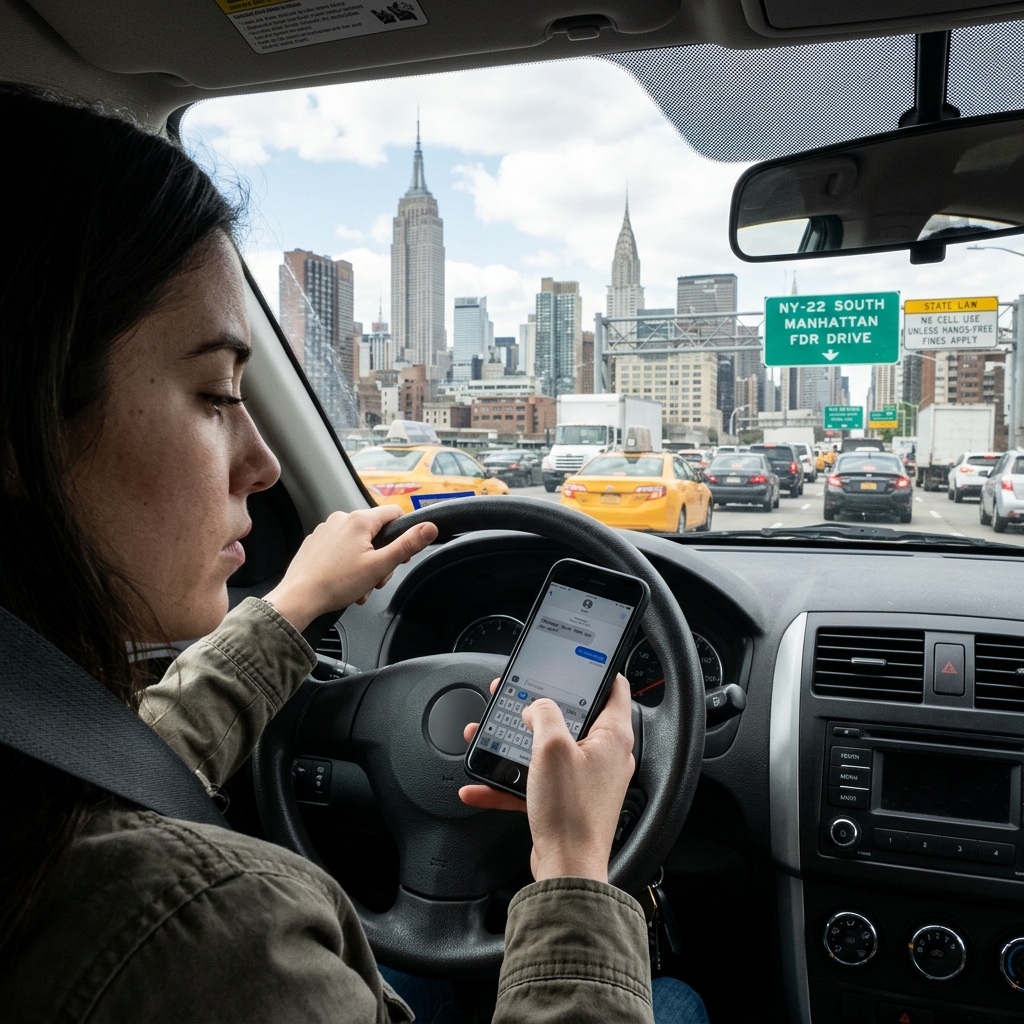
New York has some of the toughest rules in the United States for texting while driving and using handheld devices behind the wheel. These laws are designed to reduce crashes, protect pedestrians, and send a clear message that checking a screen is never worth a life.
This guide explains how New York defines illegal phone use in a vehicle, what happens if you receive a texting ticket, how points and insurance increases can follow you for years, and what practical steps you can take to avoid distracted driving altogether.
Why New York Targets Texting Behind the Wheel
New York has recognized distracted driving as a major safety threat for more than two decades. The state was the first in the nation to ban hand-held cell phone use while driving back in 2001, a move prompted by rising crash data and public concern about drivers focusing on their phones instead of the road.
Texting combines three kinds of distraction:
- Visual distraction – Taking your eyes off the road to look at a screen.
- Manual distraction – Removing your hands from the wheel to type or scroll.
- Cognitive distraction – Focusing on a message or app instead of traffic conditions.
Because texting pulls attention away in all three ways, research has linked it to sharply increased crash risk. New York’s laws respond to that risk by restricting how, when, and even whether you can touch a device while operating a vehicle.
The Legal Framework: How New York Regulates Phone Use While Driving
New York’s distracted driving rules live primarily in its Vehicle and Traffic Law (VTL). Two key sections apply to motorists who use phones and other electronics:
| Law Section | What It Regulates |
|---|---|
| VTL § 1225-c | Use of mobile telephones to engage in a call while operating a motor vehicle. |
| VTL § 1225-d | Use of portable electronic devices while operating a motor vehicle, including texting and similar interactions. |
Together, these provisions make it illegal to hold and use a phone or similar device for most purposes when you are operating a vehicle on a public highway.
Mobile Telephone Use: Talking While Driving (VTL § 1225-c)
Under § 1225-c, a driver generally may not operate a motor vehicle on a public highway while using a mobile telephone to engage in a call if the vehicle is in motion.
- Passenger vehicles: The ban applies while the vehicle is moving on a public highway.
- Commercial motor vehicles: The rules are stricter. Even if the vehicle is temporarily stationary because of traffic, a light, or other momentary delay, the driver may not use a mobile telephone to engage in a call.
The law does allow certain limited exceptions. A driver may use a mobile telephone when:
- Communicating with emergency response operators or emergency services about an urgent situation.
- They are an emergency worker using the phone in the course of official duties, such as police officers or fire department personnel.
- They are using a hands-free mobile telephone rather than holding the device.
Portable Electronic Devices: Texting and More (VTL § 1225-d)
Section § 1225-d covers a broad range of portable electronic devices, including phones used for messaging, tablets, laptops, and other mobile computing tools. The rule is simple: a person may not operate a motor vehicle while using any such device when the vehicle is in motion.
The law explicitly addresses commercial drivers again. A commercial motor vehicle operator is barred from using portable electronic devices on a public highway even when temporarily stationary because of traffic or a traffic control device.
The statute defines a portable electronic device to include items such as:
- Any handheld device with mobile data access.
- Laptop computers and similar computing devices.
- Two-way messaging devices and pagers.
- Electronic games and other portable computing devices used to input, write, send, receive, or read text.
In practice, this means that common behaviors—such as reading a text, replying to a group chat, scrolling through social media, or typing a street address into an app while driving—may all fall under New York’s distracted driving prohibitions.
Primary Offense Status: Why Police Can Stop You for Texting Alone
In New York, using a handheld device to text or make calls while driving is classified as a primary offense. This distinction matters: a police officer does not need another reason, like speeding or failing to signal, to pull you over. Visible handheld phone use is enough.
Because officers can initiate a stop solely for observed phone use, drivers are more likely to receive tickets when they glance at their device in traffic or at a light. Enforcement campaigns and public messaging in New York often emphasize this primary-offense status to deter drivers from casual or habitual texting while driving.
What Counts as Illegal Phone Use in New York?
New York’s rules are broader than simply “don’t text.” They restrict most interactions with handheld devices while you are operating a vehicle. Activities considered illegal typically include:
- Holding a phone to your ear to make or receive calls while driving.
- Typing, sending, or reading text messages or emails.
- Scrolling or browsing apps or websites.
- Taking, viewing, or sending photos or videos.
- Playing games or using entertainment apps.
- Tapping or swiping through navigation apps while the vehicle is in motion.
Some recent interpretations, including New York’s so-called “no touch” approach, reinforce that physically handling or touching the device is prohibited when the car is being operated—even if momentarily stopped in traffic or at a red light.
At the same time, the law allows limited use of hands-free systems. For example, speaking through Bluetooth or a built-in vehicle system to place a call without holding the phone is generally permitted, especially for non-commercial drivers.
Penalties for Texting-While-Driving Tickets
New York backs up its distracted driving rules with fines, license points, and, for some drivers, suspensions or revocations. Penalties can vary depending on prior history and driver age.
Fines and Mandatory Surcharges
Typical fine ranges for handheld phone or texting violations include:
- First offense: Around $50 to $200.
- Second offense within 18 months: Often up to $250.
- Third or subsequent offense within 18 months: Fines can reach approximately $450.
On top of the fine, drivers must pay a state-imposed surcharge, commonly up to about $88–$93 depending on the court and location. These additional costs mean the true price of a texting ticket is higher than the base fine alone.
License Points and Potential Suspension
Each texting or handheld device conviction typically adds points to the driver’s record. New York assigns up to five points for these offenses.
If a driver accumulates 11 points within an 18-month period, the Department of Motor Vehicles may suspend the license. This makes repeated distracted driving tickets particularly risky, since they can quickly push a driver toward the suspension threshold.
Stricter Rules for Young and Probationary Drivers
New York imposes tougher consequences on younger drivers and those under probationary status. For these drivers:
- A first offense can lead to a license or permit suspension of about 120 days.
- A second offense within six months of reinstatement may result in a one-year revocation of their permit or license.
These stricter penalties reflect concerns about inexperience combined with distraction. For junior license holders, a single decision to text behind the wheel can temporarily remove their legal ability to drive.
Insurance Consequences
Beyond fines and points, texting tickets can cause insurance rates to rise. Studies have found that a distracted driving violation may increase premiums from modest amounts up to significant percentages over time, depending on the insurer and driver profile.
Insurance companies often view texting while driving as an indicator of higher risk. Multiple offenses or a pattern of distracted driving can magnify these financial consequences, making tickets costly well beyond the courtroom.
Exceptions: When Phone Use May Be Allowed
New York law does recognize that there are moments when using a phone is necessary or where risk is substantially reduced. Key exceptions include:
- Emergency calls – Drivers may use a phone to contact emergency response operators, hospitals, ambulance services, fire departments, or police regarding an emergency situation.
- Emergency personnel – Certain emergency responders using phones in the course of official duties are exempt.
- Hands-free use – Use of hands-free mobile telephones is permitted under § 1225-c, meaning the driver is not holding the device.
- Commercial vehicles off the highway – For portable electronic devices, commercial drivers may use them when the vehicle is stopped at the side of or off the public highway where stopping is permitted.
However, these exceptions are narrow. They do not authorize casual texting, social media use, or gaming just because the vehicle is stopped temporarily or the driver feels safe. The safest assumption for most motorists is that any handheld interaction with a phone while operating a vehicle is likely prohibited.
Practical Strategies to Avoid Texting-While-Driving Tickets
Drivers can significantly reduce the risk of distraction and tickets by planning ahead and using technology wisely. Effective strategies include:
- Use true hands-free systems – Connect your phone to the car via Bluetooth or use built-in voice controls so you can keep your hands on the wheel.
- Mount your device securely – If you rely on navigation, use a dashboard or windshield mount that keeps the screen within easy view without requiring you to hold the phone.
- Program routes before driving – Enter addresses or adjust settings before shifting into gear. Avoid typing on the device once on the road.
- Silence notifications – Activate “Do Not Disturb While Driving” or similar features to block non-essential alerts.
- Pull over safely – When you must respond to a text, park legally off the roadway, not just at a red light or in stopped traffic.
- Explain expectations to passengers – Let friends or family know that you will not respond to messages while driving.
These steps help keep attention on the road and ensure that any interaction with technology happens in a way that complies with New York law.
Frequently Asked Questions About Texting While Driving in New York
Is it illegal to text while stopped at a red light?
Yes, it can still be illegal. For commercial drivers, the law explicitly bans using portable electronic devices even when temporarily stationary because of traffic or signals. For other motorists, New York’s enforcement position has increasingly treated phone use while stopped in traffic as part of operating a vehicle, especially under “no touch” interpretations.
Can the police pull me over just for holding my phone?
Yes. Texting and handheld phone use are primary offenses in New York, so an officer may stop a vehicle solely for observing this behavior, without any other apparent violation.
What if I am using my phone only for GPS?
Navigation use is not automatically exempt. Typing addresses, tapping, or scrolling while the vehicle is moving may be treated as using a portable electronic device. To reduce risk, program routes before driving and use hands-free or voice controls.
How many points will I get for a texting ticket?
New York typically assigns up to five points to your driver record for handheld phone or texting violations. Accumulating 11 points in 18 months can lead to a license suspension.
Are there different penalties for young drivers?
Yes. Probationary and junior drivers face stricter consequences. A first distracted driving offense can result in a 120-day suspension, and a second offense within six months of reinstatement may lead to a one-year revocation.
Is hands-free calling always allowed?
Using a hands-free mobile telephone is generally permitted under New York law, assuming the driver is not physically holding the device and is otherwise driving safely. However, even hands-free conversations can be distracting, so drivers should use them sparingly.
Key Takeaways for New York Drivers
- Texting and handheld phone use while operating a vehicle are heavily restricted and treated as primary offenses in New York.
- Violations can lead to fines, surcharges, five license points, insurance increases, and for young drivers, suspensions or revocations.
- Emergency calls and hands-free use are among the few narrow exceptions.
- Safe habits—like silencing notifications, pre-programming routes, and pulling over to respond—are the most reliable way to avoid both crashes and tickets.
References
- Ongoing Efforts to Prevent Distracted Driving — New York State Governor’s Traffic Safety Committee. 2024-03-15. https://trafficsafety.ny.gov/ongoing-efforts-prevent-distracted-driving
- New York Vehicle and Traffic Law § 1225-C: Use of Mobile Telephones — Justia / New York State Law. 2025-01-01. https://law.justia.com/codes/new-york/vat/title-7/article-33/1225-c/
- Section 1225-D: Use of Portable Electronic Devices — New York State Senate. 2023-06-01. https://www.nysenate.gov/legislation/laws/VAT/1225-D
- Distracted Driving in New York: Laws and Statistics — Block O’Toole & Murphy, LLP. 2023-10-10. https://www.blockotoole.com/articles/distracted-driving-a-serious-problem-in-new-york/
- New York Cell Phone Driving Laws — Law Office of Joseph J. Perrini, III. 2023-09-01. https://www.josephperrini.com/what-are-new-yorks-laws-on-cell-phones-and-driving/
- What to Know About New York’s No Touch Law — Lever & Ecker, PLLC. 2024-02-20. https://www.leverecker.com/blog/what-to-know-about-new-yorks-no-touch-law/
- New Texting and Driving Laws in Effect in New York — Kreindler & Kreindler LLP. 2015-11-05. https://www.kreindler.com/articles/texting-driving-laws-new-york
Similar Articles








Read full bio of medha deb


