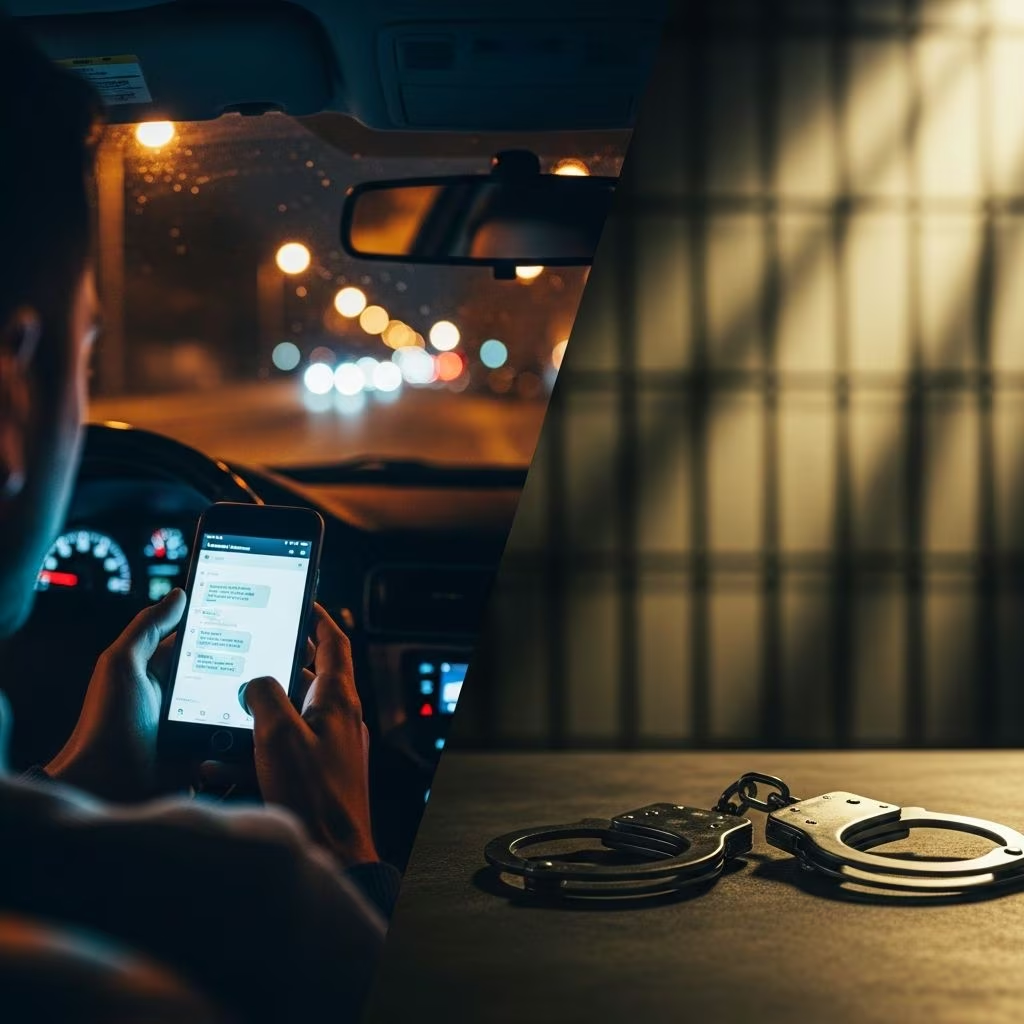
Using a mobile phone behind the wheel has become a widespread habit, but it carries escalating legal risks that can lead beyond simple fines to criminal charges and incarceration. Across the United States, laws treat distracted driving as a serious violation, with penalties intensifying based on circumstances like prior offenses, involvement in crashes, or endangerment of others. This article delves into the mechanisms that transform a momentary distraction into potential jail time, drawing from state statutes and enforcement trends.
The Surge of Distracted Driving Legislation
Over the past decade, all 50 states have enacted bans on texting while driving, recognizing it as a cognitive, visual, and manual distraction far more hazardous than many other impairments. According to official records, these laws classify violations variably—from traffic infractions to misdemeanors—depending on jurisdiction and severity. For instance, primary enforcement allows officers to pull over drivers solely for observed phone use, streamlining detection and deterrence.
Statistics underscore the urgency: distracted driving claimed over 3,000 lives annually in recent years, prompting stricter measures. States like Alaska elevate first-time texting to a class A misdemeanor, exposing offenders to up to one year in jail and $10,000 fines right away. Such harsh baselines signal a national shift toward criminalizing behaviors that predictably risk public safety.
State Variations in Penalties and Escalation
Penalties differ widely, but common threads include fines, points on licenses, and progressive punishments. Here’s a comparative overview of select states:
| State | First Offense Fine | Subsequent Offenses | Jail Risk | License Impact |
|---|---|---|---|---|
| Alaska | Up to $10,000 | Increased fines | Up to 1 year | Possible suspension |
| California | $162 (incl. fees) | $50 base + fees | Possible if reckless | 1 point |
| Colorado | $300 | Repeat misdemeanor | Unlikely initial | 4 points |
| Florida | $30 + costs | $60 + court, 3 points | If crash involved | Points accumulation |
| Oregon | Up to $1,000 | Up to $2,500 + jail | Up to 6 months (3rd) | Suspension possible |
| Utah | Up to $100/$750 | Up to $1,000 + jail | Up to 6 months | Revocation risk |
| Pennsylvania | $50 + costs (post-2026) | Summary offense | Up to 5 years if fatal | Possible suspension |
This table highlights how initial citations often stay civil but build toward criminal territory. In Pennsylvania, for example, the anti-texting law under Title 75 § 3316 prohibits sending, reading, or writing messages while in motion, starting with warnings until June 2026, then $50 fines.
When Fines Turn into Criminal Charges
A single ticket rarely leads to bars, but repeat violations or aggravating factors do. Many states impose license suspensions after multiple offenses: Idaho suspends for 30 days on a third violation within three years, while Kansas escalates learner’s permits to 90-day suspensions on seconds. Points systems amplify this—four points in Colorado or Indiana can trigger reviews leading to revocation.
Recidivism transforms tickets into misdemeanors. Oregon’s third offense in 10 years mandates fines up to $2,500 and six months imprisonment. Utah similarly threatens six months for follow-ups. These thresholds ensure habitual offenders face judges, not just meters.
Crashes: The Fast Track to Incarceration
Involvement in accidents while texting catapults penalties to felony levels. If distraction causes injury or death, charges like vehicular homicide, reckless endangerment, or manslaughter apply. Pennsylvania exemplifies this: drivers causing fatalities face up to five years prison atop other counts, under laws named for victims of distracted crashes.
Nationwide, prosecutors prove causation via phone records, witness testimony, or vehicle data. Iowa jumps fines to $1,000 for crash-related texting; Louisiana starts at $500 but soars for repeats or harm. Courts view phone use as willful negligence, equating it to DUI in culpability.
- Key Evidence in Crash Cases: Last text timestamps, screen activity logs, eyewitness accounts of device handling.
- Common Charges: Reckless driving, involuntary manslaughter, homicide by vehicle.
- Average Sentences: 1-5 years for deaths, probation/jail for injuries, varying by state.
Reckless Driving and Endangerment Clauses
Even without crashes, extreme distraction invites reckless driving citations, a step above standard infractions. Pennsylvania’s § 3736 allows this for texting, carrying fines, points, and possible jail. Officers observe swerving, delayed reactions, or near-misses attributable to phones.
Minors face amplified scrutiny: Ohio suspends under-18 licenses for 60 days on first offenses, a year on seconds. School bus drivers or commercial operators encounter federal overlays, heightening jail prospects.
Evolving Laws and Enforcement Trends
Legislation tightens continuously. Pennsylvania’s probationary warnings end in 2026, yielding to full fines and preemption of local rules. Hands-free mandates spread, but texting remains the core prohibition.
Tech aids enforcement: dashboard cameras, AI detection in patrols. Public campaigns pair with data-driven stops, targeting high-risk zones.
Defenses and Mitigation Strategies
Facing charges? Common defenses challenge observation accuracy, emergency necessity (e.g., contacting 911), or law inapplicability (parked vehicle). Mitigation includes traffic school, plea bargains to non-criminal reductions, or proving hands-free compliance.
Consult attorneys early—fines balloon with court costs, and points imperil insurance rates by 20-50%.
Frequently Asked Questions
What states treat first-time texting as a misdemeanor with jail?
Alaska stands out, with up to one year imprisonment and $10,000 fines from the start.
Can police stop me just for holding my phone?
Yes, in primary enforcement states like Pennsylvania, California, and most others.
What if I cause an accident while texting?
Expect criminal charges like manslaughter, with prison terms up to five years in states like Pennsylvania.
Do hands-free devices avoid penalties?
They mitigate but don’t eliminate risks; texting bans persist regardless.
How do repeat offenses affect my license?
Suspensions are common—30-90 days in many states after 2-3 violations.
Preventing Legal Troubles on the Road
Avoidance beats defense: silence phones, use mounts for navigation, pull over for texts. Apps lock screens while moving. Employers ban phone use for fleets, curbing corporate liability.
Ultimately, jail risks hinge on patterns— one text risks a ticket, persistence or harm risks freedom. Drive focused; the road demands it.
References
- A State-by-State Guide to Texting and Driving Fines — DriversEd.com. 2023. https://driversed.com/trending/state-state-guide-texting-and-driving-fines
- Using A Mobile Phone While Driving: What Is the Texting And Driving Law in Pennsylvania? — Zavodnick & Lassiter, P.C. 2025. https://zavodnicklaw.com/blog/using-a-mobile-phone-while-driving-what-is-the-texting-and-driving-law-in-pennsylvania/
- What Is the Pennsylvania Texting While Driving Law? — Applebaum & Associates. 2024. https://www.applebaumandassociates.com/blog/what-is-the-pennsylvania-texting-while-driving-law/
- Texting While Driving Penalties by State — Aceable. 2024. https://www.aceable.com/blog/texting-and-driving-fines-by-state/
- Distracted Driving Laws Fact Sheet — Pennsylvania Department of Transportation. 2025. https://www.pa.gov/content/dam/copapwp-pagov/en/penndot/documents/travelinpa/safety/trafficsafetyanddrivertopics/documents/distracted-driving-laws-fact-sheet.pdf
- Section 3316 – Title 75 Vehicles — Pennsylvania General Assembly. 2026. https://www.palegis.us/statutes/consolidated/view-statute?txtType=HTM&ttl=75&div=0&chpt=33&sctn=16&subsctn=0