
Texas Prisons and the Scorching Heat Problem
Exploring the legal, human rights, and policy battles over extreme heat and air conditioning in Texas prisons.
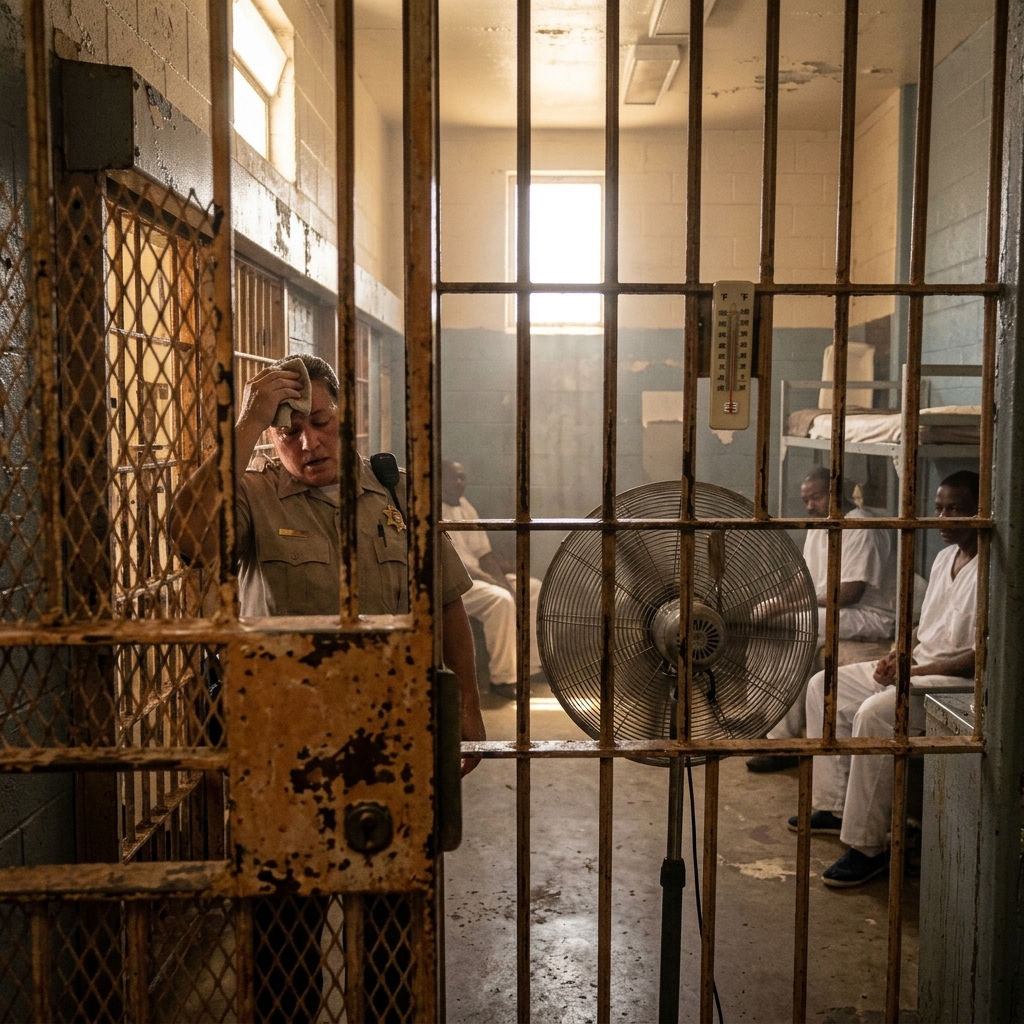
Texas is famous for its long, hot summers, but for thousands of people locked inside state prisons, that heat is not just uncomfortable — it can be dangerous, even deadly. In many facilities, living areas still lack full air conditioning, raising serious questions about constitutional rights, human dignity, and the obligations of the state to the people in its custody. At the same time, lawsuits and legislative debates are pushing Texas toward an inflection point: will extreme heat behind bars remain a tolerated reality, or become a catalyst for systemic change?
Why Prison Heat Has Become a Legal Flashpoint
The debate over air conditioning in Texas prisons is not simply about comfort. It revolves around whether exposing incarcerated people to sustained, extreme heat constitutes cruel and unusual punishment under the Eighth Amendment of the U.S. Constitution. Federal courts have already signaled that forcing people to endure sweltering conditions, especially those with medical vulnerabilities, can be plainly unconstitutional.
Several facts drive the legal urgency:
- Texas routinely experiences summer temperatures above 100°F, with heat indices that can climb much higher.
- A significant share of prison housing units lack full air conditioning, meaning incarcerated people spend months in stifling cell blocks and dorms.
- People in custody cannot freely leave, adjust their environment, or access cooling measures as someone on the outside might.
- There have been documented heat-related illnesses and deaths linked to prison conditions over the past decades.
These realities raise a core constitutional question: when the state chooses to incarcerate someone, how far does its duty extend to protect them from foreseeable, life-threatening environmental hazards like extreme heat?
How Hot Do Texas Prisons Really Get?
Recent reporting and data analysis show that high temperatures inside Texas prisons are not rare spikes but a regular part of life from spring through early fall. Research and media investigations of units without full air conditioning have found that:
- Almost all unair-conditioned prisons reached at least 85°F during each of the last four summers.
- In many facilities, indoor readings routinely hit 90°F and sometimes exceeded 100°F.
- Heat index values — which combine temperature and humidity — have been recorded above 110°F, and in at least one instance approached 149°F.
For context, Texas law requires county jails to keep temperatures between 65°F and 85°F for people held pretrial, but there is no equivalent standard for state prisons housing people already sentenced. This means longer-term prisoners can legally be kept in harsher thermal conditions than individuals detained for far shorter periods.
Comparing Standards: County Jails vs. State Prisons
| Facility Type | Temperature Requirement | Air Conditioning Mandate | Typical Practice |
|---|---|---|---|
| County Jails (Texas) | Must be kept between 65°F and 85°F. | No explicit requirement for AC, but compliance with range often effectively demands cooling systems. | More consistent use of climate control to meet statutory limits. |
| State Prisons (Texas) | No statewide statutory temperature cap for housing areas. | No universal AC requirement; many units lack full air conditioning. | Temperatures frequently 90–100°F+, with only partial mitigation policies. |
Scope of the Problem: How Many Prisons Lack AC?
The Texas Department of Criminal Justice (TDCJ) operates more than 100 prison units across the state. A large portion of those facilities still do not have full air conditioning in housing areas. According to official TDCJ information, as of recent legislative sessions:
- 38 units are fully air conditioned.
- 52 units are partially air conditioned, meaning some but not all living areas have cooling.
- Texas has committed funding to add tens of thousands of air-conditioned beds, with the goal of exceeding 80,000 cooled beds system-wide.
Even with ongoing construction projects, a substantial number of incarcerated people still live in units without full AC, often sleeping and spending most of their time in uncooled cell blocks. Advocates argue that incremental progress, while important, leaves too many people at risk for too many summers.
Health Risks: When Heat Becomes a Medical Emergency
Extreme heat imposes well-known physiological stress, especially on individuals with chronic health conditions, older adults, and those taking certain medications. Medical research and public health guidance consistently warn that prolonged exposure to high heat can cause heat exhaustion, heat stroke, dehydration, and cardiovascular complications. In prisons, the risk is compounded by restrictions on movement, limited autonomy over hydration and cooling, and sometimes delayed medical response.
People most at risk include:
- Individuals with heart disease, diabetes, or respiratory illnesses.
- Those taking medications that affect body temperature regulation or fluid balance.
- Older adults whose bodies are less able to adapt to temperature extremes.
- People with mental health conditions who may struggle to advocate for themselves or recognize early symptoms.
Reports from Texas prisons describe symptoms ranging from severe headaches and dizziness to loss of consciousness, with some cases escalating to heat stroke and death. These outcomes are not mere discomfort; they are medical emergencies that raise questions about preventable harm in state custody.
Existing Heat Mitigation Policies — And Their Limits
In response to lawsuits and rising scrutiny, TDCJ has formalized an “extreme temperature conditions” policy and a set of heat mitigation procedures. These policies typically include measures such as:
- Identifying medically vulnerable individuals and prioritizing them for air-conditioned beds.
- Providing additional access to water and ice.
- Allowing extra showers during heat waves.
- Offering respite areas where incarcerated people can cool down, at least temporarily.
- Selling cooling items like fans and electrolyte drinks via commissary.
While these steps reflect a recognition of the danger, studies and reports suggest that implementation is uneven and often insufficient. Surveys of incarcerated people in Texas found that many designated as vulnerable still did not have access to air-conditioned beds. Data also show that temperatures regularly exceed the threshold at which mitigation is supposed to be triggered, raising questions about how consistently those safeguards are applied.
Federal Lawsuits and Constitutional Arguments
The lack of air conditioning in Texas prisons has led to major federal litigation, with plaintiffs arguing that the state is violating the Eighth Amendment by subjecting them to inhumane conditions. In one landmark ruling, a federal judge concluded that housing inmates in sweltering facilities without air conditioning is “plainly unconstitutional,” though the court initially stopped short of ordering immediate installation of AC in all units.
Key constitutional issues include:
- Deliberate indifference: Courts examine whether officials know about the risk of serious harm and fail to take reasonable steps to mitigate it.
- Serious medical need: Heat-related illness, particularly among medically vulnerable prisoners, can qualify as a serious medical need demanding protection.
- Proportionality of punishment: Conditions of confinement cannot be grossly disproportionate to the legitimate goals of punishment and security.
Ongoing trials may determine whether Texas must equip all of its prisons with air conditioning by a specific deadline, potentially reshaping correctional policy statewide. A court-ordered timeline would force the state to balance fiscal constraints against constitutional rights and human life.
Cost, Politics, and Public Opinion
Installing and operating air conditioning in large prison systems is expensive, and Texas has long debated whether the state should bear that cost. Legislators and state officials have raised concerns about:
- Upfront infrastructure expenses to retrofit aging facilities.
- Ongoing electricity and maintenance costs.
- Competing budget priorities across public education, healthcare, and transportation.
However, in recent legislative sessions, Texas has allocated significant funding — including over $80 million in one session and more than $100 million in another — specifically for prison air conditioning projects. These investments suggest growing political recognition that the status quo is unsustainable, especially as heat records are broken and court scrutiny intensifies.
Public opinion plays a complicated role. Some members of the public express skepticism about spending money to cool prisons, framed in terms of punishment. Others, including families of incarcerated people, advocacy organizations, medical professionals, and religious groups, argue that basic human dignity and constitutional norms require protection from lethal heat regardless of a person’s criminal conviction.[10]
Human Rights Perspective: Beyond the Letter of the Law
International human rights standards emphasize that people deprived of their liberty still retain inherent dignity and rights. Treaties and guidelines from organizations like the United Nations call for humane treatment of prisoners, including safe and healthy living conditions. While these standards are not directly enforceable in all U.S. courts, they inform advocacy and broader ethical debate.
From a human rights viewpoint, key arguments include:
- Extreme heat that predictably causes serious illness and death is incompatible with humane treatment.
- Environmental conditions in prisons — including temperature — should not inflict suffering beyond the loss of liberty itself.
- Staff working in these facilities also face health risks, making heat a workplace safety issue as well as a prisoners’ rights issue.
This framing shifts the debate from whether incarcerated people “deserve” air conditioning to whether the state can ethically and legally subject them to avoidable, potentially fatal risk.
Possible Policy Solutions and Paths Forward
Addressing extreme heat in Texas prisons requires a mix of legal, technical, and political solutions. Policymakers and advocates have proposed several approaches:
- Universal temperature standards: Mandating a maximum allowable indoor temperature for all correctional facilities, similar to county jail rules.
- Phased AC installation: Setting a binding timeline for adding air conditioning to every housing unit, prioritizing the hottest facilities and most vulnerable populations.
- Improved monitoring: Requiring regular, transparent reporting of temperature and heat index measurements for all units, with public access to data.
- Stronger enforcement of mitigation: Ensuring policies on water, showers, respite, and vulnerable populations are consistently implemented and audited.
- Design and renovation upgrades: Incorporating heat-resilient architectural features, ventilation improvements, and insulation in new and existing prisons.
Ultimately, the direction Texas takes will depend on court rulings, legislative choices, budget decisions, and ongoing advocacy. Yet the underlying issue — the clash between extreme heat and the duty of care owed to people in custody — will remain central as climate trends point toward hotter summers and more frequent heat waves.
Frequently Asked Questions (FAQs)
1. Are all Texas prisons without air conditioning?
No. Some Texas prison units are fully air conditioned, and many others have partial AC in specific areas. However, a large share of housing units still lack full air conditioning, meaning many incarcerated people live and sleep in uncooled spaces.
2. Why are county jails subject to temperature limits but not state prisons?
Texas law explicitly sets temperature requirements for county jails, requiring them to stay within a 65°F to 85°F range. There is no equivalent statewide statute for state prisons, leaving those facilities without mandatory thermal standards for housing areas. This legal gap is one driver of current litigation and reform efforts.
3. Has a court ruled that lack of AC is unconstitutional?
Yes. A federal judge has previously ruled that housing inmates in Texas prisons without air conditioning, under sweltering conditions, is “plainly unconstitutional,” though the ruling initially pushed parties toward trial rather than mandating immediate, system-wide AC installation.
4. What steps has Texas taken to fix the problem?
Texas has adopted heat mitigation policies and secured substantial legislative funding to install air conditioning and add tens of thousands of cooled beds. However, implementation is ongoing, and many units still experience extreme heat on a regular basis.
5. Is this only about prisoners, or does it affect staff too?
The heat problem affects both incarcerated people and staff working long shifts in hot, poorly ventilated environments. Correctional officers and other prison employees also face increased health risks, fatigue, and safety challenges when temperatures soar.
6. Could climate change make this issue worse?
Long-term climate trends suggest rising average temperatures and more intense heat waves in many regions, including Texas. As summers grow hotter, the risks associated with unair-conditioned prisons are likely to increase, making proactive adaptation — such as universal temperature standards and AC installation — more urgent.
References
- Texas prisons are regularly topping 90 degrees, new data analysis shows — KUT / The Texas Newsroom. 2026-02-02. https://www.kut.org/crime-justice/2026-02-02/texas-prison-heat-ac-lawsuit-data-analysis
- Federal trial over air conditioning in Texas prisons set to start Monday — The Texas Tribune. 2025-03-26. https://www.texastribune.org/2025/03/26/texas-prison-air-conditioning-lawsuit/
- Trial on whether Texas must provide air conditioning in its prisons begins this week — NPR. 2026-04-01. https://www.npr.org/2026/04/01/nx-s1-5766285/trial-on-whether-texas-must-provide-air-conditioning-in-its-prisons-begins-this-week
- Life-Threatening Conditions in Texas Prisons — Texas A&M University, School of Architecture. 2022-11-16. https://www.arch.tamu.edu/news/2022/11/16/life-threatening-conditions-in-texas-prisons/
- TDCJ Air Conditioning Construction Projects — Texas Department of Criminal Justice. (Accessed 2026). https://www.tdcj.texas.gov/ac/index.html
- Federal judge weighs mandating air conditioning in Texas prison system — CNN. 2026-04-26. https://www.cnn.com/2026/04/26/us/prison-air-conditioning-trial-texas
Similar Articles








Read full bio of Sneha Tete




