
Texas DWI Arrest: Aftermath And How To Protect Your License Now
A practical guide to understanding the Texas DWI arrest, license consequences, court process, and your legal options after being charged.
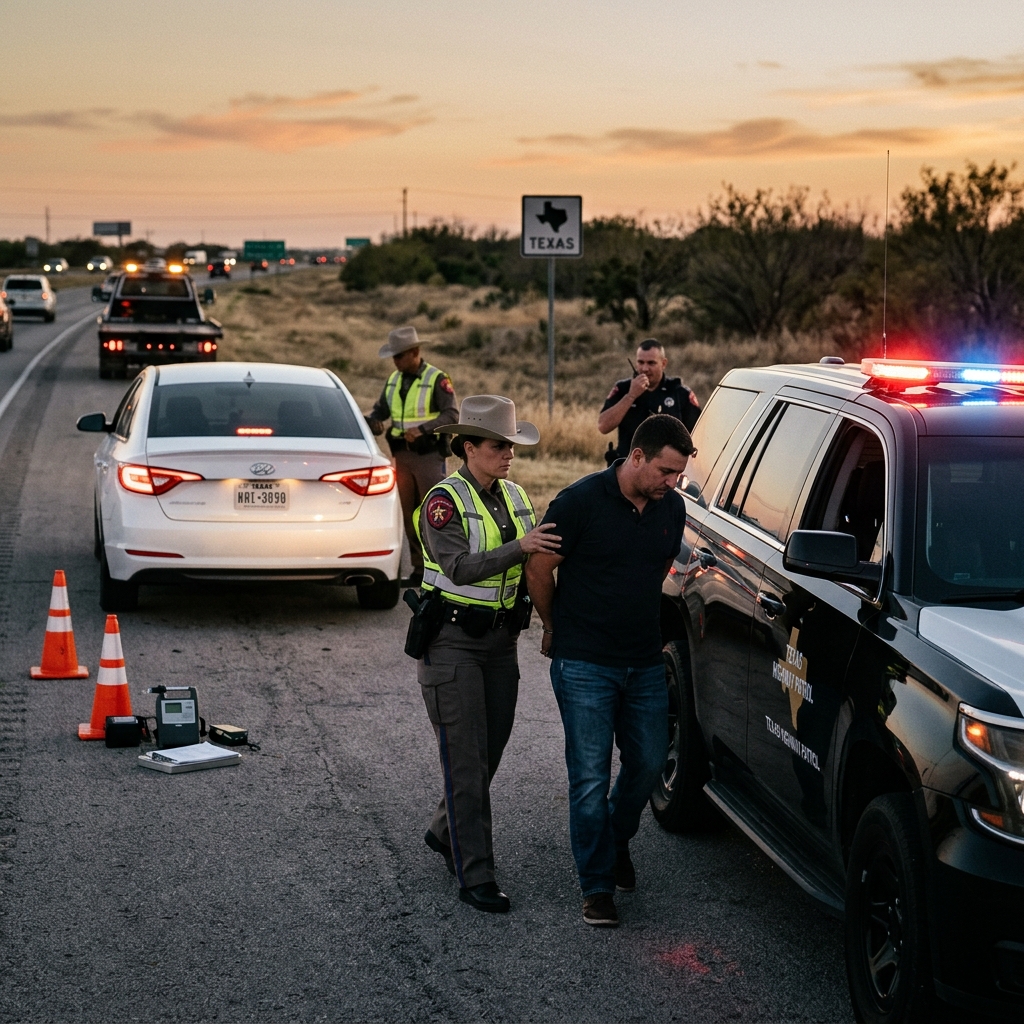
Being arrested for driving while intoxicated (DWI) in Texas is both stressful and confusing. This guide walks through what typically happens after a DWI arrest in Texas, how it affects your driver’s license, what to expect from the criminal court process, and which decisions are time‑sensitive.
1. First Moments After a Texas DWI Stop
Most Texas DWI cases begin with a traffic stop or contact with law enforcement. Officers are trained to look for indicators of impairment and then decide whether to escalate to a full DWI investigation.
Common reasons for the initial stop include:
- Speeding or unsafe lane changes
- Drifting within a lane or between lanes
- Failing to signal or obey traffic signs
- Equipment violations such as a broken tail light
After the stop, the officer will usually observe your behavior and appearance, ask questions, and may request field sobriety tests. At this stage, you generally must provide identification and proof of insurance, but you have the right to remain silent regarding incriminating questions.
1.1 Field Sobriety and Initial Investigation
Texas officers commonly use standardized field sobriety tests developed by the National Highway Traffic Safety Administration, such as the walk‑and‑turn, one‑leg stand, and horizontal gaze nystagmus (HGN) eye test. These tests are used to build probable cause for arrest but are not mandatory; refusing them may have consequences later in the case, yet performing poorly can also be used as evidence.
2. The Arrest, Booking, and Statutory Warning
If the officer concludes there is probable cause to believe you are intoxicated, you may be placed under arrest and transported to a station or jail.
Once you arrive:
- You are formally booked (photographed, fingerprinted, and processed).
- You may be asked to submit a breath or blood test for alcohol or drugs.
- You are given a written statutory warning, often on a form identified by Texas Department of Public Safety (DPS), explaining the consequences of refusing or failing a chemical test.
The statutory warning explains that refusing a chemical test or providing a result over the legal limit can lead to administrative suspension of your driver’s license under Texas implied consent laws. These license consequences occur separately from any criminal conviction.
2.1 Chemical Testing and Implied Consent
Texas law uses an implied consent framework: by driving on Texas roads, you are deemed to have consented to testing when lawfully arrested for DWI. Refusal or failure triggers administrative penalties through DPS.
| Situation | Typical Suspension Length (First Offense) |
|---|---|
| Refusal of breath/blood test | Up to 180 days |
| Test result at or above legal limit | Usually 90 days or more |
| Prior alcohol‑related license actions | Up to 2 years |
Your choice about testing has immediate civil effects on your license and can also affect the evidence available in the criminal case.
3. Magistration, Bail, and Bond Conditions
After arrest and booking, Texas law requires that you be brought before a magistrate (judge) within a short period—commonly within about 48 hours—for an initial appearance.
At this hearing, the magistrate will:
- Inform you of the charges and your basic rights
- Determine whether probable cause exists to support the charge
- Set a bail amount
- Impose conditions of release, often through a bond order
Bond can be set as cash, surety (through a bondsman), or in some cases a personal recognizance bond that relies on your promise to appear.
3.1 Common Bond Conditions in DWI Cases
Texas magistrates frequently impose specific conditions for people released after a DWI arrest, especially when the alleged blood alcohol concentration (BAC) is high or there are prior offenses.
- Obey all laws and avoid new criminal charges
- Appear at every scheduled court date
- Refrain from consuming illegal drugs and sometimes alcohol
- Maintain contact information with the court and bondsman
- Install an ignition interlock device when BAC is alleged to be 0.15 or higher, when there are prior DWI arrests, or when a child passenger is involved
Failure to follow bond conditions can lead to bond revocation, additional charges, and stricter supervision.
4. Two Tracks: License Case vs. Criminal Case
After a Texas DWI arrest, you face two separate legal processes:
- Administrative License Revocation (ALR) handled by Texas DPS
- Criminal prosecution handled in county or district court
Understanding the difference—and the deadlines—is critical.
4.1 Administrative License Revocation (ALR)
ALR is a civil proceeding that focuses only on your privilege to drive in Texas. It is triggered when you refuse or fail a chemical test.
Key features of the ALR process include:
- Notice of suspension is usually served at or shortly after arrest.
- You have a limited time (often 15 days) from service of the notice to request a hearing to contest the suspension.
- If you do not request a hearing, your license suspension typically begins automatically around the 40th day after arrest.
- At the hearing, DPS must show that the officer had reasonable grounds to believe you were intoxicated and properly requested a test.
A successful ALR hearing can preserve your driving privileges or shorten the suspension, but missing the deadline usually means automatic suspension regardless of the outcome of the criminal case.
4.2 Criminal Court Case
The criminal case determines whether you are convicted of DWI and what penalties apply. Misdemeanor DWI charges commonly go to county courts, while felony DWI is handled in district courts.
Typical criminal case stages include:
- Case filing and assignment of a cause number
- Arraignment or initial setting, where you enter a plea
- Pretrial hearings and motion practice
- Plea negotiations or trial
- Sentencing and possible post‑conviction relief
5. Potential Criminal Penalties for DWI in Texas
Actual penalties depend on your prior record, test results, presence of a child passenger, and any aggravating factors. Texas Department of Transportation provides general penalty ranges for DWI offenses.
| Offense Level | Fine | Custody | License Suspension |
|---|---|---|---|
| First DWI (no aggravating factors) | Up to $2,000 | 3–180 days in jail | Up to 1 year |
| Second DWI | Up to $4,000 | 30 days–1 year in jail | Up to 2 years |
| Third DWI (often a felony) | Up to $10,000 | 2–10 years in prison | Up to 2 years |
| DWI with child passenger | Up to $10,000 | Up to 2 years confinement | Additional 180‑day suspension |
In addition to these penalties, Texas law allows for state fines assessed at sentencing, which can add thousands of dollars in costs. Courts may also require community service, education programs, or treatment as part of probation.
6. Immediate Steps to Take After a DWI Arrest
Because deadlines are short and evidence is fresh, what you do in the days following a DWI arrest can significantly impact your case.
- Gather all paperwork: Temporary license, statutory warning, bond documents, towing receipts.
- Note the suspension notice date: This date typically starts the 15‑day ALR clock.
- Calendar key deadlines: ALR request deadline, first court appearance, and any bond compliance dates.
- Document what happened: Write down where you were, what you drank, timing of stops and testing, and officer instructions while the events are still clear.
- Limit public statements: Avoid posting on social media or freely discussing case details with people who may later be witnesses.
- Consult legal counsel quickly: An attorney can file the ALR hearing request, evaluate probable cause, and begin building a defense strategy.
7. Typical Timeline for a Texas DWI Case
Every case is different, but many Texas DWI matters follow a similar general timeline.
- Day 0–2: Arrest, booking, magistration, and bond conditions.
- Within 15 days: Deadline for requesting the ALR hearing to contest license suspension.
- Within 20–40 days (misdemeanor cases): Court date is typically issued for the first setting or arraignment.
- Following months: Pretrial negotiation, motions, and possible trial dates.
- Post‑disposition: Sentencing, probation conditions, and possible record relief depending on outcome.
Felony DWI cases may take longer to file and reach trial than misdemeanors because they proceed in district courts with more complex procedures.
8. Long‑Term Consequences and Record Options
A DWI arrest can have effects beyond fines and jail time. It may influence employment opportunities, housing applications, and insurance costs. Texas law provides limited avenues to address records after a case ends.
- Not guilty verdict or dismissal: You may be eligible to seek an expunction of the arrest and certain ALR records, which can remove them from many public searches.
- Conviction with favorable terms: In some situations, nondisclosure or other record‑sealing tools may be available, partially limiting public access to the DWI case.
The availability of these options depends on details such as prior criminal history, the type of DWI charge, and completion of court‑ordered obligations.
9. Practical Tips for Navigating a Texas DWI Case
While only a lawyer can provide legal advice for your specific situation, several practical steps are consistently helpful in managing a Texas DWI case:
- Stay organized: Keep a dedicated folder (physical or digital) with all your DWI paperwork, court notices, and license documents.
- Track all dates: Missing a hearing or deadline can create new problems, including license suspension or additional charges.
- Comply strictly with bond conditions: This includes interlock requirements, travel limits, testing obligations, and contact with supervision officers.
- Monitor your driving status: If your license is suspended, ask counsel about limited driving privileges or compliance steps to restore your license after the suspension ends.
- Consider long‑term impacts: Decisions about pleas or trials should include discussion of employment, professional licensing, and future travel implications.
10. Frequently Asked Questions About Texas DWI Arrests
10.1 Will my license be suspended automatically after a Texas DWI arrest?
Your license is not physically taken away in every case, but an administrative suspension can become automatic if you refuse or fail a chemical test and do not request an ALR hearing within the statutory deadline. Requesting the hearing puts the suspension on hold until a decision is made.
10.2 How fast do I need to act to protect my license?
In many cases, you have about 15 days from the date of the suspension notice to file a request for an ALR hearing. If you miss this deadline, DPS usually proceeds with suspension even if the criminal case is later reduced or dismissed.
10.3 What is the difference between DWI and DUI in Texas?
In Texas, DWI generally refers to driving while intoxicated for adults, while DUI is often used for certain under‑age alcohol‑related driving offenses. Both can affect your right to drive and may carry serious penalties, but DWI is the more common charge for adults.
10.4 Can I avoid jail time if convicted of a first DWI?
Texas law allows for a range of sentencing options. For some first‑time offenders, courts may permit probation or community supervision instead of serving the entire jail term, but outcomes vary widely by county, judge, and case details. Only a lawyer reviewing your specific case can explain realistic options.
10.5 Does winning my criminal case fix my license suspension?
Not necessarily. The ALR proceeding is separate from the criminal case. Even if you are acquitted or charges are dismissed, you may still face license consequences if the ALR hearing was not requested in time or if DPS proved its case in the administrative forum.
References
- DWI Process in Texas — The DWI Trial Guy. 2024-01-15. https://www.thedwitrialguy.com/DWI/DWI-Process.html
- Texas DWI Arrest — Saputo Toufexis. 2023-09-10. https://saputo.law/texas-criminal-law/texas-dwi-arrest/
- Arrest Process for DWI in Texas: What to Expect — Jason English Law. 2023-05-20. https://www.jasonenglishlaw.com/arrest-process-dwi-texas
- Texas DWI Court Process Explained — Thiessen Law Firm. 2022-11-05. https://www.thetexastrialattorney.com/blog/dwi-court-process/
- The DWI Court Process — My Dallas Criminal Lawyer. 2022-08-18. https://www.mydallascriminallawyer.com/blog/the-dwi-court-process/
- DWI Process: What Happens After Your Arrest? — Collin County DWI Attorneys. 2023-03-02. https://www.collincountydwiattorneys.com/areas-of-practice/dwi-laws/dwi-process-what-happens-after-your-arrest/
- What to Do After a DWI Arrest in Texas Immediately — Texas DUI Law Firm. 2024-02-11. https://texasduilawfirm.com/what-to-do-after-a-dwi-arrest-in-texas-immediately/
Similar Articles








Read full bio of medha deb




