
Texas Affidavit Requirements: Complete Guide
Master Texas affidavit preparation: Learn requirements, notarization, and best practices.
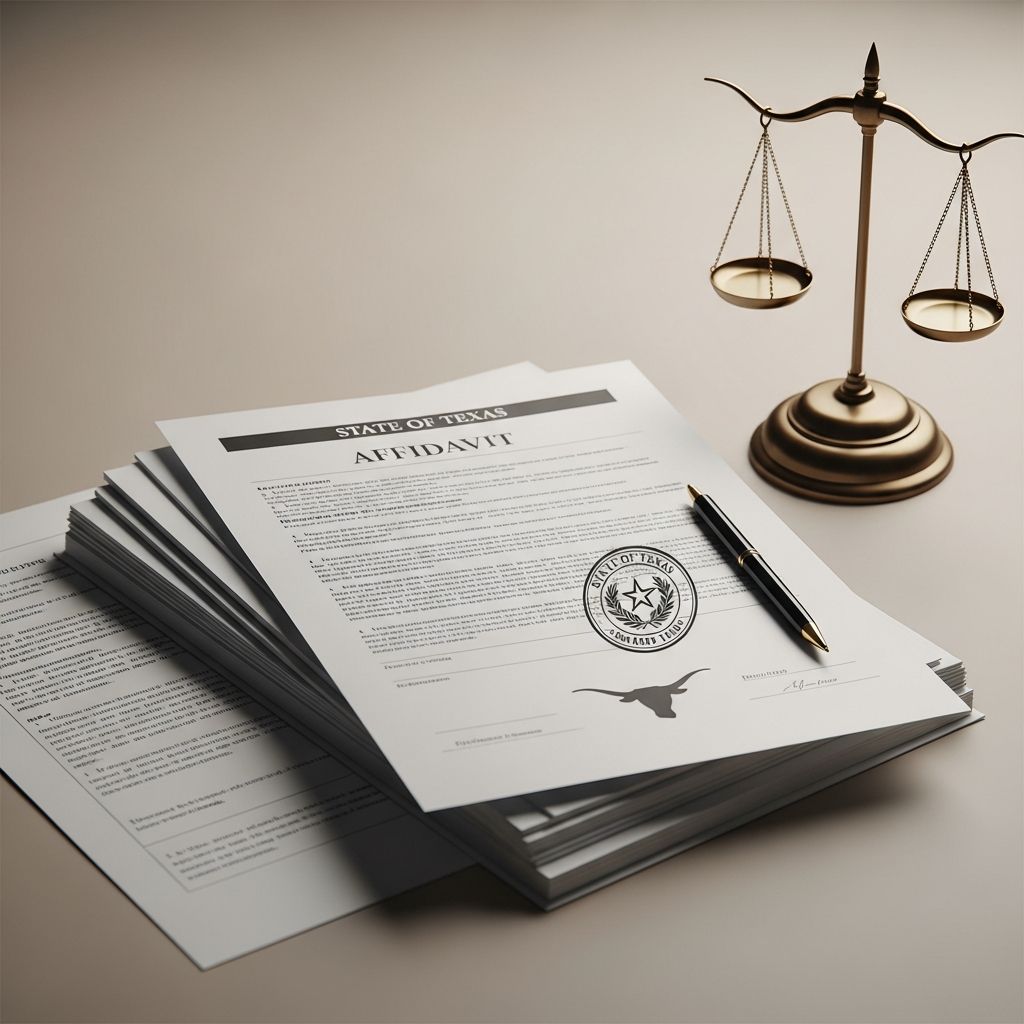
Understanding Affidavits in Texas Legal Practice
An affidavit represents a formal written declaration that you solemnly swear to be truthful before an authorized official, typically a notary public or other state-designated administrator of oaths. This legal instrument serves as a critical component in numerous legal and financial contexts throughout Texas. Whether you are involved in real estate transactions, mortgage applications, family law matters, or other civil proceedings, understanding how to properly execute an affidavit is essential for ensuring your document carries legal weight and achieves its intended purpose.
The significance of affidavits extends across multiple areas of legal practice. They function as evidence in court proceedings, provide verification for property transfers, support loan applications, and document important life events such as births or deaths. In Texas, the general affidavit form serves as a versatile tool that accommodates various situations where you need to formally attest to specific facts or circumstances. However, the validity of your affidavit depends entirely on your adherence to Texas legal requirements and proper completion procedures.
Core Components of a Texas Affidavit
Before you begin filling out an affidavit form, you must understand the essential elements that make this document legally binding. Texas law requires specific information and structural components that distinguish a valid affidavit from a simple written statement. Missing or incomplete information can render your affidavit inadmissible in legal proceedings or ineffective for your intended purpose.
The foundation of any affidavit begins with comprehensive personal identification. You must provide your full legal name exactly as it appears on official documents, your current residential address, and specific details about where and when you are signing the document. This information establishes your identity and ensures the notary can properly verify your credentials. Additionally, the affidavit must clearly state the date and location of execution, creating a definitive record of when the sworn statement was made.
Your substantive statements form the core of the affidavit. These declarations must express facts that fall within your direct personal knowledge rather than hearsay, assumptions, or information obtained secondhand. The language should be straightforward and factual, avoiding emotional language, conclusions, or legal arguments. Each statement must address relevant and material facts that directly support your purpose for creating the affidavit.
Preparing Your Affidavit: Strategic Composition Approach
The process of drafting an effective affidavit requires careful consideration of content, organization, and presentation. You should begin by clearly identifying the specific purpose of your affidavit in a brief introductory statement. This contextual opening helps readers immediately understand why this sworn statement exists and what it intends to establish or refute.
When composing your affidavit statements, adopt a first-person perspective throughout the document. Begin each statement with phrases such as “I personally witnessed,” “I have direct knowledge of,” or “Based on my personal experience.” This approach reinforces that you are testifying only to facts within your direct awareness and observation. Avoid making generalizations or drawing conclusions from the facts you present.
Relevance and specificity should guide your drafting decisions. Include sufficient detail to fully support your purpose without introducing extraneous information that distracts from your core message. For example, if your affidavit concerns property condition issues, focus exclusively on those matters rather than including unrelated complaints about the property owner or other circumstances. This focused approach strengthens your credibility and ensures the document remains legally useful.
Organization matters significantly when presenting multiple facts or events. Arrange your statements in chronological order whenever possible, as this approach helps readers follow your narrative logically and makes the facts easier to verify. If you need to reference specific dates, document numbers, or other identifying information, include these details with precision. Inaccurate or incomplete information undermines the reliability of your entire affidavit.
Legal Consequences and Truthfulness Requirements
One of the most critical aspects of affidavit preparation is recognizing the serious legal implications of making false statements. When you sign an affidavit, you explicitly swear under oath that the contents are true to the best of your knowledge. This sworn declaration subjects you to potential perjury charges if you knowingly include false information or deliberately omit material facts. Texas law treats perjury as a serious offense with substantial criminal penalties.
Before finalizing any affidavit, conduct a thorough self-review to verify that every statement accurately reflects your actual knowledge and experience. If you are uncertain about any fact or cannot verify its accuracy, either exclude that information or clearly indicate the extent of your certainty. Being honest about the limits of your knowledge demonstrates integrity and protects you legally. Never include information simply because you believe it might strengthen your case if you cannot honestly attest to its accuracy.
This emphasis on truthfulness extends to what you choose not to include. If relevant facts might contradict your overall statement, you cannot simply omit them hoping they will not be discovered. Deliberate omission of material facts can constitute perjury just as effectively as including false statements. Your affidavit must represent a complete and honest accounting of the facts within your knowledge.
Types of Affidavits Available in Texas
Texas provides different affidavit forms designed for specific circumstances and legal contexts. Understanding which form applies to your situation ensures you use the correct document format and include all necessary information for your particular purpose.
The General Civil Affidavit serves cases being filed with or already pending in court. This form includes space for cause numbers, party names, court information, and case-specific details. You would use this form when your affidavit directly relates to an active litigation matter. The header information must match exactly with other court documents in your case to maintain consistency in the court record.
The General Civil Affidavit Without Case Style applies when you need an affidavit for purposes outside of active litigation. This version omits court-specific information and works for various non-litigation contexts such as loan applications, real estate transactions, or personal records documentation. This form provides flexibility when you need an affidavit without court involvement.
Texas also recognizes specialized affidavit forms tailored to specific legal matters. These might include affidavits for small claims, family law proceedings, or other particular contexts. Additionally, Texas allows unsworn declarations as alternatives to affidavits in certain situations where notarization is not required. Understanding whether your situation requires an affidavit, unsworn declaration, or other sworn statement is crucial for proper document execution.
The Notarization Process in Texas
Notarization transforms a personal statement into an officially verified legal document. In Texas, most affidavits require notarization by a qualified notary public who verifies your identity and witnesses your signature. This process adds legal weight to your affidavit and makes it admissible in judicial proceedings and other official contexts.
The notarization process requires your personal appearance before the notary public. You cannot submit an affidavit for notarization remotely or through a representative. The notary must see you sign the document in person and verify your identity using government-issued identification. Valid identification documents include your driver’s license, state-issued identification card, or passport. The notary will record your identification information in their notary journal and affix their official seal to the document.
Texas law permits electronic notarization as an alternative to in-person traditional notarization. Electronic notarization follows similar procedures but involves virtual verification of your identity and digital witnessing of your signature. If you choose electronic notarization, you must ensure compliance with the Texas Uniform Electronic Transaction Act (TUETA). This statute establishes specific requirements for electronic transactions to ensure their legal validity. Pay particular attention to security provisions and authentication procedures required under TUETA when conducting electronic notarization.
After notarization, the notary will add their signature, official title, and seal impression to your affidavit. This official notation indicates that the notary personally verified your identity and witnessed your signature under oath. The notarized document then becomes a certified statement with enhanced legal standing compared to an unsigned personal declaration.
Identification Requirements and Documentation Standards
Proper identification verification forms an essential foundation of the notarization process. Before a notary can notarize your affidavit, you must present current, government-issued identification that bears your photograph and signature. This requirement ensures the notary can confirm you are the person whose name appears on the affidavit and that you are voluntarily signing the document.
Acceptable identification documents include:
- Driver’s license issued by Texas or any other state
- State-issued identification card
- United States passport
- Military identification with photograph
- Certain government-issued credentials with photograph and signature
Your identification must be current and valid at the time of notarization. Expired identification generally will not be accepted, as it no longer serves as reliable proof of your identity. If you lack current identification or your identification contains significant discrepancies with the name on your affidavit, you should address these issues before attempting notarization.
In addition to identification verification, ensure that all information on your affidavit matches your official documents. Your legal name should appear consistently throughout the document exactly as it appears on your identification. Any variations or nicknames can create confusion and potentially raise questions about the document’s validity or your identity.
Completing Your Affidavit: Step-by-Step Process
The completion process involves several sequential steps that ensure you properly fill out your affidavit before notarization. Following this methodical approach helps prevent omissions or errors that could undermine your document’s legal validity.
Step One: Select the appropriate affidavit form for your specific situation. Determine whether you need a general affidavit with case style, a general affidavit without case style, or a specialized form. Review the form instructions to understand which version matches your circumstances.
Step Two: If using an affidavit with case style, gather all relevant court information from existing case documents. Enter the cause or case number, court type, county, and party names exactly as they appear on other documents in your case. Accuracy in this section is critical for court filing purposes.
Step Three: Complete your personal information section with your full legal name and current residential address. Include any additional identifying information requested by the form, such as your occupation or date of birth.
Step Four: Draft your substantive statements. Write these in first-person language, addressing only facts within your personal knowledge. Organize your statements logically and ensure each one directly supports your affidavit’s purpose. Review for clarity, accuracy, and completeness.
Step Five: Include the standard affidavit language certifying that you are over age 18, of sound mind, and capable of making an affidavit. Verify that this language appears in your document, as it constitutes a formal legal requirement.
Step Six: Sign the affidavit but only in the presence of the notary public. Do not sign before meeting with the notary, as the notary must witness your signature as part of the verification process.
Step Seven: Bring your current identification to your notarization appointment. The notary will verify your identity, have you swear or affirm the truthfulness of the document, and then notarize the completed affidavit.
Document Requirements for Court Filing
If your affidavit will be filed with a court, several additional requirements apply beyond basic content and notarization. These requirements ensure your document complies with court procedures and maintains proper formatting standards.
When affidavits relate to land or property matters filed with the county clerk, notarization becomes mandatory. Similarly, if your affidavit serves to waive service of process in a legal action, it must be notarized to have legal effect. These specific situations require strict adherence to notarization requirements.
Your affidavit must contain only relevant and material information that addresses the issues the court is deciding. Irrelevant facts, speculation, or information protected by legal privilege cannot appear in your affidavit. Examples of privileged information in Texas include confidential communications with your attorney, spouse, physician, or clergy member. Including such protected information can result in your affidavit being disregarded or excluded from court proceedings.
The information in your affidavit must be authentic and capable of verification. Official records and documents referenced in your affidavit should be accurate and properly identified. If you reference specific documents, include identifying information such as document numbers, dates, or sources that allow others to locate and verify your references.
Common Mistakes and How to Avoid Them
Understanding prevalent errors helps you avoid pitfalls that could compromise your affidavit’s effectiveness. Many individuals create problems through seemingly minor oversights that have significant legal consequences.
Including hearsay information: Many affidavits fail because they include facts the affiant does not personally know. You cannot include information told to you by others unless you are testifying about the fact that someone told you something. Stick exclusively to information within your direct knowledge and observation.
Mixing facts with opinions: Conclusions, interpretations, and legal arguments do not belong in affidavits. Present only objective facts and let others draw conclusions. If you state “the landlord negligently failed to maintain the property,” you are offering a legal conclusion rather than a fact. Instead, describe specific conditions you observed.
Vague or incomplete statements: Generalized assertions weaken your affidavit’s credibility. Instead of “I saw damage,” specify “On March 15, 2025, I observed a hole approximately six inches in diameter in the living room wall.” Precise details make your statements more compelling and verifiable.
Incorrect identification information: Mismatched names, addresses, or other personal data can create legal problems. Ensure every detail matches your identification documents exactly.
Signing before notarization: Your signature must occur in the notary’s presence. Signing prematurely invalidates the notarization process.
Including privileged information: Protected communications with attorneys, doctors, or spouses should never appear in affidavits. These inclusions can result in disqualification of your entire document.
Storage and Record-Keeping Practices
After notarization, proper document management ensures you can produce your affidavit when needed and maintain important records. Create a high-quality copy for your personal files and store it in a secure location such as a home safe, safety deposit box, or secure digital filing system. This backup copy protects you if the original becomes lost or damaged and provides documentation that you properly completed the affidavit.
Maintain any supporting documents referenced in your affidavit in the same secure location. If your affidavit references specific dates, events, or documents, having these materials readily available helps prove the accuracy of your statements if questions arise later. Organization of these supporting materials streamlines the process if you need to defend your affidavit’s contents.
When to Seek Professional Assistance
While many individuals successfully complete affidavits independently, certain situations warrant professional guidance. Complex legal matters, affidavits involving substantial property interests, or situations with contested facts benefit from attorney review before notarization. An experienced attorney can ensure your affidavit meets all legal requirements and effectively supports your position.
Legal service providers can also assist with form selection, completion guidance, and recommendations regarding notarization options. If you are uncertain about your state’s specific requirements or whether your situation requires an affidavit, unsworn declaration, or other document type, consulting with a legal professional provides valuable clarity.
Frequently Asked Questions
Q: What is the legal difference between an affidavit and an unsworn declaration in Texas?
A: An affidavit requires notarization before a notary public who administers an oath, while an unsworn declaration does not require notarization. Declarations can be used in certain situations where access to a notary is unavailable and applicable law permits non-notarized statements. Both document types must contain only facts personally known by the declarant and truthful statements.
Q: Can I sign my affidavit without a notary present?
A: For most Texas affidavits, particularly those filed in court or concerning property, notarization is required and must occur with the notary witnessing your signature in person. You cannot sign the affidavit before meeting the notary. Electronic notarization permits remote witnessing but still requires your personal appearance and real-time verification.
Q: What happens if I include false information in my affidavit?
A: Knowingly providing false information in an affidavit constitutes perjury, a serious criminal offense in Texas. Perjury can result in imprisonment, substantial fines, and a permanent criminal record. Even if discovered later in proceedings, false statements can result in your affidavit being excluded from evidence and separate criminal charges being filed.
Q: How long is an affidavit valid after notarization?
A: A notarized affidavit does not have an expiration date for validity. However, courts or other entities accepting your affidavit may have their own rules regarding how recent the affidavit must be. Some situations may require a relatively recent affidavit, while others accept older notarized documents. Check with the entity requiring your affidavit regarding their specific timing requirements.
Q: Do I need an attorney to prepare my affidavit?
A: You can prepare a straightforward affidavit yourself using available forms and instructions. However, complex legal situations, affidavits involving substantial property interests, or matters with contested facts benefit from attorney review. An attorney ensures your affidavit complies with all legal requirements and effectively supports your position.
Q: Can I modify my affidavit after it has been notarized?
A: Modifications to a notarized affidavit require re-notarization of the entire document or the creation of a supplemental affidavit addressing additional information. Altering a notarized document without proper re-notarization can raise questions about its validity and integrity.
References
- Using a General Affidavit Form in Texas — LegalZoom. Accessed February 2026. https://www.legalzoom.com/articles/using-a-general-affidavit-form-in-texas
- I Need to Prepare an Affidavit or Unsworn Declaration — Texas Law Help. Accessed February 2026. https://texaslawhelp.org/guide/i-need-to-prepare-an-affidavit-or-unsworn-declaration
- General Civil Affidavit Form (CV-AFF-100) — Texas Law Help. August 2025. https://texaslawhelp.org/sites/default/files/2025-08/cv-aff-100_general_affidavit.pdf
- Civil & General – Commonly Requested Legal Forms — State Law Library of Texas. Accessed February 2026. https://guides.sll.texas.gov/legal-forms
- Affidavits and Declarations (Civil) Research Guide — Tarrant County District Clerk. Accessed February 2026. https://www.tarrantcountytx.gov/content/dam/main/law-library/pdfs/research-guides/Affidavits_and_Declarations_Civil_Research_Guide.pdf
Similar Articles








Read full bio of medha deb


