
Marriage Law In Tennessee: Essential Guide For Couples In 2025
A clear guide to Tennessee marriage rules, licenses, officiants, and legal limits.
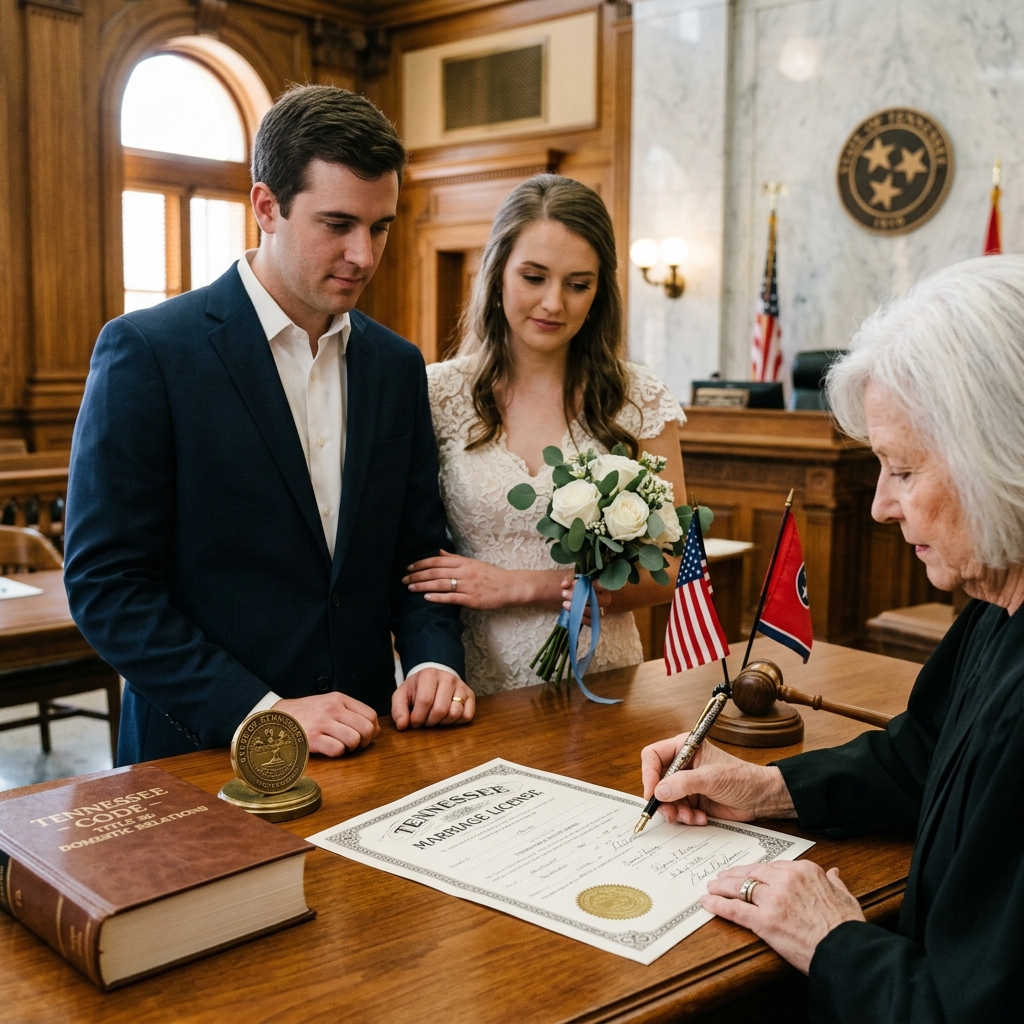
Understanding Marriage Law in Tennessee
Marriage in Tennessee is treated as a legal status, not just a personal commitment. That means couples must meet state requirements before a marriage is valid, including obtaining a license and having the marriage solemnized by an authorized officiant. Tennessee law also sets limits on who may marry, how old the parties must be, and what kinds of ceremonies count under state law.
For many couples, the process is straightforward. Still, mistakes can create real problems, especially if a couple assumes that living together, using the same last name, or having a private ceremony without the proper paperwork is enough. Tennessee law makes clear that a valid marriage depends on compliance with statutory requirements.
What Makes a Marriage Valid
In Tennessee, a marriage generally requires two core steps: a marriage license and a ceremony performed by someone legally allowed to officiate. Without those elements, the relationship may not be recognized as a lawful marriage.
- A couple must obtain a marriage license from the county clerk.
- The marriage must be solemnized by an authorized officiant.
- The couple must satisfy all age, consent, and identification requirements.
- The marriage cannot violate Tennessee’s rules against closely related marriages.
Tennessee does not recognize common law marriage formed within the state. In practical terms, living together for years and presenting yourselves as married will not, by itself, create a legal marriage in Tennessee.
Who Can Apply for a Marriage License
Both parties normally appear together at the county clerk’s office to apply for a license. The application usually asks for identifying information about each person, including full names, dates of birth, and other personal details required by local procedure.
Applicants should expect to provide government-issued photo identification, and some counties may also request proof of Social Security number if available. Because county offices can differ slightly in procedure and fees, it is wise to verify the local clerk’s current requirements before filing an application.
Age Rules and Parental Consent
Tennessee sets minimum age requirements for marriage, and minors face stricter rules than adults. A marriage license cannot be issued if either person is under 18 unless a legal exception applies. In some circumstances, a minor may marry with parental or guardian involvement, but the state’s age restrictions are enforced carefully.
When a party is underage, the law may require a parent, guardian, or other responsible adult to join in the application. For especially young applicants, additional court approval may be necessary. These safeguards are intended to prevent marriages entered into without maturity, consent, or proper oversight.
| Issue | General Tennessee Rule |
|---|---|
| Minimum age | Marriage is restricted for anyone under 18, subject to limited exceptions. |
| Minor applicants | May need parental or guardian participation and, in some cases, court approval. |
| Adult applicants | Can usually apply together with valid identification and required information. |
Where and How to Get the License
Couples may generally obtain a marriage license from a county clerk in Tennessee. The license is a prerequisite to the ceremony, and the couple should not assume the wedding can proceed legally without it. Since clerks handle local administration of the process, the practical steps may vary slightly from county to county.
One important feature of Tennessee procedure is that a couple is usually not required to obtain the license in the same county where the wedding will occur. That flexibility can be useful for couples marrying away from home, but the completed license still must be handled according to the clerk’s instructions after the ceremony.
License Fees and Time Limits
Marriage license fees are set locally and can differ by county. Some counties also offer a reduced fee if the couple completes a qualifying premarital preparation course. Because fee schedules may change, applicants should check with the issuing clerk for the current amount before appearing in person.
A Tennessee marriage license is not open-ended. It is valid for a limited period, so the marriage ceremony must take place before the license expires. Couples who delay their ceremony too long may need to apply for a new license and pay the fee again.
Is There a Waiting Period?
For most adult couples, Tennessee does not impose a waiting period after the license is issued. That means a ceremony may take place soon after the clerk approves the application, provided the license is still valid and all other rules are met.
Different rules can apply when one of the applicants is a minor. In those situations, a waiting period or judicial waiver may come into play. The existence of a delay for underage applicants reflects the state’s stronger protection for marriages involving minors.
Who May Officiate a Tennessee Wedding
Tennessee law limits who can legally solemnize a marriage. Not every person who is willing to perform a ceremony is authorized to make the marriage valid. The officiant must fall within the categories recognized by state law.
- Regular ministers, preachers, pastors, priests, rabbis, and similar religious leaders who meet statutory requirements.
- Current and certain former judges, chancellors, legislators, and other government officials authorized by law.
- County clerks and some local executive officials, including certain mayors and the governor.
The law has also been interpreted to exclude some online ordinations from qualifying a person to solemnize marriages in Tennessee. That distinction matters because a ceremony may feel official even when the officiant lacks legal authority. Couples should verify the officiant’s status before the wedding day rather than assuming any ordained person will do.
What the Ceremony Must Include
Tennessee does not require a highly formal script or a particular set of ceremonial words. Instead, the key requirement is that the parties express their agreement to enter into marriage in the presence of an authorized officiant. The ceremony may be simple, but it must still satisfy the legal function of solemnization.
There is no need for elaborate rituals, but there must be enough formality to show that the marriage was knowingly and voluntarily entered into. A private exchange of vows without an authorized officiant may be meaningful emotionally, yet still fail to create a legal marriage under Tennessee law.
Marriages Tennessee Will Not Allow
Tennessee law prohibits marriage between certain relatives. These restrictions are designed to prevent marriages that are legally and socially impermissible because of close blood or family ties.
In general, a person may not marry a parent, child, sibling, grandparent, grandchild, aunt, uncle, or lineal descendant. The law also bars marriages involving certain in-law relationships, such as a spouse’s parent or other closely related family members described by statute.
These restrictions apply regardless of whether the relationship is by whole or half blood in the categories covered by law. If a couple is unsure whether their relationship falls within a prohibited category, legal advice is appropriate before applying for a license.
Common Law Marriage Is Not Recognized
Some states recognize a form of marriage created by conduct rather than a formal license and ceremony. Tennessee is not one of them. Couples who move in together, share finances, or hold themselves out as married do not create a valid Tennessee marriage solely through those acts.
This rule can matter in divorce, inheritance, insurance, and other legal disputes. Even if another state recognized a common law marriage, Tennessee will generally require proof that the marriage was validly formed under applicable law. For couples who want legal certainty, a licensed and solemnized marriage remains essential.
Practical Steps Before the Wedding
Because Tennessee marriage requirements are procedural, a few simple preparations can prevent delays. Couples should gather identification, confirm fee information, and make sure the chosen officiant is legally authorized. They should also check whether any premarital course might reduce the license fee or simplify the process.
- Confirm the county clerk’s office hours and filing requirements.
- Bring acceptable photo ID and any additional documents requested.
- Verify that both parties can appear together for the application.
- Check whether the chosen officiant is legally authorized in Tennessee.
- Make sure the ceremony will occur before the license expires.
These steps are especially important for destination weddings, second marriages, or ceremonies planned quickly after engagement. The more unusual the situation, the more valuable it is to confirm the county’s current rules in advance.
Why Legal Compliance Matters
Marriage is often understood as a personal and cultural event, but in Tennessee it also has legal consequences. A valid marriage affects property rights, tax filing, spousal benefits, inheritance, healthcare decisions, and family law obligations. If the marriage was not legally formed, those rights and duties may not attach in the way the couple expected.
That is why the details matter. A missing license, an unauthorized officiant, or a prohibited relationship can create uncertainty later, sometimes at the worst possible time. Couples who follow the formal requirements reduce the risk of dispute and make their marital status easier to prove.
Frequently Asked Questions
Do both people have to be present to apply for a marriage license? Yes. Tennessee practice generally requires both applicants to appear together and complete the required application.
Can I get married in Tennessee if I live in another state? Yes. Residency is generally not required, but you still must follow Tennessee’s licensing and ceremony rules.
Can we be married without a ceremony? No. Tennessee requires a ceremony or solemnization by an authorized officiant after the license is issued.
Is an online-ordained officiant always valid? No. Tennessee law does not automatically accept every internet ordination for solemnizing marriages.
Does Tennessee recognize common law marriage? No. Simply living together or presenting yourselves as married does not create a Tennessee marriage.
References
- Marriage | UT County Technical Assistance Service — University of Tennessee County Technical Assistance Service. 2024-01-01. https://www.ctas.tennessee.edu/eli/marriage
- General Requirements for Marriage in Tennessee — ACLU of Tennessee. 2024-01-01. http://www.aclu-tn.org/general-requirements-marriage-tennessee/
- Tennessee Marriage Law – Marriage License — Tennessee Lawyer for Me. 2024-01-01. https://tnlawyerforme.com/understanding-basics-tennessee-marriage-law/242/
- Marriage Licenses — Shelby County, Tennessee. 2024-01-01. https://www.shelbycountytn.gov/574/Marriage-Licenses
- Tennessee Gov. Bill Lee signs law that allows people to refuse to solemnize a marriage — CNN. 2024-02-21. https://www.cnn.com/2024/02/21/us/tennessee-marriage-license-solemnize-reaj
Similar Articles








Read full bio of Sneha Tete


