
Tennessee’s Landmark Child Welfare Overhaul: The Brian A. Lawsuit
A deep dive into the federal class-action lawsuit that mandated sweeping reforms and rebuilt Tennessee's Department of Children’s Services.
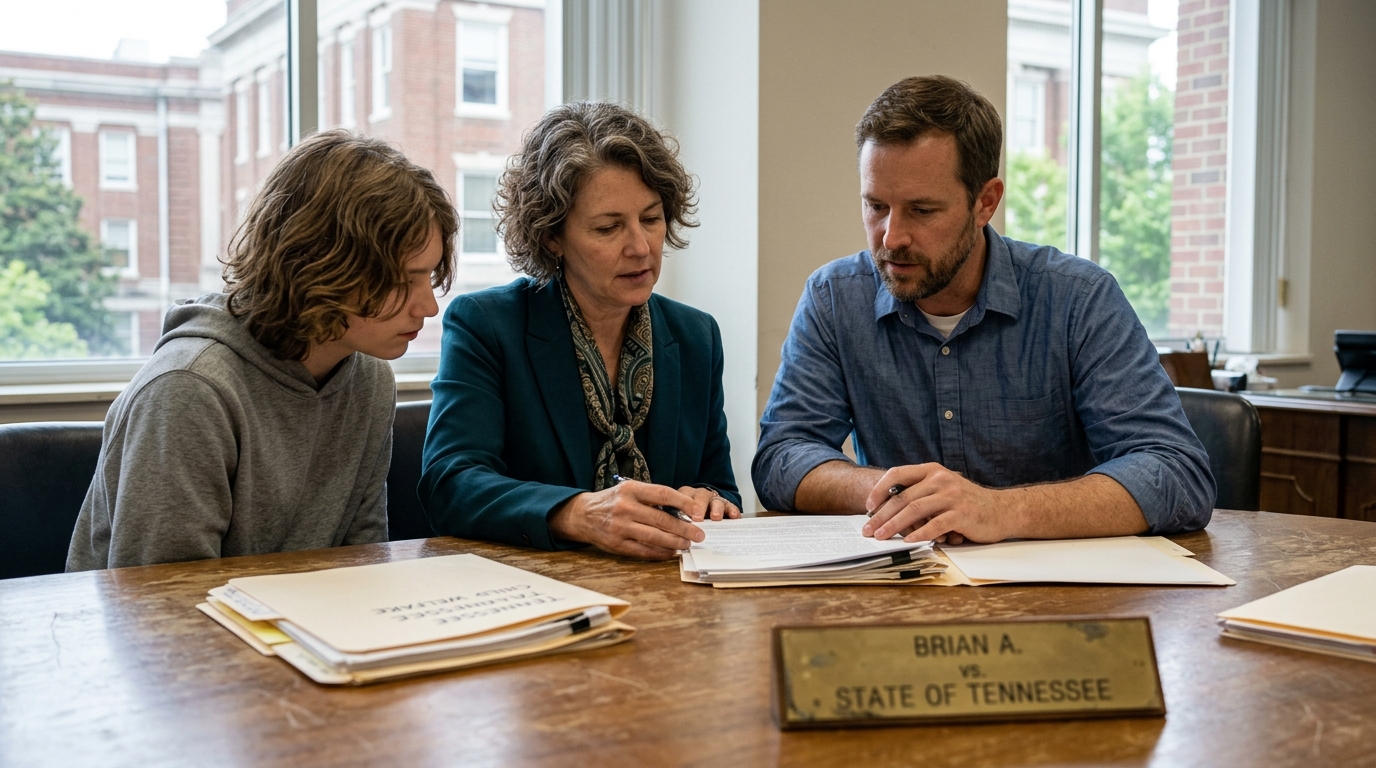
Tennessee’s Landmark Child Welfare Overhaul: How a 16-Year Litigation Transformed Foster Care
For decades, child welfare advocates across the United States have struggled with a persistent question: How can a deeply entrenched, failing state bureaucracy be forced to adequately protect its most vulnerable citizens? In the late 1990s, the state of Tennessee provided a grim case study of a system in total crisis. The state’s Department of Children’s Services (DCS) was dangerously overwhelmed. Front-line social workers carried unmanageable caseloads, financial mismanagement plagued the agency, and countless foster children were languishing in restrictive, orphanage-like settings or emergency shelters instead of finding permanent family homes.
However, what began as a systemic failure eventually evolved into one of the most successful public institutional reform efforts in American history. Through the vehicle of federal class-action litigation—specifically the landmark case known as Brian A. v. Haslam—advocates legally cornered the state into accountability. Over a grueling 16-year period, the intervention forced the state to comprehensively dismantle and rebuild its foster care apparatus. Today, Tennessee’s transformed child welfare system serves as a powerful blueprint for other jurisdictions grappling with similar crises, proving that durable, systemic reform is not only necessary but entirely achievable.
The Genesis of a Civil Rights Class-Action
The turning point for Tennessee’s foster youth arrived in May 2000, when a coalition of child advocacy attorneys filed a federal class-action lawsuit in the U.S. District Court for the Middle District of Tennessee. The lawsuit was filed on behalf of all children who were, or would be, in the custody of the state’s DCS. The lead plaintiff, operating under the pseudonym “Brian A.,” represented thousands of youth who were allegedly suffering from the state’s failure to provide adequate care, supervision, and safety.
The legal foundation of the complaint relied heavily on the constitutional rights of foster children. Under the 14th Amendment’s Substantive Due Process clause, when a state removes a child from their parents and assumes custody, the state simultaneously assumes an affirmative duty to ensure that child’s basic safety and well-being. The plaintiffs argued that Tennessee was actively violating these constitutional rights by placing children in dangerous environments, failing to provide basic medical and mental health care, and lacking the organizational competency to reunify families or secure alternative permanent placements in a timely manner. The litigation sought injunctive relief—a court order compelling the state to fix its systemic deficiencies rather than simply seeking monetary damages for past harms.
Establishing the Benchmarks: The 2001 Settlement Agreement
Recognizing the insurmountable evidence of systemic failure, Tennessee officials entered into a Settlement Agreement in 2001. Rather than enduring a protracted and highly public trial, the state agreed to a federal consent decree. However, signing a settlement is vastly different from executing real-world reform. To ensure compliance, the agreement established more than 140 rigorous, data-driven benchmarks that the DCS was legally obligated to meet before federal oversight would be lifted.
These mandates were not vague philosophical goals; they were highly specific, quantifiable metrics designed to alter the daily operations of the agency. The benchmarks forced the state to track everything from worker-to-child ratios to the frequency of parental visitation. Reforming an agency of this size required shifting the organizational culture from one of reactive crisis management to one of proactive, data-informed social work.
Key Metrics of the Overhaul
The settlement forced Tennessee to prioritize family-based settings and manageable workloads. Below is a summary of some of the most critical transformations that the state was required to achieve:
| Reform Category | Historical Issue | Post-Reform Mandate & Achievement |
|---|---|---|
| Placement Settings | Heavy reliance on emergency shelters and institutional, orphanage-like settings. | 85% of children entering the system placed in family settings; virtually 100% of children under age 6 in family homes. |
| Caseload Limits | Front-line caseworkers carrying double or triple the safe limit of cases, leading to burnout and neglect. | 95% of caseworkers maintaining safely capped, dramatically lower caseloads within settlement limits. |
| Family Reunification | Low rates of successful child-parent reunification and infrequent visitations. | 97% of children on a reunification track visiting their parents at least once per month. |
| Appropriate Housing | Children housed in facilities ill-equipped for their trauma or specific needs. | 99% of children appropriately housed in placements specifically matched to meet their individualized needs. |
Overcoming Institutional and Bureaucratic Hurdles
The timeline of the Brian A. lawsuit underscores a harsh reality about public system reform: it does not happen overnight. Spanning 16 years, the litigation outlasted multiple gubernatorial administrations and several DCS commissioners. Early in the process, the state struggled immensely to meet the court’s demands. Deep-seated bureaucratic inertia, initial lack of legislative funding, and constant turnover among front-line staff hampered progress for years.
For true reform to take root, the state legislature had to be convinced to significantly increase the DCS budget. Funding was required to hire hundreds of new caseworkers, implement modern tracking software, and increase stipends for foster parents to expand the pool of available family homes. The turning point occurred when state leadership stopped viewing the federal monitors as adversaries and began treating the settlement agreement as a vital strategic roadmap. By embracing transparency and aligning the agency’s internal leadership goals with the court-mandated benchmarks, Tennessee began to slowly chip away at the systemic failures that had plagued it for decades.
The Role of Independent Monitoring in Systemic Reform
A critical component of the Brian A. success story was the use of court-appointed, independent monitors. When a state agency is under a consent decree, internal self-reporting is often viewed with skepticism by plaintiffs and the courts. Independent monitors act as neutral, third-party subject matter experts who audit the agency’s data, conduct site visits, and report their findings directly to the federal judge.
The monitoring process provided multiple benefits:
- Data Validation: Monitors ensured that the statistics DCS reported regarding caseloads and placements were accurate and not artificially inflated by bureaucratic loopholes.
- Mediation and Problem Solving: Rather than returning to the courtroom for every minor dispute, the monitors facilitated ongoing dialogue between the advocacy attorneys and state officials, helping to troubleshoot operational roadblocks.
- Public Accountability: By publishing comprehensive biannual reports on the state’s progress—or lack thereof—the monitors kept the pressure on the state legislature to maintain adequate funding for the child welfare system.
Achieving the Impossible: Exiting Federal Oversight
The monumental breakthrough arrived in July 2017. After 16 years of exhaustive effort, a federal judge ruled that Tennessee’s DCS had finally sustained compliance with the 140-plus improvement requirements. The court granted the agency permission to begin an 18-month exit period, transitioning out of federal oversight. By early 2019, the case was officially closed, marking a rare and triumphant conclusion to a systemic civil rights lawsuit.
Legal advocates and state officials alike celebrated the exit as proof that failing government systems can be turned around. The sustained compliance demonstrated that top-to-bottom reform was not merely an idealistic goal, but a practical reality when backed by legal accountability, political will, and adequate resources. Tennessee had transitioned from being a cautionary tale of child welfare negligence to becoming one of the premier examples of organizational turnaround.
A Blueprint for Child Welfare Across the Nation
The legacy of the Brian A. litigation extends far beyond the borders of Tennessee. Across the United States, class-action lawsuits remain a primary tool for forcing states to address constitutional violations in their foster care systems. Organizations tracking child welfare litigation note that jurisdictions from Texas to Michigan have faced similar legal challenges regarding overcrowding, severe abuse, and systemic mismanagement.
Tennessee’s success provides a definitive roadmap for these ongoing battles. It proves that while litigation is an adversarial process, a well-structured consent decree can eventually foster a collaborative environment where state administrators and legal advocates work toward a shared mission. The case illustrates the power of strategic litigation to spark accountability, ensuring that when the government assumes the role of a parent, it is legally and structurally equipped to provide a safe, nurturing environment.
Crucial Lessons for Policymakers and Advocates
The 16-year journey of Tennessee’s DCS offers several enduring lessons for public policy experts, lawmakers, and civil rights advocates:
- Bipartisan Political Will is Mandatory: Federal court orders are only effective if the state legislature is willing to appropriate the necessary funds to hire staff, update technology, and support foster families. Continuity of effort across different political administrations is essential.
- Front-Line Workers are the Engine of Reform: No amount of high-level policy change matters if front-line caseworkers are drowning in paperwork and carrying 40-50 cases. Capping caseloads and providing adequate training is the foundational step to systemic recovery.
- A Data-Driven Culture Beats Anecdotes: The ability to track and analyze real-time data regarding child placements, abuse investigations, and reunification timelines is non-negotiable for a modern child welfare agency.
- Patience and Persistence Pay Off: Institutional reform is a marathon. Advocates must be prepared for years of grinding enforcement, setbacks, and incremental victories before realizing transformational change.
Frequently Asked Questions (FAQ)
What was the primary cause of the Brian A. lawsuit?
The lawsuit was filed because Tennessee’s child welfare system was systematically failing to protect the youth in its care. Key issues included dangerously high caseloads for social workers, the inappropriate housing of children in emergency shelters and institutions rather than family homes, inadequate medical care, and a lack of effort to reunite children with their biological families.
Did the lawsuit result in financial payouts to the plaintiffs?
No, the primary goal of the Brian A. class-action lawsuit was injunctive relief, not financial damages. The objective was to force the state to legally commit to overhauling its policies, increasing its budget, and meeting specific operational benchmarks to ensure the future safety of all children in state custody.
What exactly is a consent decree in child welfare litigation?
A consent decree is a legally binding agreement between the plaintiffs and the state, approved by a federal judge. It outlines the specific reforms the state must implement to settle the lawsuit. As long as the consent decree is active, the federal court retains jurisdiction to enforce the agreement, often using independent monitors to track the state’s progress.
How does Tennessee’s DCS maintain these standards now that the lawsuit is closed?
During the 16-year litigation period, the required reforms were deeply integrated into the state’s statutes, budgetary priorities, and the DCS’s internal operational culture. Furthermore, Tennessee established robust internal quality assurance departments designed to continuously track the metrics originally mandated by the court, ensuring the state does not backslide into non-compliance.
Can systemic litigation truly fix failing government agencies?
Yes, though it is a difficult and lengthy process. As demonstrated by the Tennessee case, when strategic litigation is paired with comprehensive settlement agreements, independent monitoring, and sustained political investment, it is highly effective at forcing transparency, securing necessary funding, and fundamentally changing how a government agency operates.
Conclusion
The successful conclusion of the Brian A. v. Haslam lawsuit is a monumental achievement in the realm of public interest law and child advocacy. It serves as an enduring reminder that the most vulnerable members of society—foster children—do not have to accept negligent treatment from the systems designed to protect them. By enforcing constitutional standards through strategic litigation, advocates ensured that Tennessee transformed its Department of Children’s Services into a functioning, family-centric organization. The legacy of this 16-year legal battle will continue to inform and inspire systemic reform efforts across the country for decades to come, proving that government accountability is achievable when pursued with relentless dedication.
References
- Case: Brian A. v. Haslam — Civil Rights Litigation Clearinghouse, University of Michigan Law School. 2026-03-28. https://clearinghouse.net/case/14298/
- Class Action Lawsuit Results in Transformational Change to Tennessee’s Child Welfare System — Center for the Study of Social Policy (CSSP). 2019-02-21. https://cssp.org/2019/02/brian-a-v-haslam/
- What is a summary of child welfare class-action litigation? — Casey Family Programs. 2022-10-20. https://www.casey.org/class-action-summary/
Similar Articles








Read full bio of Sneha Tete


