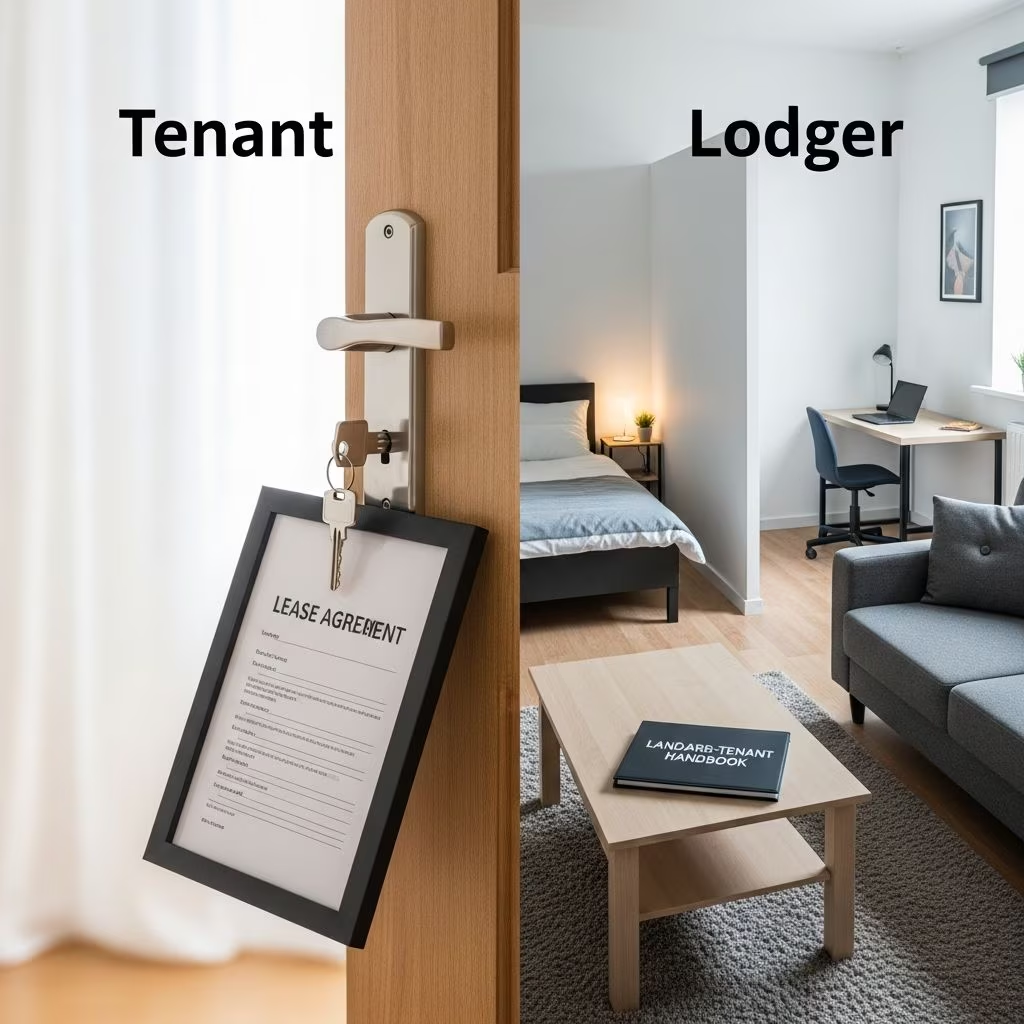
Navigating rental arrangements requires understanding whether you are a **tenant** or a **lodger**, as this classification determines your legal rights, eviction protections, and financial obligations. Tenants enjoy exclusive possession of their space and robust safeguards, while lodgers share living areas with the landlord and face fewer protections. This guide breaks down these distinctions to help both renters and property owners make informed decisions.
Defining Tenants and Lodgers
A **tenant** rents an entire property or a self-contained unit, granting them **exclusive possession**. This means the landlord cannot enter without permission, except in emergencies or with prior notice for specific reasons. Tenants typically sign an Assured Shorthold Tenancy (AST) agreement, providing security of tenure.
In contrast, a **lodger** occupies a room in the landlord’s primary residence, sharing common areas like kitchens and bathrooms. The landlord retains access to the property, classifying the lodger as an ‘excluded occupier’ with limited rights. This setup is common for homeowners seeking extra income without full landlord responsibilities.
Exclusive Possession: The Core Distinction
**Exclusive possession** is the fundamental difference. Tenants control their space and can exclude others, including the landlord, enforcing privacy.
Lodgers lack this right; landlords can access rooms with reasonable notice and impose house rules. Courts assess factors like shared facilities and landlord residency to determine status.
| Aspect | Tenant | Lodger |
|---|---|---|
| Control over Space | Exclusive possession | Shared access |
| Landlord Entry | Requires permission/notice | Reasonable access allowed |
| House Rules | Limited imposition | Landlord can enforce |
Landlord Residency Requirements
For a lodger arrangement, the landlord must live in the same property as their **principal home** at the start and end of the occupancy. Interruptions do not automatically change status, but absence could reclassify the occupier as a tenant.
Tenants rent independently; landlord residency is irrelevant. Renting a room without the owner present typically creates a tenancy.
- Landlord moves out: Lodger may become tenant with full rights.
- Separate annexe: Likely tenant, even in same grounds.
Legal Agreements and Documentation
Tenants require a formal **tenancy agreement**, often an AST, outlining rent, term, and repairs. This is legally binding.
Lodgers use a **licence to occupy**, simpler and less protective. No statutory requirements for deposits or terms.
Always document arrangements in writing to avoid disputes, regardless of status.
Eviction Processes Compared
Evicting a tenant demands formal steps: notice (e.g., Section 21 or 8), court order, and bailiff enforcement under the Protection from Eviction Act 1977.
Lodgers, as excluded occupiers, can be evicted with **reasonable notice** (often matching rent period, like 1 month), without court involvement. Landlords may change locks post-notice if needed. Fixed-term licences must run their course unless breached.
| Process | Tenant | Lodger |
|---|---|---|
| Notice Required | Formal (2+ months) | Reasonable (e.g., 1 month) |
| Court Order | Mandatory | Not required |
| Eviction Method | Bailiff only | Landlord direct |
Rights and Responsibilities
Tenants benefit from implied covenants: landlords must maintain structure, installations, and safety under the Landlord and Tenant Act 1985. Deposits require protection in government schemes.
Lodgers have fewer entitlements; landlords ensure habitability but can delegate tasks via house rules. No deposit protection mandated.
- Tenants: Right to quiet enjoyment, repairs.
- Lodgers: Basic safety, but shared maintenance.
Financial Implications and Taxes
Landlords renting to tenants face full income tax on earnings. Lodger income may qualify for the **Rent a Room Scheme**, exempting up to £7,500 annually if in the main home.
Tenants’ deposits (up to 5 weeks’ rent) must be protected; lodger deposits are optional and unprotected. Utility splits are common for lodgers, negotiated informally.
Can Situations Change?
Transitions occur: Landlord moving in post-fixed term converts tenant to lodger. Conversely, landlord departure grants tenant status.
Tenants can host lodgers, but with identical limitations. Subletting risks breaching tenancy terms.
Practical Advice for Landlords
Choose lodger for flexibility and tax perks, but expect more involvement. Use clear licences specifying access and rules.
For tenants, verify ASTs and deposit protection. Screen lodgers carefully due to proximity.
Advice for Renters
Assess living preferences: privacy (tenant) vs affordability/convenience (lodger). Review agreements; seek advice if unsure.
Frequently Asked Questions (FAQs)
What makes someone a lodger instead of a tenant?
A lodger shares the landlord’s home without exclusive possession, while tenants control their space independently.
Can a landlord evict a lodger quickly?
Yes, with reasonable notice and no court order, unlike tenants.
Does a lodger need a formal contract?
A licence suffices; it’s less rigid than a tenancy agreement.
Are lodger deposits protected?
No legal requirement, unlike tenants’ deposits.
What if the landlord moves out?
The lodger may gain tenant rights.
Conclusion: Choose Wisely
Grasping tenant-lodger differences empowers better housing choices. Tenants prioritize security; lodgers value simplicity. Consult professionals for specifics.
References
- What’s the Difference Between a Tenant and a Lodger? — Duncan Yardley Solicitors. 2023-05-15. https://www.duncanyeardley.co.uk/news/general-news/whats-the-difference-between-a-tenant-and-a-lodger/
- Difference between a Tenant and a Lodger — James Douglas Estate Agents. 2024-02-20. https://james-douglas.co.uk/difference-between-a-tenant-and-a-lodger/
- Lodger or tenant? Key differences explained — Ellis & Co. 2023-11-10. https://www.ellisandco.co.uk/guides/landlord/lodger-or-tenant-key-differences-explained/
- The five main differences between a lodger and a tenant — Lodger Landlord. 2022-08-05. https://www.lodgerlandlord.co.uk/the-five-main-differences-between-a-lodger-and-a-tenant/
- What is a Lodger? Tenant vs Lodger — Belvoir. 2024-01-12. https://www.belvoir.co.uk/articles/what-is-a-lodger-tenant-vs-lodger/
- Tenant or lodger? — Shelter England. 2023-09-18. https://england.shelter.org.uk/professional_resources/news_and_updates/tenant_or_lodger