
Tenant Rights and Lawsuits Over Armed Foreclosure Evictions
How tenants are protected, and when armed foreclosure evictions can lead to lawsuits for illegal lockouts, intimidation, and personal injuries.
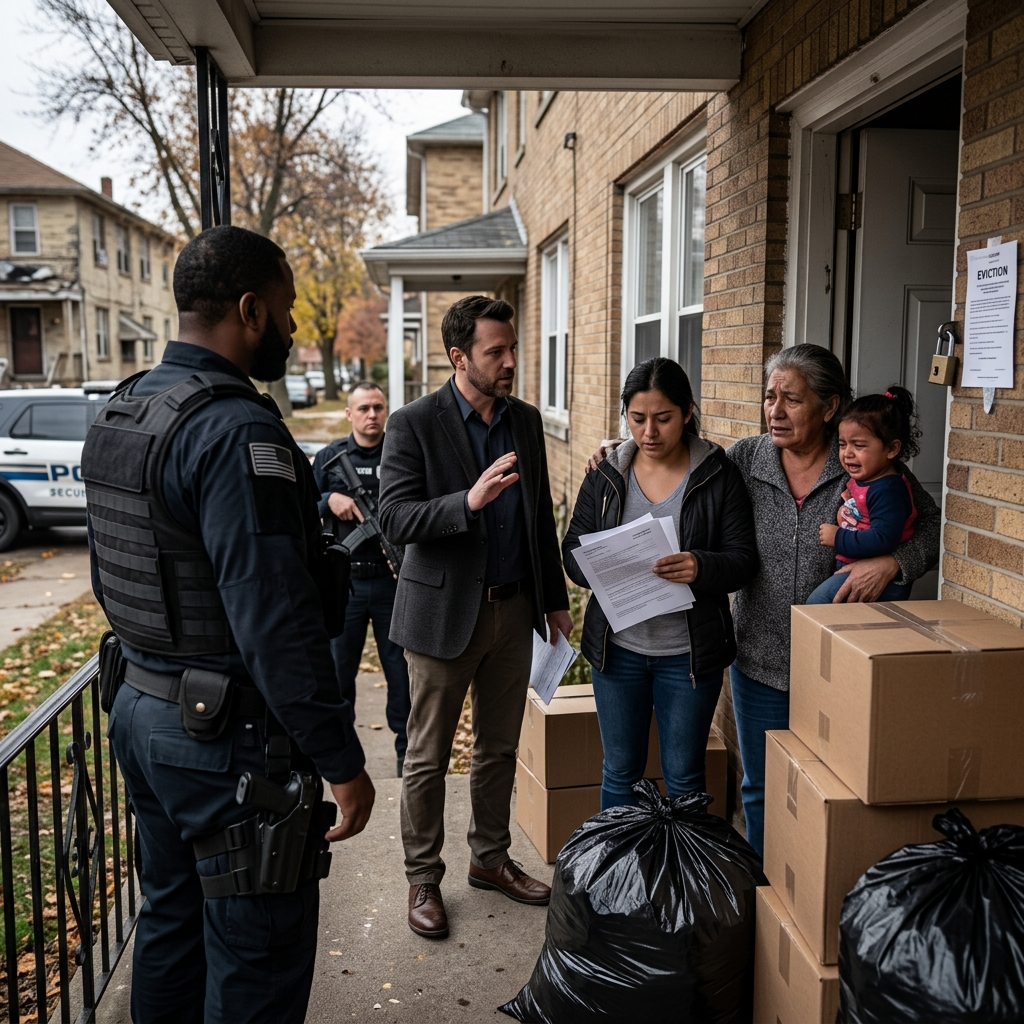
When a property goes into foreclosure, the people living there often face sudden uncertainty about their housing and safety. In some cases, lenders or property owners hire private companies to clear out occupants, including armed security personnel or so-called “eviction teams.” These aggressive tactics can cross legal lines and expose landlords, banks, and contractors to substantial liability. This article explains how foreclosure evictions work, what rights tenants retain, and when an armed foreclosure eviction can lead to a lawsuit for personal injury, emotional distress, or illegal eviction.
Foreclosure Evictions: Why Tenants Get Caught in the Middle
Foreclosure is a process where a lender takes back a property after the owner fails to pay the mortgage. Tenants often have no control over this process, but they live with the consequences when the property is sold and the new owner wants them out. Historically, tenants were frequently evicted immediately after foreclosure, sometimes with little or no notice.
In response to widespread abuses during the 2008 financial crisis, Congress passed the Protecting Tenants at Foreclosure Act of 2009 (PTFA), which gives tenants basic rights when their landlord’s property is foreclosed. These protections significantly limit how and when tenants can be evicted after foreclosure, regardless of whether the eviction is peaceful or involves armed personnel.
- Tenants are not “collateral damage”: They have independent rights separate from the landlord’s mortgage obligations.
- Lease agreements can survive foreclosure: In many cases, the lease continues even when ownership changes.
- Eviction must still follow legal procedure: Foreclosure does not give anyone the right to bypass the courts.
Core Legal Protections for Tenants in Foreclosure
Even when foreclosure occurs, tenants are not automatically required to leave. Several overlapping layers of protection may apply: federal law, state statutes, and local “just cause” eviction ordinances. Understanding these rules is crucial when evaluating whether an armed eviction was lawful.
Federal Protections Under the PTFA
The PTFA establishes minimum standards for tenants in foreclosed properties:
- 90-day notice requirement: Most tenants are entitled to at least 90 days’ written notice before a post-foreclosure eviction can proceed.
- Respect for existing leases: If the tenant has a valid lease, the new owner generally must allow the tenant to stay until the lease ends, unless the new owner plans to move in personally.
- Section 8 voucher protections: Tenants with housing vouchers receive additional protections; new owners must honor the housing assistance contract and cannot treat foreclosure itself as “good cause” for termination.
These rules mean that even after a home is sold at a foreclosure auction, tenants usually cannot be summarily ordered out immediately. An armed crew that arrives without honoring notice or lease protections may be participating in an illegal eviction.
State and Local Tenant Protection Laws
States and cities often add further safeguards. For example:
- State foreclosure-tenant laws may explicitly require new owners to provide copies of court documents to tenants and prohibit immediate lockouts.[10]
- “Just cause” eviction ordinances in some cities prevent termination of tenancies based solely on a change of ownership or foreclosure.
- Procedural rights such as the right to file a notice of tenancy with the court, receive formal writs of possession, and maintain uninterrupted utilities during foreclosure.[10]
Local rules vary widely, but most jurisdictions share a basic principle: only a court order can authorize eviction, and self-help tactics are almost always unlawful.[10]
Armed Eviction Tactics: Where Foreclosure Becomes a Safety Risk
The use of armed personnel in residential evictions raises serious safety and legal concerns. Lenders or investors sometimes employ private security companies, process servers, or property preservation firms that arrive in uniform, carry firearms, or present themselves as law enforcement. Tenants may feel coerced, threatened, or forced to leave even though no judge has ordered them out.
| Lawful Eviction Procedure | Potentially Illegal Armed Eviction Conduct |
|---|---|
| Eviction only after a court judgment and writ of possession. | Demanding immediate move-out without any court order. |
| Notice served according to landlord-tenant law timelines. | Verbal threats or surprise early-morning demands to leave. |
| Sheriff or authorized officer executes the writ. | Private armed contractors posing as officials or police. |
| Orderly removal, with time to gather belongings. | Immediate lock change, property removal, or utility shutoff. |
When armed agents overstep, tenants may have legal claims not just for wrongful eviction, but also for personal injury, emotional distress, false imprisonment, and civil rights violations, depending on the facts and who was involved.
Illegal Eviction and “Self-Help” During Foreclosure
In most states, landlords and new owners are prohibited from using “self-help” to remove tenants. Self-help includes actions like changing the locks, removing doors, cutting utilities, or using intimidation to force tenants out without going through court.[10]
Foreclosure does not change this rule. New owners must follow the same legal eviction process as any other landlord:
- Serve appropriate termination or notice-to-vacate documents.
- File an eviction case in court if the tenant does not leave.
- Obtain an eviction judgment from a judge.
- Request a writ of possession; the sheriff or authorized officer carries it out.
If armed personnel appear and lock tenants out without meeting these steps, the tenants may have claims for:
- Wrongful or retaliatory eviction
- Violation of state landlord-tenant statutes
- Conversion or trespass to personal property (for belongings thrown away or damaged)
- Negligence or intentional torts related to threats, physical harm, or harassment
Special Protections for Military Tenants
Service members enjoy additional protections under the federal Servicemembers Civil Relief Act (SCRA). The law limits evictions, foreclosures, and repossessions while a tenant is in active duty.
- Court order required: A landlord may not evict a servicemember or dependent from a residence during military service without a court order, even in states that allow non-judicial evictions.
- Military status affidavit: If a landlord seeks a default judgment in an eviction case, they must file an affidavit addressing whether the tenant is in military service, triggering appointment of a guardian ad litem when appropriate.
- Foreclosure protections: Creditors must obtain a court order before non-judicial foreclosure on a service member’s mortgage, and courts can stay proceedings or adjust obligations when service affects the ability to pay.
If armed agents ignore these protections, the consequences can include federal enforcement actions, fines, and potential criminal liability for knowing violations.
Separate rules allow reimbursement for short-distance moves when service members must relocate because the landlord’s property is foreclosed, helping offset the financial burden.
Financial and Practical Harms Tenants May Suffer
Tenants forced out during foreclosure—especially through armed or abrupt evictions—often suffer tangible losses beyond the disruption of housing. Courts and legal scholars have recognized several types of damages that may be recoverable when a landlord or new owner violates their obligations.
- Moving and relocation costs: Expenses for movers, truck rentals, storage, and travel.
- Search and application fees: Application costs, background checks, and deposits for new housing.
- Rent differential: The difference between the old rent and the higher rent for a comparable unit.
- Loss or damage to personal property: Items lost or destroyed during a rushed or chaotic move-out.
- Emotional distress and physical injury: Anxiety, trauma, or bodily harm caused by armed confrontations or unsafe removal practices.
Many lease agreements include an implied covenant that the landlord will protect the tenant’s right to use and enjoy the property. When a landlord’s mortgage default triggers a foreclosure that undermines this right, tenants may sue the landlord for breach and claim resulting damages.
When Tenants Decide to Sue Over Armed Foreclosure Evictions
Tenants may file suit when they believe an eviction involved illegal force, inadequate notice, deception, or disregard of statutory protections. Common grounds for lawsuits include:
- Violation of federal foreclosure protections (PTFA, SCRA).
- Breach of lease or implied covenant of quiet enjoyment.
- Negligent or intentional infliction of emotional distress tied to armed presence and threats.
- Assault, battery, or false imprisonment if tenants were physically restrained or reasonably feared imminent harm.
- Illegal lockout and constructive eviction when tenants were forced out without judicial process.
Depending on the facts, defendants may include the original landlord, the foreclosure purchaser, property managers, private security firms, and, in some cases, law enforcement agencies.
Practical Steps for Tenants Facing Aggressive Foreclosure Evictions
Tenants confronted by armed or high-pressure eviction tactics should take immediate steps to protect their rights and safety.
Document Everything
- Write down dates, times, and the names or descriptions of everyone involved.
- Save copies of all notices, letters, and court documents.
- Record photos or videos of posted notices, property damage, or lock changes, if safe to do so.
- Collect contact information for neighbors or witnesses.
Verify the Legal Status of the Eviction
- Ask to see the court order or writ of possession authorizing the eviction.
- Contact the local clerk of court or visit their website to confirm whether an eviction case has been filed and decided.[10]
- Check whether state or local law guarantees at least 90 days’ notice or continued occupancy under your lease.
Seek Legal Assistance Quickly
- Call legal aid organizations or tenant advocacy groups; many publish guides specifically for renters in foreclosure.[10]
- Consult a private attorney if you have significant financial losses or injuries.
- Service members should contact their installation’s legal assistance office or Judge Advocate for advice under the SCRA and related relocation benefits.
Frequently Asked Questions (FAQs)
1. Can a new owner evict me immediately after foreclosure?
In most cases, no. Under federal law, bona fide tenants are entitled to at least 90 days’ notice and, if they have a lease, often the right to stay until that lease expires, unless the new owner intends to live in the property.
2. Is it legal for armed private security to conduct my eviction?
Evictions generally must be carried out by a sheriff or other authorized official after a court issues a writ of possession. Using private armed contractors to force tenants out without proper judicial process can be unlawful and may give rise to claims for wrongful eviction, personal injury, and other damages.[10]
3. What if I never received any written notice before people showed up?
A lack of written notice is a major red flag. Federal and state laws typically require specific written notices before any post-foreclosure eviction, especially the 90-day minimum period under the PTFA. Tenants who were never notified may have strong arguments that the eviction was illegal.
4. Do my rights change if I am a month-to-month tenant?
Month-to-month tenants are still protected. They are generally entitled to 90 days’ notice before being required to move out under federal law, which is longer than many normal termination periods in non-foreclosure situations.
5. Can I sue my landlord if foreclosure forces me to move?
In some situations, yes. If the landlord’s mortgage default breaks an implied promise to preserve your right to occupy the property, you may sue for moving costs, application fees, and the rent difference for a comparable unit, among other damages. Laws vary by state, so legal advice is essential.
6. What extra protections do service members have?
Service members are protected by the SCRA, which prohibits evictions and foreclosures without court orders and requires courts to safeguard the interests of tenants in active military service. Military tenants may also qualify for reimbursement of certain moving expenses caused by landlord foreclosure.
Key Takeaways for Tenants and Property Owners
- Court orders are essential: Evictions, even after foreclosure, must be authorized by a judge.
- Notice and leases matter: Tenants often have a right to stay for 90 days or through the end of their lease.
- Self-help and intimidation are risky: Armed or coercive tactics can create liability for landlords, new owners, and contractors.[10]
- Special groups have added protections: Service members and voucher holders have extra layers of legal safeguards.
- Document and seek help: Tenants facing aggressive foreclosure evictions should carefully document events and contact legal assistance promptly.
References
- Tenants and Foreclosure — National Housing Law Project. 2023-05-01. https://www.nhlp.org/initiatives/foreclosure-and-tenants/
- Tenant Rights in a Foreclosure — Texas State Law Library. 2022-09-15. https://guides.sll.texas.gov/foreclosure/tenant-rights
- Financial and Housing Rights — U.S. Department of Justice. 2022-06-21. https://www.justice.gov/servicemembers/financial-and-housing-rights-0
- Service members eligible for household goods reimbursement when evicted as a result of landlord’s foreclosure — U.S. Army. 2008-08-21. https://www.army.mil/article/12310/service_members_eligible_for_household_goods_reimbursement_when_evicted_as_a_result_of_landlord039
- Renters in Foreclosure: What Are Their Rights? — Anthem EAP. 2021-11-30. https://www.anthemeap.com/tradna/find-legal-support/resources/renters-right/legal-assist/renters-in-foreclosure-what-are-their-rights
- Landlords in Foreclosure — Community Legal Services. 2023-03-10. https://www.legalaccessforall.org/get-help-post/debt-creditors/landlords-in-foreclosure/
- A Renter’s Rights During and After Foreclosure — CTLawHelp.org. 2022-04-05. https://ctlawhelp.org/landlord-foreclosure
Similar Articles








Read full bio of medha deb


