
Tenant Bankruptcy and Eviction Rights for Landlords
Understand how tenant bankruptcy interacts with eviction rules, automatic stays, and landlord remedies under modern U.S. bankruptcy law.
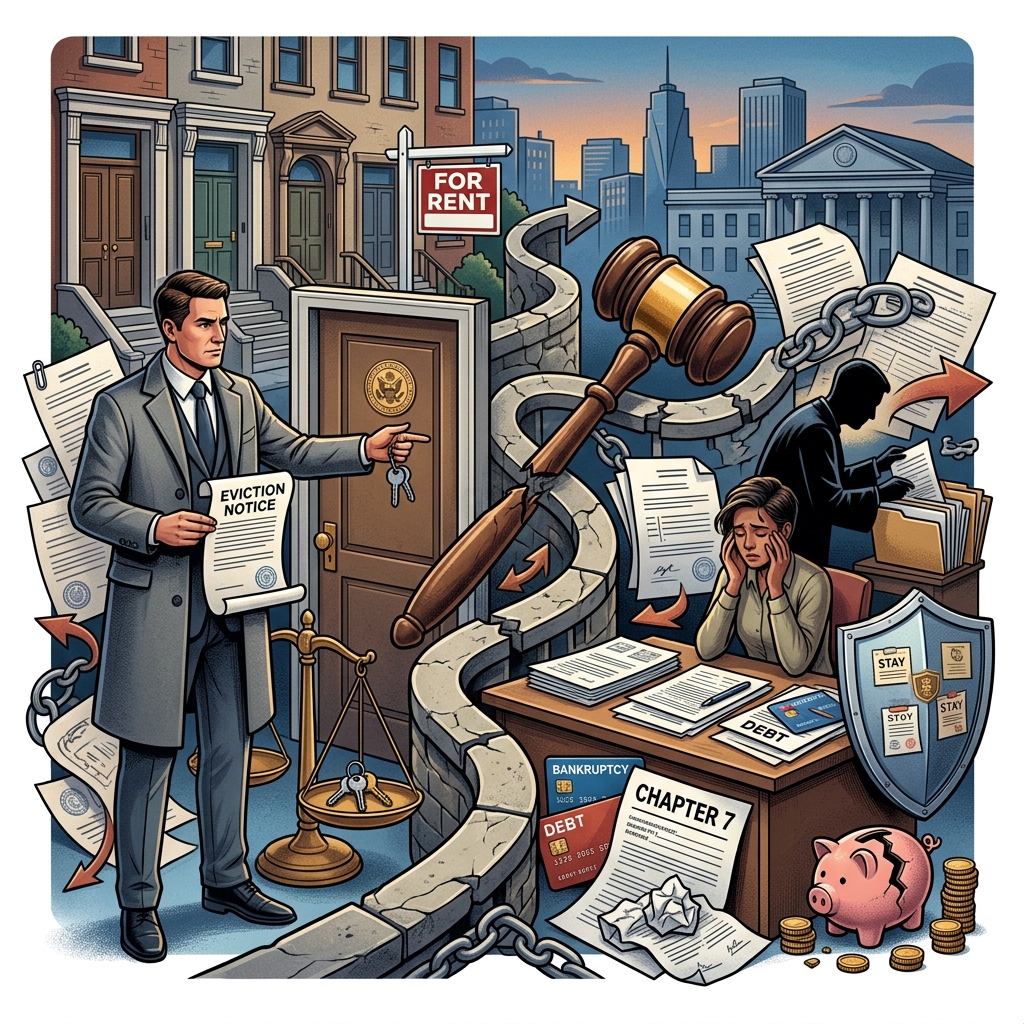
When a tenant files for bankruptcy, it does not simply erase the landlord’s right to regain possession of the property, but it does change the timing, procedure, and strategy for eviction in significant ways. Understanding how bankruptcy law interacts with state eviction rules is essential to avoid costly mistakes and unlawful actions.
Bankruptcy and Eviction: Why Timing Matters
The most critical factor in determining how bankruptcy affects an eviction is when the tenant files for bankruptcy in relation to the eviction process. Federal bankruptcy law creates an automatic stay that usually freezes collection and eviction efforts, but that protection is limited when the landlord already has a judgment for possession.
- Before eviction starts: Bankruptcy often pauses or prevents the landlord from even filing for eviction.
- After eviction starts, but before judgment: The automatic stay usually stops the court case until the bankruptcy judge allows it to continue.
- After judgment for possession: In most situations, the landlord can move ahead with eviction even if the tenant files for bankruptcy.
The 2005 Bankruptcy Abuse Prevention and Consumer Protection Act (BAPCPA) tightened rules so tenants can no longer rely on a last-minute bankruptcy filing to indefinitely stop eviction after a possession judgment is entered.
Understanding the Automatic Stay
When a tenant files for bankruptcy, the automatic stay is a federal court order that immediately halts most collection actions against the debtor, including many eviction proceedings. Its purpose is to give the bankruptcy court time to review the tenant’s finances and protect the estate from aggressive creditor actions.
Key effects of the automatic stay on landlords:
- Eviction filings usually must stop once the stay is in place, unless an exception applies.
- Existing eviction cases are paused if no final judgment for possession has been entered.
- Collection of unpaid rent for pre-bankruptcy periods is generally prohibited while the case is pending.
However, the stay is not absolute. Landlords can ask the bankruptcy court to lift or modify the stay, and certain eviction situations are carved out of the stay entirely.
Judgment for Possession: A Turning Point
Whether the landlord already has a court-ordered judgment for possession when the tenant files for bankruptcy is often the decisive factor.
| Stage of Eviction | Bankruptcy Filed? | Typical Effect on Landlord Rights |
|---|---|---|
| No eviction filed yet | Tenant files bankruptcy | Automatic stay generally blocks starting eviction for nonpayment, unless the landlord later obtains relief from the stay. |
| Eviction case pending | Tenant files bankruptcy | Proceedings typically pause until the bankruptcy court allows them to continue, especially if no judgment for possession exists. |
| Judgment for possession entered | Tenant files bankruptcy | Landlord can usually enforce the judgment and complete the eviction despite the bankruptcy filing. |
Under BAPCPA, the automatic stay generally does not prevent enforcement of a residential judgment for possession, meaning landlords often have a clear path to regain the unit after judgment, even if the tenant later declares bankruptcy.
Special Rules for Illegal Activity and Property Damage
Federal law includes targeted exceptions that allow landlords to proceed with eviction despite bankruptcy when the eviction is based on serious misconduct such as illegal drug use or deliberate endangerment of the property.
To use these exceptions, landlords typically must:
- Certify to the bankruptcy court that the tenant engaged in illegal drug activity or significantly endangered the property within the previous 30 days.
- Serve a copy of the certification on the tenant so they are aware of the allegations and pending eviction.
- Wait a statutory period (often 15 days) for the tenant to object in bankruptcy court.
If the tenant contests the certification, the bankruptcy court will hold a hearing to determine whether the allegations are true or have been remedied. If the landlord proves the misconduct or the tenant fails to cure it, the court can permit the eviction to move forward despite the automatic stay.
State Law Variations: Curing Default After Judgment
While BAPCPA generally favors landlords once a judgment for possession exists, some states give tenants limited rights to cure their default even after judgment, and bankruptcy law recognizes those rights in specific circumstances.
In these jurisdictions, a tenant may temporarily preserve the automatic stay by:
- Filing a sworn certification with the bankruptcy court on the day of the bankruptcy petition, stating that state law allows curing the default after judgment.
- Tendering or depositing the ongoing rent with the bankruptcy court clerk as required.
- Paying all arrears specified in the judgment within a set period, often 30 days, and filing a further certification confirming payment.
If these steps are completed correctly and on time, the automatic stay can remain in effect and prevent eviction until the court modifies or terminates the stay. Failing to comply typically allows the landlord to proceed with enforcement of the judgment.
Landlord Options During Tenant Bankruptcy
Bankruptcy does not leave landlords powerless. It changes the procedure but still offers several tools to protect their interests and recover possession.
Requesting Relief from the Automatic Stay
When the stay blocks eviction, landlords can file a motion for relief from the automatic stay in the bankruptcy court. Case law and practice show that judges often grant these motions, particularly when the tenant cannot keep up with current rent.
Typical arguments for lifting the stay include:
- The tenant is failing to pay post-bankruptcy rent and is unable to demonstrate a realistic ability to pay going forward.
- The lease adds little or no value to the bankruptcy estate and is primarily a private housing arrangement.
- The landlord cannot be forced to continue providing housing indefinitely without compensation.
Once the bankruptcy court grants relief from the stay, the landlord may resume or initiate state-court eviction proceedings, but usually only to recover possession of the property, not to collect pre-bankruptcy rent.
Protecting Post-Bankruptcy Rent
Rent that becomes due after the bankruptcy filing is often treated differently from rent owed beforehand. In many cases, post-petition rent is considered an administrative expense of the bankruptcy estate and may receive priority in payment.
For landlords, this means:
- They retain the right to be paid for rent accruing after the bankruptcy filing, subject to court approval and the tenant’s ability to pay.
- Failure to pay post-petition rent can be grounds for lifting the stay and terminating the lease.
- Pre-petition rent is often treated as an unsecured claim, and recovery may be limited or discharged.
Residential vs. Commercial Tenancies
Bankruptcy consequences differ between residential and commercial leases. Residential cases frequently involve consumer bankruptcy (Chapter 7 or Chapter 13), while commercial leases may appear in Chapter 11 or business reorganizations.
Key distinctions include:
- Residential leases: Automatic stay rules focus on protecting housing while balancing landlord rights. The presence or absence of an unlawful detainer judgment is often decisive.
- Commercial leases: The lease may be considered a business asset that can be assumed, assigned, or rejected in the bankruptcy process, and rent claims may be treated differently.
- Personal property leases: Separate rules may apply, particularly where the leased property is not real estate.
Practical Steps for Landlords Facing Tenant Bankruptcy
When a tenant files for bankruptcy, landlords should respond systematically to protect their legal rights while avoiding violations of the automatic stay.
Immediate Actions to Consider
- Confirm the bankruptcy filing: Obtain the case number, chapter of bankruptcy, and filing date from court records or the tenant.
- Review the eviction status: Determine whether an eviction has been filed, whether a judgment for possession exists, and what stage the state case is in.
- Pause collection efforts: Stop demanding pre-bankruptcy payments or threatening eviction until you receive legal advice regarding the stay.
- Consult legal counsel: Bankruptcy and landlord-tenant law interact in complex ways; an attorney can advise on motions to lift the stay and compliance with both federal and state rules.
Ongoing Management During the Case
- Track post-petition rent: Keep accurate records of all rent due after the filing date to support administrative expense claims or motions for relief.
- Monitor tenant performance: If the tenant falls behind again, consider asking the bankruptcy court to lift the stay and terminate the lease.
- Remain compliant with the stay: Avoid self-help eviction, lockouts, or harassment, which can result in sanctions.
Frequently Asked Questions
Does tenant bankruptcy automatically stop all evictions?
No. Bankruptcy almost always triggers an automatic stay, but that stay does not prohibit enforcement of a judgment for possession in many residential cases, and specific exceptions exist for illegal drug use or property endangerment.
Can a landlord ever start eviction after a tenant files bankruptcy?
Yes. Although the automatic stay initially blocks most eviction filings, landlords can ask the bankruptcy court to lift the stay. Courts frequently grant these motions when tenants cannot pay ongoing rent or when the lease provides little benefit to the bankruptcy estate.
What happens to past-due rent if the tenant receives a discharge?
Past-due rent that arose before the bankruptcy filing is often treated as an unsecured debt that may be discharged. This means the landlord may not be able to collect those amounts after the case ends, though the landlord can still pursue eviction if legally permitted.
Is there any way for tenants to keep their housing after judgment for possession?
In some states, tenants can cure their rent default even after judgment by paying arrears and filing specific certifications with the bankruptcy court. If they do so correctly and within prescribed deadlines, the automatic stay may continue to protect them from eviction.
Do commercial landlords have the same rights as residential landlords?
Many core principles are similar, but commercial leases are often treated as business assets in bankruptcy. The tenant may assume or reject the lease, and different priorities and procedures can apply, especially in Chapter 11 cases.
References
- How a Tenant Bankruptcy Affects a Landlord’s Right to Evict — FindLaw. 2023-05-01. https://www.findlaw.com/realestate/landlord-tenant-law/how-a-tenant-bankruptcy-affects-a-landlord-s-right-to-evict.html
- Eviction Legal Issues Related to Bankruptcy — Justia. 2022-08-15. https://www.justia.com/bankruptcy/evictions/
- Tenant/Lessee Filed For Bankruptcy, What Happens Now? — U.S. Bankruptcy Court, Central District of California. 2021-11-10. https://www.cacb.uscourts.gov/faq/tenantlessee-filed-bankruptcy-what-happens-now
- Eviction and Bankruptcy — Texas Disaster Legal Help. 2020-09-01. https://texasdisasterlegalhelp.org/news/eviction-and-bankruptcy
- Bankrupt Tenants: How the New Bankruptcy Law Affects Evictions — Carelon Wellbeing Legal Resources. 2019-06-20. https://hd.carelonwellbeing.com/hd/find-legal-support/resources/landlords-and-property-management/legal-assist/bankrupt-tenants-how-the-new-bankruptcy-law-affects-evictions
- When Your Tenant Files for Bankruptcy — Kimball, Tirey & St. John LLP. 2018-03-05. https://www.kts-law.com/when-your-tenant-files-for-bankruptcy/
- Will Chapter 7 Bankruptcy Stop Me from Being Evicted? — Matthews & Megna LLC. 2021-04-14. https://www.matthewsandmegna.com/posts/will-chapter-7-bankruptcy-stop-me-from-being-evicted
Similar Articles








Read full bio of medha deb


