
Templates vs Custom Contracts: Smart Choices
Discover when business contract templates save time and money versus when custom contracts provide essential protection for complex deals.
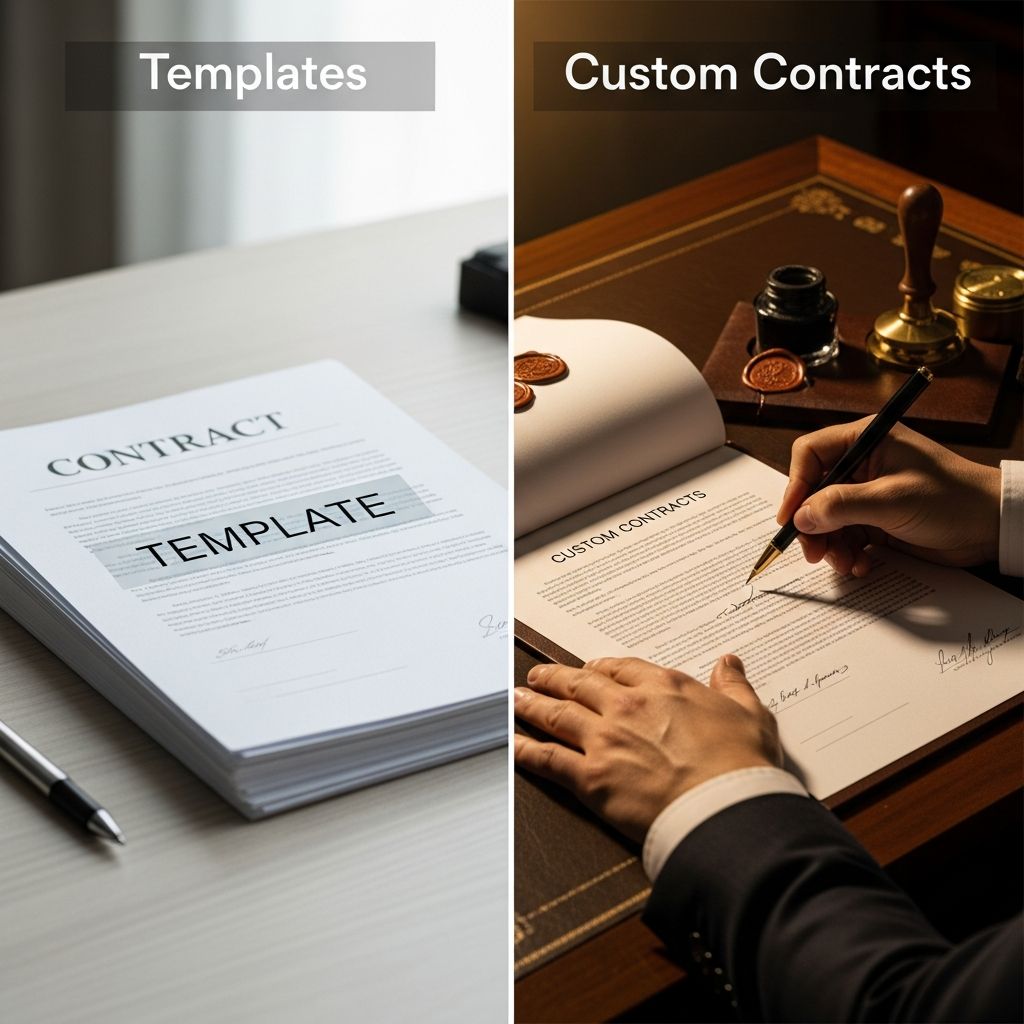
Businesses frequently face decisions on drafting agreements, balancing efficiency with protection. Contract templates offer quick, standardized solutions for everyday needs, while custom contracts deliver precision for unique scenarios. This article examines scenarios, advantages, drawbacks, and decision-making frameworks to optimize your approach.
Understanding Contract Templates and Their Role
Contract templates are pre-formatted documents designed for common transactions. They include standard clauses covering essentials like payment terms, timelines, and basic protections. These tools streamline processes for startups and small firms handling routine deals.
- Ideal for non-disclosure agreements (NDAs), basic freelance gigs, or simple vendor purchases.
- Available from reputable legal platforms, often state-specific to ensure compliance.
- Enable quick customization of fields like names, dates, and amounts without full redrafting.
Templates reduce administrative burdens, allowing focus on core operations. However, success depends on selecting vetted versions and verifying jurisdictional fit.
The Value of Custom Contracts in Business
Custom contracts start from scratch or heavily adapt templates to address specific deal elements. Attorneys craft these to incorporate unique terms, mitigating risks in complex arrangements.
- Suitable for mergers, intellectual property licenses, or multi-party ventures.
- Include tailored clauses for liabilities, dispute resolution, and regulatory adherence.
- Provide robust enforcement, minimizing litigation chances in high-value contexts.
Though resource-intensive, they safeguard against oversights that templates might miss, especially in regulated sectors.
Key Differences: A Side-by-Side Comparison
Choosing between options hinges on transaction nature. The table below highlights contrasts:
| Aspect | Contract Template | Custom Contract |
|---|---|---|
| Preparation Time | Minutes to hours | Days to weeks |
| Cost | Low (free or minimal fees) | High (attorney billing) |
| Customization Level | Basic fill-ins | Full tailoring |
| Risk Coverage | Standard protections | Comprehensive, scenario-specific |
| Best For | Routine, low-stakes deals | Complex, high-value pacts |
This overview, drawn from industry analyses, underscores templates’ efficiency for simplicity versus customs’ depth for intricacy.
Ideal Scenarios for Deploying Contract Templates
Templates shine in predictable, low-risk settings. Consider them when:
- Handling repeated transactions like standard service orders or basic leases.
- Budget constraints limit legal consultations for minor agreements.
- Speed is paramount, such as onboarding temporary contractors.
- Deals involve modest sums, where generic safeguards suffice.
For instance, a tech firm might use templates for routine NDAs with prospective hires, ensuring consistency without per-deal expenses. Always cross-check state laws, as omissions can invalidate documents.
When Custom Contracts Are Non-Negotiable
Opt for bespoke drafting in elevated-risk environments. Essential cases include:
- Strategic alliances with exclusivity or revenue-sharing provisions.
- Cross-border deals navigating varied regulations.
- Agreements transferring sensitive data or proprietary tech.
- Long-term supplier pacts with performance metrics.
These situations demand precise language to avert disputes. For example, biotech partnerships require custom IP clauses beyond template scopes. Legal expertise ensures enforceability across jurisdictions.
Advantages and Limitations of Each Approach
Strengths of Templates
- Cost Savings: Avoid hefty attorney fees for straightforward needs.
- Efficiency: Instant access accelerates deal closures.
- Uniformity: Maintains consistent terminology across documents.
Drawbacks of Templates
- Potential gaps in niche protections.
- Risk of non-compliance if not jurisdiction-matched.
- Limited handling of novel terms.
Strengths of Custom Contracts
- Tailored Protection: Addresses exact risks and opportunities.
- Dispute Prevention: Clear, specific clauses reduce ambiguities.
- Compliance Assurance: Incorporates latest regulatory updates.
Drawbacks of Custom Contracts
- Extended timelines delay executions.
- Elevated expenses strain smaller operations.
- Less reusable without modifications.
Balancing these factors aligns choices with business priorities.
Hybrid Strategies: Combining Templates and Customization
Many enterprises blend approaches. Start with a quality template as a foundation, then layer custom clauses via attorney input. This hybrid yields speed with specificity.
- Develop industry-specific templates (e.g., virtual vs. in-person event contracts).
- Incorporate modular addendums for variations like extended warranties.
- Periodically audit templates for legal updates.
Such methods minimize errors while retaining flexibility, ideal for scaling firms.
Critical Factors Influencing Your Decision
Evaluate these elements systematically:
- Transaction Complexity: Simple? Template. Intricate? Custom.
- Financial Exposure: Low value tolerates generics; high stakes demand tailoring.
- Legal Familiarity: Seasoned teams handle templates confidently.
- Regulatory Demands: Heavily regulated fields favor customs.
- Frequency: Recurring deals justify template investments.
Consulting counsel for borderline cases prevents costly missteps.
Frequently Asked Questions
Can templates fully replace custom contracts?
No, templates suit routine matters, but complex deals require customization for adequate protection.
Are free templates reliable?
Free options vary; prioritize those from legal experts and verify state compliance to avoid invalidation.
How often should templates be updated?
Review annually or after legal changes to maintain relevance and enforceability.
Is attorney review needed for templates?
Recommended for high-value uses, even with templates, to catch overlooked issues.
What if a template deal escalates?
Amend via addendum or transition to custom for ongoing protection.
Best Practices for Implementation
To maximize effectiveness:
- Source templates from credible providers like state bar associations.
- Document all customizations for records.
- Train staff on basic legal red flags.
- Integrate e-signature tools for efficiency.
These steps enhance security across both methods, fostering smoother operations.
References
- Contract templates vs. custom contracts — PandaDoc. 2023-05-15. https://www.pandadoc.com/blog/contract-templates-vs-custom-contracts/
- Contract Templates vs. Custom Contracts: Pros & Cons — Sizle. 2024-02-10. https://sizle.io/contract-templates-vs-custom-contracts-pros-cons/
- When to Use a Business Contract Template Instead of a Customized Business Contract — LegalZoom. 2023-11-20. https://www.legalzoom.com/articles/when-to-use-a-business-contract-template-instead-of-a-customized-business-contract
- Does Your Business Need a Custom Contract Template? — Catina Law PLLC. 2024-01-05. https://catinalawpllc.com/post/does-your-business-need-a-custom-contract-template/
- When to Use a Contract Template vs. Custom Drafting — Borderless Counsel. 2025-01-15. https://www.borderlesscounsel.com/blog-news-and-updates/2025/1/15/when-to-use-a-contract-template-vs-custom-drafting
Similar Articles








Read full bio of Sneha Tete


