
Teen Cyberbullying and Fake Profiles: Legal Risks and Protections
How fake social media profiles used for bullying can trigger serious legal consequences and what families can do to respond safely.
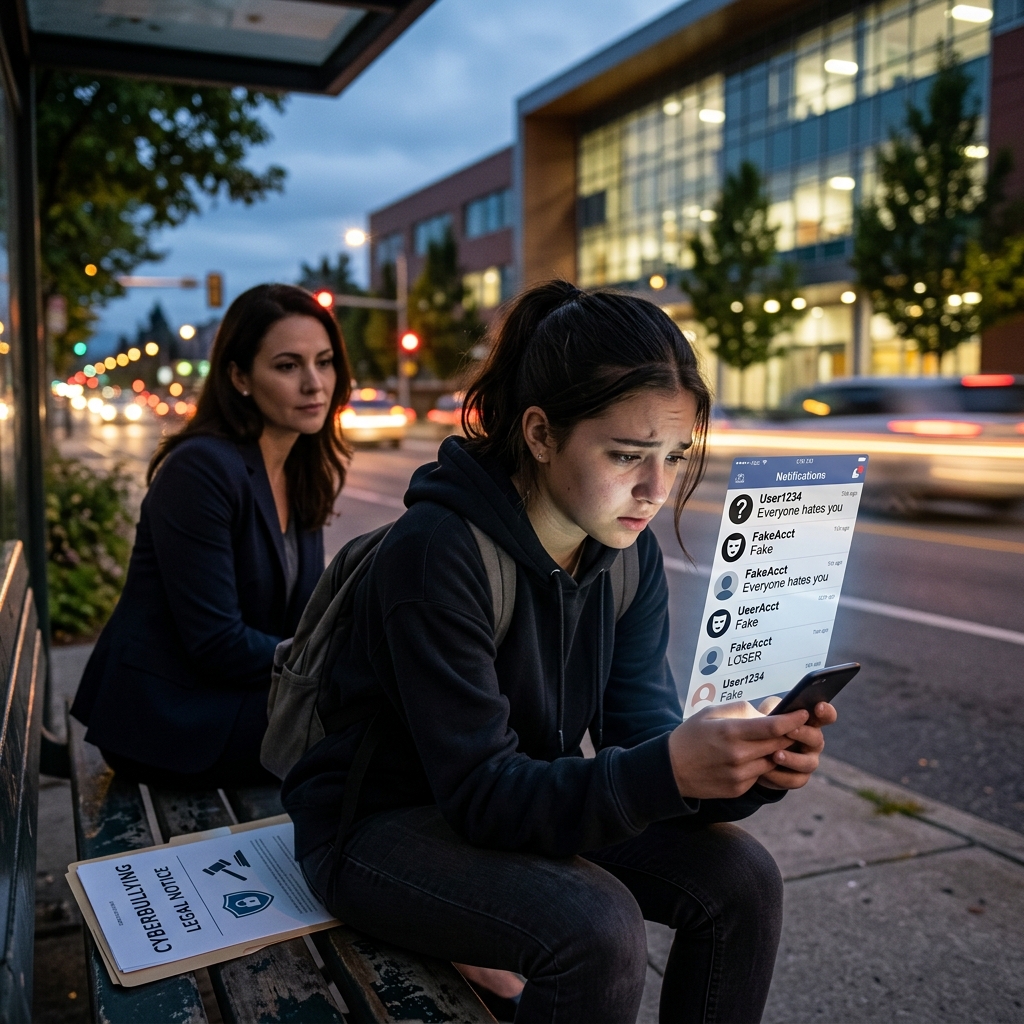
Online platforms give teenagers powerful ways to connect, but they also make it easy to cause harm from behind a screen. One of the most damaging forms of online harassment among students involves creating fake social media profiles that impersonate classmates and are used to bully, humiliate, or threaten them. When this happens, the impact goes far beyond hurt feelings—it can lead to school discipline, civil lawsuits, and even criminal charges.
This article explains how fake profiles are used in cyberbullying, the legal issues they raise, and practical steps that students, parents, and schools can take to respond. It is inspired by reported cases involving teens and fake Facebook pages, but it offers original analysis and guidance based on broader research into cyberbullying laws and best practices.
From Pranks to Prosecution: How Fake Profiles Become Cyberbullying
At first glance, some teens may see a fake account as a joke or a way to tease a peer. But when that account is used to spread false statements, sexualized content, threats, or targeted harassment, it moves into the realm of cyberbullying and potentially criminal behavior.
Typical patterns seen in cases involving fake profiles include:
- Impersonation of a classmate using their name, photo, and personal details to create an account that appears authentic.
- Posting embarrassing or false content such as doctored images, crude jokes, or statements implying sexual activity or illegal behavior.
- Encouraging others to harass the victim through comments, direct messages, or sharing the fake profile widely among peers.
- Soliciting or sharing intimate images or private information that can further shame or endanger the victim.
These actions can cause severe psychological distress, damage reputations, disrupt education, and, in some cases, place victims in physical danger. Courts and schools increasingly treat this behavior as more than simple mischief, particularly when there is evidence of ongoing harassment or threats.
The Legal Landscape: When Cyberbullying Becomes a Crime
Over the past decade, many jurisdictions have updated their laws to address bullying that takes place online. Research tracking state legislation has found that most U.S. states now explicitly address electronic or online harassment in their bullying laws. In addition, some states use separate cyberstalking, harassment, or impersonation laws to respond to fake-profile cases.
Key Legal Concepts Involved
| Legal Concept | Typical Application to Fake Profiles |
|---|---|
| Cyberbullying / electronic harassment | Repeated online behavior intended to intimidate, humiliate, or harm a student, often covered in state bullying laws. |
| Cyberstalking / harassment | Use of electronic communications to threaten, harass, or cause fear in another person, which may be charged when fake profiles are used to target a victim. |
| Digital impersonation | Creating online accounts that pretend to be another person without consent, sometimes covered by dedicated impersonation or identity-theft statutes. |
| Defamation / libel | Publishing false statements presented as facts that harm someone’s reputation, which can support a civil lawsuit for damages. |
In cases where teens create fake profiles impersonating classmates, authorities have used different combinations of these laws. For example, in one Florida case involving a false Facebook profile used to bully a student, the teens were initially arrested and later steered into a diversion program instead of formal prosecution. Other cases involving threats made via fake accounts—such as threats to kill or seriously harm another student—have led to felony charges with potential prison time.
School Discipline vs. Criminal Charges
Not every fake profile will result in criminal prosecution. Often, responses fall into one of several categories:
- School disciplinary action, such as suspension, loss of privileges, or restorative interventions, especially when the behavior disrupts the victim’s education.
- Diversion programs for youth, ordered by courts or prosecutors, that focus on counseling, education, and community service rather than punishment.
- Civil lawsuits, where victims or their families seek damages for defamation or emotional harm resulting from the fake profile.
- Criminal charges such as harassment, cyberstalking, or making threats, particularly when messages suggest violence or ongoing intimidation.
Authorities look closely at the content of the fake profile, the duration and intensity of the harassment, and whether the victim appears to be in danger. When threats of violence are involved, or when harassment is severe and repeated, criminal charges become much more likely.
Why Fake Profiles Are Particularly Harmful to Students
Fake social media accounts can be uniquely damaging in a school environment because they merge impersonation, public humiliation, and persistent online visibility:
- Loss of control over identity: Victims may feel that their name and image have been stolen and used against them, undermining their sense of safety and autonomy.
- Broad audience: Posts and comments can be shared quickly among peers, amplifying the impact of a single cruel message.
- Difficulty escaping the harassment: Because the content exists online, victims may feel the bullying follows them home and into their private spaces.
- Educational disruption: When the harassment involves classmates, the victim may avoid school, withdraw from activities, or struggle to focus in class.
Experts who work with schools on safe Internet use note that administrators are often permitted to act when off-campus online conduct creates a substantial disruption in the school environment. This includes fake profiles that provoke conflict, distract students, or severely impact the victim’s ability to learn.
Immediate Steps for Victims of Fake Profiles
For students and families, the first priority is to stay safe and preserve evidence. Online content can be quickly deleted or altered, so acting promptly and calmly is critical.
1. Preserve Evidence Before It Disappears
- Capture screenshots of the fake profile, including the main page, posts, comments, followers, and any private messages.
- Record the web address (URL) of the profile, as it typically contains a unique user ID or username that platforms and investigators can use.
- Document dates and times when posts appeared and any direct communications from the account.
- Note connected accounts such as friends or followers of the fake profile, which may help identify the person behind it.
It is important to gather this information before requesting removal, because once a profile is deleted, it may be more difficult to investigate.
2. Report the Fake Profile to the Platform
Major social media platforms have dedicated tools for reporting impersonation and harassment. Guidance from cyberbullying organizations and cyber-helplines often emphasizes:
- Using the platform’s “report” or “impersonation” option to flag the fake account.
- Explaining that the profile is pretending to be you or your child and is being used to harass or defame.
- Attaching screenshots or additional information when the reporting system allows it.
Platforms may temporarily disable the profile while they investigate, especially if there is clear evidence of impersonation or abusive content.
3. Involve Trusted Adults and the School
Students should not be left to navigate cyberbullying alone. Parents, guardians, and school officials can help:
- Talk openly with the student about what has happened, validating their feelings and avoiding blame.
- Notify the school, particularly when the fake profile is created or shared by classmates, or when school-related content is involved.
- Provide evidence to counselors or administrators, including screenshots and timelines of the harassment.
Many schools now have policies and procedures for dealing with cyberbullying, even when it occurs off campus, if it disrupts the learning environment.
4. Consider Law Enforcement When there is Threat or Criminal Content
In some cases, fake profiles include explicit threats of violence, hate-crime language, or other content that may violate criminal laws. Credible guidance recommends contacting law enforcement in situations such as:
- Posts or messages that threaten physical harm or death.
- Content that appears to target a victim based on race, religion, sexual orientation, or other protected characteristics.
- Repeated, severe harassment that causes fear or significant emotional harm.
When a report is made, investigators can send formal requests to the platform to preserve account data and help identify the person behind the fake profile. This is especially important if the user attempts to delete the account after realizing they might face consequences.
Balancing Accountability and Youth Development
Cases involving teen-created fake profiles raise complex questions about responsibility, maturity, and the appropriate level of punishment. Some jurisdictions have chosen to route young offenders into diversion programs that emphasize education about the impact of cyberbullying, counseling, and community service instead of jail or long-term criminal records.
Such approaches aim to:
- Hold teens accountable for the harm they caused, including acknowledging the victim’s experience.
- Promote empathy and understanding of how online actions can have real-world consequences.
- Reduce reoffending by teaching digital citizenship and conflict-resolution skills.
At the same time, when threats of serious violence are involved or when a pattern of extreme harassment emerges, prosecutors may pursue felony charges. In some jurisdictions, a felony conviction for cyberbullying or related offenses can carry potential sentences of several years in prison and thousands of dollars in fines.
Practical Prevention Strategies for Families and Schools
Preventing fake-profile cyberbullying requires cooperation between parents, students, and educators. While no single strategy eliminates the risk, combining education, technical tools, and clear policies can significantly reduce harm.
For Parents and Guardians
- Discuss online behavior regularly and explain that impersonating others or sharing cruel content is not harmless fun, but can be deeply damaging and legally risky.
- Monitor younger teens’ accounts in a developmentally appropriate way, including awareness of friend lists and public activity.
- Encourage responsible reporting if your child sees fake profiles targeting others, and discourage joining in or amplifying the content.
- Teach critical thinking so teens question whether an account is authentic before believing or sharing harmful posts.
For Schools and Educators
- Adopt clear policies that address cyberbullying and impersonation, including potential disciplinary consequences.
- Provide digital citizenship education that covers empathy, privacy, and the impact of online actions on peers.
- Create safe reporting channels where students can confidentially share concerns about fake profiles and harassment.
- Collaborate with parents and law enforcement when serious incidents occur, ensuring a coordinated and proportionate response.
Frequently Asked Questions (FAQ)
Can a teen be arrested for creating a fake profile of a classmate?
Yes. When a fake profile is used to harass, threaten, or defame a classmate, authorities can charge the creator under cyberbullying, harassment, or impersonation laws, depending on the jurisdiction. In some cases, teens have been arrested and then placed in diversion programs rather than prosecuted in adult court.
Is cyberbullying always a crime?
Not every instance of cyberbullying leads to criminal charges. Many cases are handled through school discipline or informal interventions. However, when the behavior involves threats, severe harassment, or targeted hate, it may violate criminal statutes.
What should I do if I find a fake profile pretending to be me?
First, preserve evidence with screenshots and the account URL. Then report the profile to the platform using its impersonation or harassment tools. Inform trusted adults and, if the content includes threats or hate speech, consider contacting law enforcement.
Can victims sue for damages?
In some cases, victims or their families may bring civil lawsuits, such as defamation claims, if false statements on a fake profile have harmed the victim’s reputation or caused measurable damage. Legal advice from a qualified attorney can help determine whether such a claim is appropriate.
What role do schools play if the fake profile was created off campus?
Schools may still take action if the fake profile causes a substantial disruption to the learning environment or significantly affects a student’s ability to attend or participate in school. This can include discipline, counseling, and working with families to resolve the situation.
References
- Students Create Fake Online Profiles to Bully Peers — Education Week. 2012-04-25. https://www.edweek.org/leadership/students-create-fake-online-profiles-to-bully-peers/2012/04
- Fake Facebook page leads to cyber bully investigation — WSOC-TV. 2012-01-27. https://www.wsoctv.com/news/local/fake-facebook-page-leads-cyber-bully-investigation/223242228/
- Help With Fake Facebook Profile Pages — Cyberbullying Research Center. 2011-03-07. https://cyberbullying.org/help-with-fake-facebook-profile-pages
- Nassau County teen’s arrest in cyberbullying case — First Coast News / YouTube. 2021-01-19. https://www.youtube.com/watch?v=USwLYtOwtjI
- Students accused of Facebook cyber-bullying placed in diversion — Naples Daily News (Archive). 2012-04-24. https://archive.naplesnews.com/news/crime/students-accused-of-facebook-cyber-bullying-placed-in-diversion-program-ep-392144977-343020152.html/
- Guide to dealing with harassment from fake profiles — The Cyber Helpline. 2023-05-01. https://www.thecyberhelpline.com/guides/fake-profiles
- Teen Sues Classmates Over Facebook Cyberbullying — FindLaw Legal Blogs. 2012-04-06. https://www.findlaw.com/legalblogs/law-and-life/teen-sued-classmates-over-facebook-cyberbullying/
Similar Articles








Read full bio of medha deb


