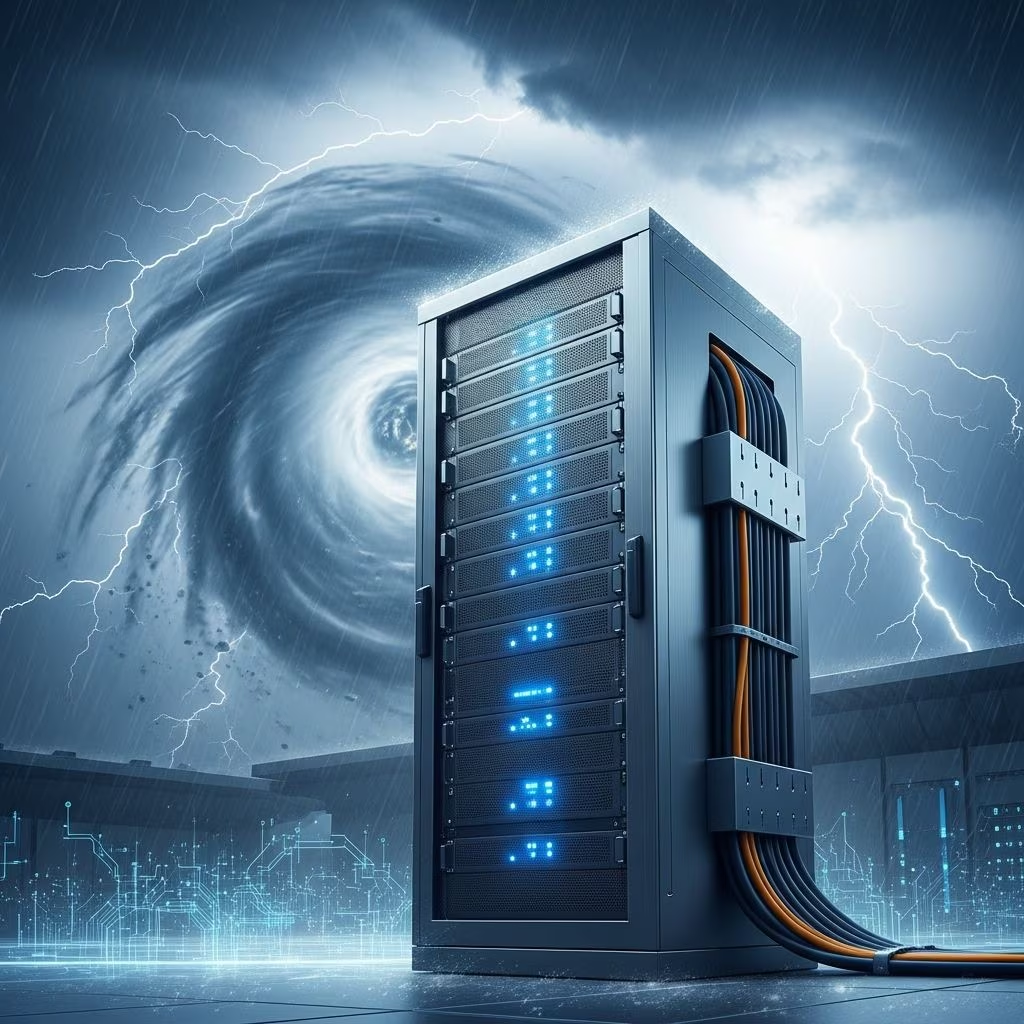
Legal professionals in hurricane-prone regions face unique challenges when severe storms disrupt operations. Power failures, internet outages, and physical damage can halt case management, client communications, and document access. Proactive technology strategies enable law firms to minimize downtime, secure sensitive data, and resume services swiftly. This guide outlines critical steps tailored for tech-enabled legal practices, drawing from established disaster preparedness principles.
Establishing Robust Data Protection Protocols
Maintaining access to client files, court documents, and billing records is paramount for any law office. Begin by implementing comprehensive backup systems that operate automatically and store data offsite. Cloud-based solutions from reputable providers ensure redundancy across multiple geographic locations, reducing the risk of total data loss from localized disasters.
- Automate daily backups: Schedule incremental backups of case management software, email servers, and shared drives to encrypted cloud storage.
- Use hybrid approaches: Combine local external drives with cloud services for layered protection; store physical drives in waterproof, elevated containers.
- Test recovery processes: Conduct quarterly drills to verify that data can be restored within hours, simulating storm-induced scenarios.
For legal practices handling confidential information, prioritize services compliant with standards like HIPAA or GDPR equivalents, ensuring encrypted transmission and storage. Regular audits confirm that backups capture all critical assets, from scanned contracts to digital signatures.
Securing Uninterrupted Power Supplies
Power surges and blackouts pose immediate threats to servers, desktops, and networked printers. Invest in uninterruptible power supplies (UPS) for essential equipment, providing minutes to hours of backup during outages. Whole-office generators offer extended runtime for firms with on-site servers.
| Equipment Type | Recommended UPS Capacity | Backup Duration |
|---|---|---|
| Single Workstation | 500-1000 VA | 15-45 minutes |
| Server Rack | 2000+ VA | 30-120 minutes |
| Full Office Network | 5000+ VA + Generator | Days |
Before storm season, inspect all surge protectors and replace any damaged units. Unplug non-critical devices to prevent lightning-induced damage. For practices reliant on cloud telephony or virtual desktops, these measures bridge gaps until utility restoration.
Optimizing Network Connectivity and Remote Capabilities
When fixed internet fails, mobile hotspots and cellular failover become lifelines. Test dedicated hotspots capable of supporting multiple devices, ensuring sufficient data plans for video calls and file uploads. Configure VPNs for secure remote access to firm intranets from any location.
- Pre-provision multiple carriers: Maintain hotspots from AT&T, Verizon, and T-Mobile to avoid single-provider outages.
- Enable remote desktop tools: Tools like Microsoft Remote Desktop or Citrix allow full access to office systems via smartphone or laptop.
- Strengthen Wi-Fi security: Use WPA3 encryption and complex passwords, changing them post-storm to deter opportunistic hackers.
Legal teams should practice remote workflows annually, simulating evacuations where attorneys access dockets from hotels or shelters. Satellite internet kits serve as ultimate backups in prolonged outage zones.
Developing Comprehensive Communication Strategies
Client trust hinges on reliable updates during crises. Deploy multi-channel notification systems that trigger automatically based on weather alerts. Integrate firm apps with services like Twilio for SMS blasts or email autoresponders informing of delays.
Prepare templates for common scenarios: court continuances, filing extensions, and virtual consultations. Designate a crisis communication lead to coordinate with staff via encrypted group chats on platforms like Signal or Microsoft Teams.
Proactive messaging prevents panic; a single update can reassure dozens of clients that their matters remain prioritized.
Hardening Physical Infrastructure Against Storms
Tech gear demands physical safeguards. Elevate servers on reinforced racks in interior rooms, away from windows. Use weatherproof enclosures for outdoor routers or cameras. Inventory all devices with serial numbers, photos, and insurance details for rapid claims.
- Secure cabling: Bundle and label cables in protective conduits to prevent flood damage.
- Waterproof storage: Pelican-style cases for laptops and portable drives during evacuations.
- Climate control backups: Fans or dehumidifiers powered by UPS to protect against humidity spikes.
Cybersecurity Vigilance in Post-Storm Chaos
Disasters attract phishing scams targeting stressed professionals. Train staff to recognize fraudulent emails mimicking utility providers or courts. Enable multi-factor authentication (MFA) universally and monitor logs for unusual activity.
Post-event, scan all systems for malware before reconnecting to networks. Collaborate with IT consultants for penetration testing tailored to legal data sensitivities.
Training and Simulation for Team Readiness
Firm-wide drills build muscle memory. Hold biannual tabletop exercises where teams role-play scenarios: a Category 4 hurricane flooding the office. Assign roles—data recovery lead, client liaison, facilities coordinator—and debrief to refine plans.
Partner with local bar associations for shared resources, like mutual aid networks for temporary office space.
Leveraging Insurance and Compliance
Review cyber insurance policies for storm-related coverage, including business interruption clauses. Document all preparations to demonstrate due diligence during claims. Ensure disaster plans align with state bar ethics rules on client data protection.
Frequently Asked Questions
What is the minimum backup frequency for law firm data?
Daily automated backups, with full weekly images, supplemented by real-time replication for high-value cases.
How long should UPS systems support critical legal servers?
Aim for 60-120 minutes to allow safe shutdowns or generator startup; scale based on equipment draw.
Are mobile hotspots sufficient for firm-wide remote work?
They bridge short-term gaps effectively but pair with VPNs and cloud tools for full functionality.
What apps aid hurricane tracking for legal professionals?
FEMA app, NOAA Weather Radar, and local utility alerts provide real-time updates without broadband.
How to handle court deadlines during outages?
Monitor emergency declarations for extensions; file electronically via mobile when possible.
Long-Term Resilience Building
Beyond immediate prep, adopt a culture of continuous improvement. Annual audits assess evolving threats like rising sea levels impacting coastal offices. Invest in edge computing to distribute workloads, reducing single-point failures.
Collaborate with tech vendors offering hurricane-specific SLAs, guaranteeing rapid support deployment. Metrics like recovery time objective (RTO) under 4 hours benchmark success.
For solo practitioners, community co-working spaces with redundant systems provide affordable failover options. Larger firms benefit from regional data centers hardened against Category 5 winds.
Ultimately, tech resilience transforms vulnerability into strength, allowing legal practices to emerge stronger from storms. By embedding these protocols, attorneys safeguard not just data, but their professional reputations and client relationships.
References
- National Hurricane Center Tropical Cyclone Climatology — NOAA National Centers for Environmental Information. 2025-06-01. https://www.nhc.noaa.gov/climo/
- Business Continuity Planning for IT Systems — National Institute of Standards and Technology (NIST). 2024-08-15. https://nvlpubs.nist.gov/nistpubs/SpecialPublications/NIST.SP.800-34r1.pdf
- Hurricane Season Preparedness Guide — Federal Emergency Management Agency (FEMA). 2025-04-10. https://www.fema.gov/emergency-managers/risk-management/hurricane
- Cybersecurity and Infrastructure Security Agency Alerts — CISA. 2025-09-20. https://www.cisa.gov/topics/disasters
- NOAA 2025 Atlantic Hurricane Season Outlook — NOAA Climate Prediction Center. 2025-05-22. https://www.cpc.ncep.noaa.gov/products/outlooks/hurricane2025/May/hurricane.shtml