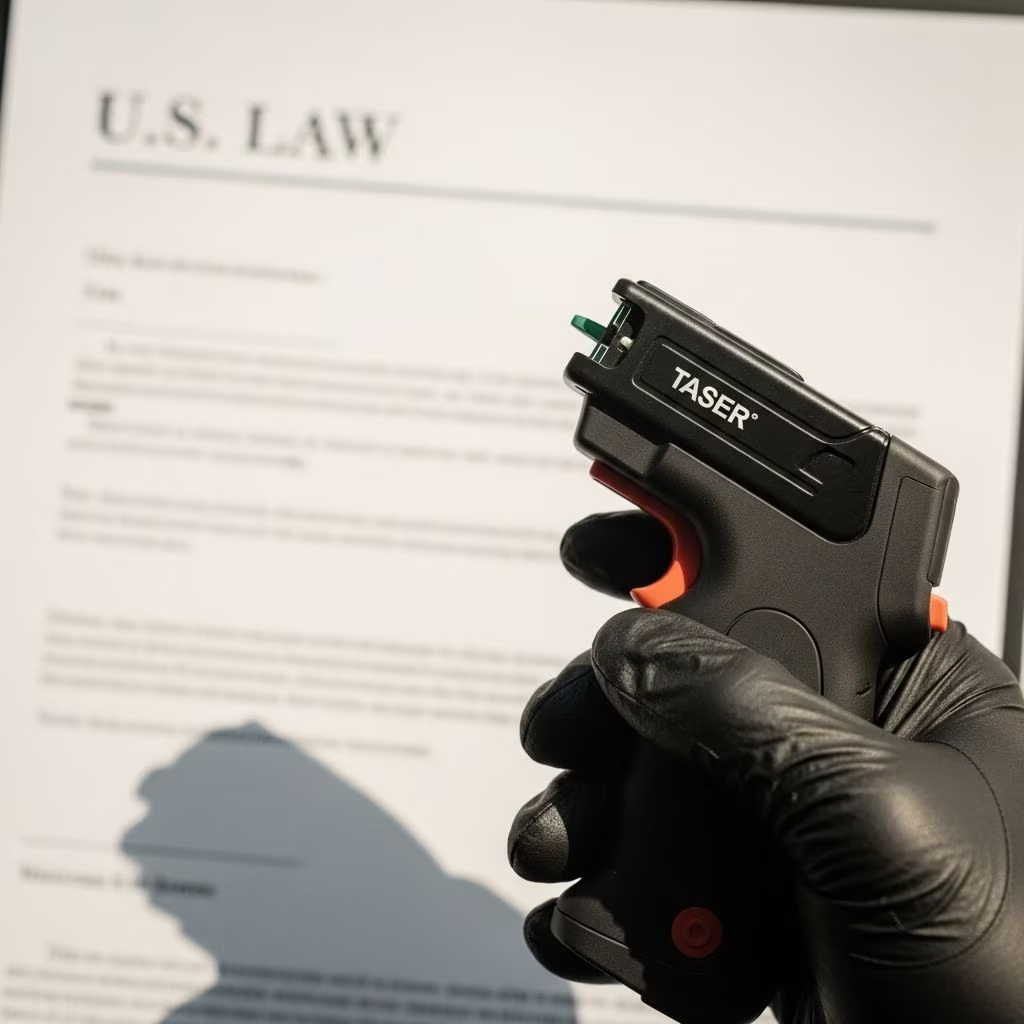
Electronic control devices like tasers and stun guns are popular self-defense tools because they are marketed as less-lethal alternatives to firearms. But owning or carrying one does not give you a free pass to use it however you want. In many places, tasers are tightly regulated, and misuse can lead to criminal charges, civil lawsuits, or both.
This guide explains how U.S. law typically treats tasers as self-defense weapons, who can legally own them, where they are prohibited, and how using them in the wrong way can quickly turn into a crime.
What Is a Taser and How Is It Different from a Stun Gun?
Before looking at legality, it helps to understand what kind of device the law is talking about. Statutes often use terms such as electronic control device, conducted energy weapon, or electronic defense weapon to describe these tools.
- Taser (conducted energy weapon): Fires small probes connected by wires that deliver an electric shock from a distance, usually up to several feet away.
- Stun gun: Requires direct contact with the attacker’s body, applying an electric shock through exposed electrodes on the device.
- Electronic control device (ECD): A broad legal term used in many statutes to cover both tasers and stun guns.
Despite technical differences, many states regulate both types similarly, focusing more on the device’s effect (delivering an incapacitating shock) than on its exact design.
Are Tasers Legal for Self-Defense?
In much of the United States, tasers and stun guns are legal for self-defense use, but with important conditions.
Common features of state laws include:
- Possession allowed for lawful self-defense only.
- Restrictions on certain categories of people (for example, felons or minors).
- Bans on carrying tasers in sensitive locations such as schools and some government buildings.
- Criminal penalties for using a taser while committing another offense.
Federal law does not provide a single nationwide rule for civilian taser ownership. Instead, each state (and often each city or county) decides whether tasers are treated more like ordinary self-defense tools, like pepper spray, or more like firearms, requiring permits and licensing.
Typical State Approaches to Taser Regulation
States fall into broad categories in the way they regulate tasers and other electronic control devices.
| Regulation Type | What It Usually Means | Common Examples |
|---|---|---|
| Generally permitted | Adults may own and carry tasers for self-defense with relatively few extra license requirements, but standard weapons and location restrictions still apply. | Many southern and western states; often allow possession but punish misuse (e.g., Colorado, Texas). |
| License or background check required | States may require a firearms-type permit, background check, or registration for tasers, treating them closer to guns. | Some northeastern states and those that regulate stun guns as firearms or electronic defense weapons (e.g., Massachusetts, Connecticut). |
| Restrictions with conditions | Possession allowed, but with important conditions like age limits, prohibited persons, and bans on public carry without good cause. | States that limit minors, people with certain convictions, or carry in public places. |
| Historically banned, now allowed | Some states once prohibited civilian tasers but were forced to relax bans after court decisions based on the Second Amendment. | Rhode Island, for example, saw its ban struck down in 2022, with tasers now legal subject to general weapons rules. |
Because these categories are general, always check your own state’s statutes or an updated legal resource before purchasing or carrying a taser.
Who Is Not Allowed to Have a Taser?
Even in states where tasers are broadly legal, certain people are often barred from ownership or possession. Statutes commonly exclude:
- Felony offenders with prior convictions for serious crimes.
- People with prior convictions for assault or misuse of a stun gun or taser.
- Individuals declared addicted to narcotics, depending on state law.
- Minors, particularly those under age 16 or 18, unless a specific exception applies.
- Individuals subject to certain protective or restraining orders, in some jurisdictions.
For instance, California law permits most adults to own or carry tasers, but prohibits possession by convicted felons, those with certain assault-related convictions, and some individuals with narcotics addictions. Other states have similar lists of prohibited persons for both firearms and electronic defense weapons.
Where Tasers Are Commonly Prohibited
Lawmakers often treat tasers somewhat like firearms when it comes to location-based restrictions. These restrictions can apply even if you are otherwise legally allowed to possess the device.
- Schools and school grounds, including K–12 and sometimes colleges.
- Daycare centers or child-care facilities, depending on state law.
- Government buildings and certain state facilities, such as capitol complexes or public administration offices.
- Airports, especially beyond security checkpoints and in secure areas of ports or harbors.
- Courtrooms, police stations, and other law enforcement facilities.
- Any place where firearms are banned by law, when statutes explicitly extend those rules to tasers and stun guns.
Violations can result in seizure of the device, fines, or even jail time. In California, for example, bringing a taser into certain prohibited places can lead to a misdemeanor charge with possible jail and financial penalties.
When Is Using a Taser Considered Self-Defense?
Even if you lawfully own a taser, using it is only justified when your conduct meets general self-defense standards. U.S. self-defense law varies by state, but typical requirements include:
- You reasonably believe you face imminent unlawful force (or sometimes serious bodily injury or death, depending on the level of force used).
- Your response is proportional to the threat — not obviously excessive.
- You are not the initial aggressor, or you have clearly withdrawn from the confrontation.
- In some states, you must retreat if safely possible before using force (others have stand-your-ground rules).
Because tasers are generally treated as less-lethal weapons, courts may view them differently from firearms in close cases. However, deploying a taser can still be considered serious force, especially if used against vulnerable individuals, near traffic, on stairs, or in other dangerous conditions. Misuse may lead to charges such as assault, battery, or weapons offenses.
Misuse and Criminal Liability
States criminalize using tasers for purposes that clearly fall outside lawful self-defense. Examples of conduct that often leads to charges include:
- Using a taser while committing another crime, such as robbery or kidnapping.
- Threatening someone with a taser to intimidate or coerce them, without a legitimate safety reason.
- Discharging a taser against a police officer, emergency personnel, or other protected professional performing lawful duties.
- Allowing minors or prohibited persons to access your taser in violation of storage or transfer rules.
- Carrying or using a taser in a location where these devices are explicitly banned.
Some state statutes create specific offenses for unlawful use of electronic defense weapons. For instance, several states classify using a taser in the commission of a crime as a felony, even if the underlying crime would otherwise be a misdemeanor.
Best Practices for Responsible Taser Ownership
If you choose to carry a taser for personal protection, it is critical to treat it as a real weapon, not a gadget. Good practices can reduce both legal and safety risks.
1. Know Your Local Laws
- Review your state’s code sections on electronic defense weapons or conducted energy devices, as well as any local ordinances.
- Confirm:
- Whether you need a license or permit.
- Age requirements and prohibited-person rules.
- Places where tasers are banned (schools, government buildings, airports, etc.).
2. Get Training
- Consider taking a reputable self-defense or weapons-handling course covering tasers or similar devices.
- Practice with training cartridges or inert devices to learn safe aiming, firing, and reholstering.
- Understand the device’s limitations: range, battery requirements, and failure risks.
3. Store and Carry Safely
- Keep the taser out of reach of children and unauthorized users.
- Use a safe storage method at home, such as a locked drawer or safe, especially if minors are present.
- Carry the device in a way that complies with any local rules on concealed or open carry and reduces the chance of accidental discharge.
4. Use Only in Genuine Emergencies
- Reserve taser use for situations where you reasonably fear imminent unlawful force.
- Avoid using a taser as a tool for arguments, anger, or retaliation.
- Once the threat has ended or the attacker is incapacitated enough to escape, stop using force and, when safe, contact law enforcement.
Tasers Compared with Other Self-Defense Options
Tasers are just one of several tools available for personal protection. Each carries different legal and practical trade-offs.
| Tool | Typical Legal Status | Advantages | Drawbacks |
|---|---|---|---|
| Taser / stun gun | Legal in many states for self-defense, with restrictions on locations, minors, and prohibited persons. | Distance capability (for tasers), strong deterrent, less-lethal than firearms. | Range limits, potential for serious injury, regulatory complexity in some states. |
| Pepper spray | Generally legal in smaller quantities for self-defense; some states limit container size or formulation. | Inexpensive, widely available, easy to carry, non-electronic. | Wind can blow spray back at user, may not stop determined attackers, some health risks. |
| Firearms | Heavily regulated; often require permits, background checks, and training, especially for concealed carry. | High stopping power, effective at greater distances. | High risk of lethal injury, significant legal responsibilities, severe consequences for misuse. |
| Personal alarms / no-contact tools | Usually unregulated or lightly regulated. | No physical contact, low legal risk, can attract attention quickly. | May not deter determined attackers, depend on others hearing and responding. |
Special Issues: Travel and Interstate Differences
Traveling with a taser raises additional complications. Because every state can set its own rules, a device that is legal in your home state may be restricted elsewhere.
- Some states treat tasers more like firearms, requiring permits or licensing that out-of-state visitors may not have.
- Airlines and federal agencies regulate how electronic weapons can be transported in checked baggage, and most forbid them in carry-on luggage or past security checkpoints.
- Local city ordinances may impose further restrictions, even within states that generally permit tasers.
Before crossing state lines with a taser, review the laws of both your destination and any states you pass through, as well as airline and transportation security rules.
Frequently Asked Questions (FAQs)
Q: Is it legal to carry a taser for self-defense everywhere in the U.S.?
A: No. Many states allow tasers for self-defense, but details differ widely. Some require permits, restrict carry in public places, or treat tasers similarly to firearms.
Q: Do I need a permit or license to own a taser?
A: In some states you can own a taser without a firearms permit, while others require licensing, background checks, or registration, especially where tasers are legally classified alongside guns.
Q: Can a minor legally carry a taser?
A: Often no. Many jurisdictions bar minors from possessing tasers, or only allow it under specific conditions such as written parental consent and age thresholds (for example, at least 16 years old).
Q: What happens if I use a taser in an argument that is not self-defense?
A: Using a taser outside genuine self-defense can lead to assault or weapons charges, especially if it is used to threaten, intimidate, or harm someone unlawfully.
Q: Are tasers safer than guns from a legal standpoint?
A: Tasers are generally considered less-lethal, but they are still weapons. Misuse can bring serious criminal and civil consequences, and in some states they are regulated almost as strictly as firearms.
References
- Self-Defense Weapon Laws by State: Know What’s Legal — Premier Body Armor. 2024-05-10. https://premierbodyarmor.com/blogs/pba/self-defense-weapon-laws-by-state
- Rules of Carrying Taser Guns in the 50 States — EDI Distributors. 2023-08-01. https://edisastersystems.com/blogs/news/rules-of-carrying-taser-guns-in-the-50-states
- California Penal Code Section 22610: Stun Guns and Tasers — Simmrin Law Group (discussing Cal. Penal Code §22610). 2023-11-15. https://www.simmrinlawgroup.com/california-penal-code-section-22610/
- 5 Self-Defense Weapons That Are Legal in California — Shouse Law Group. 2024-02-20. https://www.shouselaw.com/ca/blog/legal-self-defense-weapons-in-california/
- Self-Defense Weapons You Can Legally Carry in California — Southwest Legal. 2023-09-18. https://southwestlegal.com/self-defense-weapons-you-can-legally-carry/