
Tactical Border Units in Sanctuary Cities: A Policy Overview
Analyzing the deployment of elite border units to sanctuary jurisdictions.
Introduction to Tactical Immigration Enforcement
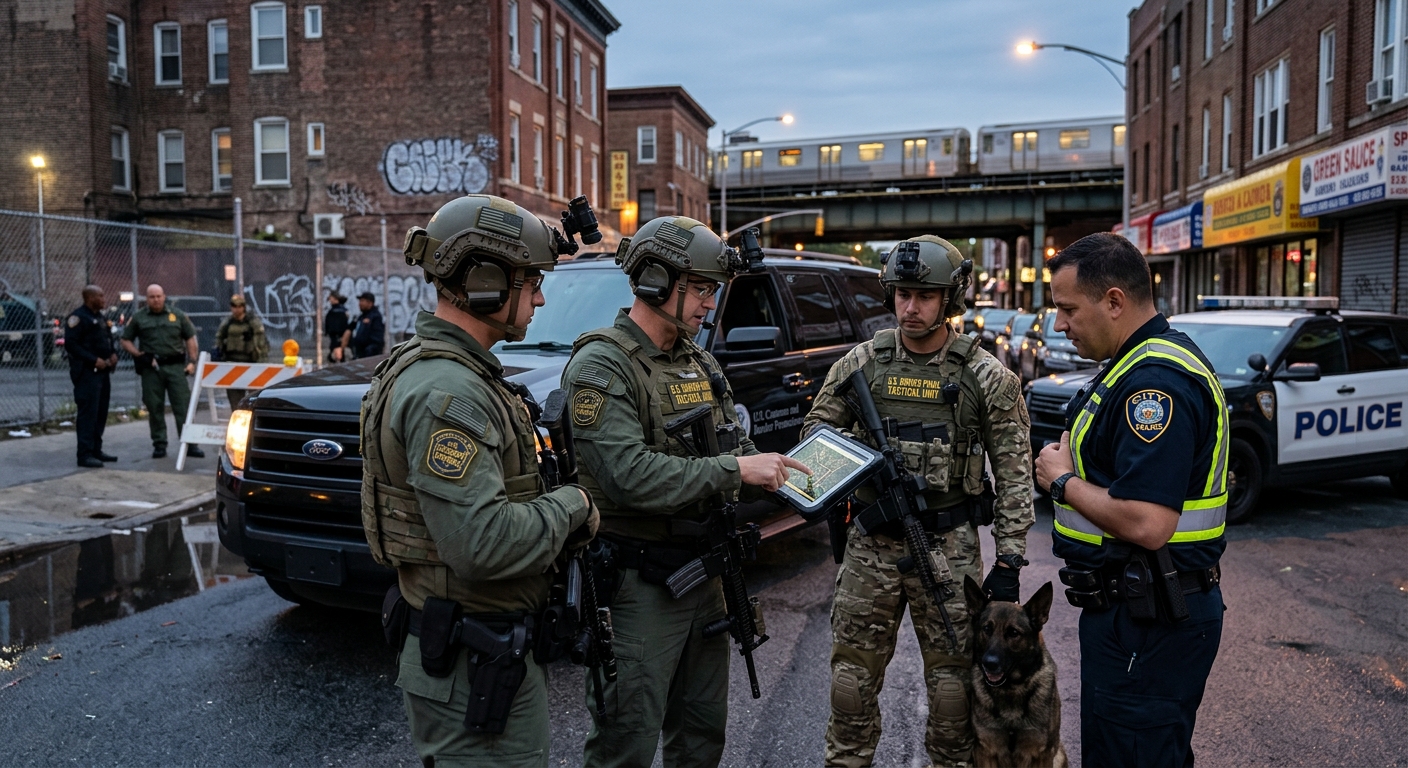
The landscape of American immigration enforcement underwent a substantial structural shift when federal authorities authorized the deployment of elite tactical border units into major metropolitan areas. Historically, the apprehension and deportation of undocumented immigrants within the interior of the United States fell squarely under the purview of standard Immigration and Customs Enforcement (ICE) personnel. However, mounting political and legal tensions between the federal government and local jurisdictions led to an unprecedented escalation in tactics. Specifically, the government authorized the use of the Border Patrol Tactical Unit (BORTAC)a specialized outfit trained for high-risk border operationsa conduct routine civil immigration arrests in cities far removed from the international boundary.
This deployment reflects a broader conflict over federalism and the autonomy of local policing. When municipalities decline to cooperate with federal immigration agencies, it forces federal authorities to rely on alternative methods for interior enforcement. The decision to inject military-style tactical units into domestic neighborhoods raises profound questions about civil liberties, the necessity of force, and the intricate balance of power between federal mandates and local community standards. By examining the operational nature of these units and the legal frameworks surrounding local non-cooperation policies, we can better understand the long-term implications for public safety and constitutional rights.
What Are Sanctuary Jurisdictions?
Before analyzing the deployment of tactical units, it is essential to understand the environments they are meant to police. The term ‘sanctuary city’ or ‘sanctuary jurisdiction’ is not a strict legal definition found in federal statute. Instead, according to the Congressional Research Service, it serves as a colloquial umbrella term for states, counties, and cities that have enacted laws, policies, or resolutions limiting their cooperation with federal immigration enforcement.
At the core of a sanctuary policy is the refusal to honor ICE administrative detainers. A detainer is a request from ICE to a local law enforcement agency, asking them to hold an individual for up to 48 hours beyond their scheduled release time so that federal agents can take them into custody. Because these detainers are not judicial warrants signed by a judge, many local jurisdictions argue that complying with them could violate the Fourth Amendment rights of the detained individual.
Furthermore, sanctuary policies are rooted in the anti-commandeering doctrine of the Tenth Amendment. The U.S. Constitution stipulates that the federal government cannot compel or ‘commandeer’ state and local officials to enforce federal regulatory programs. Consequently, cities are well within their constitutional rights to decline the use of their own municipal resources, jail space, and police personnel for the purpose of federal immigration enforcement.
Local leaders implement these policies for a variety of reasons, primarily centered on public safety. When immigrant communities know that interacting with local police will not trigger deportation proceedings, they are significantly more likely to report crimes, serve as witnesses, and engage with community services. By drawing a bright line between local crime prevention and federal immigration enforcement, municipalities aim to foster trust and ensure that all residents1regardless of legal status1feel safe navigating their neighborhoods.
The Role of Specialized Border Units (BORTAC)
The federal response to the proliferation of sanctuary jurisdictions has involved a dramatic reallocation of resources, most notably the deployment of Customs and Border Protection (CBP) personnel to the nation’s interior. Among these personnel are members of BORTAC, which serves as the SWAT equivalent for the U.S. Border Patrol.
BORTAC agents undergo rigorous, specialized training designed for highly volatile and dangerous environments. Their primary mission typically involves targeting armed cartels, disrupting human smuggling rings, executing high-risk warrants, and operating in the rugged, remote terrain along the U.S.-Mexico border. They are equipped with advanced tactical gear, including heavy body armor, stun grenades, specialized firearms, and advanced surveillance equipment.
Deploying these highly militarized units to conduct standard immigration arrests in urban centers marks a significant departure from established norms. Traditional ICE Enforcement and Removal Operations (ERO) agents are generally tasked with executing civil administrative warrants, which involve locating individuals who have overstayed visas or entered the country without inspection. While ICE agents certainly face risks, the presence of BORTAC introduces a level of force and intimidation historically reserved for violent criminal syndicates.
This tactical escalation fundamentally alters the dynamic of neighborhood immigration sweeps. When agents trained for armed combat are dispatched to apartment complexes and local workplaces, the potential for escalation1and the associated risk to bystanders1increases substantially.
Policy Arguments and Justifications for Federal Deployment
Federal authorities have defended the deployment of BORTAC and other CBP agents to sanctuary cities as an unavoidable consequence of local non-cooperation. According to agency statements and leadership directives, when local jails refuse to honor ICE detainers and instead release undocumented individuals back into the community, federal agents are forced to conduct ‘at-large’ arrests.
An at-large arrest occurs when ICE agents must track down, surveil, and apprehend an individual in a public space, such as a courthouse, a residential street, or a place of employment. Federal officials argue that these operations are exponentially more dangerous and resource-intensive than a secure transfer within the confines of a local jail. The unpredictable nature of street-level apprehensions requires more manpower, extensive surveillance, and heightened security measures.
From the perspective of immigration enforcement agencies, sanctuary policies artificially inflate the risks and operational costs of their mandate. By bringing in specialized units like BORTAC, the government asserts it is merely compensating for the resource challenges created by uncooperative local governments. Furthermore, officials argue that these elite units act as a necessary force multiplier to address backlogs and ensure that immigration laws are adequately enforced nationwide.
Civil Liberties and Constitutional Concerns
While the logistical arguments provided by federal agencies highlight operational challenges, the deployment of tactical forces into domestic, pro-immigrant cities has alarmed civil rights organizations and legal scholars. The primary concern is the potential erosion of Fourth Amendment protections against unreasonable searches and seizures.
The use of plainclothes agents, unmarked vehicles, and military-grade equipment to apprehend individuals for civil immigration violations is viewed by many as a disproportionate use of force. Legal experts warn that treating routine administrative violations with the same tactical response as violent felonies blurs the line between civil enforcement and militarized policing. There are significant concerns that these deployments are designed less for practical enforcement and more for political theater1specifically, to intimidate immigrant communities and visually assert federal dominance over rebellious local governments.
Moreover, the chilling effect on communities is palpable. The visible presence of heavily armed federal agents can paralyze neighborhoods, keeping children out of school, preventing sick individuals from seeking medical care, and deterring victims of domestic violence from coming forward. When the fundamental functions of daily life are interrupted by the fear of a sudden tactical raid, the overall health and safety of the community deteriorate rapidly.
The Intersection of Local Autonomy and Federal Law
The ongoing standoff over sanctuary cities represents one of the most prominent modern battles over American federalism. While the federal government exercises plenary power over immigration policy1meaning it has the exclusive authority to set the rules regarding who can enter and remain in the country1it cannot mandate that state and local governments carry the burden of enforcing those rules.
This constitutional divide has forced federal agencies to devise new, often controversial strategies to bypass local authorities. Alongside the deployment of BORTAC, agencies have historically launched enhanced arrest campaigns, utilizing surveillance and redirecting Homeland Security Investigations (HSI) personnel to flood the streets of non-cooperative cities. These operations intentionally bypass local law enforcement, creating parallel policing structures within the same geographic area.
This lack of coordination frequently leads to friction between local police chiefs and federal directors. When federal tactical teams operate in urban environments without the knowledge or assistance of the local police department, it can create confusion, compromise local investigations, and increase the likelihood of dangerous misunderstandings between different law enforcement entities.
The Economic and Social Toll on Municipalities
Beyond the direct legal clashes, the deployment of tactical border units into major cities carries hidden economic and social costs for municipalities. When federal agents conduct highly publicized raids using plainclothes operators and militarized equipment, the resulting panic disrupts the local economy. Businesses in predominantly immigrant neighborhoods often see a sharp decline in foot traffic, and agricultural, construction, and hospitality sectors may experience sudden labor shortages as workers remain home out of fear.
Furthermore, the social fabric of the city is strained. Schools often report sudden drops in attendance, and local health clinics see missed appointments, increasing the risk of unmanaged public health issues. For local mayors and city councils, the challenge is not just defending legal autonomy, but managing the cascading municipal crises that follow intensive federal enforcement operations.
Summary Table: Standard ICE vs. Tactical Units (BORTAC)
To clarify the distinction between the different federal units involved in immigration enforcement, the following table outlines their standard operational parameters:
| Feature | Standard ICE (ERO) Agents | Tactical Border Units (BORTAC) |
|---|---|---|
| Primary Mission | Civil immigration enforcement and deportations. | High-risk operations, counter-smuggling, cartels. |
| Standard Gear | Standard sidearms, soft body armor, radios. | Heavy tactical armor, stun grenades, specialized firearms. |
| Typical Environment | Jails, residences, administrative offices. | Rugged border terrain, hostile urban environments. |
| Target Population | Visa overstays, undocumented individuals. | Armed smugglers, violent criminal syndicates. |
| Arrest Strategy | Scheduled apprehensions, jail transfers. | Dynamic entry, rapid tactical deployment. |
Frequently Asked Questions (FAQs)
- What is a sanctuary jurisdiction?
A sanctuary jurisdiction is a city, county, or state that has adopted policies limiting its cooperation with federal immigration enforcement. This typically means local police will not hold individuals in jail solely on the basis of a civil immigration detainer request from ICE. - What does BORTAC stand for?
BORTAC stands for the Border Patrol Tactical Unit. It is an elite, highly trained specialized unit within U.S. Customs and Border Protection, functioning similarly to a SWAT team for high-risk federal operations. - Why does the federal government send tactical units to sanctuary cities?
Federal officials argue that because sanctuary cities do not allow ICE to take custody of individuals in a secure jail setting, agents must make arrests out in the community. They claim these ‘at-large’ arrests are more dangerous and require the specialized training and manpower provided by tactical units. - Is it constitutional for cities to refuse cooperation with ICE?
Yes. Under the Tenth Amendment’s anti-commandeering doctrine, the federal government cannot force state or local agencies to enforce federal laws or use their resources to assist federal agencies. - Does the presence of tactical units impact local crime rates?
Many local officials and criminologists argue that aggressive federal immigration enforcement creates a chilling effect. When immigrant communities fear deportation, they are less likely to report local crimes, which can undermine overall public safety and community policing efforts.
References
- Trump to dispatch border agents to “sanctuary” cities to aid in ICE operations CBS News. 2020-02-14. https://www.cbsnews.com/news/trump-to-dispatch-border-agents-to-sanctuary-cities-to-aid-in-ice-operations/
- Sanctuary Jurisdictions: Policy Overview Congressional Research Service. 2020-02-21. https://crsreports.congress.gov/product/pdf/IF/IF11438
- Sanctuary Policies: An Overview American Immigration Council. 2025-02-21. https://www.americanimmigrationcouncil.org/research/sanctuary-policies-overview
Similar Articles








Read full bio of medha deb


