
The Systemic Impact of Police in Schools
Examining the consequences of school policing on marginalized students.
Reimagining School Safety: The Systemic Impact of Law Enforcement in Educational Spaces
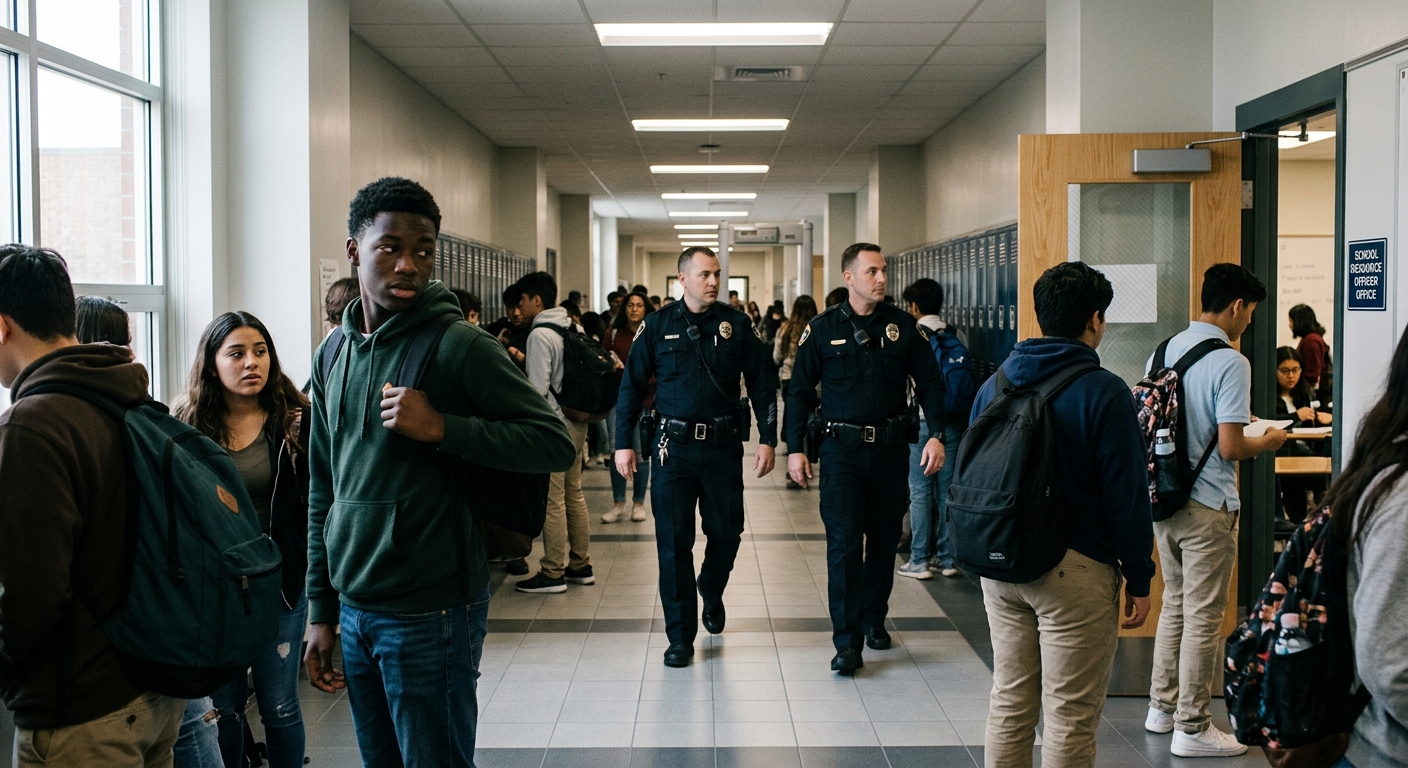
The concept of school safety is foundational to effective education. Students cannot learn, and educators cannot teach, in environments where they feel threatened or insecure. Over the past few decades, however, the strategies employed to secure these educational environments have undergone a profound and highly debated transformation. Rather than relying primarily on educators, administrators, and community-based counselors to manage student behavior and foster a supportive climate, a growing number of school districts have integrated sworn law enforcement officers—often referred to as School Resource Officers (SROs)—into their daily operations.
While the stated goal of these programs is often to protect students from external threats and mitigate severe acts of violence, the day-to-day reality of having armed police in school hallways has sparked intense national scrutiny. The normalization of police presence in educational spaces fundamentally alters the dynamic of school discipline. It shifts the paradigm from one of pastoral care, guidance, and educational redirection to one of criminalization and punitive enforcement. By examining the structural evolution of campus security, the severe disciplinary disparities among marginalized student groups, and the urgent need for evidence-based alternatives, we can better understand the true cost of heavily policed schools.
The Evolution of Campus Security and the Rise of SROs
To understand the current landscape of school policing, it is necessary to examine its historical roots. The presence of law enforcement in educational settings is not a new phenomenon, but its scale has exploded in recent decades. In the late 20th century, particularly during the 1990s, high-profile tragedies and a broader cultural panic regarding juvenile crime spurred the implementation of “zero-tolerance” policies. These policies mandated strict, predetermined consequences for specific offenses, stripping educators of their discretion and effectively mandating severe punishments for often minor behavioral infractions.
Concurrently, federal and state grants provided significant funding to place police officers directly into schools. The National Center for Education Statistics (NCES) reported in 2024 that approximately 46 percent of traditional public schools now have a School Resource Officer present at least once a week. What began as an initiative to prevent catastrophic violence has, in many jurisdictions, expanded into a generalized policing of student behavior. SROs frequently find themselves tasked with handling routine disciplinary matters—such as insubordination, uniform violations, or minor classroom disruptions—that would have historically been managed by a teacher or principal. This expansion of duties, often referred to as “mission creep,” has effectively blurred the lines between maintaining physical security and enforcing school rules, drawing ordinary adolescent misbehavior into the purview of the criminal justice system.
Analyzing the Disciplinary Divide
The most alarming consequence of integrating law enforcement into daily school life is the grossly disproportionate impact on marginalized student populations. Extensive research and federal data reveal that the burden of school policing does not fall evenly across the student body. Instead, it disproportionately affects Black students, Indigenous students, and students with disabilities.
A comprehensive 2024 report by the U.S. Government Accountability Office (GAO) highlighted that disparities in student arrest rates widen significantly when factors like race, gender, and disability status overlap. The criminalization of ordinary behavior means that a minor scuffle in the hallway, which might result in a parent-teacher conference in a predominantly white, affluent district, often leads to an arrest and a juvenile record in a heavily policed, predominantly minority district. Similarly, research from the Brookings Institution underscores that the adverse effects of SROs on discipline are most pronounced for Black students and male students, exacerbating existing educational inequalities.
Intersectionality in Disciplinary Actions
Students with disabilities are particularly vulnerable in these environments. Behaviors that are manifestations of a student’s recognized disability—such as an emotional outburst from a child with autism or defiance from a student with an emotional behavioral disorder—are frequently misinterpreted by officers as criminal noncompliance or aggression. Law enforcement personnel typically lack the specialized, rigorous training in special education and de-escalation techniques that certified behavioral specialists possess. As a result, standard law enforcement tactics, including physical restraint and arrest, are applied to vulnerable children in crisis.
| Demographic Focus | Primary Disciplinary Concern | Systemic Implication |
|---|---|---|
| Black Students | Higher rates of arrests for subjective offenses (e.g., insubordination). | Accelerates the school-to-prison pipeline and deepens racial inequities. |
| Students with Disabilities | Criminalization of behaviors stemming from diagnosed conditions. | Violation of educational rights and exacerbation of mental health crises. |
| Low-Income Districts | Increased likelihood of relying on SROs over mental health staff. | Creates a punitive environment rather than a supportive, resource-rich one. |
The School-to-Prison Pipeline: A North Carolina Perspective
The trajectory from the classroom to the courtroom is commonly referred to as the “school-to-prison pipeline.” This term describes the systemic policies and practices that push students—especially those from disadvantaged backgrounds—out of educational institutions and into the juvenile and adult criminal justice systems. To understand this phenomenon in practice, observing state-level dynamics provides a clear window into a national crisis. North Carolina, for instance, has frequently served as a focal point for civil rights advocates and educational researchers analyzing these trends.
In states like North Carolina, historical data has often shown a stark contrast in funding priorities. Communities frequently allocate substantial portions of their limited budgets to law enforcement while facing severe shortages of school psychologists, nurses, and social workers. When schools lack the resources to address the root causes of student misbehavior—which often include trauma, undiagnosed learning disabilities, or turbulence at home—they default to the quickest available tool: the police officer. In this environment, a student experiencing a mental health crisis is met with handcuffs rather than counseling.
Advocacy groups analyzing these regional trends have repeatedly highlighted that once a student enters the juvenile justice system, their likelihood of dropping out of high school increases exponentially. An arrest record can severely hinder a young person’s future prospects, complicating college admissions, employment opportunities, and access to housing. By prioritizing law enforcement over student support services, districts are effectively sacrificing long-term student success for short-term compliance, cementing a cycle of disenfranchisement that echoes throughout the community.
The Psychological Toll on the Student Body
Beyond the tangible metrics of arrests and suspensions, the presence of police in schools inflicts a profound psychological toll on the student body. Schools are meant to be safe havens that foster intellectual curiosity, emotional growth, and community building. The continuous presence of armed officers, metal detectors, and surveillance equipment fundamentally alters the pedagogical atmosphere, replacing a culture of support with a culture of suspicion.
For students from communities that have historically experienced fraught relationships with law enforcement, the presence of police in their school can induce chronic anxiety and hypervigilance. Rather than feeling protected, these students often feel targeted and surveilled. This stress can severely impair cognitive functioning, leading to decreased academic engagement, lower attendance rates, and diminished academic performance. When students believe that their environment is hostile and that their mistakes will be met with criminal rather than educational consequences, the foundational trust required for effective learning is broken.
Furthermore, this dynamic damages the relationship between students and educators. When teachers rely on SROs to handle classroom management, it undermines the teacher’s authority and prevents the development of strong, mentor-mentee relationships. Students learn that their educators are not there to guide them through their behavioral mistakes but to hand them over to the authorities.
Evidence-Based Alternatives for Fostering Safe Schools
Dismantling the school-to-prison pipeline requires more than simply removing police from schools; it necessitates a comprehensive reinvestment in evidence-based, supportive infrastructures. If the goal is genuine safety and student well-being, resources must be redirected toward proactive, preventive measures rather than reactive, punitive ones.
First and foremost, schools must prioritize the hiring of trained mental health professionals. According to NCES data from 2024, nearly 39 percent of public schools report that inadequate access to licensed mental health professionals limits their ability to provide necessary services “in a major way.” By funding positions for school counselors, social workers, and psychologists, districts can ensure that students in crisis receive appropriate therapeutic interventions rather than law enforcement responses.
Secondly, implementing Restorative Justice practices has shown immense promise in transforming school cultures. Restorative practices focus on mediation, repairing harm, and holding students accountable through community building rather than exclusion. When a conflict occurs, restorative justice brings the involved parties together to understand the impact of the behavior and collaboratively determine a resolution. This approach not only reduces recidivism and suspension rates but also teaches students crucial conflict resolution skills that will serve them throughout their lives.
Ultimately, fostering a truly safe school environment means creating a space where all students are treated with dignity and provided with the resources they need to thrive. It requires abandoning the illusion that armed policing equates to safety and embracing a holistic view of student development.
Frequently Asked Questions (FAQs)
- What is a School Resource Officer (SRO)?
A School Resource Officer (SRO) is a sworn law enforcement officer with arrest authority who is assigned to work within a school setting. While their intended role is often to ensure physical security and act as a liaison between the police department and the school, they frequently become involved in routine school discipline matters.
- How does police presence affect students with disabilities?
Students with disabilities are often disproportionately impacted by school policing. Behaviors that are a direct manifestation of a disability (such as an emotional outburst) can be misinterpreted by police as criminal defiance, leading to inappropriate and sometimes dangerous uses of force, restraint, or arrest instead of necessary therapeutic interventions.
- What exactly is the “school-to-prison pipeline”?
The school-to-prison pipeline refers to a system of policies, practices, and systemic failures that push students out of the educational system and into the juvenile or adult criminal justice systems. This is heavily driven by zero-tolerance discipline policies and the presence of police in schools.
- Are there proven alternatives to school policing?
Yes. Many districts are successfully transitioning to models that prioritize mental health and community support. Alternatives include hiring more school psychologists, counselors, and social workers, as well as implementing Restorative Justice programs that focus on conflict resolution and behavioral support rather than punitive exclusion.
References
- K-12 Education: Differences in Student Arrest Rates Widen When Race, Gender, and Disability Status Overlap (GAO-24-106294) — U.S. Government Accountability Office. 2024-07-08. https://www.gao.gov/products/gao-24-106294
- Crime, Violence, Discipline, and Safety in U.S. Public Schools — National Center for Education Statistics (NCES). 2024-07-15. https://nces.ed.gov/pubsearch/pubsinfo.asp?pubid=2024043
- Navigating the tradeoffs of police in schools — Brookings Institution. 2023-09-07. https://www.brookings.edu/articles/navigating-the-tradeoffs-of-police-in-schools/
Similar Articles








Read full bio of Sneha Tete




