
Systemic Flaws in ICE Detention Oversight
Examining how flawed oversight endangers lives in federal immigration custody.
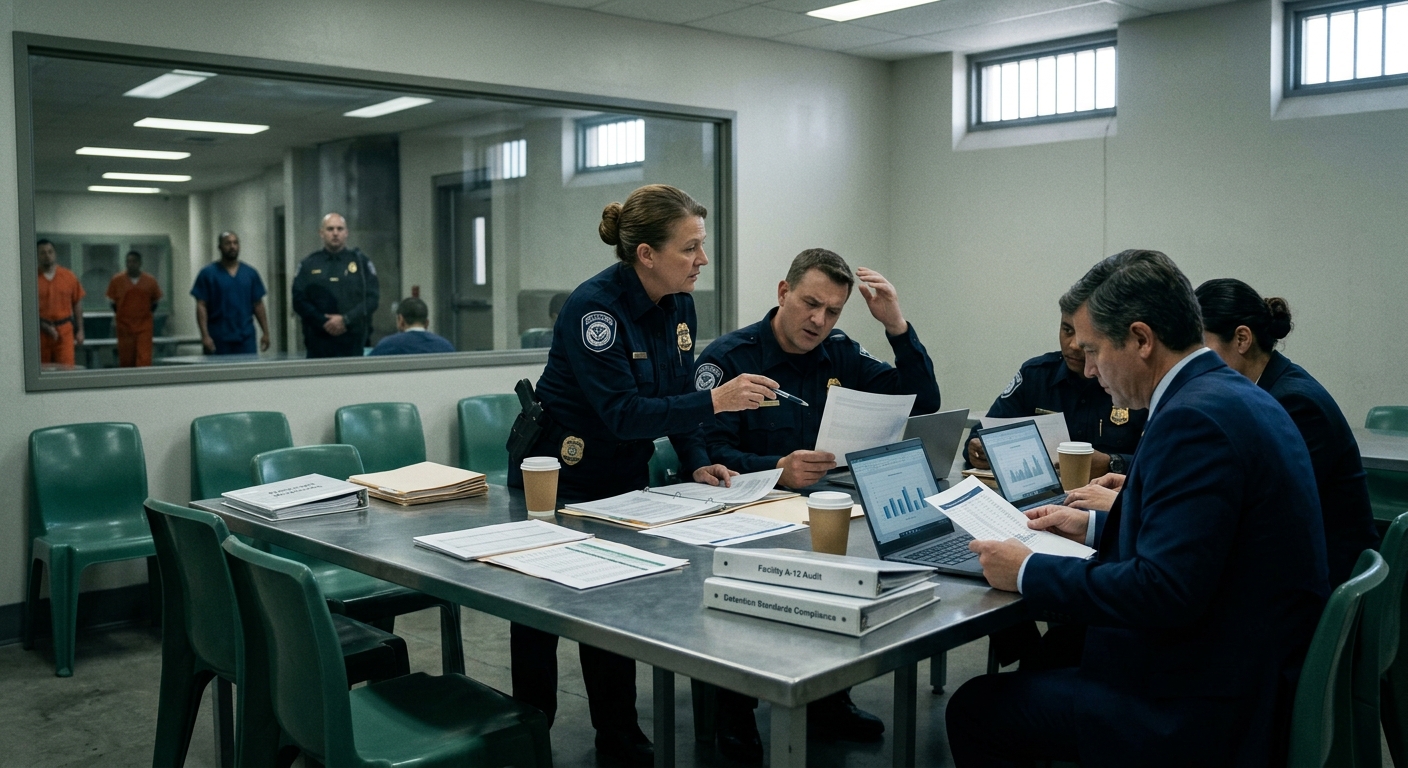
The United States operates a sprawling and highly privatized immigration detention network, holding tens of thousands of individuals across the country on any given day. To manage this massive enterprise, U.S. Immigration and Customs Enforcement (ICE) relies heavily on a web of contracts with local county jails and multi-billion-dollar private prison corporations. Given the immense power the government exercises over civil detainees—many of whom are seeking asylum or awaiting the adjudication of their immigration cases—robust, transparent, and enforceable oversight is not just a bureaucratic necessity; it is a fundamental human rights imperative.
However, consecutive reports from government watchdogs, civil rights organizations, and internal whistleblowers have repeatedly demonstrated that the existing mechanisms meant to ensure safe, secure, and humane confinement are profoundly flawed. Instead of serving as a strict regulatory framework that protects vulnerable populations, the current inspection regime frequently operates as a rubber-stamp system. Facilities with well-documented histories of medical neglect, unsanitary conditions, and abusive practices routinely pass official audits with flying colors. This deep disconnect between the realities on the ground and the official compliance grades points to a systemic failure that requires an immediate and comprehensive overhaul.
The Current Landscape of Federal Immigration Confinement
To understand the failures of the oversight system, one must first understand the architecture of modern immigration confinement. Unlike the federal prison system, which is largely operated by the Bureau of Prisons, ICE detention is a patchwork operation. As of late 2024, ICE held noncitizens in over 100 different facilities, the vast majority of which are owned and operated by private, for-profit entities or local sheriff’s departments under Intergovernmental Service Agreements (IGSAs).
This decentralized approach complicates accountability. The agency enforces various iterations of its detention standards—such as the National Detention Standards (NDS) and the Performance-Based National Detention Standards (PBNDS)—depending on when a contract was signed and what was negotiated. This means that a facility in one state might be held to a completely different, and potentially weaker, set of safety standards than a facility a few hours away. When expectations are disjointed, measuring comprehensive compliance across the network becomes a nearly impossible task.
Furthermore, the privatization of these facilities introduces a profit motive that inherently conflicts with the costly requirements of providing comprehensive healthcare, adequate nutrition, and safe housing. Private operators have a fiduciary duty to their shareholders to minimize operational costs, which often translates to understaffing, limited medical resources, and deferred facility maintenance. When the oversight system is not stringent enough to penalize these cost-cutting measures, the detainees bear the ultimate burden.
The Architecture of Oversight: Who is Watching the Watchmen?
ICE’s monitoring framework is built on a multi-tiered approach, but a closer examination reveals overlapping inefficiencies and glaring blind spots. The primary tools used to gauge facility compliance include:
- Third-Party Private Auditors: ICE contracts out its most frequent facility inspections to private auditing firms. These firms conduct annual reviews to determine if a facility meets its contractual standards. However, these inspections are frequently announced in advance, allowing facility administrators to temporarily staff up, clean housing units, and conceal chronic problems. The audits often prioritize paperwork compliance over physical realities.
- The Office of Detention Oversight (ODO): As an internal ICE entity, the ODO conducts more rigorous, unannounced inspections. While their methodology is generally considered more thorough than private third-party auditors, they only inspect a fraction of the facilities each year. Consequently, a facility might go years without a comprehensive ODO review, allowing dangerous conditions to fester unchecked.
- Independent Government Watchdogs: The Department of Homeland Security’s Office of Inspector General (DHS OIG) and the Government Accountability Office (GAO) provide independent assessments of the detention system. These entities consistently publish scathing reports highlighting massive gaps in care, safety hazards, and systemic mismanagement, often contradicting the passing grades given by ICE’s contracted auditors.
A System Designed to Deflect Rather Than Detect
The most damning indictment of the current oversight apparatus is the persistent disparity between internal evaluations and independent watchdog findings. A facility can receive a ‘Meets Standards’ rating from a private auditor while simultaneously facing a DHS OIG management alert for life-threatening conditions.
This discrepancy stems from a deeply ingrained checklist mentality. When third-party auditors visit a detention center, they often focus on whether written policies exist, rather than how—or if—those policies are implemented in practice. For instance, an auditor might verify that a facility has a written protocol for medical emergencies. They will check the box indicating compliance. However, they may fail to investigate whether medical requests are actually answered in a timely manner, whether the clinic is staffed by qualified professionals, or whether medications are routinely distributed as prescribed.
The U.S. Government Accountability Office (GAO) has repeatedly emphasized that without clear, quantifiable performance measures, assessing the true effectiveness of these inspection programs is impossible. In a 2024 report, the GAO noted that various inspection entities evaluate compliance differently, lacking unified goals that articulate target levels of performance. When the grading curve is skewed to ensure that nearly all facilities pass, the inspection process ceases to be a tool for accountability and becomes a shield against public and legal scrutiny.
The Human Toll of Lax Oversight
The consequences of these bureaucratic failures are measured in human suffering. When oversight mechanisms fail to enforce standards, the daily lives of detained immigrants are marked by indignity, danger, and, in tragic cases, preventable death. Independent investigations and unannounced OIG inspections routinely uncover a litany of severe violations that directly impact detainee welfare.
Medical Neglect and Delayed Interventions
Healthcare within immigration custody is a chronic vulnerability. Facilities often rely on remote medical consultations or underqualified staff to triage serious health complaints. Detainees frequently report waiting weeks for responses to basic medical requests, and chronic conditions like diabetes, hypertension, and mental health disorders are regularly mismanaged. In unannounced inspections spanning 2020 to 2023, the DHS OIG found widespread non-compliance with standards related to chronic medical care, dental care, and medical staffing. Such systemic neglect has led to catastrophic outcomes, including outbreaks of infectious diseases and preventable fatalities that prompt retroactive outrage but rarely proactive reform.
The lack of psychiatric care is particularly devastating. Individuals with pre-existing trauma—many of whom are fleeing persecution in their home countries—often find their conditions rapidly deteriorating within the austere environment of federal holding centers. Instead of receiving trauma-informed care, these individuals are frequently isolated, heavily medicated, or entirely ignored until a psychiatric emergency demands hospitalization. The absence of strict, actionable benchmarks for mental health staffing means that facilities can easily cut corners, leaving critical mental health positions vacant for months on end while still claiming to meet baseline operational guidelines.
Solitary Confinement and Retaliation
Another major concern is the misuse of segregation, often referred to as solitary confinement. Detention standards strictly limit the use of administrative and disciplinary segregation, especially for vulnerable populations such as those with severe mental illnesses. Yet, lax oversight allows facilities to use segregation as a default management tool or, worse, as retaliation against detainees who file grievances or participate in hunger strikes. Because the grievance system itself is often poorly managed and rarely audited for effectiveness, detainees who speak out against abusive conditions are frequently silenced without consequence to the facility operators.
Financial Incentives that Subvert Safety
To truly overhaul the accountability system, one must address the financial structures that incentivize the status quo. One of the most controversial elements of federal immigration detention is the use of ‘guaranteed minimum’ contracts. Under these agreements, ICE guarantees payment for a specific number of beds at a facility every day, regardless of whether those beds are actually occupied.
This financial model provides private operators and local governments with guaranteed revenue streams, deeply insulating them from the financial repercussions of poor performance. If a facility fails an inspection, provides substandard medical care, or has a documented history of civil rights violations, the operator still receives millions in taxpayer dollars. A September 2024 OIG summary report calculated that ICE paid approximately $160 million for unused bed space under these guaranteed minimum contracts over a recent multi-year period.
When financial penalties are non-existent or rarely enforced, facilities have zero economic incentive to invest in costly improvements. Meaningful oversight must be inextricably linked to financial consequences. Contracts must be structured so that severe or repeated violations of detention standards result in immediate financial deductions, and ultimately, the termination of the contract.
The Path Forward: Blueprint for an Effective Accountability Model
Repairing the fractured oversight system requires more than minor policy tweaks; it demands a paradigm shift in how the federal government prioritizes human rights over operational convenience. A robust, effective accountability model should incorporate the following foundational changes:
- Ending Advance Notice for Audits: All inspections, whether conducted internally or by third parties, must be completely unannounced. Providing facilities with advance warning defeats the purpose of an audit and prevents inspectors from observing the day-to-day reality of the detention environment.
- Tying Contracts to Compliance: ICE must establish a zero-tolerance policy for critical safety and health violations. Contracts must include mandatory financial penalties for non-compliance, and the agency must demonstrate a willingness to terminate agreements with repeat offenders rather than continuously granting waivers.
- Standardizing Detention Requirements: The current fragmented system of differing standards must be unified. Every facility holding federal immigration detainees should be held to the highest, most updated standard of care, removing the legal loopholes that allow older facilities to operate under severely outdated rules.
- Empowering Independent Watchdogs: The DHS Office of the Immigration Detention Ombudsman and the OIG must be granted unfettered access to facilities, detainee records, and medical files. Furthermore, their recommendations must be treated as binding mandates rather than optional suggestions that ICE can simply ignore.
- Enhancing Transparency: Inspection reports, corrective action plans, and detainee grievance logs should be made publicly available in a timely manner. Public scrutiny is a powerful catalyst for reform, and shielding facility operations behind bureaucratic red tape only perpetuates a culture of impunity.
In addition to independent government reviews, civil society and legal advocacy groups must be granted greater access to these facilities. Non-governmental organizations (NGOs) and pro bono attorneys frequently serve as the last line of defense for detainees facing immediate harm. When ICE and its private contractors restrict attorney-client visitations or limit access to independent medical experts, they effectively shield their operations from constitutional scrutiny. Opening the doors of these facilities to external human rights observers would provide an essential layer of transparency that internal bureaucratic mechanisms have repeatedly failed to supply.
The federal government holds a profound legal and moral obligation to ensure the safety of those it strips of their liberty. Until the oversight system is drastically overhauled to prioritize transparency, enforce strict penalties, and listen to the voices of those detained, the cycle of abuse and neglect will inevitably continue. True accountability is not achieved by checking a box; it is achieved by fostering an environment where human dignity is uncompromisingly protected.
Frequently Asked Questions (FAQs)
What is the difference between ICE’s internal inspections and independent OIG audits?
ICE’s standard inspections are often conducted by private, third-party contractors hired by the agency. These inspections are frequently announced ahead of time and have been heavily criticized for being superficial. Conversely, the Department of Homeland Security’s Office of Inspector General (OIG) is an independent watchdog that conducts unannounced, highly detailed inspections. OIG audits frequently uncover severe health, safety, and operational deficiencies that third-party contractors overlook.
Why are private prison companies heavily involved in immigration detention?
Over the decades, the federal government has increasingly relied on private, for-profit prison corporations to quickly scale up detention capacity. Proponents argue it offers flexibility, but critics highlight that the profit motive leads these companies to cut operational costs—such as medical staffing and facility maintenance—which negatively impacts the health and safety of detained individuals.
What are ‘guaranteed minimum’ contracts?
A guaranteed minimum contract is an agreement where ICE promises to pay a detention facility operator for a specific number of beds every single day, regardless of whether those beds are actually filled with detainees. This means taxpayer money flows to the facility even if it is underutilized, and it insulates the operator from financial losses, even if they have a track record of failing to meet basic safety standards.
How do detainees report abuse or unsafe conditions?
Detainees can theoretically report abuse through a facility’s internal grievance system or by calling specialized ICE hotlines. However, numerous independent reports have shown that these grievance systems are often broken, phone lines are frequently non-functional, and detainees face significant threats of retaliation—such as being placed in solitary confinement—if they complain about their treatment.
What role does the GAO play in detention oversight?
The U.S. Government Accountability Office (GAO) acts as the investigative arm of Congress. It evaluates federal programs, including ICE detention operations, to ensure taxpayer money is spent efficiently and legally. The GAO routinely issues reports recommending systemic improvements, such as urging DHS to define clear, measurable goals to accurately assess whether their facility inspection programs are actually working.
References
- Immigration Detention: DHS Should Define Goals and Measures to Assess Facility Inspection Programs (GAO-25-107580) — U.S. Government Accountability Office. 2024-05-21. https://www.gao.gov/products/gao-25-107580
- Immigration Detention: ICE Can Improve Oversight and Management (GAO-23-106350) — U.S. Government Accountability Office. 2023-01-09. https://www.gao.gov/products/gao-23-106350
- Summary of Unannounced Inspections of ICE Facilities Conducted in Fiscal Years 2020-2023 (OIG-24-60) — Department of Homeland Security Office of Inspector General. 2024-09-24. https://www.oig.dhs.gov/sites/default/files/assets/2024-09/OIG-24-60-Sep24.pdf
Similar Articles








Read full bio of medha deb




