
Swimming Pool Permits: Legal Requirements by State
Understand swimming pool permit requirements, regulations, and contractor licensing across US states.
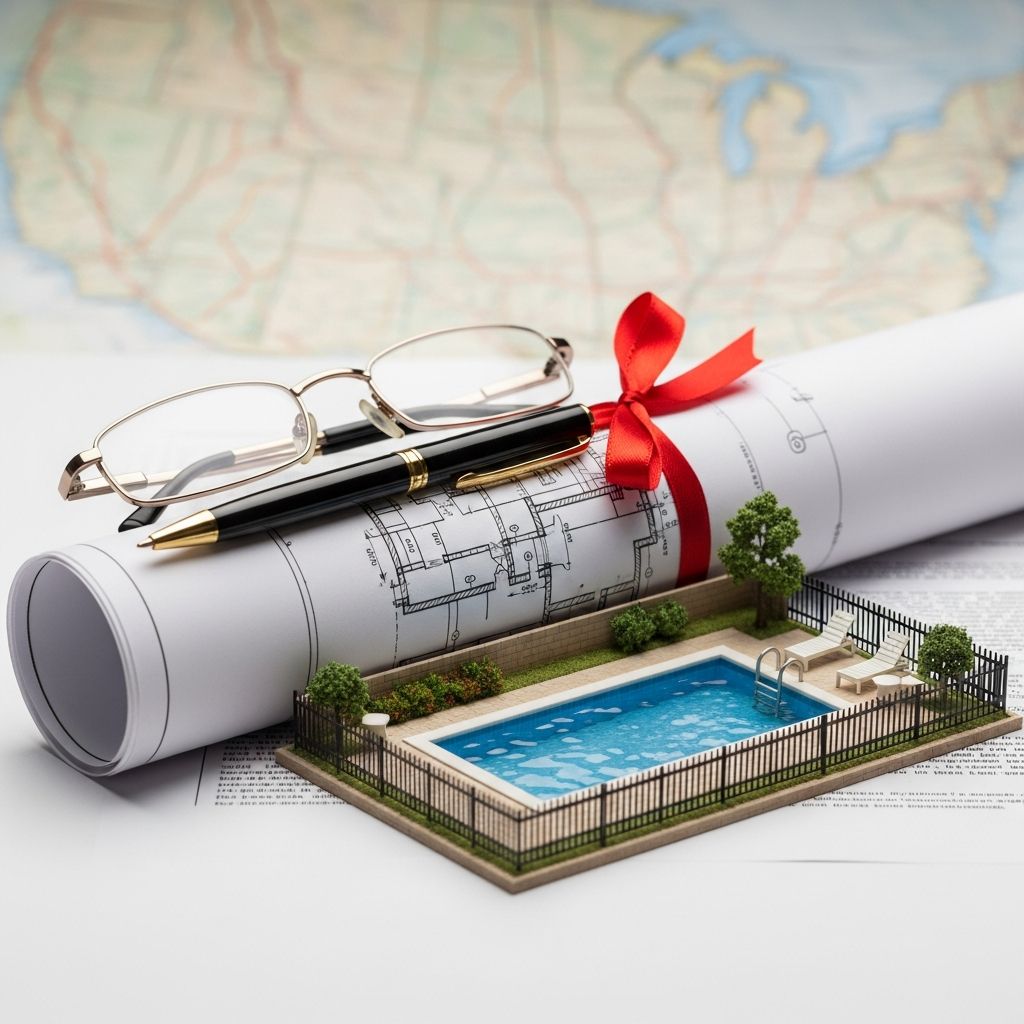
Understanding Swimming Pool Permits and Legal Obligations
Installing a swimming pool on your residential property involves more than just selecting the right design and construction contractor. Before breaking ground, property owners must navigate a complex landscape of local and state regulations that govern pool construction, safety standards, and professional licensing requirements. The permit process serves as a critical safeguard, ensuring that pools meet safety codes, environmental standards, and zoning restrictions that protect both homeowners and their communities.
The requirement for a swimming pool permit varies significantly depending on your geographic location, the type of pool being installed, and its specifications. Understanding these legal obligations early in the planning process can prevent costly delays, fines, and the need to modify or remove non-compliant installations. This guide explores the permit requirements and contractor licensing standards across major US states.
When Pool Permits Are Mandatory
Most jurisdictions require permits for permanently installed swimming pools, though the specific triggers for permit requirements differ across states and municipalities. The depth, type, and nature of the installation all influence whether a permit is necessary.
Permanent in-ground pools universally require permits in all states with formalized pool regulations. Above-ground pools typically require permits only when they exceed certain depth thresholds, often ranging from 24 to 42 inches depending on the jurisdiction. For example, in Massachusetts, any pool with water depth exceeding 24 inches requires a building permit, while South Carolina requires permits for above-ground pools deeper than 42 inches. Indoor pools, including those in basements or dedicated pool houses, generally require permits regardless of depth due to additional ventilation and structural considerations.
Temporary or portable pools that remain shallow typically do not require permits. However, property owners should verify local regulations before proceeding, as some municipalities have specific rules about temporary installations lasting beyond a certain duration or size threshold.
State-Specific Licensing Requirements for Pool Contractors
Beyond property owner permits, many states mandate that pool contractors hold specific licenses demonstrating their expertise in pool construction and installation. These licensing requirements protect homeowners by ensuring that qualified professionals handle complex technical work.
California’s Comprehensive Contractor Licensing
California enforces some of the nation’s most rigorous pool contractor licensing standards. Pool contractors in California must obtain a C-53 Swimming Pool Contractor license from the California Contractors State License Board (CSLB) for projects valued at $500 or more. Applicants must be at least 18 years old, hold a valid Social Security Number or ITIN, and demonstrate at least 4 years of journeyman-level swimming pool construction experience. Beginning in 2025, prospective licensees must also complete pre-licensing coursework covering safety protocols and California construction law, followed by both written and hands-on examinations before licensure is granted.
Connecticut’s Tiered Licensing Structure
Connecticut implements a tiered licensing system that recognizes different levels of pool construction expertise. The Swimming Pool Builder (SPB) license represents the highest tier, requiring a minimum of 5 years of verified experience under another licensed builder or equivalent background, along with Certified Building Professional certification from the Pool & Hot Tub Alliance. Applicants for the Swimming Pool Contractor (SP-1) license must have at least 2 years of experience as a licensed SP-2 journeyperson, while the entry-level Swimming Pool Journeyperson (SP-2) designation requires 1 year of experience or apprenticeship combined with industry certification.
New Jersey’s Dual Certification Approach
New Jersey requires all pool and spa builders, installers, and service contractors to maintain current licenses renewed every two years. Pool and spa builders or installers must hold an APSP Certified Building Professional (CBP) designation, while service contractors need either an APSP Certified Service Technician (CST) or Certified Service Professional (CSP) credential. Spa service specialists may qualify through an APSP Certified Hot Tub Technician (CHTT) certification. This certification-based approach ensures that professionals maintain ongoing education in pool safety and construction standards.
New York’s Local Licensing Framework
New York differs from many states by delegating pool contractor licensing primarily to local authorities rather than establishing statewide requirements. In New York City, only Licensed General Contractors can obtain permits for pool installation projects. For residential properties containing one to four family units, contractors must also hold a Home Improvement Contractor (HIC) license. Additionally, contractors must maintain a physical business location within New York City to qualify for a General Contractor license, and all pool work must comply with the 2020 NYS Residential and Building Codes, which establish standards for safety barriers, electrical systems, and accessibility features.
Regional Variations in Permit Requirements and Timelines
Swimming pool permit processes vary substantially by region, reflecting different climate conditions, soil compositions, and risk profiles. Understanding these regional differences helps property owners anticipate permit timelines and required documentation.
Texas Pool Permitting Considerations
Texas lacks a statewide permitting structure, creating significant variation across municipalities. Local permit timelines typically range from 2 to 6 weeks depending on the specific jurisdiction. Texas permits typically address setback requirements that mandate minimum distances from property lines, septic systems, and utility easements. In flood-prone areas like Harris County, pools located in Special Flood Hazard Areas (SFHAs) require elevation certificates and inspections to verify that fill material does not obstruct natural drainage patterns. All electrical installations must comply with the 2015 International Building Code, with ground fault circuit interrupter (GFCI) protection required for outlets adjacent to water. A unique challenge in Central Texas involves expansive clay soils that frequently require engineered foundations to prevent soil shifting and structural damage.
North Carolina’s Coastal and Seismic Requirements
North Carolina’s permit process typically requires 3 to 8 weeks for review and approval. Coastal communities enforce distinctive regulations, particularly in areas like North Topsail Beach, where pools located below the Design Flood Elevation (DFE) must be in-ground installations independent of primary buildings to minimize flood damage risk. All jurisdictions mandate 4-foot fencing with self-closing gates and child-safe latches. Western North Carolina’s seismic activity necessitates reinforced concrete footings in mountainous regions, adding to construction complexity and cost. Electrical bonding of all metal components, including ladders and rails, prevents electrocution hazards and is mandatory statewide.
Florida’s Hurricane and Environmental Considerations
Florida’s permit approval process typically spans 4 to 8 weeks, following a three-phase sequence: initial plan review (2–4 weeks), pre-opening inspection to confirm health and safety compliance, and annual permit renewals for commercial pools with routine inspections. The Florida Building Code requires coastal pools to withstand winds exceeding 140 mph, necessitating specialized engineering and construction techniques. Safety barriers must reach 4 feet in height, with screened enclosures featuring self-latching gates as an alternative. Anti-entrapment drain covers complying with the Virginia Graeme Baker Act are mandatory. South Florida’s elevated water table often requires specialized pool designs that prevent buoyancy issues, adding significant technical complexity to construction planning.
South Carolina’s Permit Documentation Requirements
South Carolina requires permits for permanently installed swimming and wading pools deeper than 42 inches, as well as all indoor pools regardless of depth. Temporary pools remaining shallow typically avoid permit requirements. Applicants must submit drawn-to-scale site plans indicating pool location, dimensions, and proximity to property boundaries; proof of property ownership through deeds or tax records; and detailed project scope descriptions. Licensed contractors handling electrical, plumbing, or gas work must provide contractor licenses, liability insurance documentation, and workers’ compensation verification. Certain municipalities offer standardized application forms to streamline the process, such as Spartanburg’s Swimming Pool Permit Application or York County’s Residential Swimming Pool Permit Application.
Comparison of Key State Requirements
| State | Depth Threshold | Typical Timeline | Key Contractor License | Unique Requirements |
|---|---|---|---|---|
| California | All permanent pools | Varies by county | C-53 License (4+ years exp.) | Pre-licensing coursework (2025+), written and practical exams |
| Connecticut | All permanent pools | Varies by municipality | SPB/SP-1/SP-2 Tiered | PHTA Certification required for SPB tier |
| Massachusetts | Exceeds 24 inches | Varies by town | Varies locally | Plot plans and zoning setback compliance |
| New Jersey | All permanent pools | Every 2 years renewal | APSP CBP (builders), CST/CSP (service) | Dual certification system for different service types |
| New York | Varies locally (NYC all) | Locally determined | GC + HIC (NYC, 1–4 family) | Local licensing framework, business location required |
| Texas | Varies by municipality | 2–6 weeks | Varies locally | Setback and floodplain compliance, expansive clay considerations |
| North Carolina | Varies by location | 3–8 weeks | Varies by region | Coastal DFE requirements, seismic considerations in west |
| Florida | Varies by county | 4–8 weeks | Varies by county | Hurricane wind resistance (140+ mph), anti-entrapment drains |
| South Carolina | Exceeds 42 inches | Varies by municipality | Licensed contractors for utility work | Site plans, proof of ownership, specific municipality forms |
Essential Documentation for Permit Applications
Successfully obtaining a pool permit requires submitting comprehensive documentation that demonstrates compliance with local codes and safety standards. While specific requirements vary by jurisdiction, certain documents appear consistently across most permit applications.
Site plans and property documentation form the foundation of most applications. These scaled drawings must accurately depict the proposed pool’s location, dimensions, depth, and relationship to existing structures and property boundaries. Property ownership documentation, typically a deed or recent tax records, verifies that applicants have legal authority to construct on the property. Zoning compliance materials demonstrate that the pool meets setback requirements and does not violate local zoning restrictions. Engineering drawings may be required in areas with challenging soil conditions, flood risks, or seismic activity, ensuring that the proposed construction accommodates regional geological factors. Contractor credentials, including licenses, liability insurance, and workers’ compensation coverage, establish that qualified professionals will perform the work. Some jurisdictions require environmental impact assessments or drainage plans to ensure that pool construction does not negatively affect surrounding properties or local water systems.
Safety Standards and Building Code Compliance
Pool permits exist primarily to enforce safety standards that protect swimmers and property integrity. Modern building codes establish comprehensive requirements covering structural design, electrical systems, drainage, entrapment prevention, and accessibility features. These standards have evolved significantly following high-profile incidents, particularly the Virginia Graeme Baker Act, which mandated anti-entrapment drain covers in public pools and subsequently influenced residential safety requirements in many states.
Electrical work in and around pools requires specialized compliance, including ground fault circuit interrupter (GFCI) protection for all outlets within specified distances from water. Metal components such as ladders, rails, and light fixtures must be properly bonded to prevent electrical hazards. Fencing requirements typically specify 4-foot barriers with self-closing, self-latching gates to prevent unauthorized access by children. In coastal areas subject to hurricanes or severe storms, pools must meet wind-resistance specifications that may require reinforced construction techniques. Drain covers must prevent child entrapment while maintaining proper water circulation. These varied requirements ensure that properly permitted pools incorporate multiple layers of protection addressing common accident scenarios.
Timeline Expectations for Permit Approval
Permit approval timelines vary substantially across jurisdictions but generally range from 2 to 8 weeks. Several factors influence approval duration, including the completeness of submitted documentation, the complexity of the proposed project, and local review capacity. Municipalities with dedicated building departments and streamlined processes typically process applications more rapidly than areas where pool permits compete with other construction applications for reviewer attention.
Incomplete applications frequently extend timelines, as reviewers request missing information or clarification. Submitting comprehensive, accurate documentation from the outset significantly reduces approval time. Projects requiring engineering review or environmental assessment naturally require longer processing periods than straightforward residential installations in standard conditions. Property owners should contact local building departments early to understand specific timelines and documentation expectations, allowing adequate time for planning and construction scheduling.
Common Questions About Pool Permits
Q: Do I need a permit for an above-ground pool?
A: Most jurisdictions require permits for above-ground pools exceeding certain depth thresholds, typically 24 to 42 inches. Shallow temporary pools usually do not require permits. Check local regulations to determine specific requirements for your property.
Q: What happens if I install a pool without obtaining a permit?
A: Installing an unpermitted pool can result in substantial fines, requirements to remove the installation, difficulty obtaining homeowner insurance coverage, and complications when selling the property. Unpermitted structures may also violate local zoning ordinances.
Q: Can I act as my own pool contractor?
A: Most states allow property owners to perform construction work on their own homes, though contractor licenses are typically required for specialized work like electrical, plumbing, and gas installation. Even if owner-constructed, the project must still obtain appropriate permits and pass required inspections.
Q: How often must pool permits be renewed?
A: Renewal requirements vary by state and pool type. Residential pools typically do not require annual renewal once construction is complete and final inspections pass. Commercial pools and seasonal public pools often require annual renewal with routine inspections.
Q: What inspections will be conducted during the permit process?
A: Inspections typically focus on structural integrity, electrical safety, fencing compliance, drainage, and adherence to building codes. Additional inspections may address floodplain compliance in flood-prone areas or wind resistance in coastal regions. Multiple inspections may occur at different construction stages.
Q: Are there any exemptions from pool permit requirements?
A: Temporary shallow pools typically do not require permits, and some jurisdictions may exempt very small decorative water features. However, most permanently installed pools, including in-ground installations and above-ground pools exceeding specified depths, require permits regardless of exemption categories.
References
- State Requirements for Contractors for Swimming Pools — NIP Group. 2024. https://nipgroup.com/blogs/state-licensing-and-coverage-must-haves-for-contractors-for-swimming-pools/
- Navigating Swimming Pool Permitting and Regulations in TX, NC, and FL — JRH Engineering. 2024. https://www.jrhengineering.net/post/swimming-pool-permits-regulations-in-texas-north-carolina-florida
- Pool Permits in SC: Common Questions Answered — Aqua Blue Pools. 2024. https://www.aquabluepools.net/blog/swimming-pools/pool-permits-in-sc-common-questions-answered/
- California Code of Regulations: Contractors State License Board — State of California Department of Consumer Affairs. 2025. https://www.cslb.ca.gov/
- Virginia Graeme Baker Pool and Spa Safety Act — United States Consumer Product Safety Commission. 2024. https://www.cpsc.gov/
Similar Articles








Read full bio of medha deb




