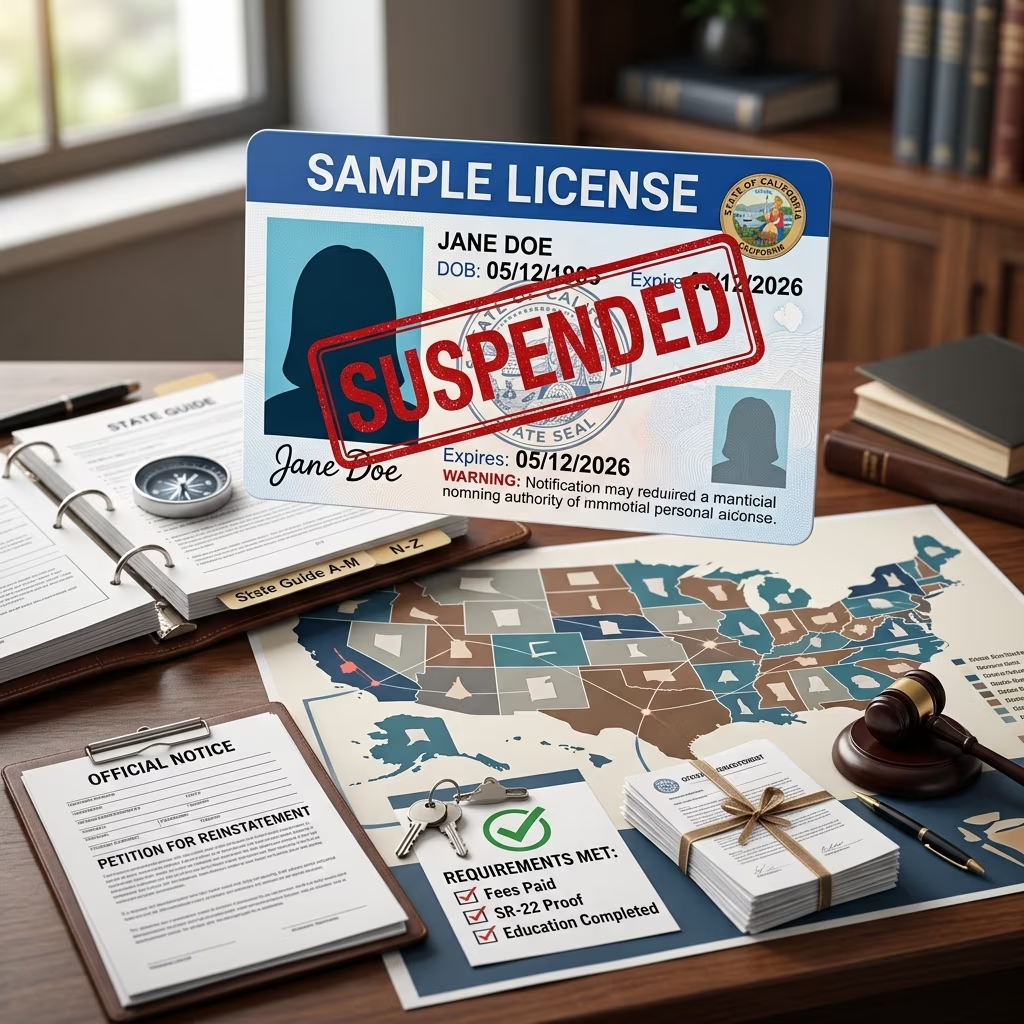
When your driver’s license is suspended, your ability to drive legally is put on hold. Every U.S. state has its own rules for how suspensions are imposed and how they can be lifted, but the overall goal is the same: to protect public safety and encourage responsible driving behavior.
This guide explains what a license suspension means, how reinstatement typically works, how state laws differ, and what to expect if you move to a new state while your license is suspended.
Understanding License Suspensions and Related Terms
States use different legal actions to restrict driving privileges. Knowing the terminology helps you understand what you are facing and which reinstatement process applies.
- Suspension: A temporary loss of driving privileges for a specific period or until certain conditions are met. Once you satisfy the requirements, you may be eligible to reinstate your license.
- Revocation: A more serious action where your license is cancelled. After a revocation, you usually must reapply as if you were a new driver, meeting additional conditions set by law.
- Cancellation: An administrative action where a license is voided because you were not eligible for it, or there was some error in issuance. You can often apply again once the issue is corrected.
- Disqualification: A term commonly used for commercial driver’s licenses (CDLs), referring to loss of commercial driving privileges for specific violations.
The exact definitions and consequences of each action are published by state motor vehicle agencies, such as the Virginia Department of Motor Vehicles and the Texas Department of Public Safety.
Common Reasons for License Suspensions
Although the details vary by state, many suspensions fall into a few broad categories.
- DUI or DWI (Driving Under the Influence / Driving While Intoxicated): Often leads to mandatory suspension periods, court-ordered programs, and strict reinstatement conditions.
- Excessive traffic violations: Accumulating too many points or repeated serious offenses can trigger suspension in most states.
- Driving while suspended: Driving after your license has already been suspended can lead to additional penalties, including longer suspension times.
- Failure to pay fines or appear in court: Unpaid traffic tickets or missed court dates often result in administrative suspensions until the obligations are met.
- Non-driving related issues: Some states suspend licenses for non-payment of child support, certain tax debts, or other court-ordered obligations.
Typical Steps to Reinstate a Suspended License
Although each state sets its own rules, many follow a similar pattern for reinstating driving privileges. State agencies like the Texas Department of Public Safety, Virginia DMV, and South Carolina DMV outline these steps in their official guidance.
1. Confirm Your Suspension Status
The first step is to verify exactly why your license is suspended, how long the suspension lasts, and what conditions must be met for reinstatement.
- Most states provide an online portal or eligibility webpage where you can check your status and see outstanding requirements.
- Some agencies send a formal notice explaining the suspension and listing required actions.
This status check helps you avoid guessing and ensures you focus on the requirements that actually apply to your record.
2. Complete the Suspension Period
Many suspensions last for a fixed term. You typically must wait out that period before reinstatement is allowed.
- For certain violations, such as driving while already suspended, states impose a mandatory additional suspension. For example, Louisiana requires a one-year suspension in some cases of driving under suspension.
- Attempting to renew or reinstate before the suspension period ends is usually not permitted.
3. Satisfy Court and Administrative Requirements
Reinstatement often depends on resolving the underlying cause of the suspension.
- Pay all outstanding fines and fees, including traffic tickets and court costs.
- Complete required programs, such as DUI education, alcohol or drug safety courses, or defensive driving classes.
- Provide proof of insurance or financial responsibility, often in the form of an SR-22 certificate after serious violations like DWI.
- Address non-driving obligations, such as child support or tax issues, when these are the basis for the suspension.
Many states will not accept a reinstatement application until these obligations are fully met.
4. Gather Compliance Documents
You usually must submit documentation proving that you have completed all required steps.
- Receipts showing payment of fines and reinstatement fees.
- Completion certificates for court-ordered courses or programs.
- Letters or releases from agencies handling child support or tax issues.
- Proof of SR-22 or other required insurance coverage.
Providing all relevant documents together, with clear identification information (name, date of birth, license number), helps your state agency process your request more quickly.
5. Pay Reinstatement Fees
Nearly all states charge reinstatement fees that are separate from fines or court costs.
- Fees may vary depending on the type of suspension and whether multiple violations are involved.
- Many agencies allow payment online through official eligibility or payment portals to speed up processing.
Some states require all past due fees and fines to be paid before a license can be reinstated, as seen in various administrative codes governing professional and driver’s license reinstatements.
6. Submit Your Reinstatement Request
Once you have completed the required steps, you must formally request reinstatement.
- Many states allow reinstatement by mail, online submission, or in person at a DMV or driver service office.
- Processing times vary; some agencies estimate several business days to review documents and update your record.
- You may receive a letter or electronic confirmation explaining whether your license is reinstated or if additional steps are needed.
How Reinstatement Processes Differ by State
While the basic pattern of suspension and reinstatement is similar, states add unique requirements based on their laws, programs, and public safety priorities.
| Aspect | Typical State Approach | Example |
|---|---|---|
| Online eligibility check | Dedicated portal showing status, fees, and requirements. | Texas license eligibility webpage for suspended drivers. |
| DUI-related suspensions | Program enrollment, ignition interlock, and restricted or provisional licenses. | South Carolina requires ignition interlock for certain DUI suspensions and offers provisional licenses in specific cases. |
| Driving while suspended | Additional mandatory suspension term and fines. | Louisiana imposes a one-year suspension for driving while under suspension. |
| Out-of-state suspensions | Reinstatement generally not allowed until the original state clears the suspension. | Virginia requires drivers to reinstate their privileges in the other state before obtaining a Virginia license. |
| Non-driving obligations | License may be suspended until debts or support obligations are resolved. | Some states require tax clearance or child support compliance before reinstatement. |
States also differ in whether they offer limited or restricted licenses during suspension, such as provisional licenses for certain first-time DUI offenders.
Moving to a New State with a Suspended License
Many drivers assume they can avoid a suspension by moving to another state and applying for a new license. In practice, interstate license rules make that difficult.
Driver License Compact and Interstate Cooperation
Most states are part of agreements that share information about serious traffic offenses and license suspensions. According to legal analysis, DLC states typically recognize suspensions from other member states and require drivers to clear those issues before obtaining a new license.
As a result:
- In many states, you cannot obtain a valid license if you have a suspension in another jurisdiction.
- New states often require you to resolve the original suspension by completing the appropriate waiting period, paying fines, and finishing required programs in the previous state.
Steps if You Move While Suspended
If you relocate to a new state with a suspended license, guidance from state DMVs and legal resources suggests the following approach.
- Research your new state’s licensing requirements and confirm whether they participate in information-sharing compacts.
- Be honest with the new state’s licensing agency about your suspension status; attempting to hide it may lead to further penalties.
- Resolve the suspension in your original state by following the reinstatement steps there.
- Collect proof of compliance, such as payment receipts and completion certificates, to show the new state that your record is clear.
Some drivers consult traffic or license restoration attorneys to understand how interstate rules apply to their specific situation.
Practical Tips for a Smoother Reinstatement Process
Official motor vehicle agencies emphasize organization and timely compliance as key to successful reinstatement.
- Keep copies of everything: Notices, payment receipts, program certificates, and correspondence with courts or agencies.
- Use trackable mail or secure online portals when sending documents, especially to state agencies handling large volumes of requests.
- Check your status regularly: Online eligibility tools often update within days of receiving payments or documents, letting you confirm progress.
- Address every listed requirement: Missing even one item can delay reinstatement or lead to denial.
- Ask questions early: If you are unsure about a requirement, contacting the state agency directly can prevent mistakes and delays.
Frequently Asked Questions (FAQs)
Can I drive in another state if my license is suspended at home?
In general, you are not allowed to drive in another state using a license that is suspended in your home state. Many states treat a suspension as a loss of driving privileges that other jurisdictions will respect, especially under interstate compacts and cooperation agreements.
How do I find out why my license was suspended?
Most state agencies provide a written notice explaining the reason for the suspension and required steps for reinstatement. Many also offer online portals where you can view your status, outstanding fees, and compliance requirements.
Do I need SR-22 insurance to reinstate my license?
SR-22 insurance is often required after serious offenses like DUI or repeated violations. Whether you need it depends on your state’s laws and the type of suspension. Your suspension notice or eligibility portal will usually specify if SR-22 or similar proof of financial responsibility is required.
How long does reinstatement take once I submit everything?
Processing times vary by state and by how you submit your documents. Some agencies estimate around several business days for online payments and up to a few weeks for mailed compliance documents.
Can I get a restricted or provisional license during suspension?
Some states allow restricted driving privileges, such as provisional licenses for certain first-time DUI offenders, if specific conditions are met. Requirements may include enrollment in alcohol and drug safety programs, limits on other suspensions, and payment of additional fees.
What if my license was revoked, not just suspended?
Revocation generally means your license has been cancelled and you must reapply as a new driver once you are eligible. This process often includes more stringent requirements than standard reinstatement after a suspension, and you may need to pass testing again and meet any court or program obligations.
References
- Reinstating Your Driver License or Driving Privilege — Texas Department of Public Safety. 2024-03-01. https://www.dps.texas.gov/section/driver-license/reinstating-your-driver-license-or-driving-privilege
- Reinstate Driver’s License — Virginia Department of Motor Vehicles. 2024-02-15. https://www.dmv.virginia.gov/licenses-ids/license/reinstate
- License Reinstatement — South Carolina Department of Motor Vehicles. 2024-05-19. https://dmv.sc.gov/driver-services/license-reinstatement
- Suspensions — Louisiana Office of Motor Vehicles. 2023-11-10. https://expresslane.la.gov/omv/drivers/driver-reinstatement/suspensions/
- Reinstating A Driver’s License — LouisianaLawHelp.org. 2023-10-05. https://louisianalawhelp.org/resource/reinstating-a-drivers-license
- Reinstating Your License in a New State with an Out-of-State Suspension — FindLaw. 2023-08-30. https://www.findlaw.com/traffic/drivers-license-vehicle-info/valid-license-in-one-state-but-it-gets-revoked-in-another.html
- Drivers License Reinstatement Steps in Texas — YouTube (informational video referencing Texas DPS process). 2023-06-12. https://www.youtube.com/watch?v=-JRZd-VCbyY