
Suspecting Unauthorized Trading? A Practical Investor Guide
Learn how to recognize, document, report, and seek compensation for unauthorized trades in your investment accounts.
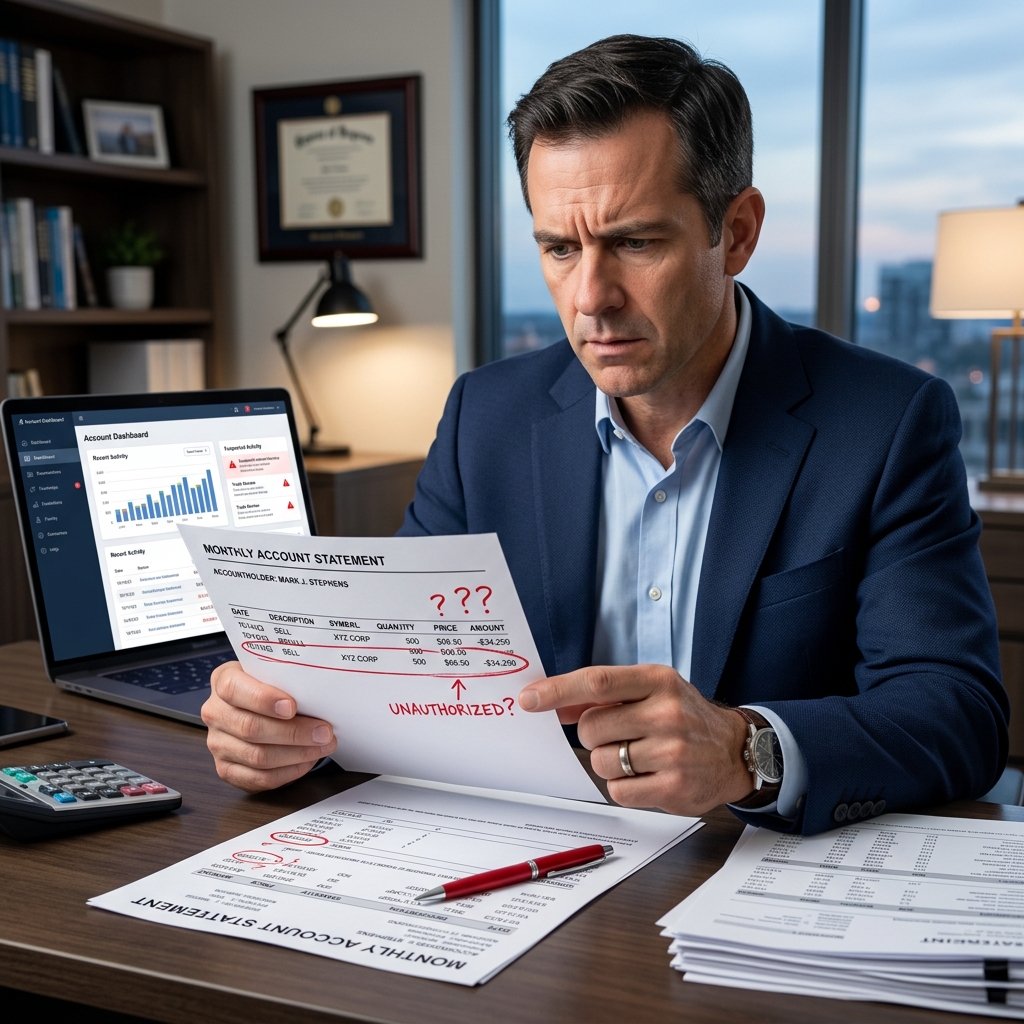
When you trust a broker or investment adviser with your money, you expect every trade in your account to be made with your knowledge and consent. If you spot unfamiliar transactions, sudden shifts in your portfolio, or losses you cannot explain, you may be dealing with unauthorized trading. Understanding what this means, how to respond quickly, and which remedies are available can make the difference between absorbing a loss and recovering your funds.
Understanding Unauthorized Trading in Plain Language
In the simplest terms, unauthorized trading occurs when a broker or adviser buys or sells securities in your account without getting your approval first. This may involve stocks, bonds, mutual funds, options, or other financial products, and it violates both industry rules and federal law.
Key points about what qualifies as unauthorized trading include:
- Your broker executes a trade without asking you first, and you did not give written permission for discretionary trading.
- Trades are placed that do not match your previously agreed investment strategy or risk tolerance, without your approval.
- Transactions appear in your statement that you only learn about after the fact.
Brokerage firms and brokers are subject to rules from the Financial Industry Regulatory Authority (FINRA)Securities Exchange Act of 1934, which prohibit unauthorized trades and related deceptive practices. Violations can expose them to regulatory sanctions, arbitration claims, and lawsuits.
Discretionary Accounts vs. Non-Discretionary Accounts
Whether a trade is unauthorized often depends on what kind of account you opened with your broker. Understanding this difference is crucial before you decide how to proceed.
| Feature | Discretionary Account | Non-Discretionary Account |
|---|---|---|
| Broker’s authority | Broker can decide what to trade and when, within the agreed strategy. | Broker must get your approval before each trade. |
| Required permission | Written authorization for discretion, usually through a specific agreement. | No discretionary authority; each transaction should be individually authorized. |
| Common dispute | Broker exceeded the scope of discretion or violated your investment objectives. | Broker placed trades without your express consent or misrepresented your approval. |
| Key question | Did you sign a document giving the broker trading discretion, and were trades consistent with that authority? | Did you clearly approve each trade that appears on your statement? |
FINRA rules restrict brokers from making discretionary trades in a non-discretionary account unless they obtain express written authority from the customer, and these rules are incorporated into the FINRA rulebook. If you never signed such a document, each trade should normally be preceded by your consent.
Typical Warning Signs of Unauthorized Trading
Unauthorized trading is sometimes obvious, but in many cases it surfaces gradually as you review monthly statements or tax documents. Watch for the following red flags:
- Trades you do not recognize: You see purchases or sales of securities you never discussed or approved, especially in significant amounts.
- High turnover in the account: Securities are bought and sold frequently with no clear strategy, potentially signaling both unauthorized trading and excessive trading (churning).
- Shifts in risk level: Your portfolio suddenly holds speculative or high-risk investments inconsistent with your stated objectives, such as aggressive options strategies when you requested conservative investments.
- Losses in a rising market: You incur notable losses during a generally upward market, and the explanation does not make sense based on your prior plan.
- Missing or confusing explanations: Your broker cannot clearly explain why a particular transaction occurred or tries to avoid questions.
- Trades dated while you were unreachable: For non-discretionary accounts, trades made while you were traveling or hospitalized without communication can be a major warning sign.
These signals do not always prove misconduct, but together they justify a closer review of your account and communication history.
Immediate Steps When You Suspect Unauthorized Trading
Time matters. Securities laws and FINRA rules have filing deadlines, and waiting too long may limit your ability to recover damages. Acting quickly also reduces the risk of additional harmful trades. Consider the following structured approach:
1. Review and Organize Your Documentation
Begin by gathering and reviewing all relevant documents. This helps you confirm what actually happened and supports any future complaint.
- Download or print account statements for the period in question.
- Collect trade confirmations showing dates, prices, and quantities of each transaction.
- Locate your account opening documents, especially any discretionary authority forms or investment policy statements.
- Compile all emails, text messages, and notes from phone calls with your broker.
As you compile these records, make a list of the specific trades you believe were unauthorized, including:
- Trade date
- Security name or symbol
- Buy or sell
- Quantity and price
- Reason you believe you did not authorize the trade
2. Confirm Your Account Type and Instructions
Before accusing your broker of wrongdoing, confirm whether the account allowed discretion. Check your account agreement to see if you signed a discretionary authorization. FINRA rules emphasize that discretionary authority must be properly documented, and trades outside that authority may violate industry standards.
Ask yourself:
- Did I sign any document giving the broker authority to trade without asking me each time?
- Were my investment objectives (e.g., conservative income, growth, speculation) clearly recorded?
- Do the questioned trades fit within those objectives, or are they clearly inconsistent?
3. Contact Your Broker Promptly, in Writing if Possible
The U.S. Securities and Exchange Commission (SEC) encourages investors to address concerns with the firm and, if needed, file complaints when unauthorized transactions occur. Start by reaching out to your broker and their supervisor.
Good practices when you first contact the firm include:
- Describe the suspected unauthorized trades clearly and calmly.
- Ask the broker to explain, in writing, the rationale and authorization for each disputed trade.
- Keep notes of the date, time, and content of all conversations.
- Follow up phone calls with a confirming email or letter summarizing what was discussed.
Written communication creates a record that can be important later if the matter escalates to arbitration, litigation, or regulatory review.
4. Escalate the Issue Within the Brokerage Firm
If the broker’s explanation is unsatisfactory or inconsistent with your documentation, escalate your concerns:
- Send a written complaint to the firm’s compliance department or branch manager describing the alleged unauthorized trading and attaching supporting documents.
- Request that the firm conduct a formal internal review and respond in writing.
- Ask for any internal notes or records that show when and how the trades were supposedly authorized.
Your complaint should be factual and detailed, but you do not have to present complex legal arguments at this stage. The key is to put the firm on notice and preserve your rights.
5. Preserve All Evidence
From the moment you suspect a problem, preserve everything that could support your case:
- Keep copies of statements, confirmations, and correspondence in a safe place.
- Save voicemails and screenshots of relevant text messages.
- Write a timeline of events, including when you first noticed the issue and any conversations with the broker.
This record will be crucial if you later file a complaint with regulators, pursue FINRA arbitration, or bring a court case.
Regulatory and Legal Options for Investors
When internal discussions with the firm do not resolve the problem to your satisfaction, you may have several avenues for further action. Investors often use a combination of regulatory complaints and private claims.
Filing a Complaint with the SEC
The SEC provides an online complaint system for investors who believe a broker has made unauthorized transactions or engaged in other sales practice abuses. While the SEC does not represent individual investors in private disputes, it can investigate misconduct and, where appropriate, bring enforcement actions against firms or individuals.
An SEC complaint typically includes:
- Your contact information and the name of the brokerage firm or adviser.
- A description of the suspicious trades and why you believe they were unauthorized.
- Relevant dates, account numbers, and documentation.
Even if the SEC does not intervene directly in your case, your complaint can support broader regulatory oversight and help protect other investors.
FINRA Arbitration for Recovery of Losses
Most brokerage account agreements require customer disputes to be resolved through FINRA arbitration rather than traditional courtroom litigation. According to FINRA and legal analyses, unauthorized trading can be addressed in arbitration where an investor seeks compensation for losses and other damages caused by the broker’s misconduct.
Important aspects of FINRA arbitration include:
- It is generally faster and less formal than court litigation.
- An independent panel of arbitrators hears evidence from both sides and issues a binding decision.
- You can request reimbursement for out-of-pocket losses and, in some cases, lost market gains you would have earned if your account had been properly handled.
Because arbitration is legally complex and outcome-driven, many investors consult or retain an attorney experienced in securities arbitration before filing a claim.
Court Lawsuits in Certain Situations
In some cases, especially where an arbitration clause is absent or challenged, investors may pursue claims through state or federal courts. Unauthorized trading may constitute:
- Violations of federal securities antifraud rules, including SEC Rule 10b-5, which prohibits manipulative and deceptive devices in connection with securities transactions.
- Breach of fiduciary duty or negligence under state law.
- Breach of contract based on the account agreement and representations made by the broker.
The choice between court and arbitration depends on your agreement, the specifics of your case, and strategic considerations best evaluated with legal counsel.
Potential Compensation and Damages
If you prove that unauthorized trading occurred and it caused losses, you may be entitled to various forms of compensation. Legal sources describing investor remedies explain that damages can include:
- Out-of-pocket losses: The difference between what you invested and what you recovered due to the unauthorized trades.
- Lost market gains: If your money would likely have earned returns in a rising market but instead suffered losses because of unauthorized trades, you may claim the missed gains.
- Interest and costs: Depending on the forum, you might obtain interest and reimbursement of certain fees.
- Other damages: In rare cases, punitive or exemplary damages may be available under applicable law, although these are less common in securities cases.
The exact amount and type of recovery depend on the facts, the law applied, and the decision of the arbitrator or court.
Preventive Measures to Reduce the Risk of Unauthorized Trading
While no step can guarantee absolute protection, careful oversight and disciplined habits significantly reduce the risk of being harmed by unauthorized trades.
Monitor Your Accounts Regularly
Regulators and investor advocates consistently urge investors to review brokerage statements and trade confirmations carefully. Make it a routine to:
- Check monthly or quarterly statements for unfamiliar positions or activity.
- Compare trade confirmations with your notes or emails recording what you actually approved.
- Verify that the overall allocation and risk level remain consistent with your goals.
Clarify Instructions and Keep Written Records
Clear communication reduces misunderstandings and creates a paper trail:
- Confirm major instructions by email, such as changing investment objectives or approving large trades.
- Ask your broker to summarize discussions in writing if complex strategies are involved.
- Request updated written profiles if your circumstances or risk tolerance change.
Written records help distinguish legitimate discretion from unauthorized action later.
Know Your Broker and Check Their Background
Before opening or moving an account, research the firm and individual broker. FINRA provides online tools that allow investors to check disciplinary history, registrations, and complaints. While a clean record does not guarantee future conduct, a history of problems can be an important warning sign.
Frequently Asked Questions About Suspected Unauthorized Trading
Does it matter if the unauthorized trades made money?
Yes, the trades can still be improper even if they were profitable. Unauthorized trading focuses on the lack of required permission, not solely on whether you gained or lost money. Industry rules and federal law prohibit executing trades without the customer’s authorization, regardless of the outcome.
What if I verbally approved a general strategy but not each trade?
In a non-discretionary account, general approvals are usually not enough. The broker is expected to obtain your consent for each transaction unless you signed written discretionary authority. However, the specific facts and communications pattern can affect how this is evaluated, which is why documentation is important.
How quickly should I act if I find an unauthorized trade?
As soon as possible. Waiting to complain can be interpreted as accepting the trade and may weaken your position. There are also time limits for bringing arbitration claims or lawsuits, so prompt action is in your best interest.
Can I handle a FINRA arbitration myself?
FINRA does not require investors to have lawyers, and some choose to represent themselves. However, brokerage firms typically have experienced counsel, and securities law can be complex. Many investors consult with or retain an attorney who regularly handles unauthorized trading and other brokerage disputes to improve their chances of a successful outcome.
Will filing a complaint with the SEC or FINRA get my money back?
Regulatory complaints can prompt investigations and potential enforcement actions, but regulators generally do not act as your personal lawyer or guarantee restitution. To seek direct compensation, you usually need to pursue FINRA arbitration or a lawsuit, often with the assistance of counsel.
Key Takeaways for Investors
Unauthorized trading undermines the trust at the heart of the broker–client relationship and can cause significant financial harm. By understanding what unauthorized trading is, monitoring your accounts carefully, responding quickly to warning signs, and using the regulatory and legal tools available, you can better protect your investments and, where appropriate, seek compensation for losses.
References
- Unauthorized Transactions — U.S. Securities and Exchange Commission. 2011-11-02. https://www.sec.gov/answers/unauthtransact.htm
- Unauthorized Trading of Securities & Legal Remedies for Investors — Justia. 2023-05-01. https://www.justia.com/banking-finance/securities/unauthorized-trading/
- What Constitutes Unauthorized Trading? — Brophy & Bland, PLLC. 2024-06-10. https://www.bdlawpllc.com/blog/2024/06/what-constitutes-unauthorized-trading/
- What Is Unauthorized Trading? — Scott Hirsch Law Group, PLLC. 2023-08-15. https://www.scotthirschlawgroup.com/blog/what-is-unauthorized-trading/
- What Is Unauthorized Trading? — Forman Law Firm. 2022-03-01. https://www.formanlawfirm.com/frequently-asked-questions/what-is-unauthorized-trading/
Similar Articles








Read full bio of medha deb




