
Contest A Will In Georgia: 6 Practical Steps To Prove Tampering
Learn how to recognize possible will tampering in Georgia, common legal grounds to challenge a will, and practical steps to protect your inheritance.
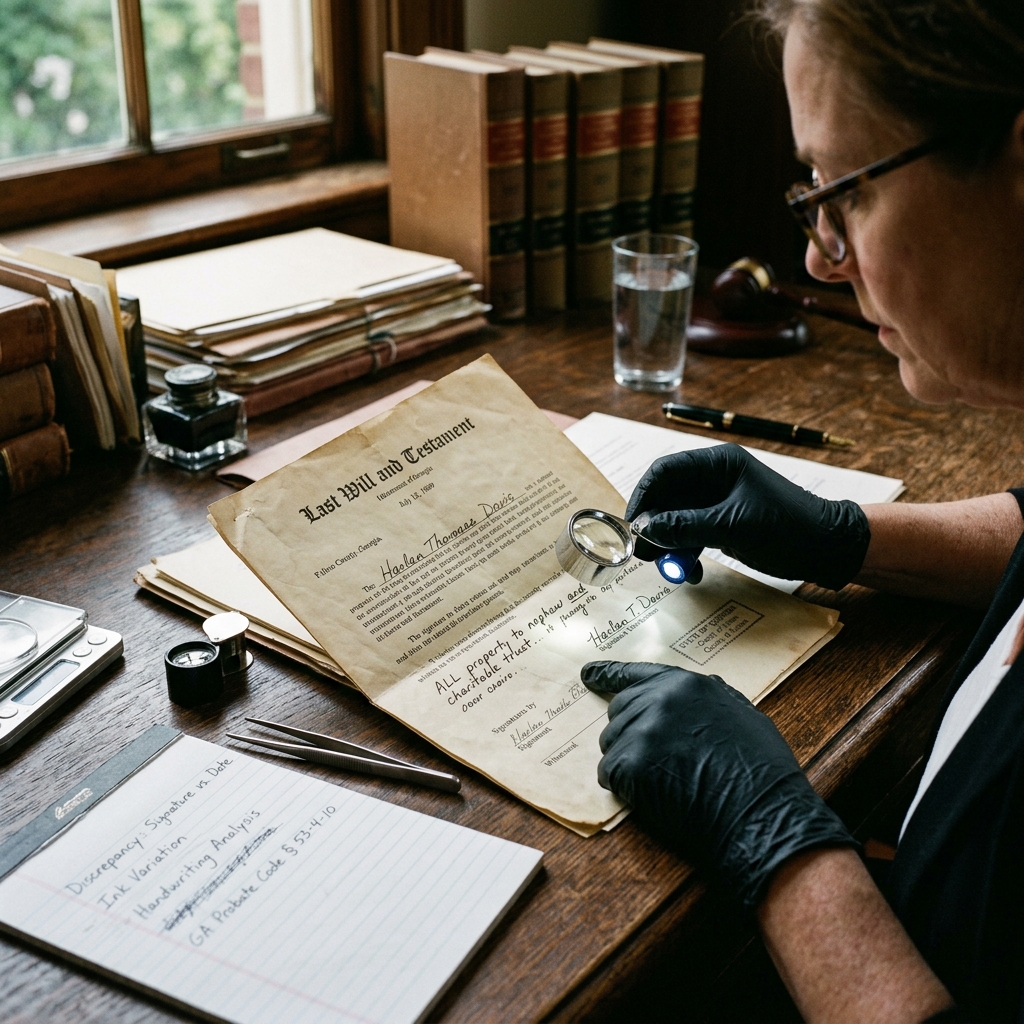
Discovering that a loved one’s last will and testament may have been altered, forged, or created under suspicious circumstances is deeply unsettling. In Georgia, there are clear legal rules for how a valid will must be created and probated, and there are established procedures for challenging a will that appears improper or fraudulent. When you suspect tampering, the key is to act quickly, gather facts, and understand the legal grounds on which a will can be contested.
This guide explains how to recognize potential tampering, the main legal bases for a will contest in Georgia, what evidence is important, how probate deadlines work, and why speaking with an experienced probate litigation attorney is often essential.
Understanding What “Tampering” With a Will Really Means
In everyday language, people use the word tampering to describe any improper interference with a will. Legally, several different issues may fall under that umbrella:
- Improper changes to an existing will, especially after the person has lost capacity.
- Forgery of signatures or entire provisions that were never approved by the person who made the will.
- Fraud, where the testator (the person making the will) is tricked or misled into signing a document they do not truly understand.
- Undue influence, when someone exerts extreme pressure to obtain a favorable inheritance.
- Execution errors, where the will was not signed or witnessed as Georgia law requires.
These problems can make a will partially or completely invalid, depending on how serious the defect is and how it affects the inheritance. The goal of any court review is to determine the true last wishes of the deceased and apply Georgia law to enforce those wishes.
Core Requirements for a Valid Will in Georgia
To recognize possible tampering, it helps to know what a properly executed Georgia will looks like. According to official state guidance, a valid will in Georgia generally requires:
- The will must be in writing.
- It must be signed by the person making the will, or by another person at their direction and in their presence.
- The signing must occur in the presence of two competent witnesses, who also sign.
- The testator should understand their property, the people who might inherit, and how the will disposes of their assets.
Georgia does not require notarization for a will to be valid, and a will does not have to be filed with the probate court before death. If any of these execution requirements are missing or seriously flawed, it can become a key ground for a will contest.
Table: Proper Will Execution vs. Warning Signs
| Proper Execution | Possible Red Flags |
|---|---|
| Testator signs while mentally aware of property and heirs. | Signing occurs after serious cognitive decline or diagnosed dementia. |
| Two disinterested witnesses sign in the testator’s presence. | Witnesses are missing, are beneficiaries, or were not present at signing. |
| Will clearly identifies beneficiaries and assets. | Sudden, unexplained changes exclude close family or favor a new acquaintance. |
| Original document is stored securely and accessible to the executor. | Original will goes missing or is replaced by a questionable “new” version. |
Common Legal Grounds to Contest a Will in Georgia
Georgia law recognizes several specific reasons a will may be challenged in probate court. Not every unfair or disappointing outcome is illegal; you must identify a legally recognized ground for your objection. Common grounds include:
Lack of Testamentary Capacity
Testamentary capacity means the person creating the will was of sound mind at the time of signing. In Georgia, this typically requires that the testator:
- Understands the nature and extent of their property.
- Knows the natural objects of their bounty (family members and close heirs).
- Comprehends how the will distributes their assets.
If a will is signed or altered after the person loses the ability to reasonably understand these points, the document or later changes can be invalid. Medical records, caregiver testimony, and prior legal documents are often crucial evidence in these cases.
Undue Influence
Undue influence occurs when someone exerts extreme pressure or manipulates the testator to the point that the will no longer reflects the testator’s free and independent decision. Common indicators include:
- A sudden, dramatic change in the will that strongly benefits the person exerting influence.
- Isolation of the testator from family and advisors.
- Control over finances, medications, or living arrangements by the influencer.
- The influencer arranging lawyers and meetings, while excluding others.
Undue influence does not mean ordinary persuasion or family discussions—it must substantially override the testator’s free will. Proving this often requires detailed, fact-specific investigation.
Fraud and Forgery
Fraud involves lies or deception that cause the testator to sign a document they do not truly understand. For example, they might be told they are signing a simple property form when in reality it is a will reshaping their entire estate. Forgery means the signature is not genuinely the testator’s, or a portion of the will has been altered without their approval.
These claims are serious and may intersect with broader criminal concepts such as tampering with evidence, which in Georgia includes knowingly altering or disguising physical evidence to obstruct legal proceedings. Proving fraud or forgery often requires expert handwriting analysis, document examination, and testimony from lawyers and witnesses involved in the drafting of the will.
Errors in Execution
Georgia has specific rules for how a will must be signed and witnessed. If those rules were not followed, the will can be challenged for defective execution. Common problems include:
- Missing witness signatures or witnesses who were never present at the signing.
- Beneficiaries acting as witnesses, raising questions about impartiality.
- Signatures added after the fact, or on separate pages without clear connection.
- Unclear or inconsistent dates, especially when multiple versions of a will exist.
Even when fraud or undue influence is hard to prove, clear execution errors can provide a straightforward basis to challenge the will.
Recognizing Practical Warning Signs of Will Tampering
Most families do not see the signing process itself. Instead, they notice changes in behavior or unexpected outcomes. Practical warning signs include:
- Surprise disinheritance of close family members without prior discussion.
- Last-minute changes close to death, especially when the testator was ill or cognitively impaired.
- A new beneficiary with a brief relationship to the testator receiving a major share.
- Statements from the testator before death that conflict with the final document.
- Missing, destroyed, or “lost” prior wills that had more typical distributions.
- One person controlling access to the testator and to their lawyers.
While these signs do not automatically prove tampering, they warrant closer review of the circumstances surrounding the will.
Time Limits and the Importance of Acting Quickly
In Georgia, you generally have only a limited window to object once a will is submitted to probate. When you receive official notice that a will has been offered for probate, you typically must file an objection (often called a caveat) within a short deadline or lose the right to challenge.
Missing this deadline can bar you from contesting the will later, even if strong evidence of fraud or forgery later emerges. This is one reason lawyers emphasize contacting a probate litigation attorney as soon as you suspect a problem, rather than waiting until distributions begin.
Building a Strong Case: Evidence That Can Matter
Successful will contests rely on solid, credible evidence. A general feeling that the result is unfair is rarely enough. Depending on your claim, relevant evidence can include:
- Medical records showing cognitive decline, dementia, or incapacity at the time of signing.
- Testimony from friends, caregivers, and advisors about the testator’s understanding and wishes.
- Prior wills or estate plans that reveal a consistent pattern of distribution.
- Emails, letters, or notes describing why changes were made—or objecting to them.
- Handwriting analyses and document examinations regarding signatures and alterations.
- Evidence of isolation, threats, or control that support undue influence claims.
Courts examine these facts in context. For example, a dramatic change in the will may be suspicious, but if it matches the testator’s clearly expressed wishes and was properly executed with legal advice, it may still be upheld.
Working With a Georgia Probate Litigation Attorney
Because will contests can be complex, emotionally charged, and time-sensitive, consulting a Georgia estate and trust litigation attorney is usually essential. An experienced lawyer can:
- Review the will, supporting documents, and probate filings for legal defects.
- Explain whether your concerns align with recognized grounds under Georgia law.
- File a timely caveat or formal objection in probate court.
- Gather and present evidence, including expert testimony, to support your claims.
- Negotiate with other heirs or beneficiaries to seek a fair resolution.
- Represent you at hearings or trial if the dispute cannot be settled.
Attorneys who focus on will contests are familiar with local probate judges, common patterns in fraud and undue influence cases, and practical strategies to protect your inheritance rights.
Practical Steps If You Suspect a Tampered Will
If you believe a will has been unlawfully altered or is not the true expression of your loved one’s wishes, consider taking the following steps quickly:
- Request copies of the current will and any prior versions.
- Gather written records (emails, letters, notes) where the testator discussed estate plans.
- List specific concerns—who benefits, who is excluded, and what changed.
- Note key dates (execution date of the will, medical diagnoses, major life events).
- Consult a probate litigation attorney before speaking extensively with other heirs.
- Act before probate deadlines expire to preserve your right to contest.
Being organized from the beginning makes it easier for your attorney to assess the case and respond appropriately.
Frequently Asked Questions
Can I contest a will just because I think it is unfair?
Generally, no. In Georgia, you must rely on legally recognized grounds, such as lack of capacity, undue influence, fraud, forgery, or execution errors. The fact that you received less than you hoped is not, by itself, sufficient to invalidate a will.
Who is allowed to challenge a will in Georgia?
Typically, people with a direct financial or legal interest in the estate may challenge a will. This often includes heirs at law and named beneficiaries whose rights would be affected if the will is declared invalid or modified. A probate attorney can help determine whether you have standing to contest.
What happens if my challenge succeeds?
If the court finds the will invalid in whole or in part, the estate may be distributed according to a prior valid will or, if no valid will exists, under Georgia’s intestacy laws. Those laws provide a default scheme for how assets are divided among surviving family members.
Is tampering with a will a crime?
Altering or forging a will can have civil and criminal consequences. Georgia’s tampering-with-evidence statute makes it a crime to knowingly destroy, alter, or disguise evidence in order to obstruct legal proceedings, which can include probate matters involving felonies. Whether criminal charges apply depends on the specific facts and the prosecutor’s decision.
Do I need to go to trial to resolve a will dispute?
Not always. Many will contests are resolved through negotiation or settlement among heirs and beneficiaries. However, if parties cannot agree, the court may hold a hearing or trial—sometimes with a jury—to decide whether the will is valid and how the estate should be distributed.
References
- Write a Will — Georgia.gov. 2024-01-10. https://georgia.gov/write-will
- Georgia Code § 16-10-94: Tampering with Evidence — Justia / State of Georgia. 2024-01-01. https://law.justia.com/codes/georgia/title-16/chapter-10/article-5/section-16-10-94/
- What If You Suspect a Will Was Tampered With? — Super Lawyers. 2023-09-15. https://www.superlawyers.com/resources/estate-and-trust-litigation/georgia/what-if-you-suspect-a-will-was-tampered-with/
- Common Grounds for Will Contests in Georgia — McGinn Law. 2023-06-20. https://www.lawga.com/common-grounds-for-will-contests-in-georgia
- Tampering with Evidence — Georgia Criminal Lawyer. 2022-11-01. https://www.georgiacriminallawyer.com/tampering-with-evidence-3
- Forged Will? What You MUST Do When a Will Looks Suspicious — YouTube / Georgia probate attorney commentary. 2023-08-03. https://www.youtube.com/watch?v=JxZSsx6NJuM
- Common Reasons Wills Are Challenged in Georgia — Norcross Law Firm. 2023-05-12. https://www.norcrosslawfirm.com/common-reasons-wills-are-challenged-in-georgia/
Similar Articles








Read full bio of medha deb


