
Survivor Privacy, Social Media, and Juvenile Justice
How one survivor’s public stand exposed the tension between court secrecy, accountability, and digital speech.
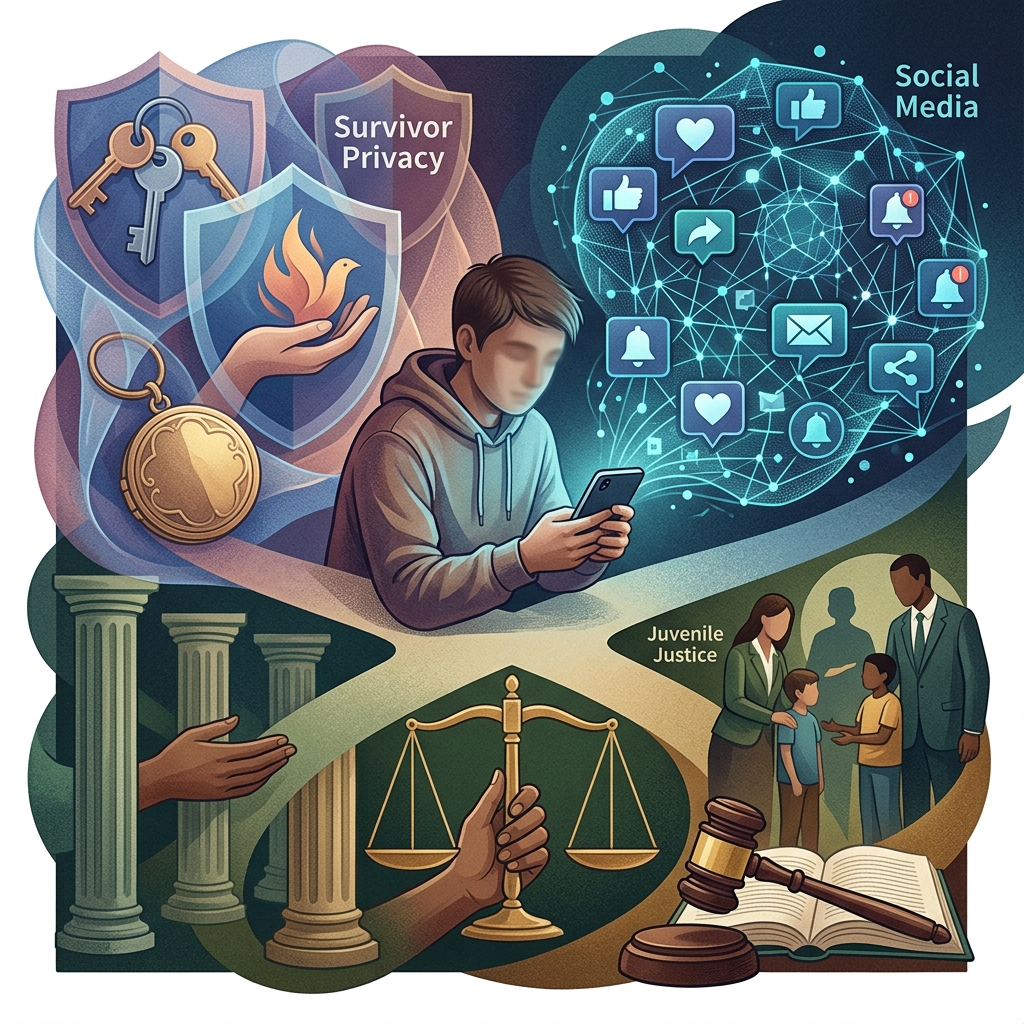
When a sexual assault survivor uses social media to name the people she believes harmed her, the post can trigger a legal and public debate that reaches far beyond one case. At stake are victim privacy, the protection traditionally given to juvenile defendants, and the broader question of how survivors can seek accountability when formal systems move slowly or appear to minimize harm.
This topic came into sharp public view after a Kentucky teenager drew national attention for publicly identifying the young men she said had assaulted her and then facing the threat of contempt proceedings because a court order barred disclosure of the juveniles’ names. The incident became a flashpoint for discussions about secrecy in juvenile court, the power of online speech, and the experience of survivors who feel unheard by the justice system.12
Why this case still matters
The story resonated because it was not just about one controversial tweet. It highlighted a familiar pattern in sexual assault cases: survivors often encounter procedural rules, plea negotiations, and privacy restrictions that can feel detached from the emotional reality of the harm they suffered. In juvenile cases, those tensions become even sharper because the legal system often protects the identities of young defendants while limiting what victims can say publicly.24
Public reaction to the case also showed how social media has changed the balance of power. A statement that once might have stayed in a private conversation can now spread instantly to a wide audience. For survivors, that can be empowering. For courts, it can complicate efforts to preserve confidentiality and manage a proceeding involving minors.27
What happened in the underlying dispute
According to reports on the case, Savannah Dietrich was a high school student in Kentucky who said she had been sexually assaulted by two boys from her school. The defendants were juveniles, and the matter proceeded through juvenile court, where records and hearings are often more restricted than in adult criminal cases.12
After what many observers considered a lenient resolution, Dietrich posted the names of the boys on Twitter, making clear that she was frustrated by the outcome and by the limits placed on her ability to speak. Attorneys for the defendants moved to hold her in contempt, arguing that she had violated a court order that protected the boys’ identities. The contempt request was later withdrawn amid growing public attention.27
The dispute then broadened into a larger legal conversation about whether a survivor should be punished for naming the people she says assaulted her, particularly when the survivor is also a minor and is speaking in the immediate aftermath of a deeply traumatic event.24
Juvenile court secrecy is designed to protect minors
Juvenile justice systems in the United States are built on the idea that children and teenagers are different from adults and may benefit from rehabilitation rather than permanent public stigma. That philosophy helps explain why juvenile proceedings are often confidential and why records may be sealed or restricted.4
The policy goals are straightforward. Confidentiality can reduce the long-term consequences of youthful misconduct, protect rehabilitation prospects, and prevent juveniles from being defined forever by one serious event. In sexual assault cases, the protection of minors can also extend to privacy for victims and witnesses, especially where the allegations involve other young people in the same school or community.4
But secrecy also creates a difficult tradeoff. The same rules meant to shield young people can leave victims feeling excluded from the process, especially if they believe plea deals are too light or court proceedings are too opaque. The Dietrich case captured that tension in a highly visible way.24
Why survivors sometimes go public
Many survivors who disclose sexual assault publicly are not simply seeking attention or revenge. They may be trying to reclaim control over a story that was taken from them, warn others, or express anger at a process they believe failed them. In cases involving juveniles or school communities, survivors may also hope that public identification will prevent the same people from harming others.27
Public disclosure can serve several purposes:
- It can give survivors a sense of agency after a traumatic loss of control.
- It can pressure institutions to respond more transparently.
- It can alert others in the community to alleged danger.
- It can create a record that is harder to ignore than a private complaint.
Still, public speech carries risk. Survivors may face retaliation, online harassment, or claims that they violated legal restrictions. They may also discover that a moment of candor online becomes a permanent part of the public record, even if they later regret it.27
The legal tension between speech and court orders
The central legal issue in cases like this is the conflict between a person’s desire to speak and a court’s authority to restrict disclosure. Courts can issue confidentiality orders to protect minors, preserve the integrity of proceedings, and limit public exposure of sensitive facts. If a person subject to the order publishes protected information, the court may consider contempt proceedings.24
At the same time, the First Amendment strongly protects speech, especially on matters of public concern. That does not mean a court order can never limit disclosure, but it does mean judges must balance competing interests carefully. When the person speaking is also the victim of the alleged offense, the moral and legal calculus becomes more complicated.
In the Dietrich matter, the threat of contempt generated controversy because many people viewed her tweet not as reckless defiance, but as a frustrated response to a system she felt had failed to recognize the seriousness of the assault. The public response helped push the dispute away from punishment and toward transparency.27
How media attention can change a case
Once a case enters the national conversation, the dynamics often shift. Media coverage can lead to scrutiny of sealed records, renewed questions about sentencing, and pressure on courts to explain their decisions. In Dietrich’s case, broader attention contributed to the eventual opening of juvenile court records and related filings concerning the contempt issue.4
That development matters because it shows that confidentiality is not always absolute. Courts may revisit secrecy decisions if public interest is substantial or if earlier restrictions prove difficult to justify in practice. Once a matter becomes a symbol of a larger issue, judges and lawyers may face pressure to make the process more transparent without undermining the protections the juvenile system is supposed to provide.4
Media attention, however, is a double-edged sword. It can increase accountability, but it can also intensify the burden on the survivor. Public discussion may bring validation, yet it may also expose the person to criticism and renewed trauma. That reality is one reason sexual assault advocacy groups stress survivor-centered approaches to reporting and support.9
The emotional reality behind the legal argument
Legal analysis alone does not fully explain why the Dietrich case struck such a nerve. The emotional dimension was central. Survivors often describe the experience of reporting assault as a second struggle, one that includes disbelief, delay, procedural complexity, and a sense that the system is more comfortable protecting defendants than acknowledging the survivor’s pain.23
When a survivor speaks out publicly after feeling ignored, the act can be both legally risky and psychologically meaningful. It may be a form of protest, a demand for recognition, or a refusal to remain silent. In that sense, the story became emblematic of how trauma can reshape the meaning of speech: what one person sees as a violation of a court order, another sees as an attempt to tell the truth after being denied a voice.
Key legal lessons from the controversy
The case offers several important lessons for lawyers, judges, schools, and advocates:
- Confidentiality rules should be explained clearly to all parties, especially minors and victim-survivors.
- Courts should anticipate that social media can quickly amplify private disputes.
- Juvenile secrecy must be balanced against the public interest in transparency when serious misconduct is alleged.
- Victims may need practical guidance on lawful ways to document their experiences without violating orders.
- Public institutions can reduce backlash by communicating sentencing and procedure more openly.
These lessons are not limited to one state or one type of case. They reflect a wider legal reality: the modern justice system must function in a world where private conflict can become public instantly, and where survivors may choose public speech when formal channels feel inadequate.
How survivors can seek support while protecting themselves
For people affected by sexual assault, support often matters as much as legal strategy. Reaching out to trained advocates can help survivors understand their options, manage safety concerns, and avoid unintended legal complications. National and community-based resources can also help survivors process trauma and decide whether public disclosure is the right step for them.9
Common forms of support include:
- Crisis hotlines staffed by trained responders.
- Advocacy organizations that help explain reporting and court processes.
- Counseling or trauma-informed therapy.
- Campus or community victim services.
- Legal advice before publishing names, messages, or allegations online.
Before making any public post about an ongoing case, survivors should consider whether a court order, protective order, or confidentiality agreement may apply. Even a post made in anger or grief can have legal consequences if it identifies protected parties.
Frequently asked questions
- Can a sexual assault survivor name an alleged assailant online?
- Sometimes yes, but it depends on whether a court order, confidentiality restriction, or other legal rule applies. If an order limits disclosure, naming someone online can create legal risk.
- Why are juvenile cases often sealed?
- Juvenile cases are often kept private to support rehabilitation, reduce stigma, and protect minors involved in the process. The goal is to avoid lasting harm from youthful misconduct.
- Does social media change the legal analysis?
- Yes. Social media can make a private dispute public in seconds, which can intensify pressure on courts and increase the chance of legal conflict over speech and confidentiality.
- What should a survivor do before posting details of a case?
- They should review any court orders, seek legal advice if possible, and consider whether sharing names or identifying facts could create legal or safety problems.
- Is public attention always helpful?
- No. Public attention can increase accountability, but it can also expose survivors to harassment, emotional strain, and unwanted long-term visibility.
| Issue | Purpose | Potential Risk |
|---|---|---|
| Juvenile confidentiality | Protect minors and support rehabilitation | Can frustrate victims seeking transparency |
| Survivor speech | Allows self-expression and accountability | May violate court restrictions |
| Media coverage | Increases public awareness | Can intensify trauma and harassment |
| Online naming | Can warn others and document harm | May trigger contempt or other sanctions |
A broader conversation about justice
The deeper significance of the Dietrich episode is that it forces a hard question: what does justice look like when a survivor feels the system has protected everyone except the person harmed? Some will argue that juvenile confidentiality is essential and that disclosing protected names undermines the rule of law. Others will argue that the law cannot demand silence from a victim who believes the process was unfair, especially when the public interest in accountability is strong.
There is no simple answer. But cases like this show why legal systems must do more than apply rules mechanically. They must also consider how survivors experience those rules, how young defendants are protected, and how transparency can coexist with fairness. When those interests collide, the result is not just a legal dispute; it is a test of whether institutions can respond to trauma with both integrity and humanity.
References
- Sexual assault of Savannah Dietrich — Wikipedia. 2026-07-09. https://en.wikipedia.org/wiki/Sexual_assault_of_Savannah_Dietrich
- Teen sexual assault victim who identified juvenile attackers will not… — Reporters Committee for Freedom of the Press. 2012-02-06. https://www.rcfp.org/teen-sexual-assault-victim-who-identified-juvenile-attackers-will-no/
- Savannah Dietrich: “I was in so much pain, death seemed like a …” — Roger Canaff. 2012-12-01. https://www.rogercanaff.com/news/2012/12/savannah-dietrich-i-was-in-so-much-pain-death-seemed-like-a-friendly-thought-to-me
- Ky Teen Sexual Assault Court Records to be Opened, Judge Rules — ABC News. 2012-08-28. https://abcnews.com/US/ky-teen-sexual-assault-court-records-opened-judge/story?id=17096473
- RAINN’s National Sexual Assault Hotline — RAINN. 2026-07-09. https://rainn.org/help-and-healing/hotline/
- Making the world uncomfortable for rapists — NBC News. 2019-01-07. https://www.nbcnews.com/news/world/making-world-uncomfortable-rapists-flna905469
Similar Articles








Read full bio of medha deb




