
Supreme Court Limits Wiping Out Underwater Second Mortgages
A clear guide to how a key Supreme Court ruling affects homeowners with underwater second mortgages in Chapter 7 bankruptcy.
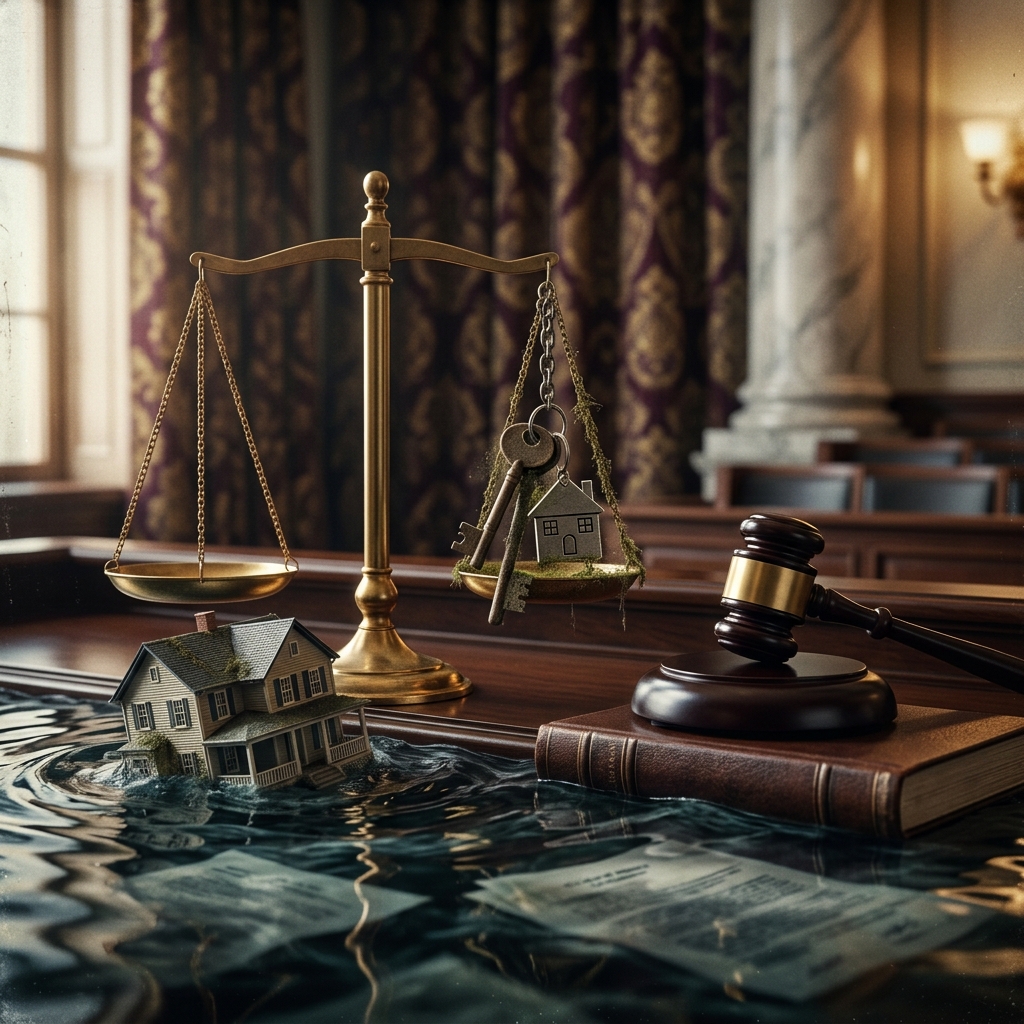
When home values plunge, many owners discover a harsh reality: their house is worth less than what they owe on their mortgages. For some, that means a fully
underwater second mortgage
on top of a first mortgage that already exceeds the home’s value. A recent and important U.S. Supreme Court decision made clear that, in a standardChapter 7 bankruptcy
, those second mortgages cannot simply be wiped out even when there is no equity securing them.This article explains what that ruling means, how it fits within bankruptcy law, and what practical options remain for struggling homeowners.
Understanding Underwater Second Mortgages
A mortgage becomes “underwater” when the amount owed is greater than the current market value of the property. A second mortgage (or home equity loan/line of credit) is
completely underwater
when the home’s value is lower than the balance of the first mortgage alone, leaving no value at all to support the second lien.Example scenario:
- Home value: $150,000
- First mortgage balance: $170,000
- Second mortgage balance: $40,000
In this example, the second mortgage is fully underwater: if the house were sold for $150,000, the entire amount would go toward the first mortgage, with nothing left for the second. That type of second mortgage was at the center of the Supreme Court’s ruling in Bank of America v. Caulkett.
Chapter 7 Bankruptcy in Brief
Chapter 7 bankruptcy is often called “liquidation” bankruptcy. In basic terms:
- The debtor’s non-exempt assets (if any) can be sold by a trustee to pay creditors.
- Most unsecured debts (like credit cards and medical bills) can be discharged.
- Secured creditors, such as mortgage lenders, generally keep their liens on property.
The U.S. Bankruptcy Code distinguishes between
secured claims
(debts backed by collateral) andunsecured claims
(no collateral). Section 506 of the Code defines how a claim is treated as secured or unsecured based on the value of the collateral. Section 506(d) addresses when liens may be voided. The interaction of these provisions was central to the dispute resolved by the Supreme Court.What Homeowners Tried to Do: Stripping Off Second Mortgages
Before the Supreme Court stepped in, some homeowners in certain federal circuits argued that they should be able to
“strip off”
a junior mortgage that is wholly underwater in a Chapter 7 case. The idea was that, because the collateral (the home) had no value left to cover the second mortgage, that claim was effectively unsecured and the lien should be voided.In the Eleventh Circuit, which covers several southeastern states, courts had allowed Chapter 7 debtors to void underwater second mortgages under this logic. That gave homeowners there a powerful tool to emerge from bankruptcy without the burden of an entirely unsecured second lien.
Lenders strongly opposed this approach, arguing that the Bankruptcy Code and prior Supreme Court precedent prohibited it. They pointed to an older decision, Dewsnup v. Timm, where the Supreme Court had already rejected a different form of lien reduction (“strip down”) in Chapter 7.
The Supreme Court’s Decision in Bank of America v. Caulkett
In Bank of America, N.A. v. Caulkett, the Supreme Court unanimously held that a Chapter 7 debtor cannot use Section 506(d) to void a junior mortgage lien, even when the lien is completely underwater, so long as the underlying claim is both allowed and secured by a lien on the property.
| Issue | Ruling |
|---|---|
| Type of case | Chapter 7 consumer bankruptcy |
| Type of lien | Junior (second) mortgage on a residence |
| Collateral value vs. mortgages | Property value lower than first mortgage balance (second mortgage fully underwater) |
| Key holding | Debtor may not void the junior mortgage lien under §506(d) when the creditor’s claim is allowed and secured by a lien, even if completely underwater |
The Court reasoned that its earlier decision in Dewsnup v. Timm controlled the outcome. In Dewsnup, the Court rejected the argument that a mortgage lien could be reduced to the current value of the collateral in Chapter 7 (“strip down”). In Caulkett, the Court extended that reasoning to prohibit completely stripping off a junior lien that lacked any present collateral value.
In practical terms, the decision means that in Chapter 7:
- A junior mortgage lien remains attached to the property even if the home is worth less than the balance of the first mortgage.
- The borrower’s personal liability on the second mortgage may be discharged, but the lien survives and can still affect the property.
- Lenders retain their legal right to be paid from any future increase in home value or later sale of the property.
How the Ruling Affects Homeowners and Lenders
Impact on Homeowners
For debtors, the ruling removes a potential shortcut to clearing away underwater second mortgages in Chapter 7. The consequences include:
- No automatic lien cancellation: Filing Chapter 7 does not erase the second mortgage lien just because the home is underwater.
- Future equity remains encumbered: If the home later appreciates, the second mortgage holder may still have a claim to proceeds from a sale or refinance.
- Harder decisions about keeping the home: Debtors must consider not only the first mortgage but also the lingering second lien when deciding whether to keep or surrender the property.
However, Chapter 7 can still discharge the borrower’s personal liability on the second mortgage, depending on whether the lender pursues reaffirmation or other arrangements. That means the lender may be limited to the property itself and unable to pursue the borrower personally after discharge, though the exact effect can vary and should be evaluated with legal counsel.
Impact on Lenders
The decision was widely regarded as a victory for mortgage lenders and investors in second-lien portfolios. Industry groups highlighted several benefits:
- Protection of collateral rights: Junior lienholders maintain their security interests even during severe market downturns.
- Greater predictability: Lenders can more reliably assess the risks of extending second mortgages, knowing that Chapter 7 debtors cannot wipe out liens solely due to temporary drops in home values.
- Stability for mortgage markets: Preserving lien priority and enforcement rights supports the structure of mortgage-backed securities and home equity lending.
Why the Court Rejected Lien Stripping in Chapter 7
The Supreme Court’s reasoning rested on a combination of statutory interpretation and respect for its own precedent.
- Reading of §506(d): The Court interpreted Section 506(d) to mean that a lien is void only if the underlying claim itself is not an “allowed” secured claim, not merely because the collateral’s current value is low.
- Consistency with Dewsnup: In Dewsnup, the Court had already rejected using Section 506 to reduce the amount of a lien in Chapter 7 based on property value, emphasizing that liens generally ride through Chapter 7 bankruptcy.
- Avoiding arbitrary distinctions: The Court found it would be inconsistent to allow complete lien stripping when a lien is slightly more underwater than in Dewsnup, yet prohibit partial reductions. That would turn minor valuation differences into dramatic legal consequences.
By extending Dewsnup to fully underwater second liens, the Court preserved a uniform rule: in Chapter 7, mortgage liens survive unless the claim itself is disallowed for other reasons.
What About Chapter 13 and Other Bankruptcy Options?
The Supreme Court’s ruling is explicitly about
Chapter 7
. Other chapters of the Bankruptcy Code, especiallyChapter 13
, have different mechanisms for dealing with underwater liens.Chapter 7 vs. Chapter 13: Key Differences for Liens
| Feature | Chapter 7 | Chapter 13 |
|---|---|---|
| Primary purpose | Liquidation and quick discharge | Reorganization and structured repayment over 3–5 years |
| Treatment of home mortgage liens | Liens generally pass through bankruptcy unchanged | In some courts, wholly unsecured junior liens on a principal residence can be stripped and treated as unsecured claims |
| Applicability of Caulkett | Directly controls; no stripping off underwater second liens under §506(d) | Decision does not directly address Chapter 13 lien-stripping provisions |
| Case duration | Usually 3–6 months | 3–5 years |
Many bankruptcy courts have allowed Chapter 13 debtors to strip off wholly unsecured junior liens on a primary residence under provisions specific to Chapter 13 plans, treating those claims as unsecured and discharging them upon successful completion of the plan. Some lenders argue that the Supreme Court’s reasoning should limit such practices, but the decision itself did not directly resolve Chapter 13 lien stripping, leaving room for continued litigation and varying interpretations.
Practical Considerations for Homeowners with Underwater Second Mortgages
For homeowners weighing their options, the Supreme Court’s ruling does not end the conversation; it simply clarifies what Chapter 7 cannot do. Here are key considerations to discuss with a qualified bankruptcy or housing attorney:
- Assess the long-term value of the property
If the home is likely to appreciate or already rebounding, retaining the property may allow the second lienholder to recover value later. Surrendering the home might make more sense if keeping it is unaffordable. - Evaluate Chapter 13 or other reorganization options
Depending on local precedent, Chapter 13 may still offer tools to modify or strip certain junior liens in a structured repayment plan. - Negotiate with the second mortgage holder
Outside bankruptcy, some lenders may agree to settlements, modifications, or short payoffs, especially when a second mortgage is deeply underwater and unlikely to be fully repaid in the near term. - Consider non-bankruptcy alternatives
Loan modifications, refinancing (if available), or selling the property (including through a short sale) might address both first and second mortgages in a coordinated way. - Understand the effect of discharge on personal liability
Even if the lien remains, Chapter 7 may still eliminate the borrower’s personal obligation on the second mortgage, limiting the lender’s recourse to the property itself. The specific impact depends on the case and agreements made during bankruptcy.
Key Takeaways from the Supreme Court’s Ruling
For quick reference, here are the most important points from the Supreme Court’s decision on underwater second mortgages in Chapter 7:
- No stripping off underwater second mortgages in Chapter 7: A junior lien on a home cannot be voided under §506(d) just because the home is worth less than the first mortgage.
- Liens ride through Chapter 7: As long as a creditor’s claim is allowed and secured by a lien, that lien generally survives bankruptcy, even if there is no current equity to support it.
- Decision favors lenders: The ruling protects the rights of second mortgage holders and helps maintain stability in mortgage lending and securitization markets.
- Chapter 13 remains a distinct path: The decision does not directly resolve what is permissible in Chapter 13 cases, where different provisions of the Bankruptcy Code may allow more flexibility in dealing with junior liens.
- Professional advice is essential: The choice between Chapter 7, Chapter 13, or non-bankruptcy solutions depends on the homeowner’s full financial picture, local practice, and long-term goals.
Frequently Asked Questions (FAQs)
Can I wipe out a fully underwater second mortgage in Chapter 7 bankruptcy?
No. Under the Supreme Court’s decision in Bank of America v. Caulkett, a debtor in Chapter 7 cannot void a junior mortgage lien under Section 506(d) when the creditor’s claim is allowed and secured by a lien, even if the lien is completely underwater.
Does this mean my second mortgage is always fully enforceable?
The lien remains attached to your property, but your personal liability for the debt may still be discharged in Chapter 7, limiting the lender’s remedies to enforcing the lien against the property. The exact effect depends on the details of your case and any reaffirmation or settlement agreements.
Is Chapter 13 still an option to deal with an underwater second mortgage?
In many jurisdictions, Chapter 13 may still allow debtors to treat wholly unsecured junior liens on a principal residence as unsecured claims and strip them upon successful completion of a repayment plan, although practices differ across courts and the Supreme Court’s Chapter 7 ruling has prompted ongoing legal debate.
Why did the Supreme Court side with lenders in this case?
The Court relied on its earlier decision in Dewsnup v. Timm, which interpreted Section 506(d) narrowly and emphasized that liens generally survive Chapter 7 bankruptcy. The justices concluded that the same reasoning applied to fully underwater junior liens, and that allowing complete lien stripping would conflict with Dewsnup and create arbitrary distinctions based on small valuation differences.
What should I do if I have an underwater second mortgage and am considering bankruptcy?
You should consult an experienced bankruptcy or consumer finance attorney who can review your income, assets, debts, and local case law. They can help you compare Chapter 7 and Chapter 13, understand the impact of the Supreme Court’s decision on your situation, and explore negotiation or non-bankruptcy alternatives.
References
- Recent Unanimous Supreme Court Decision Holds That Underwater Mortgages in a Chapter 7 Cannot be “Stripped off” — Seyfarth Shaw LLP. 2015-06-09. https://www.seyfarth.com/news-insights/recent-unanimous-supreme-court-decision-holds-that-underwater-mortgages-in-a-chapter-7-cannot-be-stripped-off.html
- Supreme Court Rejects 2nd Lien Stripping in Chapter 7 Bankruptcies — Safeguard Properties. 2015-06-01. https://safeguardproperties.com/supreme-court-rejects-2nd-lien-stripping-in-chapter-7-bankruptcies/
- Supreme Court to Rule on Second Mortgage Liens — American Bankruptcy Institute. 2015-03-23. https://www.abi.org/feed-item/supreme-court-to-rule-on-second-mortgage-liens
- Supreme Court Ruling Protects Second Mortgage Holders — American Bankers Association Banking Journal. 2015-06-01. https://bankingjournal.aba.com/2015/06/supreme-court-ruling-protects-second-mortgage-holders/
- Supreme Court Ruling Resuscitates Underwater Second Mortgage Holder Protection — Kreis Enderle. 2015-06-08. https://www.kreisenderle.com/supreme-court-ruling-resuscitates-underwater-second-mortgage-holder-protection/
Similar Articles








Read full bio of medha deb




