
Supreme Court Reexamines Rules for Questioning Children
How a recent Supreme Court ruling reshapes what police and schools must consider when interrogating children.
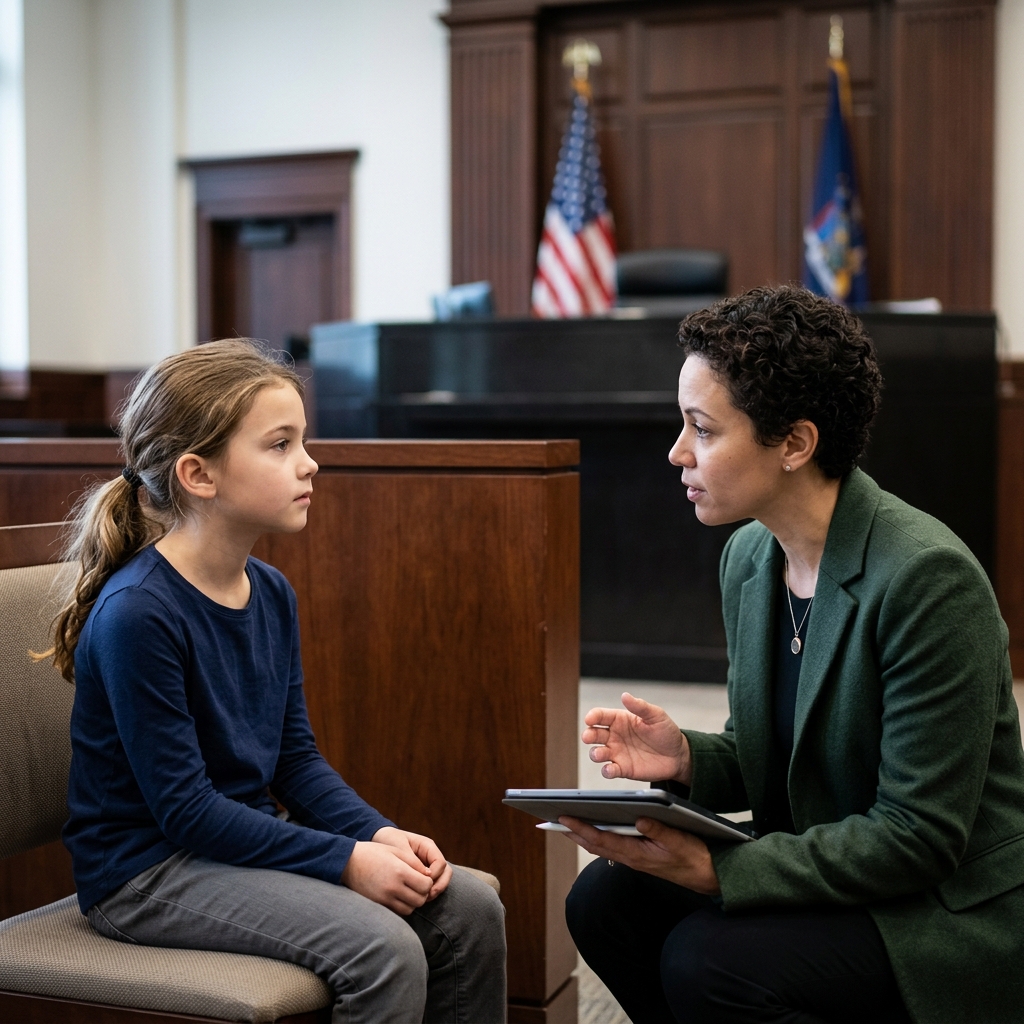
The United States Supreme Court has once again turned its attention to the question of how children are treated during police interrogations, vacating a decision by the Ninth Circuit and signaling that lower courts must take particular care with youth interrogated in school and similar settings. Although the Court’s ruling focuses on procedural issues, it sits against a broader constitutional backdrop that recognizes children are different from adults and require additional protections when facing law enforcement.
This article examines the legal framework for child interrogations, the importance of Miranda rights in the juvenile context, and what the Supreme Court’s intervention means for police, school officials, parents, and young people.
Why Interrogations of Children Raise Unique Concerns
Law enforcement interrogations are inherently coercive, but those pressures fall particularly heavily on children. Psychological research and Supreme Court doctrine both emphasize that minors are more vulnerable to suggestion, less aware of their rights, and more likely to comply with authority figures, especially in environments like schools.
- Developmental differences: Adolescents typically have diminished capacity to assess long-term consequences, heightened sensitivity to peer and adult influence, and limited understanding of legal processes.
- Power imbalance: When youth face uniformed officers or school resource officers, the imbalance of authority can make them feel they have no real choice but to comply.
- School setting: A child questioned in the principal’s office or by an officer at school may assume they must obey, even when legally they could leave or refuse to answer.
In recognition of these realities, the Supreme Court has gradually refined constitutional standards to account for age when determining whether a young person is in custody and entitled to Miranda warnings.
Miranda Rights and the Custodial Interrogation Standard
Miranda rights originate from the landmark case Miranda v. Arizona, in which the Court held that the Fifth Amendment’s protection against self-incrimination requires specific warnings before custodial interrogation. These warnings are now familiar:
- The right to remain silent
- That anything said may be used against the person in court
- The right to consult with an attorney and have one present during questioning
- The right to appointed counsel if the person cannot afford a lawyer
However, these protections only apply when two conditions are met:
- Custody: The person has been taken into custody or deprived of freedom of action in a significant way.
- Interrogation: Law enforcement initiates questioning or uses words or actions reasonably likely to elicit an incriminating response.
The Supreme Court has clarified that interrogation includes not only direct questions but also their “functional equivalent”—statements or conduct that officers should know are likely to draw incriminating responses.
J.D.B. v. North Carolina: Making Age Part of the Custody Test
A pivotal Supreme Court decision involving youth interrogations is J.D.B. v. North Carolina. In that case, a 13-year-old was questioned by police and school officials in a closed-door setting without being given Miranda warnings.
The core legal issue was whether a suspect’s age must be considered when deciding if they were in custody for Miranda purposes. Before J.D.B., some courts treated custody as a strictly objective inquiry that ignored age, assuming the same standard applied to adults and children alike.
The Supreme Court rejected that approach and held:
- Age is relevant to the custody analysis when it is known to the officer or objectively apparent.
- The question is whether a reasonable child in the suspect’s position would feel free to end the questioning and leave.
- Ignoring age would make the custody test “nonsensical,” because children often feel compelled to submit when adults would feel free to walk away.
By reversing the North Carolina Supreme Court, the Court reinforced the principle that “kids are different” under the Constitution and set a baseline for evaluating youth interrogations.
School Interrogations: Where Education and Law Enforcement Collide
Many child interrogations now occur in schools, where officers, principals, and counselors may work together. This intersection of education and policing raises complicated questions:
| Issue | Why It Matters for Youth |
|---|---|
| Whether the child is in custody | Students are normally subject to school rules and may feel they cannot leave, blurring the line between routine discipline and custodial detention. |
| Role of school officials vs. police | Some courts treat questioning by educators differently from questioning by law enforcement, while others see educators acting as agents of police. |
| Need for Miranda warnings | When officers conduct custodial interrogation on campus, several courts have held that students must receive Miranda warnings, just as they would off campus. |
| Parental involvement | Questions arise about whether and when parents must be notified or allowed to be present during questioning of their children. |
For example, an ACLU case from another jurisdiction involved a 12-year-old boy interrogated behind closed doors by a school resource officer, without Miranda warnings, and later found not to have been “in custody” by the lower court. In contrast, the Wisconsin Supreme Court has ruled that law enforcement must provide Miranda warnings before conducting custodial interrogations of students at school.
These differing outcomes underscore why the Supreme Court’s guidance remains essential: without clear standards, children’s rights may depend heavily on where they live and how local courts view school-based questioning.
Parental Presence and Juvenile Requests During Interrogation
Another layer of protection for youth is the right in some jurisdictions to have a parent or guardian present during custodial interrogation. In one state-level case, the supreme court considered whether a juvenile’s request to call a parent was enough to invoke that statutory right.
The court held that:
- A juvenile’s request for a parent must be clear and unambiguous to require police to stop questioning.
- This parental-presence right is analogous to the right to counsel, so the same standards apply.
- Once the right is properly invoked, questioning must cease until the parent is present or the juvenile reinitiates conversation.
This approach parallels the Miranda rule that interrogation must stop when a suspect clearly asks for a lawyer or clearly asserts the right to remain silent. It also highlights how easily ambiguous or hesitant statements by youth can be overlooked unless officers are trained to recognize them.
The Ninth Circuit Case and Supreme Court Review
The FindLaw article that inspires this discussion analyzes a Ninth Circuit decision involving child interrogations that was later vacated by the Supreme Court. While the Supreme Court’s ruling is focused on procedural issues in that particular case, it takes place within the broader landscape described above—especially the principles established in J.D.B. v. North Carolina.
In practical terms, the Supreme Court’s intervention sends several messages to lower courts:
- They must apply the age-sensitive custody analysis when evaluating youth interrogations.
- They should consider the specific setting—such as a school office or classroom—and how that environment affects a child’s perception of freedom.
- They must carefully examine whether law enforcement, rather than merely educators, initiated or directed questioning, triggering Miranda’s requirements.
Although vacating a lower court’s ruling does not always create new substantive law, it often signals that the Supreme Court believes existing doctrine was misapplied or insufficiently considered.
Practical Implications for Police and School Officials
Against this constitutional backdrop, police departments and school districts should reassess how they question students about suspected wrongdoing. Key best practices include:
- Explicitly evaluate custody for youth: Officers should document how a reasonable child in the same situation would view their freedom to leave, considering age, location, presence of school staff, and tone of the encounter.
- Provide Miranda warnings whenever in doubt: When a student appears to be detained or interrogated in a way that feels coercive, giving warnings can reduce the risk that statements will be excluded later and protect constitutional rights.
- Clarify roles with school staff: School officials should understand when they are acting as agents of law enforcement and when their questioning could be treated as custodial interrogation requiring additional safeguards.
- Invite parental participation: While not always legally required, involving parents or guardians can help ensure that youth understand their rights and reduce the risk of involuntary or uninformed statements.
- Special training for school resource officers: Officers stationed in schools should receive tailored training on juvenile rights, adolescent development, and the unique dynamics of school-based interrogations.
Rights and Considerations for Parents and Children
Parents and guardians play a critical role in protecting children’s rights during interactions with law enforcement. While specific rights vary by state, several general considerations apply:
- Children have Fifth Amendment rights: Even though youth may not fully understand them, they are entitled to remain silent and to avoid self-incrimination.
- Parents can ask about custody: Parents may seek clarification from officers or school officials on whether their child is free to leave and whether the encounter is voluntary.
- Legal counsel can be critical: In serious matters, consulting a lawyer before permitting extensive questioning can protect the child from unintended consequences.
- School policies matter: Parents should review and, where necessary, advocate for school policies that address law enforcement questioning, parental notification, and student rights.
For children, the most important messages are simple: they do not have to answer every question, they can ask to speak to a parent or lawyer, and feeling afraid or pressured is a reason to pause and seek adult help.
Frequently Asked Questions About Child Interrogations
Do police have to read Miranda rights to children?
Police must provide Miranda warnings to children when they are in custody and subject to interrogation, the same basic rule that applies to adults. However, because age affects whether a youth is considered in custody, courts must ask whether a reasonable child in that situation would feel free to leave.
Does age always matter in the custody test?
Age matters when it is known to the officer or is objectively apparent. In such cases, courts must incorporate age into the custody analysis instead of applying an adult-centered standard.
Are school interrogations treated differently?
Some courts distinguish between questioning by educators and officers, but when law enforcement conducts or directs a custodial interrogation at school, Miranda protections generally apply. The Supreme Court’s reasoning in J.D.B. underscores that the school setting can heighten the coercive feel for youth.
Can a child’s request to see a parent stop interrogation?
In some jurisdictions, a clear and unambiguous request for a parent during custodial interrogation can trigger a statutory right to parental presence, requiring questioning to stop until the parent arrives or the child reinitiates conversation. Ambiguous or indirect statements may not be enough, which is why clarity and training are important.
What should schools do to protect students’ rights?
Schools should adopt written policies addressing law enforcement access to students, parental notification, and procedures for questioning, and ensure school staff understand when their actions may implicate constitutional protections. Collaboration with legal counsel and community stakeholders can help craft policies that safeguard both safety and rights.
References
- Landmark U.S. Supreme Court Decision Protects Miranda Rights for Youth — Juvenile Law Center. 2011-06-16. https://jlc.org/news/landmark-us-supreme-court-decision-protects-miranda-rights-youth
- Supreme Court Ruling Protects Miranda Rights of Children — MacArthur Foundation. 2011-06-16. https://www.macfound.org/press/grantee-publications/supreme-court-ruling-protects-miranda-rights-children
- Facts and Case Summary – J.D.B. v. North Carolina — U.S. Courts (Educational Resources). 2011-06-16. https://www.uscourts.gov/about-federal-courts/educational-resources/educational-activities/fifth-amendment-activities/jdb-v-north-carolina/facts-and-case-summary-jdb-v-north-carolina
- A Juvenile’s Request for a Parent During Custodial Interrogation Must Be Unambiguous — UNC School of Government Civil Blog. 2017-03-09. https://civil.sog.unc.edu/2017/03/09/a-juveniles-request-for-a-parent-during-custodial-interrogation-must-be-unambiguous/
- State v. K.R.C. — American Civil Liberties Union. 2018-01-18. https://www.aclu.org/cases/state-v-k-r-c
- The “Clear Rule” in Student Interrogations… That Maybe Isn’t So Clear — ACLU of Indiana. 2019-12-17. https://www.aclu-in.org/news/clear-rule-student-interrogations-maybe-isnt-so-clear/
- Amdt5.4.7.4 Custodial Interrogation Standard — Constitution Annotated, U.S. Congress. 2020-08-26. https://constitution.congress.gov/browse/essay/amdt5-4-7-4/ALDE_00013689/
- Miranda Rights Supreme Court Cases — Justia U.S. Supreme Court Center. 2023-01-01. https://supreme.justia.com/cases-by-topic/miranda-rights/
- ACLU of Wisconsin Applauds Wisconsin Supreme Court Decision Reaffirming Miranda Rights for School Students — ACLU of Wisconsin. 2022-07-11. https://www.aclu-wi.org/press-releases/aclu-of-wisconsin-applauds-wisconsin-supreme-court-decision-reaffirming-miranda-rights-for-school-students
Similar Articles








Read full bio of medha deb




