
Supreme Court Narrows Reentry Protections for Green Card Holders
How a recent Supreme Court decision reshapes the risks and legal protections for lawful permanent residents returning to the United States after travel abroad.
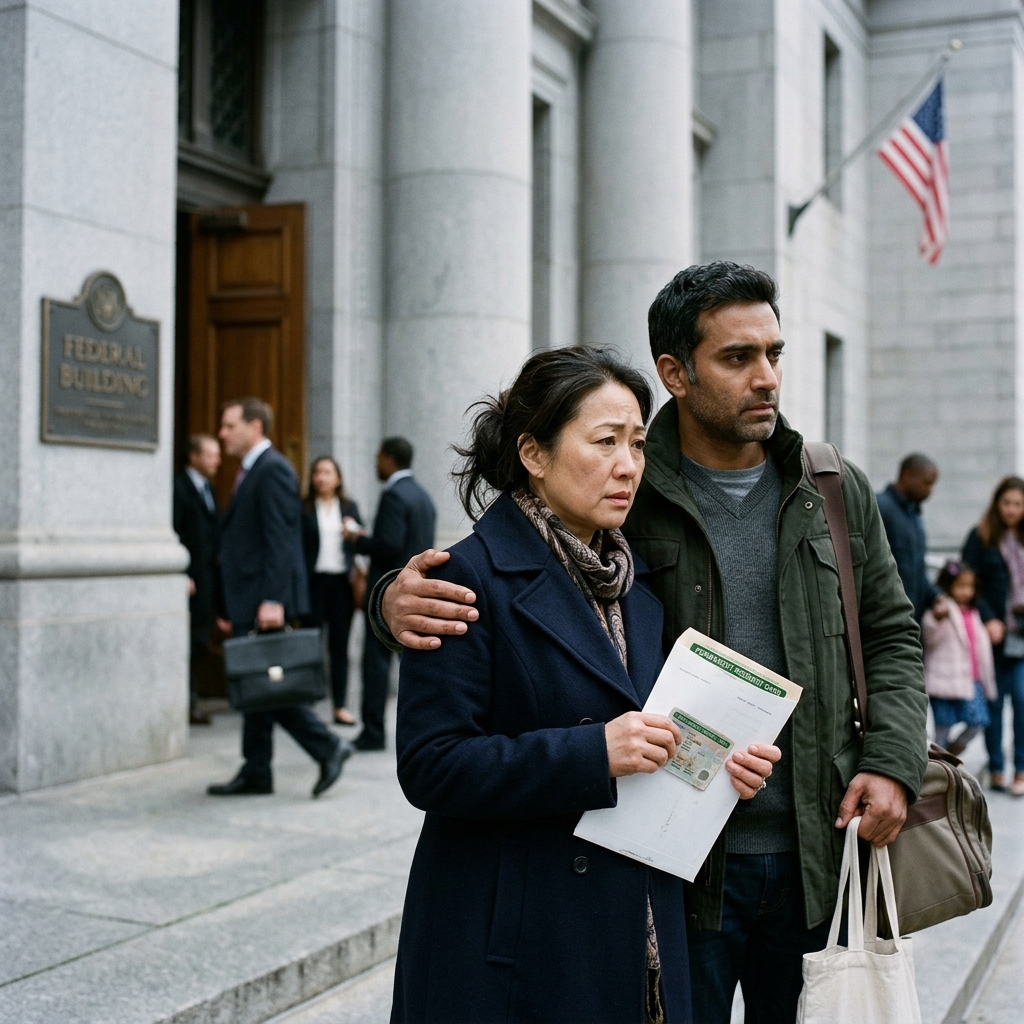
The U.S. Supreme Court has issued a significant immigration ruling that affects how lawful permanent residents (LPRs), commonly known as green card holders, are treated when they return to the United States after traveling abroad. In Blanche v. Lau, the Court held that border officials do not need clear and convincing evidence of a disqualifying crime at the time of reentry to treat a returning LPR as an applicant for admission, making it easier to deny reentry and initiate removal.
This article explains what changed, how the case arose, what the Immigration and Nationality Act (INA) requires, and what practical steps green card holders can take in light of the decision.
Background: Green Card Holders and Reentry Rules
U.S. immigration law has long distinguished between people seeking admission to enter the country and people who are already lawfully admitted, including green card holders returning from short trips abroad. Generally, LPRs who temporarily leave and come back are treated as continuing residents, not as new applicants, and therefore enjoy stronger procedural protections against removal.
However, the INA includes specific exceptions under which a returning LPR is treated as if they are applying for admission again. These exceptions expose the person to the full array of inadmissibility grounds and can make loss of status and removal more likely.
Key INA Exceptions for Returning LPRs
Under the INA, a returning green card holder may be treated as an applicant for admission if any of several conditions applies, including criminal grounds and lengthy absences. These exceptions matter because they determine whether the government can rely on inadmissibility grounds at the border rather than pursuing removal solely based on conduct after admission.
- Abandoning permanent resident status.
- Remaining outside the United States for more than 180 days.
- Committing certain crimes, including those involving moral turpitude, during travel.
- Departing while in removal or extradition proceedings.
- Having committed specified crimes in the United States that make the person inadmissible.
- Attempting to enter without inspection.
The Blanche v. Lau decision focuses on how much evidence border officials need to invoke these exceptions, especially when a crime is alleged but not yet proven.
The Case of Blanche v. Lau: How the Dispute Arose
The case centered on a lawful permanent resident, Mr. Lau, who returned to the United States while facing criminal charges involving alleged counterfeiting, which can qualify as a crime involving moral turpitude. At the port of entry, a border officer used the pending charge to treat him as an applicant for admission under the INA’s exceptions for certain crimes.
This reclassification had serious consequences: rather than being treated as a returning resident with more robust procedural protections, Mr. Lau was treated like someone seeking admission for the first time and became subject to inadmissibility rules and potential removal.
Lower Court’s Higher Evidentiary Standard
The U.S. Court of Appeals for the Second Circuit initially sided with Lau, holding that border officers needed clear and convincing evidence that he had actually committed a disqualifying crime before treating him as an applicant for admission. The appeals court reasoned that a mere criminal charge is not proof of guilt and imposed a heightened burden on the government at the border.
That standard would have made it substantially harder for immigration officials to deny admission to returning LPRs based only on allegations or incomplete information.
The Supreme Court’s 6–3 Decision
The Supreme Court reversed the Second Circuit in a 6–3 ideologically divided decision. Justice Clarence Thomas, writing for the majority, concluded that the INA does not require border officials to have clear and convincing evidence at the time of reentry to treat a returning LPR as seeking admission.
Instead, the Court held that immigration officers may reclassify an LPR based on a pending charge or other information and rely on evidence obtained after entry—such as a later conviction—to justify that decision. This significantly expands the government’s practical ability to deny reentry or subsequently remove green card holders.
Majority’s Key Points
- No statutory requirement: The majority found that “nothing in the INA” imposes a clear-and-convincing burden on border officials in this context.
- Reliance on later evidence: Border officers can make reclassification decisions at the border and the government may justify those decisions later with evidence, including post-entry convictions.
- Deference to enforcement needs: The opinion emphasized the practical reality that border officers must make on-the-spot judgments and declined to add additional burdens not specified in the statute.
The decision effectively lowers the evidentiary bar at ports of entry, shifting more risk onto returning green card holders who have any criminal exposure.
The Dissenting View
Justice Ketanji Brown Jackson, joined by Justices Sonia Sotomayor and Elena Kagan, dissented. The dissent raised concerns about fairness and due process, stressing that treating a long-time LPR as an applicant for admission based solely on allegations erodes the protections Congress intended for returning residents and undermines the presumption of innocence.
While the dissent does not control the law, it underscores the tension between enforcement efficiency and individual rights.
Legal Standards: From Clear and Convincing to Reason to Believe
The ruling’s most important practical impact lies in the evidentiary standard that applies when immigration officers decide whether to treat a returning LPR as seeking admission.
| Standard | Meaning | Effect on Green Card Holders |
|---|---|---|
| Clear and convincing evidence (rejected) | High level of proof requiring strong, persuasive evidence that a fact is true. | Would significantly limit reclassification at the border based on unproven allegations. |
| Reason to believe / lower threshold | Allows action based on credible information suggesting a crime may have been committed. | Makes it easier for officers to treat an LPR as seeking admission and trigger inadmissibility grounds. |
According to the Court and reporting from major news outlets, border agents now need only show that they had reason to believe a returning LPR committed a disqualifying offense, rather than proving guilt by clear and convincing evidence before denying admission.
Practical Consequences for Green Card Holders
The decision increases legal and practical risks for green card holders who travel outside the United States while facing criminal exposure. Immigration law already makes certain crimes grounds for inadmissibility or removal; the new ruling affects when and how those rules can be applied at the border.
Who Is Most Affected?
Immigration practitioners have highlighted groups of LPRs who are particularly vulnerable under this new standard.
- LPRs with pending criminal charges or ongoing investigations.
- Individuals with past arrests or convictions, even for older or seemingly minor offenses.
- Permanent residents currently facing any allegations of criminal conduct that could be framed as moral turpitude or other inadmissibility grounds.
For these individuals, international travel can now lead more readily to reclassification as applicants for admission, confiscation of their physical green card, and exposure to removal proceedings.
Potential Outcomes at the Border
When an LPR with criminal exposure attempts to reenter, several outcomes are now more likely than before.
- Additional screening: Secondary inspection, questioning, and review of criminal records.
- Parole or deferred inspection: Temporary entry or delayed decision while officials gather more information.
- Admission as applicant: Treatment as seeking admission, triggering inadmissibility analysis rather than standard LPR protections.
- Initiation of removal proceedings: Issuance of charging documents and placement into immigration court, with possible detention.
Such outcomes can result in stricter detention regimes, reduced access to bond, and a shift in who carries the burden of proof in removal cases.
Interaction with Constitutional Rights
Green card holders enjoy many of the same constitutional protections as U.S. citizens once they are lawfully present in the country, including due process and equal protection. Supreme Court precedent has recognized that noncitizens lawfully residing in the United States are entitled to the rights guaranteed by the Constitution to all people within U.S. borders.
However, immigration law distinguishes between individuals inside the country and those at the threshold of admission. By allowing border officials to more easily treat returning LPRs as applicants for admission, the Blanche v. Lau decision shifts some protections from the more robust category of existing residents to the more limited category of entrants.
While the government still must present evidence to justify removing an LPR through the immigration court system, the ruling affects what evidence is needed at the border and how quickly removal risks can arise.
Practical Guidance for Green Card Holders
In light of this decision, green card holders should approach international travel with increased awareness, especially if they have any criminal history or pending charges. Although each case is unique and requires individualized legal advice, several general precautions are advisable.
Risk-Reduction Steps Before Traveling
- Consult an immigration attorney if you have ever been arrested, charged, or convicted, even if the matter was resolved years ago.
- Review your criminal record and obtain certified dispositions of past cases to understand how they may be classified under immigration law.
- Avoid international travel while serious charges are pending, particularly those that could be characterized as crimes involving moral turpitude or fraud-related offenses.
- Update contact information and keep documentation showing residence, employment, and community ties in the United States.
What to Expect at the Port of Entry
Green card holders returning to the United States should be prepared for the possibility of increased scrutiny.
- Be ready to answer questions about recent travel, criminal history, and ongoing legal matters.
- Carry documentation showing lawful status, such as a valid green card and, if applicable, evidence of pending immigration applications.
- Remain calm and understand that officers have broad authority to refer you to secondary inspection and to review criminal databases.
If an officer indicates that you are being treated as an applicant for admission, it may be a sign that one of the INA’s exceptions, including alleged criminal conduct, is being invoked. Seeking prompt legal counsel is critical in these situations.
Frequently Asked Questions (FAQs)
1. Does this decision mean green card holders can be denied reentry without any evidence?
No. The government still needs a factual basis to act, but the Supreme Court held that the INA does not require clear and convincing evidence at the border. Instead, border officers can rely on a lower threshold—such as reason to believe a disqualifying crime occurred—and may justify their decisions later with additional evidence, including subsequent convictions.
2. Are short trips abroad still generally safe for green card holders?
For LPRs with no criminal exposure, short, temporary trips abroad remain relatively low risk and the general rule that returning residents are not seeking admission still applies. The new ruling primarily affects those with pending charges, investigations, or prior conduct that could trigger inadmissibility.
3. What kinds of crimes are most likely to create problems at reentry?
Crimes involving moral turpitude, such as certain fraud, theft, or counterfeiting offenses, as well as other INA-listed grounds like controlled substance violations, can create serious immigration consequences. Whether a particular offense qualifies is a technical legal question that should be evaluated by an immigration attorney.
4. Does the ruling only apply to one specific exception in the INA?
The case focused on the crime-related exception, but commentators expect the government to argue that the Supreme Court’s reasoning extends to the other five exceptions for returning LPRs, thereby affecting a broader range of reentry scenarios.
5. Do green card holders still have constitutional rights?
Yes. Lawful permanent residents are protected by the Constitution while they reside in the United States, including rights to due process and equal protection. The decision does not erase those rights, but it does affect how immigration law treats them when they return from abroad and whether they are considered seeking admission.
Key Takeaways
- The Supreme Court in Blanche v. Lau lowered the evidentiary bar for treating returning green card holders as applicants for admission, rejecting a clear-and-convincing standard.
- Border officers may now rely on pending charges or other information to reclassify an LPR and can justify that decision later with additional evidence, including post-entry convictions.
- The ruling increases reentry risks for permanent residents with any criminal history or ongoing allegations, making careful pre-travel legal planning more important.
- While green card holders still enjoy significant constitutional protections, the decision shifts the practical balance toward enforcement at U.S. ports of entry.
References
- Supreme Court: Green Card Holders May be Denied Reentry Into U.S. Without Clear and Convincing Evidence of a Crime — FindLaw Legal Blog. 2026-06-26. https://www.findlaw.com/legalblogs/supreme-court/supreme-court-green-card-holders-may-be-denied-reentry-into-u-s-without-clear-and-convincing-evidence-of-a-crime/
- Court sides with government in dispute over rights of green card holders accused of committing a crime — SCOTUSblog. 2026-06-25. https://www.scotusblog.com/2026/06/court-sides-with-government-in-dispute-over-rights-of-green-card-holders-accused-of-committing-a/
- Supreme Court Increases Re-Entry Risks for Green Card Holders with Criminal History — Miller Mayer. 2026-06-28. https://millermayer.com/supreme-court-increases-re-entry-risks-for-green-card-holders-with-criminal-history/
- Supreme Court makes it easier for border agents to deport green card holders — ABC News. 2026-06-25. https://abcnews.go.com/Politics/supreme-court-makes-easier-border-agents-deport-green/story?id=134141121
- Did the Supreme Court Hand the Government a “Massive Blank Check” to Deport Green Card Holders Traveling Abroad? — American Immigration Council. 2026-06-26. https://www.americanimmigrationcouncil.org/blog/supreme-court-green-card-holders-traveling-lau/
- What are the constitutional rights of green card holders? — National Constitution Center. 2017-09-07. https://constitutioncenter.org/blog/what-are-the-constitutional-rights-of-green-card-holders
- Supreme Court Clarifies When Returning Green Card Holders May Be Treated as Applicants for Admission — Greenberg Traurig Inside Business Immigration. 2026-06-27. https://www.gtlaw-insidebusinessimmigration.com/supreme-court/supreme-court-clarifies-when-returning-green-card-holders-may-be-treated-as-applicants-for-admission/
Similar Articles








Read full bio of Sneha Tete




