
Summer Hiring and Child Labor Rules Explained
A practical guide to federal and state child labor rules for employers hiring teens during school vacations.
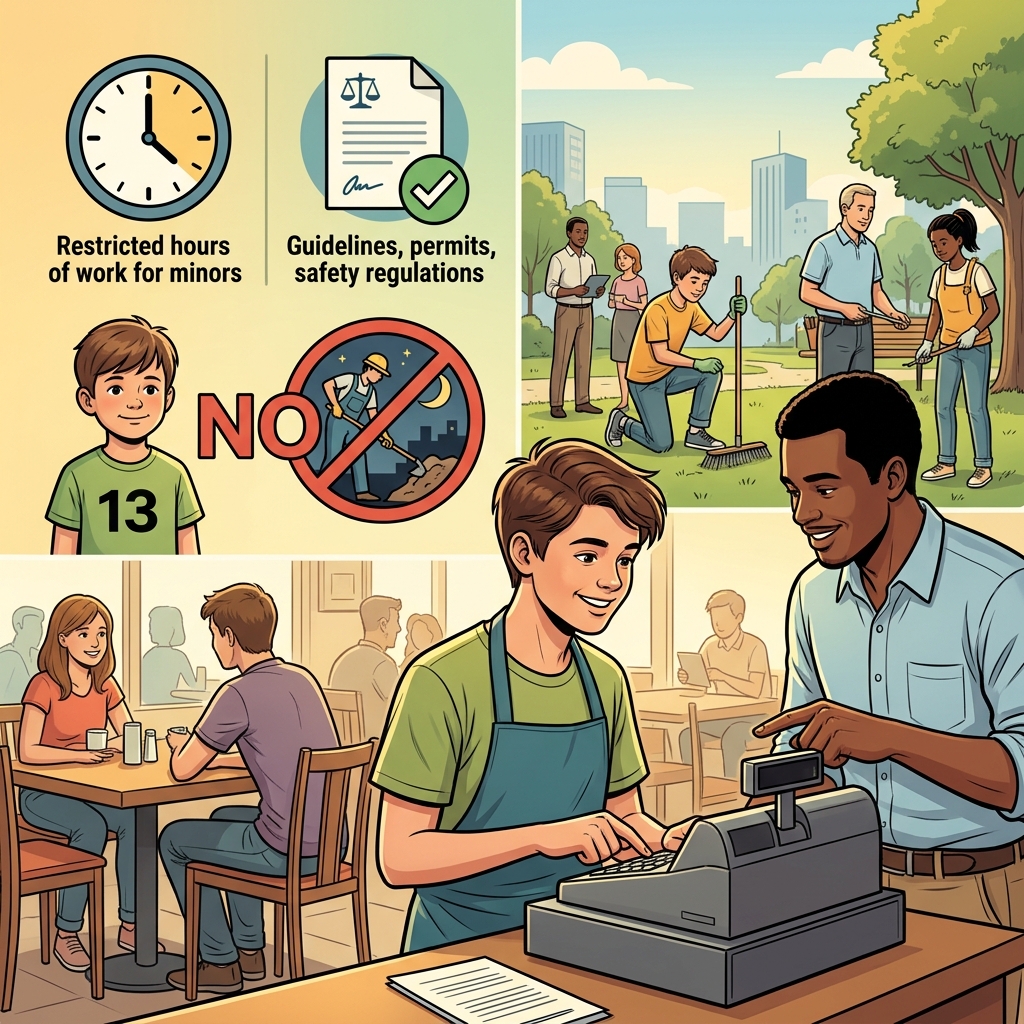
When school lets out, many teens look for summer jobs and many employers look for short-term help. To make that a positive experience for everyone, employers must understand how child labor laws regulate the work of minors in the United States. These rules affect when teens may work, which tasks they can perform, and what documentation you must keep.
This article walks through the key concepts behind child labor regulation, highlights major federal standards, explains the interaction with state laws, and offers practical compliance strategies for employers who hire young workers during school vacations.
Why Child Labor Laws Matter in Summer Months
Child labor laws are designed to protect the health, education, and safety of minors while allowing them to gain work experience. During summer, the balance shifts: teens are free from daily school attendance, yet employers still must operate within carefully defined limits on job duties and hours.
- Protecting education: Even when school is out, laws aim to prevent work from undermining learning or school attendance in year‑round or special programs.
- Preventing injury: Young workers are more likely to be injured on the job, so regulations restrict hazardous occupations and heavy equipment use.
- Ensuring fair treatment: Minors are entitled to wages, breaks, and workplace protections similar to adult workers, subject to age‑based limits.
For employers, understanding these rules is not only a legal requirement but also a way to support a safe and productive environment for teen workers.
Core Concepts: How Child Labor Is Regulated
In the United States, child labor is governed by both federal law and state law. Federal standards come from the Fair Labor Standards Act (FLSA), enforced by the U.S. Department of Labor’s Wage and Hour Division, while states adopt their own additional rules.
Three central ideas shape nearly all child labor requirements:
- Minimum age for employment: Federal law generally allows non‑agricultural work beginning at age 14, with certain exceptions for younger children in limited contexts.
- Hour and schedule limits: There are stricter limits for younger minors (especially those 14 and 15), and more flexibility for 16‑ and 17‑year‑olds.
- Prohibited or hazardous occupations: Specific jobs and tasks are off‑limits to minors, especially those involving dangerous machinery, heavy lifting, or high‑risk environments.
States may add requirements such as work permits, tighter hour limits, or extra break rules. Employers must follow whichever standard is most protective of the minor.
Federal Rules for 14- and 15-Year-Old Workers
Federal law treats 14- and 15-year-olds as a distinct group with clear limits on the number of hours they may work and the times of day they can be scheduled.
Maximum Hours and Weekly Limits
Under federal law, 14- and 15-year-olds working in non-agricultural jobs face the following limits during a typical school year:
- No more than 3 hours on a school day.
- No more than 18 hours in a school week.
- No more than 8 hours on a non-school day.
- No more than 40 hours in a week when school is not in session.
Summer vacation generally falls into the “school not in session” category, so the 8‑hour‑per‑day and 40‑hour‑per‑week limits apply. These caps help ensure teens have time for rest, summer learning, and family obligations.
Time-of-Day and School-Hour Restrictions
Federal law also controls the window of time when minors in this age group may work:
- They may not work before 7:00 a.m.
- They may not work after 7:00 p.m., except in summer.
- From June 1 through Labor Day, the evening limit is extended to 9:00 p.m.
- They are generally barred from working during their scheduled school hours.
These time-of-day rules are particularly important for employers in industries like retail, food service, and recreation, which often operate well into the evening.
Typical Permitted Work Settings
Federal rules allow 14- and 15-year-olds to work in a variety of non‑hazardous jobs, such as:
- Retail and hospitality (cashier, counter staff, host).
- Food service (busser, server assistant, limited kitchen support).
- Office or clerical work that does not involve heavy equipment.
- Certain creative and intellectual activities, such as computer programming or tutoring, when performed in safe environments.
Each job must still be evaluated to ensure it does not cross into prohibited hazardous tasks, even if the overall workplace seems appropriate.
Rules for 16- and 17-Year-Old Workers
Once minors reach 16 or 17 years of age, federal law becomes less restrictive with regard to hours, but retains strong protections against hazardous occupations.
Hours and Scheduling
At the federal level, there is no specific limit on how many hours 16- or 17-year-olds may work per day or week, and no general restriction on the time of day, apart from state-specific rules and any schooling requirements.
Some states, however, do impose limits. For example, state law may restrict late-night work before school days or cap total weekly hours. Tennessee, for instance, limits minors of this age from working between certain nighttime hours on school days and requires parental consent for extended evening work.
Continuing Prohibition on Hazardous Work
Even though older teens may work longer hours, federal rules still prohibit them from performing particularly dangerous tasks. These restrictions apply to workers under 18 and cover activities such as:
- Operating or assisting in the operation of forklifts or other power-driven hoisting equipment.
- Work in mining, logging, or certain sawmilling occupations.
- Operating power-driven woodworking or metal-forming machines.
- Certain jobs in meatpacking and slaughtering that involve dangerous cutting equipment.
- Work involving explosives, demolition, or high-risk construction tasks.
These hazardous occupation bans reflect long-standing evidence that such work poses disproportionate risks to minors.
State Child Labor Standards: Going Beyond Federal Law
While federal law sets the baseline, many states impose additional or stricter child labor rules. Employers must be familiar with both levels of regulation and follow the standard that gives the minor the greatest protection.
Examples of State-Level Differences
States may vary widely in how they regulate teen work. Some common areas of difference include:
- Daily and weekly hour limits: A state may cap hours for certain age groups more tightly than federal law, both during the school year and in summer.
- Permitted work times: Some states set specific start and end times (for example, 7 a.m. to 7 p.m. during school year and 7 a.m. to 9 p.m. in summer) and may allow special permits to extend hours.
- Mandatory breaks: States often require meal or rest breaks for minors after a certain number of consecutive hours worked.
- Work permits and certificates: Many states require an employment certificate or similar document affirming that the minor is legally hired and that work will not interfere with school.
Illustrative Comparison of Federal vs. State Rules
| Aspect | Federal Standard (14–15) | Typical State Example |
|---|---|---|
| School-day hours | Max 3 hours on a school day, 18 per week. | May further limit total daily hours or add stricter weekly caps. |
| Summer evening limit | Up to 9:00 p.m. between June 1 and Labor Day. | Some states match this; others may add age‑specific restrictions on late-night work. |
| Break requirements | No specific federal break rule for minors. | States often require a 30‑minute meal break after a set number of hours, such as by the fifth consecutive hour. |
| Work permits | Not mandated universally at federal level. | Many states require employment certificates for minors under 16. |
Documentation, Records, and Break Requirements
In addition to hour and job restrictions, child labor laws often impose specific paperwork and recordkeeping duties on employers. These requirements help regulators verify compliance and support enforcement.
Common Documentation Duties
States that actively regulate child labor frequently require employers to maintain records such as:
- Proof of age for each minor, often in the form of a birth certificate, driver’s license, or school identification.
- Work permits or employment certificates issued by schools or labor departments for minors under a certain age.
- Work schedules and time records showing start and end times, including meal breaks.
- A posted summary of child labor laws in the workplace areas where minors are employed.
Breaks and Meal Periods
While federal child labor rules focus primarily on hours and types of work, states frequently add requirements for breaks. Examples include:
- A meal period of at least 30 minutes provided no later than a specified point in the workday.
- Limitations on how long minors may work continuously without rest.
- Paid or unpaid short rest breaks during longer shifts.
Employers should integrate these requirements into scheduling systems to ensure minors receive legally compliant breaks during busy summer shifts.
Prohibited and Hazardous Work Activities
The most severe child labor violations often involve minors performing tasks that are legally considered hazardous. Federal regulations list detailed categories of prohibited occupations for workers under 18, many of which are common in industrial or high‑risk environments.
Examples of Banned Occupations
Under federal rules, minors may not perform work involving:
- Manufacturing or storing explosives or participating in certain demolition activities.
- Driving motor vehicles as part of their employment or working as outside helpers on such vehicles.
- Coal mining, other forms of mining, and certain logging and sawmilling jobs.
- Operating power-driven machinery such as heavy woodworking tools, metal forming machines, balers, compactors, and industrial bakery or paper-product machines.
- Dangerous meat cutting equipment used in slaughtering or processing plants.
- Jobs with exposure to radioactive materials or high levels of ionizing radiation.
Employers must carefully review job descriptions and actual tasks performed by teen workers to ensure none of these hazards are present. Even in seemingly low-risk workplaces, certain equipment may trigger prohibition.
Practical Compliance Tips for Summer Employers
For organizations hiring minors for seasonal work—such as municipalities, parks, restaurants, retail stores, and recreation facilities—compliance depends on combining clear policies with active oversight.
Key Steps Before Hiring
- Verify age: Confirm the worker’s age using reliable documentation and determine which set of rules applies.
- Check state law: Review state-specific child labor standards, including permits, hour limits, and break requirements, in addition to federal rules.
- Identify prohibited tasks: Cross-check job duties against federal hazardous occupation lists to remove any inappropriate tasks.
- Document policies: Write down internal procedures for scheduling, breaks, and supervision of minors.
Managing Schedules and Supervision
Once minors are on staff, day‑to‑day management is crucial.
- Use scheduling tools that automatically block hours outside permitted windows for each age group.
- Assign experienced supervisors to oversee teen workers, particularly during evening shifts or in busy environments.
- Track actual hours worked in a reliable system and review reports for potential violations.
- Ensure all required breaks and meal periods are built into the schedule and honored in practice.
Training Young Workers
Compliance is easier when minors understand the rules too. Consider providing a short orientation that covers:
- Basic safety procedures and how to report hazards.
- Tasks they are not allowed to perform, especially anything involving dangerous machinery.
- Expectations regarding punctuality, attendance, and adherence to break schedules.
- Who to contact with questions about their hours or duties.
Frequently Asked Questions about Child Labor and Summer Jobs
Can a 15-year-old work full-time during summer vacation?
No. Under federal law, a 14- or 15-year-old may not work more than 8 hours in a day or 40 hours in a week when school is not in session, even during summer. States may impose additional limits, so employers should always check local rules.
Are 16- and 17-year-olds limited in how many hours they can work?
Federal law does not set a maximum number of hours per day or week for 16- and 17-year-olds. However, state laws often restrict late-night work before school days or require parental consent for extended hours, so local regulations must be reviewed.
Do minors have to get work permits to take a summer job?
Many states require employment certificates or work permits for minors under a certain age, especially those under 16. The process usually involves school officials or state labor departments. Employers must follow their state’s specific procedures.
Can teen workers operate kitchen equipment in restaurants?
Minors may perform limited food service tasks, but they may not operate certain power-driven machines considered hazardous, such as industrial slicers or heavy bakery equipment, if they are under 18. Employers should review federal hazardous occupation lists before assigning duties.
What happens if an employer violates child labor laws?
Violations can result in civil penalties, back wages, and in serious cases, restrictions on future hiring. Enforcement is carried out by the U.S. Department of Labor and state labor agencies. Maintaining accurate records, training staff, and auditing practices are key preventive measures.
References
- YouthRules! — U.S. Department of Labor, Wage and Hour Division. 2023-06-01. https://www.dol.gov/agencies/whd/youthrules
- Child Labor Laws — OSHA Education Center. 2022-05-15. https://www.oshaeducationcenter.com/articles/child-labor-laws/
- Selected State Child Labor Standards Affecting Minors Under 18 — U.S. Department of Labor. 2023-04-10. https://www.dol.gov/agencies/whd/state/child-labor
- Child Labor Law Compliance — Illinois Department of Labor. 2023-01-20. https://labor.illinois.gov/laws-rules/fls/child-labor-law-compliance.html
- Child Labor Act — Tennessee Department of Labor and Workforce Development. 2022-11-01. https://www.tn.gov/workforce/employees/labor-laws/labor-laws-redirect/child-labor.html
Similar Articles








Read full bio of medha deb




