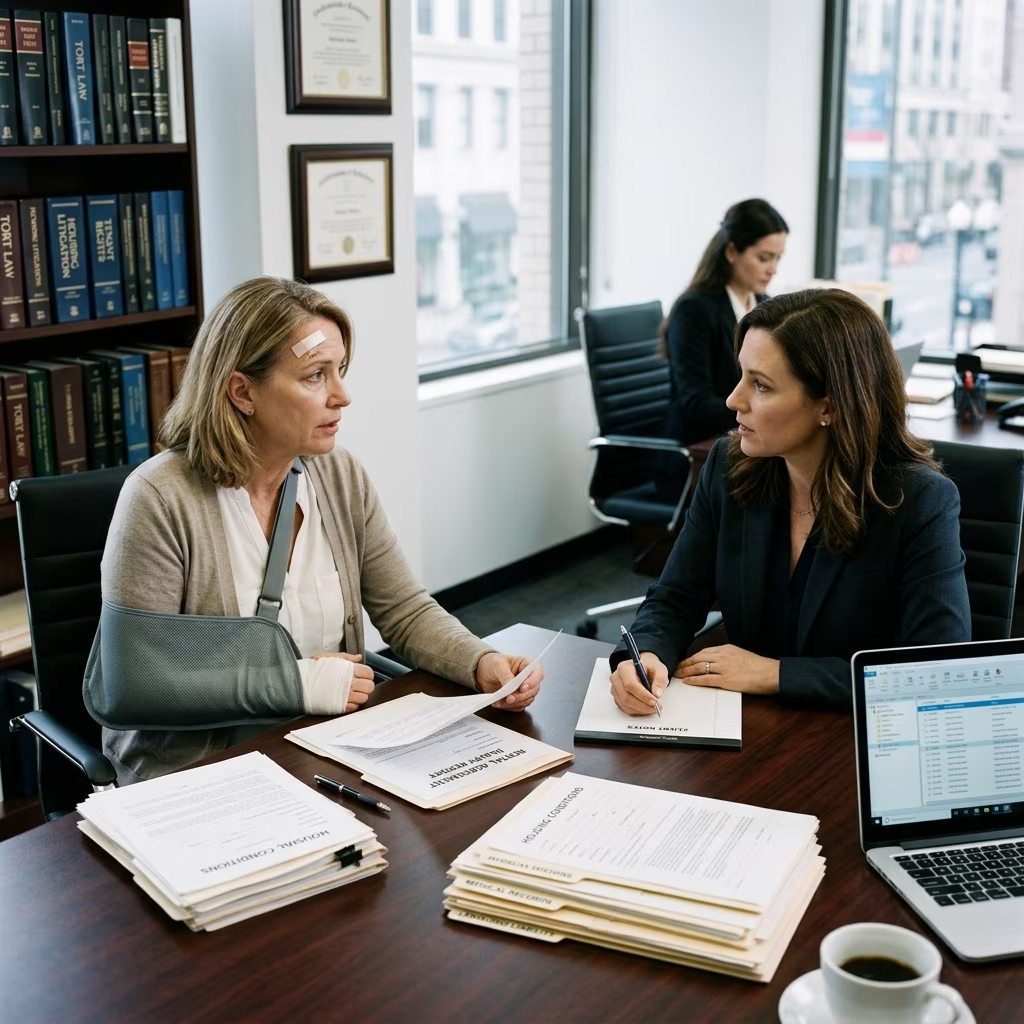
Tenants are entitled to live in rental homes that are reasonably safe and habitable. When dangerous conditions are ignored and someone is hurt, the law often allows the injured tenant to pursue a personal injury claim against the landlord. Tenants in many jurisdictions can sue their landlords if they can prove that negligence caused their injuries and resulting losses.
This guide explains when you can sue, what you must prove, common scenarios that lead to claims, and practical steps to protect your rights after an injury on a rental property. It is general information only and not a substitute for legal advice from a qualified attorney in your state.
1. When Can a Tenant Sue a Landlord for Injuries?
In most states, landlords have a legal duty to keep rental properties in a condition that is reasonably safe and fit to live in. If you are injured because your landlord failed to meet this duty, you may have grounds for a lawsuit based on negligence or premises liability.
Broadly, you may be able to sue your landlord when all of the following apply:
- The injury happened on or near the rental property.
- The harmful condition was something the landlord was responsible for maintaining or repairing.
- The landlord knew or reasonably should have known about the danger.
- The landlord did not fix the problem, warn you, or take reasonable steps to prevent harm.
- You suffered real, documentable injuries and losses as a result.
Examples include falls on broken stairs, injuries from collapsing ceilings, or illnesses caused by long-ignored mold or leaks. In each case, the critical question is whether the landlord’s failure to act reasonably led to your injury.
2. The Legal Concept of Negligence
Most tenant personal injury cases revolve around the legal concept of negligence. Negligence means someone failed to use reasonable care and that failure caused harm. To win a negligence lawsuit against a landlord, tenants must generally prove four elements.
| Element of Negligence | What the Tenant Must Show |
|---|---|
| Duty of care | The landlord had a legal obligation to maintain reasonably safe and habitable premises. |
| Breach of duty | The landlord failed to meet that obligation, such as by ignoring known hazards or violating housing codes. |
| Causation | The unsafe condition created by the landlord’s breach directly caused the injury. |
| Damages | The tenant suffered actual physical, emotional, or financial harm that can be compensated. |
Each element must be supported by evidence. If even one is missing—for example, if you were not truly injured, or if the condition did not cause the accident—the claim may fail.
3. Common Types of Injuries on Rental Properties
Landlord negligence can cause a wide range of injuries. While every case is unique, certain patterns appear frequently in tenant claims.
3.1 Slip, Trip, and Fall Incidents
Falls are among the most common sources of tenant injuries. These often involve:
- Broken or loose stair treads or handrails
- Poor lighting in hallways and stairwells
- Uneven, cracked, or icy walkways
- Wet or slippery floors from leaks that were not repaired
Where landlords are responsible for these areas and fail to address known hazards within a reasonable time, injured tenants or visitors may bring premises liability claims.
3.2 Structural Defects and Maintenance Failures
Serious injuries can result from structural or maintenance problems such as:
- Ceilings or balconies that collapse due to neglect
- Windows that do not lock properly, contributing to assaults
- Defective flooring that causes trips and falls
- Faulty electrical systems leading to shocks or fires
When landlords fail to repair defects that they knew or should have known about, they can be held responsible for resulting harm.
3.3 Environmental and Health Hazards
Not all injuries are immediately visible. Tenants may suffer from:
- Mold or dampness that contributes to respiratory problems
- Pest infestations that cause bites or spread disease
- Lead paint or other toxic substances in older buildings
These issues can support injury claims when the landlord fails to maintain habitable conditions required by state or local law and the tenant suffers measurable harm.
4. Who Is Responsible: Landlord Versus Tenant
Landlords are not automatically liable for any injury that occurs on rental property. Responsibility depends on where the injury occurred, who controlled that area, and whether the landlord acted reasonably under the circumstances.
4.1 Areas Under Landlord Control
Landlords typically bear greater responsibility for areas they control and maintain, such as:
- Common hallways and stairwells
- Lobbies and laundry rooms
- Parking lots, driveways, and outdoor walkways
- Building roofs and exterior structures
If a dangerous condition exists in these areas and the landlord had enough time to repair or warn about it, they may be liable for injuries caused.
4.2 Inside the Tenant’s Unit
Responsibility inside individual units can be more complex. Landlords may not be expected to constantly inspect every unit, but they are usually required to address dangerous conditions once they learn about them.
A landlord might be liable for an injury inside a unit when:
- The tenant previously reported the hazard (such as a broken floor tile or leaking pipe).
- The landlord had a reasonable opportunity to fix the problem but did not.
- The unresolved issue directly caused the tenant’s injury.
Documented notice—emails, texts, letters, maintenance requests—is often crucial in these cases.
4.3 Guests and Visitors
Guests and lawful visitors injured by unsafe conditions on the property may also have claims. If a landlord knew about a dangerous condition and failed to address it, they can sometimes be liable for injuries to third parties as well as tenants.
5. Proving Landlord Negligence: Evidence You Need
To successfully sue a landlord, tenants must gather and preserve evidence showing both the unsafe condition and its impact. Courts and insurance companies will not accept a claim based solely on verbal complaints.
5.1 Documenting the Hazard
- Photos and videos: Capture the dangerous condition as soon as possible, from multiple angles and distances.
- Inspection reports and notices: Save any code violation notices or inspection records indicating hazards.
- Maintenance records: Keep copies of work orders, repair logs, and contractor invoices related to the issue.
5.2 Showing Landlord Knowledge
- Prior complaints: Copies of emails, texts, written letters, or online maintenance requests made before the injury.
- Witness testimony: Statements from neighbors or building staff who know the condition existed for a long time.
- Building records: Evidence that the landlord had notice through previous incidents or official inspections.
5.3 Proving Injury and Financial Loss
- Medical records and bills: Documentation of diagnoses, treatment, and costs.
- Income records: Pay stubs or employer letters showing lost wages due to missed work.
- Receipts: Transportation costs, medication expenses, or out-of-pocket medical items.
All of this material helps show that the landlord’s negligence resulted in real damages, which is required for a successful claim.
6. Typical Compensation in Tenant Injury Cases
Tenants who prove negligence may recover different types of damages—the legal term for monetary compensation. Available categories often include:
- Medical expenses: Past and future treatment costs, including hospital care, surgery, physical therapy, and medications.
- Lost income: Wages lost due to missed work and, in serious cases, reduced future earning capacity.
- Pain and suffering: Non-economic damages for physical pain and emotional distress.
- Property damage: Replacement or repair of personal belongings damaged in the incident.
- Other damages: In some jurisdictions and rare cases, punitive or enhanced damages may be available when the landlord’s conduct is particularly egregious.
Compensation generally comes from the landlord’s liability insurance policy, although insurers will carefully review the evidence before paying.
7. Time Limits: Statutes of Limitations
Every state sets a statute of limitations for personal injury claims—deadlines for filing a lawsuit. If you miss the deadline, your claim may be barred, even if it would otherwise have merit.
For example, in California the typical time limit for many personal injury cases is two years from the date of the injury. Other states may have similar or different limits, and special rules can apply to certain types of exposure or delayed discovery of harm.
Because these deadlines are strict and vary by jurisdiction, tenants should consult an attorney promptly after an injury to avoid losing their rights.
8. Steps to Take Immediately After an Injury
Your health is the priority. Only after receiving appropriate medical care should you focus on potential legal claims.
8.1 Seek Medical Attention
- Visit an emergency room, urgent care clinic, or primary care provider.
- Explain that the injury occurred at your rental property and describe how it happened.
- Follow recommended treatment plans and attend follow-up appointments.
Medical records created shortly after the accident help link your injuries to the incident and are central evidence in any claim.
8.2 Preserve Evidence at the Scene
- Photograph the hazard and surrounding area before repairs are made.
- Write down your own account of what happened while details are fresh.
- Collect contact information for any witnesses who saw the accident.
8.3 Notify the Landlord and Insurance
- Inform the landlord in writing about the accident and your injuries.
- Request that they notify their insurance company.
- Keep copies of all correspondence and responses.
Prompt notice can help with both repairs and insurance claims while demonstrating that you took reasonable steps after the incident.
8.4 Consider Legal Advice
- Consult a personal injury or landlord-tenant attorney experienced with premises liability cases.
- Discuss deadlines, likely outcomes, and whether to pursue settlement or litigation.
- Share all evidence and documents you have gathered.
Many lawyers offer initial consultations, and some handle personal injury matters on a contingency fee basis, meaning they are paid only if you recover money.
9. Frequently Asked Questions
9.1 Can I sue my landlord if I fell in my apartment?
Possibly. If you fell because of a dangerous condition that the landlord knew about—such as a broken tile, leaking pipe, or loose handrail—and failed to repair within a reasonable time, you may have a premises liability claim. However, if the hazard arose from your own actions or belongings and the landlord had no notice, liability is less likely.
9.2 What if I am partly at fault for my injury?
Many states use comparative negligence rules. If you are partly responsible—for example, you ignored caution signs or behaved recklessly—your compensation may be reduced by your percentage of fault, but you could still recover some damages. The precise effect depends on your state’s laws.
9.3 Do I have a case if I never told the landlord about the hazard?
It is harder to prove negligence if the landlord had no opportunity to correct the problem. However, if the danger existed long enough that the landlord reasonably should have discovered it, or violated building codes, a claim may still be possible. Evidence such as prior inspections or widespread problems can be important.
9.4 Can a guest sue my landlord for injuries?
Yes. Guests and lawful visitors injured on rental property can sometimes sue the landlord if the injury resulted from a dangerous condition the landlord knew about and failed to address. Their claims are generally evaluated under similar premises liability principles as tenants’ claims.
9.5 Does my landlord’s insurance cover my injuries?
Landlords often carry liability insurance on the property. If the insurer accepts that the landlord was negligent, compensation may be paid under that policy. However, insurers frequently dispute fault and damages, making strong evidence and, in many cases, legal representation important.
10. Key Takeaways for Tenants
- Landlords must keep rental properties reasonably safe and habitable, especially in areas under their control.
- Tenants can sue when landlord negligence—failing to repair or warn about known hazards—directly causes injuries and losses.
- To succeed, you must prove duty, breach, causation, and damages with solid evidence.
- Document hazards, prior complaints, medical treatment, and financial impacts as soon as possible.
- Act quickly to meet filing deadlines and consider speaking with an experienced attorney to evaluate your options.
Understanding these principles can help injured tenants better navigate the aftermath of accidents on rental properties and make informed decisions about whether to pursue legal action.
References
- Tenant Injuries: Landlord Liability and Insurance FAQ — Indiana State Medical Association / Anthem EAP. 2022-05-01. https://www.anthemeap.com/isma/find-legal-support/resources/landlords-and-property-management/legal-assist/tenant-injuries-landlord-liability-and-insurance-faq
- Injuries to Tenants on Rental Property & Related Legal Claims — Justia. 2023-03-15. https://www.justia.com/real-estate/landlord-tenant/information-for-tenants/injuries-on-the-premises/
- Establishing Landlord Responsibility for Personal Injuries — Tobener Ravenscroft LLP. 2023-11-10. https://www.tobenerlaw.com/personal-injury/
- Injured on a Rental Property? Here’s When You Can Sue Your Landlord — Morgan & Morgan. 2022-09-20. https://www.forthepeople.com/blog/injured-rental-property-heres-when-you-can-sue-your-landlord/
- Apartment Complex Injuries: Landlord Negligence in California — Adamson Ahdoot LLP. 2023-06-05. https://aa.law/blog/apartment-complex-injuries-landlord-negligence-in-california/
- Los Angeles Slip and Fall Attorney – Apartment Claims — The Berman Law Group. 2022-08-18. https://www.victimslawyer.com/blog/los-angeles-slip-and-fall-attorney-apartment-claims/
- Premises Liability Lawyer Los Angeles — The Brinton Firm. 2022-04-12. https://www.brintonfirm.com/unsafe-home-injury-lawyer-los-angeles/