
Suing Colleges for False Promises: What Students Need to Know
Understand when misleading claims by universities or online colleges can lead to fraud or breach of contract lawsuits.
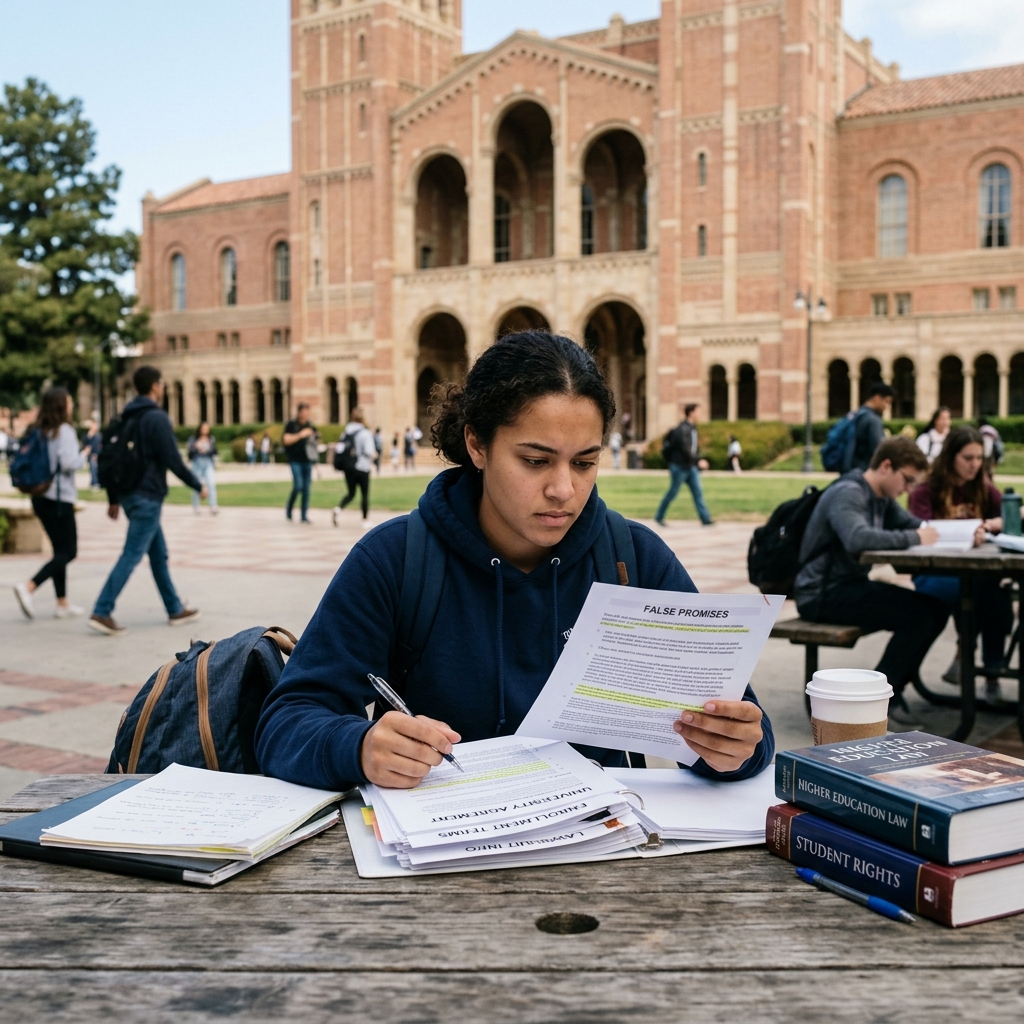
Many students enroll in universities and online colleges based on bold promises about jobs, salaries, accreditation, or flexible learning. When those assurances turn out to be misleading or outright false, some students wonder whether they can hold the school legally responsible. In certain situations, they can: lawsuits based on fraudulent misrepresentation or breach of contract may be possible if the school’s claims caused real financial harm.
This article explains when false promises by a college may amount to a legal violation, how these cases work, what evidence matters, and practical steps to take if you think you were misled.
1. When Can You Sue a College for Misleading Claims?
Not every disappointing college experience supports a lawsuit. Legal claims generally arise when a school makes specific, factual representations that turn out to be false and those statements influence your decision to enroll or stay.
1.1 Common Types of Problematic Promises
Students most often complain about statements like:
- Employment guarantees – Claims that “100% of graduates find jobs” or that a certain salary is typical for all graduates.
- Accreditation or licensure assurances – Suggestions that the program meets all professional or licensing requirements when it does not.
- Transferability of credits – Promises that credits will transfer to other institutions or count toward advanced degrees.
- Costs and financial aid – Misleading representations about total tuition, mandatory fees, or the availability of grants and scholarships.
- Program quality or resources – Claims about faculty credentials, lab facilities, clinical placements, or internship networks that do not match reality.
For a lawsuit to be viable, these statements generally must go beyond mere promotional language. Vague slogans like “world-class education” are harder to challenge than concrete claims such as “this program qualifies you to sit for X licensing exam.”
1.2 Key Legal Theories: Fraud vs. Contract
Most student claims over false promises fit into two broad categories:
- Fraudulent misrepresentation – The school knowingly or recklessly misstates important facts to persuade you to enroll or stay.
- Breach of contract – The school fails to provide what it promised in its written agreements, catalogs, or official materials.
These two theories often rely on similar evidence, but they require different legal showings and can lead to different outcomes.
2. Fraudulent Misrepresentation: Suing for Educational Fraud
A claim for fraudulent misrepresentation centers on deception. The idea is that the college made a false statement of fact, knew or should have known it was false, wanted you to rely on it, and you suffered harm because you did.
2.1 Essential Elements of Fraud Against a School
While the exact wording varies by jurisdiction, courts typically require students to prove several core elements in a fraud case:
- Representation of fact – The school communicated a concrete, factual statement, not just an opinion or vague marketing.
- Falsity – The statement was untrue at the time it was made.
- Knowledge or recklessness – The institution either knew the statement was false or acted recklessly without checking its accuracy.
- Intent to induce reliance – The school made the statement expecting prospective or current students to rely on it.
- Actual reliance – You did rely on the statement when deciding to enroll, pay tuition, or remain in the program.
- Damages – You experienced financial loss or other legally recognized harm as a direct result.
If even one of these building blocks is missing, the fraud claim may fail. In practice, the most difficult issues are proving that a statement was truly factual and showing that the institution knew or should have known it was wrong.
2.2 Challenges Unique to Fraud Cases Against Colleges
Fraud claims against higher education institutions face several practical hurdles:
- Separating facts from puffery – Courts frequently treat broad marketing language as “puffery” rather than promises. Statements like “top-tier program” or “excellent career preparation” usually are not actionable.
- Proving institutional knowledge – You must show that administrators or responsible offices were aware of the falsity or ignored clear evidence, which can be difficult without internal documents.
- Complex causal links – Students often have multiple reasons for choosing a school. Demonstrating that the misleading statement was a significant factor can be challenging.
- Disclaimers and reservation clauses – Many catalogs and enrollment agreements include language reserving the right to change programs or clarifying that employment outcomes are not guaranteed.
Despite these challenges, there have been successful fraud-based actions against schools, especially where institutions engaged in systematic deceptive advertising or misrepresented accreditation and job placement data.
3. Breach of Contract: When School Promises Become Legally Binding
Even when it is difficult to prove fraud, students may still pursue a breach of contract claim. In many jurisdictions, courts treat the relationship between a student and a college as contractual, drawing terms from enrollment agreements, tuition documents, handbooks, and official program descriptions.
3.1 What Counts as a Contract with a University?
Basic contract law requires three core elements:
- Offer – The school offers specific educational services, degrees, or program features.
- Acceptance – The student accepts by enrolling, signing required documents, or paying tuition.
- Consideration – Each side exchanges value: the student pays tuition and completes coursework while the school provides instruction and confers credits or degrees.
Courts may look at a wide range of documents to identify what the school actually promised, including application materials, program brochures, catalog descriptions, online course listings, and official policy statements.
3.2 How Breach of Contract Claims Differ from Fraud
Contract-based lawsuits are typically easier to prove than fraud because they do not require showing that the school intended to deceive you. The key questions are whether the institution made a clear promise and whether it failed to fulfill that commitment.
| Aspect | Fraudulent Misrepresentation | Breach of Contract |
|---|---|---|
| Intent requirement | Must show knowledge or recklessness and intent to induce reliance. | No need to prove intent; only that promises were not kept. |
| Type of statement | False, material statement of fact. | Specific terms contained in written or implied agreements. |
| Common evidence | Advertising, recruitment communications, internal data. | Contracts, catalogs, handbooks, enrollment documents. |
| Remedies | Damages, sometimes punitive, depending on jurisdiction. | Compensatory damages and, in some cases, restitution. |
Because intent is not required, many students pursue breach of contract claims even when they suspect fraudulent behavior, especially where written documents clearly conflict with what was delivered.
4. What Damages Are Possible in These Lawsuits?
If a student successfully proves fraud or breach of contract, courts can award financial compensation. The specific amount depends on the loss suffered and the law in the relevant jurisdiction.
4.1 Typical Student Damages
Potential damages in lawsuits against universities or online colleges often include:
- Tuition reimbursement – Repayment of tuition and mandatory fees paid for the misrepresented program or courses.
- Related educational expenses – Books, materials, technology costs, and other required spending.
- Additional financial losses – Extra loans, lost wages, or costs of transferring to a new institution.
- In some jurisdictions, consequential damages – Financial impacts that flow directly from the school’s misconduct, such as delayed entry into the workforce.
Students rarely receive compensation for generalized disappointment or emotional distress alone; courts focus on measurable harm like money spent and income reasonably lost because of the false promises.
5. Evidence That Strengthens a Case
Whether you claim fraud or breach of contract, your case will be stronger if you can present clear, organized evidence showing what was promised, what you relied on, and how you were harmed.
5.1 Useful Documents and Records
Students considering legal action should preserve items such as:
- Marketing materials – Brochures, emails, advertisements, website screenshots, and social media posts that include specific claims.
- Enrollment paperwork – Applications, acceptance letters, tuition bills, and financial aid documents.
- Program descriptions – Catalog entries, syllabus details, and official program overviews.
- Communications with staff – Emails or messages from admissions officers, advisors, or faculty discussing outcomes or requirements.
- Personal notes – Written records of conversations, including dates, names, and what was said.
This documentation helps courts see the timeline of representations and the link between those promises and your decisions.
6. Special Issues for Online Colleges and For-Profit Schools
Online programs and for-profit institutions have received particular scrutiny for deceptive advertising and misrepresentations about job placement and program value. Government agencies have brought enforcement actions alleging that some schools exaggerated career outcomes and downplayed program limitations.
6.1 Regulatory Oversight and False Claims
When colleges, including online institutions, receive federal funds such as student aid, they must comply with extensive regulations. Misrepresentations to the federal government about eligibility or compliance can trigger liability under statutes like the U.S. False Claims Act, which imposes heavy penalties for fraudulent claims.
Under legal doctrines such as “implied certification,” a school may be liable if it requests federal money while failing to disclose material violations of regulatory requirements, even when those violations are not expressly listed as conditions of payment.
Although these cases are usually brought by governments or whistleblowers rather than individual students, they can reveal patterns of misconduct that support student lawsuits or class actions.
7. Practical Steps If You Believe You Were Misled
If you suspect that false promises influenced your decision to enroll in a program, acting promptly and methodically can protect your rights and improve your chances of a favorable outcome.
7.1 Immediate Actions to Take
- Preserve evidence – Save electronic and paper documents, take screenshots, and store emails and text messages.
- Document your understanding – Write down what you believed the program would provide, who told you that, and when.
- Review your agreements – Carefully read enrollment contracts, handbooks, and disclaimers to see how the school describes its obligations.
- Raise concerns internally – Consider speaking with advisors, department heads, or ombudspersons; some issues may be resolved without litigation.
- Consult a qualified attorney – A lawyer familiar with education law can evaluate the strength of your claims and explain possible remedies.
While students sometimes consider representing themselves, education-related litigation can be complex, especially when institutions raise procedural defenses. Legal advice is important before filing a case.
8. Frequently Asked Questions (FAQs)
8.1 Can I sue my college simply because I did not get the job I wanted?
Generally, no. Courts do not treat a disappointing career outcome by itself as grounds for a lawsuit. A viable claim usually requires specific false statements about job placement or salary that you reasonably relied on, coupled with financial harm when those statements proved untrue.
8.2 Are broad marketing slogans legally enforceable?
In most cases, no. Phrases like “leading institution” or “excellent preparation” are often considered non-binding promotional language. Only concrete, verifiable statements about accreditation, job statistics, or program requirements are likely to be treated as promises.
8.3 Does it matter whether I took classes online or on campus?
From a legal perspective, both online and in-person programs can be subject to fraud and contract claims. The key question is what the institution represented and whether those representations were accurate, not the mode of delivery.
8.4 Can a disclaimer or “no guarantee” clause block my claim?
Disclaimers can limit liability, especially regarding employment outcomes or program changes. However, they do not give schools permission to make knowingly false statements. A court will consider the overall context, including any conflicting promises in marketing materials and formal documents.
8.5 Is joining a class action an option?
In some circumstances, students pursue class actions when many people were exposed to the same alleged misrepresentations, such as standardized advertising about job placement or accreditation. Whether this is possible depends on the facts of the case and procedural rules in the relevant jurisdiction.
9. Weighing Legal Action Against Other Options
Lawsuits against universities and online colleges can be time-consuming and emotionally taxing. Before suing, students often explore alternatives:
- Internal complaint procedures – Many institutions have formal grievance processes or ombuds offices.
- Accrediting bodies and regulators – Reporting concerns to accreditors or government agencies can trigger investigations that pressure schools to change practices.
- Negotiated resolution – Occasionally, schools may adjust tuition, allow withdrawals without penalty, or offer other accommodations.
Nonetheless, when false promises cause substantial financial harm and informal solutions fail, litigation based on fraud or breach of contract may be an appropriate tool to seek accountability and compensation.
References
- Can I Sue a University or Online College for False Promises? — FindLaw. 2023-05-10. https://www.findlaw.com/litigation/filing-a-lawsuit/can-i-sue-a-university-or-online-college-for-false-promises.html
- Can I Sue a University or Online College for False Promises? — LawBhoomi. 2023-08-01. https://lawbhoomi.com/can-i-sue-a-university-or-online-college-for-false-promises/
- Universities Are Prime Targets for False Claims Act Liability — Government Contracts Law Blog (Sheppard Mullin). 2016-12-19. https://www.governmentcontractslaw.com/2016/12/universities-prime-targets-false-claims-act-liability/
- Deceptive Advertising Among Higher Education Institutions — Matern Law Group. 2018-04-04. https://www.maternlawgroup.com/blog/deceptive-advertising-among-higher-education-institutions-2/
Similar Articles








Read full bio of medha deb


