
Subpoenas In Sexual Harassment Cases: A Practical Guide And Tips
Understand when subpoenas arise in harassment disputes and how witnesses, victims, and employers should respond.
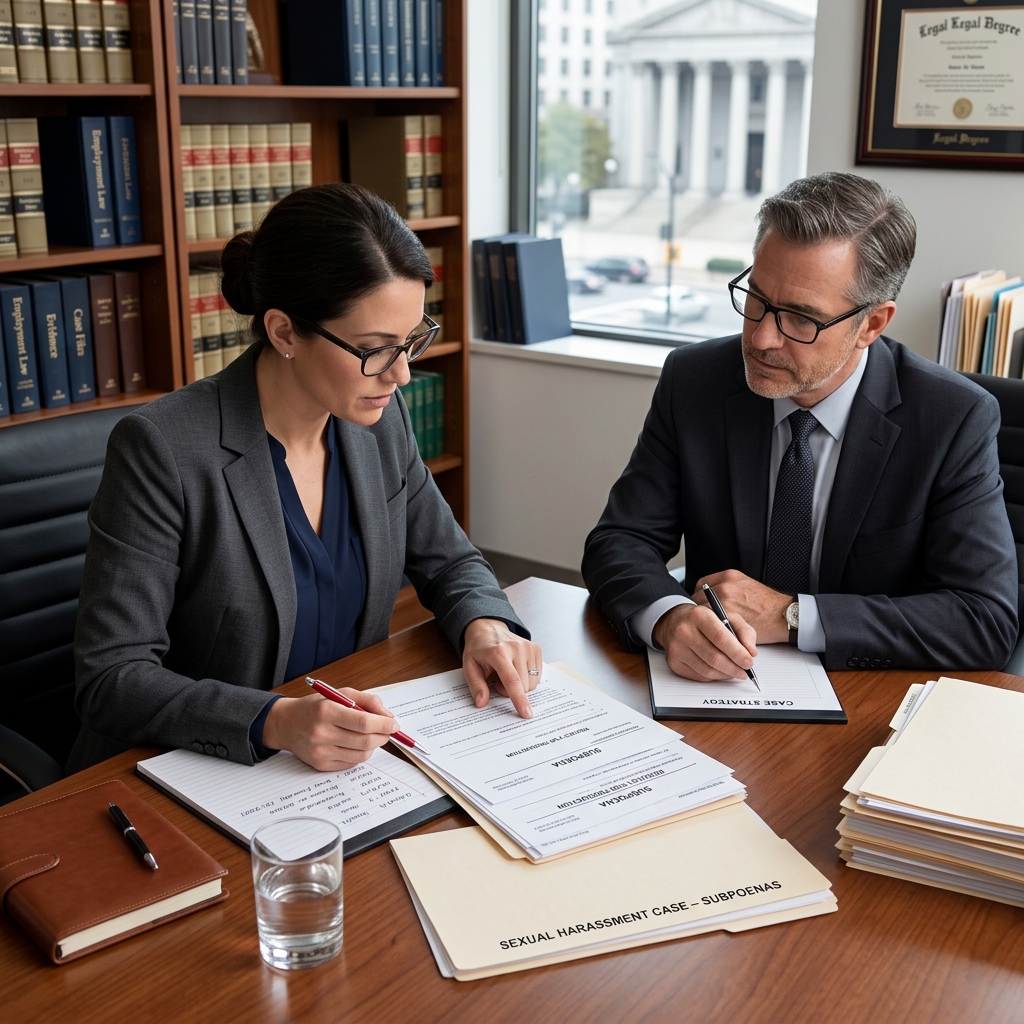
When a sexual harassment complaint moves from the workplace into formal legal proceedings, subpoenas often become part of the process. These court orders can require a person to appear, answer questions, or produce documents tied to the dispute. For employees, employers, and outside witnesses, understanding what a subpoena does and does not require is essential to responding correctly and protecting legal rights.
This article explains the role subpoenas play in harassment cases, what kinds of people and records may be involved, and the main exceptions that can limit compliance. It also outlines practical steps for recipients, including when to seek legal advice and when to ask the court to narrow or set aside a demand.
Why subpoenas matter in harassment litigation
Sexual harassment claims often depend on witness accounts, internal communications, employment records, and other evidence that may not be available without formal process. A subpoena gives a party a legal mechanism to bring in testimony or documents that may help prove or defend the case. In that sense, subpoenas are not unusual or exceptional in harassment disputes; they are a standard part of building the record.
They may be issued in civil litigation, in administrative proceedings, or in related investigations where testimony from witnesses is needed. In practice, a subpoena can be directed to a coworker, a manager, a custodian of records, or someone who saw or heard events relevant to the allegations. The purpose is not to force someone to take sides, but to require truthful information about facts within the person’s knowledge.
What a subpoena can require
A subpoena may call for one or more of three things: personal appearance, testimony, or production of documents. In a harassment case, that can include a witness being asked to show up for a deposition, appear at trial, or provide records such as emails, schedules, personnel materials, complaint files, or text messages.
Because subpoenas are legal orders, ignoring one can create serious problems. The recipient should read the document carefully and determine:
- whether it asks for testimony, documents, or both;
- when and where compliance is required;
- who issued it;
- what deadlines apply;
- whether the request is overly broad or unclear.
In many cases, the first response should be to preserve the materials requested and avoid deleting, altering, or destroying anything that may be relevant. That step is important even before deciding whether the subpoena can be challenged.
Who is likely to receive one
Witnesses in sexual harassment cases are not limited to the people directly involved in the alleged conduct. A subpoena may be served on coworkers who observed behavior, supervisors who received complaints, HR staff who handled an internal investigation, or records custodians who maintain workplace files. Sometimes third parties such as medical providers, counselors, or outside service organizations may also receive subpoenas if they possess relevant information.
Not every subpoenaed person is expected to have first-hand knowledge of the harassment itself. A witness may be asked about workplace culture, reporting channels, prior complaints, or steps the employer took after receiving notice. In other situations, the requested testimony may be limited to confirming the authenticity of records or the timeline of events.
What a witness is actually obligated to do
A subpoena does not automatically require a witness to discuss everything related to the case. The witness must answer truthfully about matters within personal knowledge, but not speculate, guess, or adopt someone else’s version of events. If the witness does not remember something, that should be said plainly. If the witness was not present, that fact is also relevant and should be stated.
That limited obligation is important. A subpoena is not a command to serve as an advocate, and it is not permission for either side to pressure a witness into conclusions the witness cannot support. The witness’s job is to provide accurate information, not to resolve the case.
When a person may resist or limit compliance
Although subpoenas are powerful, they are not unlimited. A recipient may have grounds to refuse some or all of the requested disclosure where a valid privilege applies or where compliance would violate a separate legal duty. The most common concerns include confidentiality obligations and self-incrimination.
| Possible issue | Why it matters | Typical next step |
|---|---|---|
| Confidentiality agreement | Disclosure may breach a binding promise or protected relationship | Consult counsel and seek to limit the demand |
| Privilege | Some communications are protected from disclosure | Assert privilege and identify only non-privileged material |
| Self-incrimination | Testimony could expose the witness to criminal liability | Invoke the right against self-incrimination as appropriate |
| Overbroad request | The demand seeks more than the case reasonably needs | Move to quash or modify the subpoena |
Even where a full refusal is not available, the subpoena may still be narrowed. Courts often expect parties to tailor requests so they are relevant and proportional. That means a witness or records holder may be able to object to requests that are too broad in time, scope, or subject matter.
Confidentiality and privileged information
Some of the most sensitive issues in harassment cases involve private communications and protected records. For example, attorney-client communications, certain medical records, and some counseling records may be privileged or otherwise shielded by law. A subpoena does not erase those protections by itself.
Confidentiality agreements can also complicate matters. A person who promised to keep information private may need to review whether the subpoena creates an exception, whether a protective order is needed, or whether the court should limit disclosure to a small set of materials. The existence of confidentiality concerns does not automatically end the inquiry, but it does make legal review especially important.
Employers should be especially careful with internal personnel files and complaint records. Those materials may contain both discoverable and sensitive information. A targeted response can help protect privacy while still complying with the law.
What employers should do after receiving a subpoena
For employers, a subpoena in a harassment case should trigger immediate coordination between HR, management, and legal counsel. The organization should identify the custodian of the requested records, preserve relevant documents, and decide whether any objections apply. If the subpoena seeks employee files or investigation materials, the employer may need to review redaction options, privacy rules, and applicable employment obligations before producing anything.
Useful employer steps include:
- locating all responsive records quickly;
- issuing a preservation hold if needed;
- reviewing whether the demand is valid and properly served;
- identifying privileged or confidential material;
- considering whether a protective order is appropriate;
- responding through counsel when possible.
Employers should not assume that compliance means handing over every document in a file. The better approach is often a disciplined review that separates responsive records from irrelevant, privileged, or protected information.
How victims and complainants may be affected
People who brought the harassment complaint may also encounter subpoenas, especially if they possess documents or testimony that one side believes are important. That can be unsettling, but it does not necessarily mean the case is turning against them. It may simply reflect the fact that the underlying events involved private conversations, workplace messages, and personal reactions that only certain people experienced.
If a complainant receives a subpoena, the most important step is to avoid ignoring it. The next step is often to speak with an attorney about whether the request can be challenged, limited, or answered under a protective framework. In some settings, the subpoena may call for sensitive information that should be disclosed only after the court has considered privacy concerns.
Where appropriate, a person may ask the court to quash the subpoena or enter a protective order limiting how the information can be used. That may be especially relevant if the request reaches into medical treatment, counseling notes, or other intimate material unrelated to the legal issues in dispute.
How to decide whether to challenge a subpoena
Not every subpoena is ironclad. A challenge may be appropriate if the request is facially defective, lacks proper service, seeks privileged material, or demands information that is not relevant to the case. A motion to quash asks the court to void the subpoena, while a motion to modify or protect seeks to narrow its scope.
A person considering a challenge should ask several questions:
- Is the request specific enough to understand and answer?
- Does it seek documents or testimony beyond the likely scope of the dispute?
- Does it require disclosure of privileged or confidential information?
- Would compliance impose an unreasonable burden?
- Can the same information be obtained through a less intrusive source?
The answer to one or more of these questions may justify a court challenge. Even if a full objection fails, a narrower order may still protect privacy and reduce the burden of compliance.
Practical response tips for subpoena recipients
The safest response is usually calm, prompt, and documented. Recipients should read every page of the subpoena, calendar all deadlines, and avoid informal promises to produce records without understanding the legal consequences. If the subpoena requires testimony, preparation should focus on accuracy, not persuasion.
Helpful practices include:
- saving the subpoena and envelope or proof of service;
- identifying the issuing lawyer or party;
- notifying in-house or outside counsel quickly;
- preserving relevant emails, texts, and files;
- keeping a record of what was searched and produced;
- separating factual knowledge from assumptions or opinions.
If the person is a witness, preparation should center on truthful recollection. If the person is a records holder, the focus should be on identifying what exists, what is responsive, and what should be withheld or redacted. In either situation, a careful response is better than a rushed one.
FAQs
Do I have to appear if I am subpoenaed?
In most situations, yes. A subpoena is a legal command, not an invitation. If there is a valid reason to object, the correct response is usually to raise that issue promptly rather than simply failing to appear.
Can I refuse to answer every question?
No. A witness can generally refuse only those questions covered by privilege, confidentiality, or another legally recognized protection. Otherwise, the witness must answer truthfully based on personal knowledge.
What if I do not remember the event?
Then say so. A witness should not guess or fill gaps with speculation. Incomplete memory is still testimony, and it is better to be accurate than to appear certain about something uncertain.
Can a subpoena force me to reveal privileged communications?
Not automatically. Privileged communications may remain protected even when a subpoena is served. A lawyer can help determine whether the material is privileged and whether a formal objection is needed.
Should I respond without a lawyer?
That depends on the request, but legal advice is often wise, especially when the subpoena involves sensitive records, workplace investigations, or possible self-incrimination concerns. A short consultation can prevent mistakes that are hard to fix later.
Why careful compliance matters
Subpoenas in sexual harassment cases serve an important function: they help courts and parties gather evidence from people who saw, heard, or preserved relevant information. At the same time, these orders can reach into private workplace records, confidential communications, and emotionally difficult subject matter. The right response balances cooperation with protection of lawful rights.
For that reason, the best approach is rarely to ignore a subpoena or to produce materials blindly. It is to assess the request, identify any limits, and respond in a way that is both legally sound and narrowly tailored to what the case actually requires.
References
- EEOC Enforcement Guidance on Harassment in the Workplace — U.S. Equal Employment Opportunity Commission. 2024-04-29. https://www.eeoc.gov/laws/guidance/enforcement-guidance-harassment-workplace
- Federal Rules of Civil Procedure, Rule 45 — United States Courts. 2026-07-09. https://www.uscourts.gov/rules-policies/current-rules-practice-procedure/federal-rules-civil-procedure
- Workplace Harassment — U.S. Department of Labor, Occupational Safety and Health Administration. 2026-07-09. https://www.osha.gov/workplace-harassment
- Protecting Employee Privacy and Confidentiality in the Workplace — U.S. Department of Labor. 2026-07-09. https://www.dol.gov/general/topic/discrimination/whistleblower-protections
- Guide to Privacy Act and Confidential Records Requests — U.S. Department of Justice. 2026-07-09. https://www.justice.gov/opcl/privacy-act-1974
Similar Articles








Read full bio of medha deb




