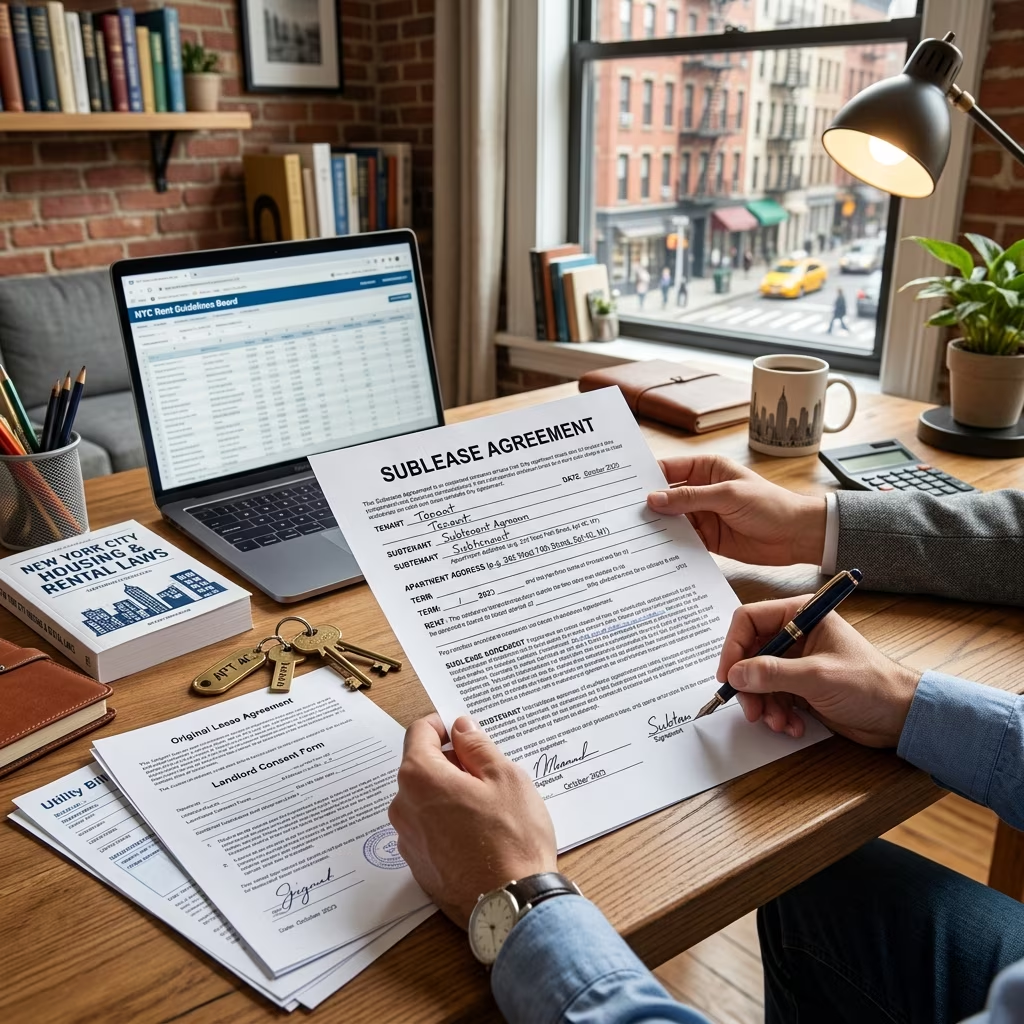
Subleasing is common in New York, especially when tenants leave temporarily for work, school, or travel. But turning over your apartment keys to someone else also means taking on legal duties and potential risk. This guide explains the core rules that govern subleasing a New York apartment, how to get proper landlord consent, special protections for rent‑stabilized units, and practical steps to reduce disputes.
What Subleasing Means Under New York Law
In basic terms, subleasing happens when the original tenant (sometimes called the prime tenant) rents out their apartment, or part of it, to another person, known as the subtenant, while the original lease with the landlord remains in place. The landlord still looks to the prime tenant for rent and compliance with the lease; the subtenant’s right to live there comes from the sublease agreement, not directly from the landlord.
- The landlord–tenant relationship remains between the landlord and prime tenant.
- The subtenant–tenant relationship is governed by the sublease contract.
- The prime tenant stays liable for rent, damage, and lease violations during the sublease term.
New York law distinguishes subleasing from assignment of a lease. Assignment transfers the lease itself—and the main tenant position—to another person, while subleasing keeps the original tenant in place and simply adds another occupant for a defined period. Different rules apply to each, so it is important not to confuse them.
Legal Right to Request a Sublease
New York Real Property Law §226‑b gives many residential tenants a legal right to request permission to sublease their apartment. This law mostly applies to buildings with at least four residential units. While the statute does not guarantee automatic approval, it requires landlords to handle sublease requests in a structured way.
| Situation | Legal Position |
|---|---|
| Tenant in a building with 4+ units | May request sublease under RPL §226‑b; landlord cannot unreasonably refuse. |
| Assignment of lease | Owner may withhold consent without cause for assignment under state law. |
| Rent‑stabilized unit | Subleasing allowed, but strict rules on duration, rent, and primary residence apply. |
Even when the law grants a right to request a sublease, the lease itself may impose procedures or limits. Tenants should review their written lease before taking any steps.
Landlord Consent: How the Process Works
In most New York rentals, written landlord consent is required before a tenant may legally sublease the apartment. The consent process is not informal; it follows a detailed procedure designed to give landlords information and time to review potential subtenants.
Preparing a Formal Sublease Request
Under state and city guidance, tenants are expected to send a written request by certified mail, return receipt requested, at least 30 days before the planned sublease. The request usually includes:
- Term of the sublease (start and end dates).
- Name and contact details for the proposed subtenant.
- Reason for the sublease (for example, temporary work assignment).
- The prime tenant’s address during the sublease period.
- Written consent from any co‑tenant or guarantor listed on the lease.
- A copy of the proposed sublease contract, and often a copy of the existing lease.
Using certified mail serves two purposes: it helps demonstrate that the landlord received the request, and it starts the clock on the statutory response deadlines.
Landlord’s Duty to Respond
After receiving a proper request, New York law and city guidance require the landlord to respond within specific timeframes.
- The landlord has about 10 days to ask for additional information if needed.
- The landlord then has up to 30 days from mailing of the initial request, or from asking for more information, to approve or deny the sublease.
- If the landlord denies the request, they must provide a written reason.
New York rules state that landlords may screen subtenants and deny them for legitimate reasons, such as poor credit or a history of disruptive behavior, but they may not unreasonably withhold consent. When denial lacks justification, a tenant may challenge it in court or choose to proceed at their own risk, though doing so can expose them to eviction proceedings.
Key Obligations and Risks for the Prime Tenant
Even after a sublease is signed, the prime tenant remains the party responsible under the original lease. This arrangement creates practical and financial risks.
Continuing Liability for Rent and Damage
As long as the original lease is active, the landlord expects full rent from the prime tenant, regardless of whether the subtenant pays. If the subtenant fails to pay, the landlord can pursue the prime tenant. The same pattern holds for property damage or lease violations.
- If a subtenant misses rent payments, the prime tenant must usually cover the shortfall.
- If the subtenant damages the unit, the landlord can charge the prime tenant for repairs.
- Non‑compliance with building rules by the subtenant can be treated as a lease breach by the prime tenant.
Because of these risks, reliable screening and a carefully drafted sublease can be as important as the landlord’s original lease.
Why a Written Sublease Agreement Matters
New York legal resources emphasize that subleases should be documented in writing and tailored to the specific arrangement. A strong sublease agreement can clarify expectations and offer remedies if things go wrong.
Important clauses typically include:
- Rent amount and due date, including how payments are made.
- Security deposit terms and conditions for returning it.
- Length of the sublease and any renewal options.
- Obligation to follow the original lease rules and building regulations.
- Restrictions on further subletting or short‑term rentals.
- Procedures for early termination or default by the subtenant.
Putting all major terms in writing reduces ambiguity and helps both sides understand their rights if a dispute arises.
Special Rules for Rent‑Stabilized Apartments
Rent‑stabilized apartments are subject to a separate regulatory framework, including specific sublease rules enforced by state housing agencies and the New York City Rent Guidelines Board. Tenants in these units often enjoy additional protections but also face tighter limits.
Primary Residence Requirement
Rent‑stabilized tenants must maintain the apartment as their primary residence to keep their regulatory status. If the tenant spends most of the year elsewhere or appears to treat the unit as a secondary home, the landlord may bring a non‑primary residence claim.
- Tenants cannot sublet a rent‑stabilized apartment if they have another primary residence.
- Extended subleasing may prompt the landlord to argue that the tenant no longer lives there primarily.
Limits on Sublease Duration
Rent‑stabilized tenants face clear time limits on how long they can sublease their units. Guidance from legal practitioners and city boards indicates that tenants typically may not sublet for more than two years within any four‑year period.
- Subleases may be used for temporary absences but not as a permanent arrangement.
- Exceeding the time limit can support a claim that the tenant has surrendered primary residence status.
Rules Against Overcharging Subtenants
Rent stabilization law prohibits prime tenants from demanding “key money” or charging more than the lawful regulated rent, except for a limited furnished‑apartment surcharge.
- Subtenants generally cannot be asked to pay more than the legal rent, plus up to 10% extra if the apartment is furnished.
- If a subtenant is overcharged, they may file a complaint with the state housing agency to recover up to three times the overcharge in serious cases.
- Systematic overcharging can lead to loss of rent‑stabilized status and other penalties.
These rules are designed to prevent tenants from turning regulatory protections into profit‑generating arrangements at the expense of subtenants.
Short‑Term Rentals and Minimum Duration Rules
New York City imposes additional constraints on very short stays in multi‑unit buildings. Legal commentary notes that tenants in large buildings generally may not sublet for less than thirty days. This interacts with separate laws governing hotel‑like stays and short‑term rental platforms.
- Subleases for short stays under thirty days in multiple dwellings (three or more units) can violate city regulations.
- Using subleases to operate de facto hotel units can expose both tenants and landlords to enforcement actions.
Tenants considering short‑term arrangements should consult building rules and city guidance to avoid inadvertently creating illegal occupancy situations.
Practical Tips to Protect Yourself When Subleasing
Beyond strict legal requirements, a few best practices can significantly reduce the risk of conflict or financial loss when subleasing a New York apartment.
Screen Your Subtenant Carefully
- Check employment and income to confirm the subtenant can reliably pay rent.
- Request and verify references, including prior landlords when possible.
- Discuss expectations around noise, visitors, and cleanliness before signing the sublease.
Align the Sublease With the Original Lease
- Ensure the sublease states that the subtenant must comply with all terms of the original lease.
- Do not grant rights (such as pets or alterations) that the original lease prohibits.
- Set the sublease term to end before or on the same date as the original lease, not after.
Keep Documentation Organized
- Save copies of all certified mail receipts and landlord responses.
- Keep the signed sublease and any co‑tenant or guarantor consents.
- If disputes arise, written records can be crucial evidence.
FAQs: Subleasing in New York
Is subleasing legal in New York?
Yes. Subleasing is legal in New York, but it is governed by strict procedures under New York Real Property Law §226‑b and related regulations. Tenants usually must obtain written landlord consent and follow statutory notice rules.
Do I need my landlord’s permission to sublease?
In most cases, yes. Leases often require written consent, and state law gives landlords the right to screen subtenants and deny them for legitimate reasons, provided they do not act unreasonably.
What happens if my subtenant stops paying rent?
The landlord will still look to you, the prime tenant, for full rent. You may need to pay the landlord and then pursue the subtenant for reimbursement under your sublease agreement.
Can I charge my subtenant more than I pay in a rent‑stabilized apartment?
Generally no. Rent‑stabilized tenants may not overcharge subtenants beyond the legal regulated rent, except for up to a 10% increase when the unit is furnished. Overcharging can lead to triple‑damage refunds and regulatory penalties.
How long can I sublease a rent‑stabilized unit?
Guidance indicates you may not sublet a rent‑stabilized apartment for more than two years within any four‑year period, and you must keep the unit as your primary residence throughout.
What’s the difference between subleasing and assigning my lease?
Subleasing keeps you as the prime tenant while allowing someone else to occupy the unit temporarily. Assignment transfers the lease and the tenant’s role to another person entirely. Owners may withhold consent to assignment without cause, while sublease requests under RPL §226‑b are subject to a reasonableness standard.
References
- Subletting Laws and Regulations In New York — Steadily. 2026-01-15. https://www.steadily.com/blog/subleasing-laws-regulations-new-york
- New York Real Property Law § 226-b: Right to Sublease or Assign — Justia / New York Legislature. 2025-01-01. https://law.justia.com/codes/new-york/rpp/article-7/226-b/
- Subletting FAQs — New York City Rent Guidelines Board. 2023-06-01. https://rentguidelinesboard.cityofnewyork.us/resources/faqs/subletting/
- Subletting Rights — Rozen Law Group. 2024-03-01. https://www.rozenlawgroup.com/subletting-rights
- Is Subletting Legal in NYC? — U Santini Moving & Storage. 2023-09-10. https://www.usantini.com/blog/is-subletting-legal-in-nyc/
- All About Subletting — Tenant Resource Center. 2022-05-01. https://www.tenantresourcecenter.org/all_about_subletting