
Student Social Media Accounts and School Control
How schools monitor, influence, and discipline student social media use while balancing privacy, speech rights, and safety obligations.
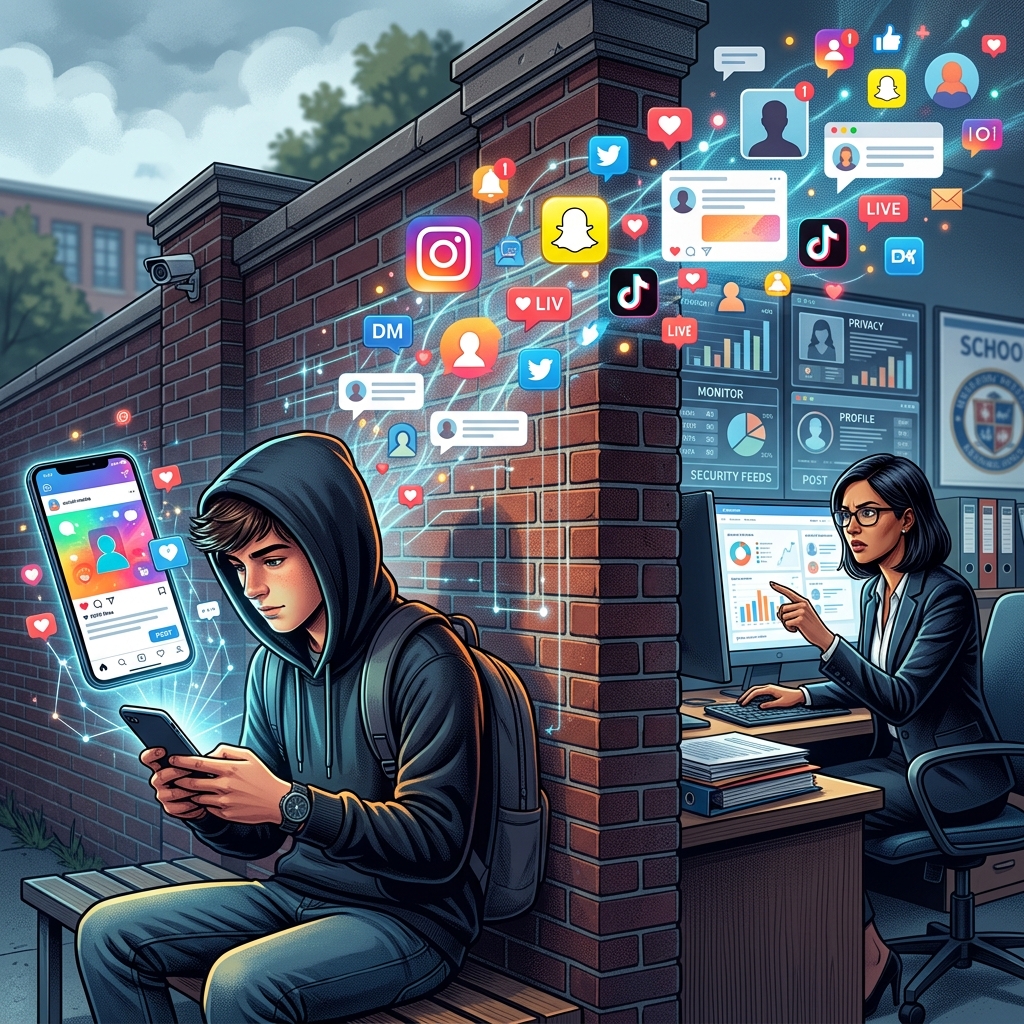
Social media is woven into everyday student life. Posts, stories, and videos can shape reputations, influence friendships, and even affect safety at school. At the same time, administrators, teachers, and district officials increasingly monitor student activity online, raising difficult questions about school authority, student privacy, and free speech rights.
This article explains how schools interact with student social media accounts—whether created by individual students, student organizations, or school-sponsored programs. It explores when schools may discipline students for online conduct, how privacy laws like FERPA apply, what constitutional protections are available, and practical steps all sides can take to reduce conflict and protect students.
Why Student Social Media Has Become a Legal Flashpoint
Social media disputes used to be mostly personal. Today, they are often legal. Schools face pressure from parents and communities to respond swiftly to online bullying, harassment, and threats. Students, on the other hand, worry about schools overreaching by tracking accounts, demanding passwords, or punishing speech that occurs off campus.
- Near-universal use: Most middle and high school students use at least one social media platform every day, making online spaces an extension of the school environment.
- Blurring boundaries: Posts made at home can have immediate impact at school, from triggering conflicts to creating safety concerns.
- Public visibility: Once content is posted online, it may be visible to school officials, future employers, and law enforcement, depending on the platform and privacy settings.
- Legal obligations: Schools must comply with federal privacy laws and, as public institutions, respect students’ constitutional rights while maintaining a safe learning environment.
These overlapping pressures make student social media accounts a focal point for discipline, policy-making, and litigation.
Types of Student Social Media Accounts and Why They Matter
Not all student social media accounts are legally treated the same. Understanding the nature of an account helps determine what authority the school may have and which rights students can assert.
| Account Type | Who Controls It? | Typical Legal Issues |
|---|---|---|
| Personal student accounts | Individual student | Discipline for off-campus speech, cyberbullying, threats, privacy expectations |
| Student club or organization accounts | Students, sometimes with staff advisor | Public forum status, censorship, FERPA if posting student information |
| School-sponsored or official accounts | Administrators or designated staff | Official speech, district liability, FERPA compliance, brand management |
| Hybrid accounts (student-run, school-branded) | Students under school oversight | Who owns content, who sets rules, censorship rights, privacy obligations |
Courts and commentators often focus on whether student-run accounts function as public forums. If students make content decisions under policies that promise editorial independence, school officials must meet a heightened standard before intervening, typically by showing that content is unlawful or would significantly disrupt school operations.
School Monitoring and Access: What Is and Isn’t Legal
One of the most common complaints from students is that schools “spy” on their social media accounts. Legally, the key distinction is between viewing publicly available content and forcing access to private information.
Viewing Public Content
If a post is publicly visible—or viewable under normal friend or follower relationships—school officials generally may look at it without violating privacy laws. Courts and legal practitioners often liken public social media posts to content printed in a newspaper: once shared publicly, there is little expectation that others will not read or save it.
- School staff may search student names on social platforms.
- Officials may print or screenshot posts for documentation.
- Law enforcement can also review publicly accessible content without a warrant, depending on the platform’s privacy settings.
Demanding Passwords or Circumventing Privacy Controls
A more serious issue arises if schools attempt to bypass privacy settings or compel students to provide access to locked accounts. Several states have enacted laws restricting employers and schools from demanding social media passwords, and attempts to circumvent technical protections can raise constitutional and statutory concerns, particularly for public schools. While specific rules vary by state, forcing password disclosure or hacking around privacy controls is far more likely to be legally problematic than simply viewing public posts.
Using Online Content in School Discipline
Public schools have some leeway to consider online conduct when deciding discipline, especially if posts threaten safety, target specific students, or materially disrupt classes. However, their authority is not unlimited.
- Content that clearly threatens violence, targets protected groups, or constitutes harassment may lead to discipline.
- Off-campus speech on matters of public concern receives First Amendment protection and generally cannot be punished unless it causes significant disruption or interferes with others’ rights.
- Private schools, as private entities, often have broader contractual authority under their codes of conduct, though they must still follow applicable privacy and civil rights laws.
First Amendment and Student Speech Online
For public schools, the First Amendment places important limits on their ability to control student expression on social media. Courts have adapted traditional school-speech standards to the online environment, focusing on disruption and the nature of the platform.
Off-Campus Speech and Disruption
The key question in many disputes is whether off-campus online speech can be punished. Legal analysis typically looks at:
- Location and context: Was the message posted during school hours or using school devices, or entirely off-campus on personal time?
- Impact on school: Did the content cause substantial disruption, such as fights, multiple class interruptions, or large-scale complaints? School officials must generally show more than just discomfort or offense.
- Rights of others: Did the speech invade the rights of specific students—for example, through targeted bullying or harassment?
Where the speech involves public issues or political commentary and does not lead to serious disruption, courts tend to side with student free speech, sometimes treating student-run accounts as public forums with heightened protection from administrative censorship.
School-Sponsored Accounts and Official Speech
When students post on accounts that are clearly school-sponsored—such as the official page of a yearbook, athletic team, or district program—courts are more likely to treat content as the school’s speech rather than independent student expression.
- Officials may impose editorial standards and remove content that conflicts with educational goals or district policy.
- Speech on these accounts may receive less First Amendment protection because it appears to represent the institution, not just the student.
- Schools are also responsible for ensuring posts do not defame individuals, infringe copyright, or violate privacy laws.
Privacy, FERPA, and Posting About Students
In addition to free speech issues, student social media accounts raise significant privacy concerns. The Family Educational Rights and Privacy Act (FERPA) governs how educational institutions handle personally identifiable information in student education records.
What FERPA Generally Covers
FERPA restricts schools from disclosing certain information from education records without parental consent, including some data that might appear online.
- Grades and disciplinary records
- Student identification numbers
- Sensitive personal information tied to official records
Schools may disclose limited “directory information”—such as names, photos, and activities—only if they follow strict notification and opt-out procedures.
Risks When Posting Students on Official or Hybrid Accounts
When schools or student organizations post images or information about identified students on official or hybrid accounts, they can inadvertently violate FERPA or related privacy policies.
- Parents generally must receive advance notice and an opportunity to opt out of directory information disclosures.
- Best practice is to obtain written parental consent before publicly posting student names, photos, or videos in a way that clearly identifies them.
- Schools should avoid combining photos with sensitive information (e.g., special education status or disciplinary history) in public posts.
These principles apply not just to district accounts, but also to student clubs that operate under university or K–12 school authority and use institutional branding.
Emerging Laws Limiting Social Media Use by Minors
Beyond school policies and federal privacy laws, state and federal lawmakers are increasingly considering direct regulation of minors’ social media use. Some proposals would bar younger children from opening accounts, while others target addictive features or algorithmic feeds.
- Recent federal proposals would prohibit platforms from allowing children under 13 to maintain accounts, requiring deletion of their personal data when discovered.
- Age-verification laws at the state level seek to control access to social media platforms or specific features like recommendation algorithms, raising First Amendment questions.
- These laws may also limit social media access in schools, changing the environment for school-sponsored accounts and student use on campus.
As more jurisdictions experiment with age-based restrictions and verification rules, school policies will need to adapt, and students should expect greater scrutiny of their online activity—both on and off campus.
Best Practices for Schools Managing Student Social Media
Clear, thoughtful policies can reduce conflict and protect both student rights and school interests. Legal guidance and professional associations emphasize the importance of proactive planning.
Policy and Governance
- Develop written guidelines that explain how student accounts may be used, who may post, and what content is prohibited.
- Clarify which accounts are official, which are student-run, and how oversight works in each case.
- Provide training for staff and student leaders on legal issues, including FERPA, harassment, and intellectual property.
Content Controls and Consent
- Obtain parental consent before posting student photos or identifying information on public-facing accounts.
- Consider limiting or disabling public comments on official accounts to reduce the risk of harmful or defamatory content.
- Establish procedures for removing problematic content quickly, including clear reporting channels and documentation practices.
Respecting Student Rights
- Distinguish between school-sponsored speech and independent student expression.
- Avoid disciplining students for off-campus posts that do not cause significant disruption or violate specific policies.
- Refrain from demanding social media passwords or attempting to access private accounts without proper legal basis.
Practical Guidance for Students Using Social Media
Students can take simple steps to reduce the likelihood of conflict with schools and protect themselves online.
- Assume anything posted may be seen: School officials, employers, and law enforcement can often review public content without special permission.
- Use privacy settings wisely: While not foolproof, restricting who can view posts reduces exposure and helps separate personal from public spheres.
- Avoid threats and harassment: Targeted bullying or threatening language, even off campus, can lead to discipline and potential legal consequences.
- Be careful with images of others: Posting photos of classmates without consent can lead to interpersonal conflict and, in some settings, privacy complaints.
- Know your school’s policies: Read your student handbook and any social media guidelines, including rules for participation in student organizations.
FAQs: Student Social Media and School Authority
Can my school look at my social media accounts?
Public and private schools can generally view content that is publicly available or shared with them by other users. Reviewing public posts is not usually considered an invasion of privacy. Problems arise if schools attempt to bypass privacy controls or compel you to disclose passwords without legal authority.
Can I be disciplined for something I post off campus?
Yes, in some circumstances. If your posts create serious disruption at school, threaten violence, or harass other students, public schools may have grounds for discipline. However, speech on matters of public concern that does not materially disrupt school is generally protected under the First Amendment.
Are student-run club accounts treated differently from my personal account?
They can be. If a student organization’s account is recognized as a public forum with student editorial control, school officials may need a stronger justification—such as illegality or substantial disruption—before censoring content. When an account is clearly school-sponsored, administrators have broader authority to set standards and remove posts.
Can my school post my photo on its official social media without asking?
Schools must follow FERPA and local policies when sharing student information. Many districts treat student names and photos as directory information but provide parents an opt-out. Best practice is to obtain written parental consent before publicly posting identifiable images of students, especially in K–12 settings.
What should schools do to stay compliant when using social media?
Schools should adopt clear policies, train staff and students, obtain parental consent for postings involving minors, limit public comments where appropriate, and avoid overbroad monitoring or discipline that infringes students’ free speech or privacy expectations.
References
- Social Media and Students: The Basics — FindLaw. 2023-05-01. https://www.findlaw.com/education/student-conduct-and-discipline/social-media-and-students-the-basics.html
- Social Media Law FAQs — Student Press Law Center. 2020-09-15. https://splc.org/social-media-law-faqs/
- Legal Risks of School District Social Media Accounts — Maya Murphy, P.C. 2018-05-10. https://mayalaw.com/legal-risks-of-school-district-social-media-accounts/
- Student Use of Social Media: Rights and Responsibilities — K-12 Legal Insights (Thompson & Horton LLP). 2018-05-30. https://www.k-12legalinsights.com/2018/05/student-use-social-media-rights-responsibilities/
- Educators’ Rights on Social Media — National Education Association. 2021-03-01. https://www.nea.org/resource-library/educators-rights-social-media
- Kids Off Social Media Act of 2024 (S.278) — U.S. Congress. 2025-01-30. https://www.congress.gov/bill/119th-congress/senate-bill/278/text
- Social Media Guidelines for Student Organizations — University of North Carolina Greensboro. 2019-08-01. https://recwell.uncg.edu/wp-content/uploads/Social-Media-Guidelines.pdf
Similar Articles








Read full bio of Sneha Tete


