
Student Speech Rights Beyond the School Gates
Why schools must not police students' off-campus digital speech.
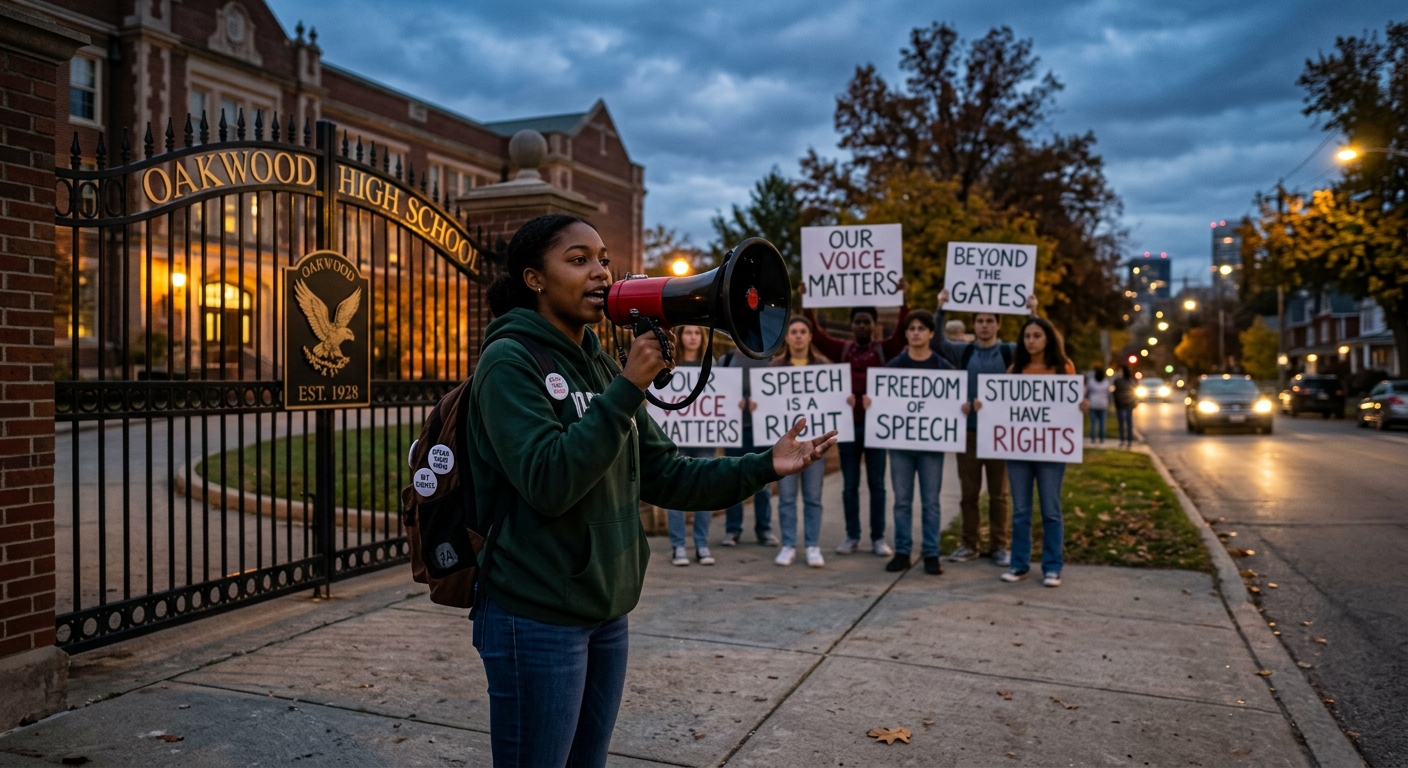
Modern teenagers exist in a dual reality: the physical physical world and the ever-expanding digital universe. For generations, the boundary between school life and private life was clearly demarcated by the ringing of the final bell and the physical exit from the schoolhouse gates. Today, however, smartphones and social media platforms have effectively erased these geographic boundaries. This technological shift has sparked a profound legal and cultural debate regarding the extent to which educational institutions can police the speech and behavior of their students during off-hours. Should a frustrated social media post made on a Saturday from a local convenience store subject a student to Monday morning disciplinary hearings?
The First Amendment guarantees freedom of speech, yet the application of this right within the context of public education has always required a delicate balancing act. Schools are tasked with maintaining order and providing a safe educational environment. However, when administrators attempt to extend their disciplinary reach into the private, off-campus lives of their students, they risk transforming educational institutions into omnipresent surveillance states. This overreach threatens not only the foundational principles of free expression but also undermines parental authority and stifles the necessary developmental freedom that youth need to navigate their way to adulthood.
Historical Precedents: Drawing the Line in the Sand
To understand the current debate over off-campus digital expression, one must first examine the foundational legal frameworks that have governed student speech for decades. The cornerstone of student First Amendment rights was laid in 1969 with the landmark Supreme Court decision in Tinker v. Des Moines Independent Community School District . In this pivotal case, students wore black armbands to school to peacefully protest the Vietnam War and were subsequently suspended. The Supreme Court famously declared that students do not “shed their constitutional rights to freedom of speech or expression at the schoolhouse gate.”
The Tinker decision established a critical legal standard: schools can only regulate or punish student speech if it causes a “material and substantial disruption” to the educational process or invades the rights of others. For decades, this standard provided a relatively clear roadmap for school administrators. If a student stood up in the middle of a math class and began shouting obscenities, it was clearly a disruption. If a student handed out political pamphlets on the public sidewalk over the weekend, it was entirely outside the school’s purview.
However, the advent of the internet, smartphones, and social media platforms profoundly complicated this once-clear geographical distinction. When a student posts a controversial opinion on a digital platform late at night, the message can instantly reach hundreds of classmates, teachers, and community members. Because the digital world is untethered to physical locations, school administrators began to argue that online off-campus speech could foreseeably cause substantial disruptions within the school building the next day. This argument became the catalyst for a troubling trend: schools aggressively expanding their disciplinary jurisdiction into the living rooms, bedrooms, and private weekends of their students. The blurring of these lines forced legal scholars, civil liberties advocates, and the courts to re-evaluate how to protect constitutional rights in an era of ubiquitous connectivity.
The “24/7 School” Problem: Why Off-Campus Regulation is Problematic
Granting public schools the authority to police the off-campus speech of their students creates a deeply problematic dynamic often referred to as the “24/7 school” phenomenon. When educational institutions monitor and punish behavior that occurs outside of their physical jurisdiction and operational hours, they effectively subject minors to a continuous, unending state of surveillance . This constant monitoring has severe implications for the psychological and civic development of young people.
Adolescence is a critical period for exploration, boundary-testing, and the development of individual identity. Teenagers naturally make mistakes, express poorly formulated opinions, and vent frustrations using language that adults might find objectionable. This messy process of trial and error is a necessary component of growing up. If students know that every social media post, text message, or online comment could be scrutinized and penalized by their school principal, it creates a pervasive chilling effect on their willingness to express themselves openly.
Furthermore, this chilling effect extends far beyond everyday teenage venting; it directly threatens political and social activism. Throughout history, young people have been at the forefront of social change, organizing protests, advocating for civil rights, and speaking out against institutional injustices. If schools are empowered to punish controversial off-campus speech under the guise of preventing potential “disruptions,” they can easily weaponize this authority to silence student activists. A student coordinating a weekend rally against climate change or publishing a blog post critical of a school board’s policies could face academic consequences. By transforming schools into omnipotent censors, society risks suffocating the democratic values that public education is meant to cultivate. The right to criticize, to question authority, and to engage in robust public debate must be protected, especially for those who are just beginning to participate in civic life.
The Erosion of Personal Freedom and Parental Authority
Beyond the direct infringement on a student’s First Amendment rights, school policing of off-campus speech represents a significant usurpation of parental authority. In the American legal and cultural tradition, the doctrine of in loco parentis grants schools the authority to discipline and guide students while they are actively in the school’s physical custody. However, this authority was never intended to be absolute or eternal.
Once the school day ends, the responsibility for guiding a child’s moral, ethical, and social development reverts entirely to the parents or legal guardians. If a child uses inappropriate language on a Saturday afternoon, engages in a heated online argument from their home computer, or expresses a rebellious attitude on social media, it is the prerogative of the parents to address that behavior according to their own family values. When school administrators step in to punish these off-campus actions, they are effectively declaring that the state knows better than the family how to raise the child. This governmental overreach undermines the fundamental structure of the family unit and strips parents of their right to determine the appropriate consequences for their children’s private conduct. The state should not be in the business of co-parenting children simply because those children possess a smartphone.
The Disproportionate Impact on Vulnerable Populations
Another critical danger of allowing schools broad discretion to punish off-campus speech is the stark reality of selective enforcement. Subjective disciplinary standards—such as determining what constitutes a “disruption” or what speech is deemed “inappropriate”—are rarely applied equally across the student body. Historical data consistently demonstrates that broad disciplinary mandates disproportionately impact students of color, LGBTQ+ students, and students with disabilities.
When administrators are granted the power to scour social media and penalize off-campus behavior, marginalized students often find themselves under a disproportionate amount of scrutiny. A harmless joke or cultural expression shared among minority peers might be misinterpreted or disproportionately penalized by administrators who lack the necessary cultural context. Similarly, LGBTQ+ students discussing gender identity or sexuality on private digital platforms could be unfairly targeted by conservative school boards claiming the speech is disruptive to community standards. Expanding a school’s disciplinary reach inevitably expands the opportunities for implicit biases to infect the educational environment, leading to higher suspension rates and the further marginalization of already vulnerable youth.
Striking the Balance: Where Should Schools Intervene?
Advocating for robust First Amendment protections for off-campus speech does not mean that schools must remain entirely powerless in the face of all digital communication. Civil liberties advocates and legal scholars widely acknowledge that there are specific, narrow circumstances where off-campus speech can and should be addressed by school authorities. The key is distinguishing between protected expression and conduct that directly threatens the safety and well-being of the school community.
Schools maintain a compelling interest in intervening when off-campus speech crosses the line into severe, pervasive cyberbullying, targeted harassment of specific students or staff members, or true threats of violence. If a student uses social media to orchestrate a coordinated campaign of terror against a classmate, creating a hostile environment that prevents the victim from safely accessing their education, the school has a legal and moral obligation to act. Similarly, specific threats made against the physical school building or its inhabitants are never protected speech. The distinction lies in the fundamental nature of the speech: generalized venting, political opinions, and teenage drama are highly protected, while targeted abuse and credible violence are not.
Protected vs. Unprotected Off-Campus Speech
| Type of Off-Campus Speech | First Amendment Protection | School Intervention Justified? |
|---|---|---|
| Venting frustration about teachers or grading policies (even utilizing profanity) | Highly Protected | No. This falls entirely under general expressive freedom. |
| Political, religious, or social commentary published on social media | Highly Protected | No. Core political and social speech is strongly defended by the courts. |
| Severe, pervasive cyberbullying intentionally targeting a specific classmate | Not Protected | Yes. This behavior disrupts the victim’s fundamental right to an education. |
| True threats of physical violence against the school building or individuals | Not Protected | Yes. Immediate safety concerns require swift administrative and legal action. |
The Supreme Court’s Stance: Mahanoy Area School District v. B.L.
The simmering tension over off-campus digital expression finally reached the highest court in the land, culminating in the landmark 2021 Supreme Court ruling in Mahanoy Area School District v. B.L. . The case centered on a high school student who, after failing to make the varsity cheerleading squad, posted a deeply frustrated message on Snapchat over the weekend. The post, sent from a local convenience store to a private group of friends, featured an image of the student with her middle fingers raised and a caption containing vulgar language directed at her school and the cheerleading squad. When school administrators learned of the post, they suspended her from the junior varsity cheer team for an entire year.
The student’s family filed a lawsuit, arguing that the school had severely overstepped its bounds by punishing her for off-campus, weekend speech that caused no actual disruption to the educational environment. In a decisive 8-1 ruling, the Supreme Court sided with the student. Justice Stephen Breyer, writing for the majority, emphasized that public schools have a significantly reduced interest in policing off-campus speech. The Court highlighted three specific features of off-campus speech that typically place it beyond the reach of school administrators: first, a student’s off-campus speech usually falls within the zone of parental responsibility; second, allowing schools to regulate off-campus speech would mean students are subject to 24/7 school surveillance; and third, public schools must protect unpopular student speech to properly serve as “nurseries of democracy” .
This ruling was a monumental victory for civil liberties, reaffirming that the digital landscape does not give the government a blank check to police the minds and expressions of young citizens. It served as a powerful reminder that while schools play a vital role in society, their authority is fundamentally limited, and the constitutional rights of students remain strongly intact long after the school day concludes.
Frequently Asked Questions (FAQs)
- Can a public school expel me for a post I made on social media during the weekend?
Generally, no. Unless your post constitutes a true threat of violence, severe harassment, or causes a substantial and material disruption to the school environment, your off-campus speech is protected by the First Amendment. Mere profanity or criticism of the school is not enough to justify expulsion. - Do these rules apply to private schools as well?
No. The First Amendment only restricts government actors, which includes public school districts. Private schools are governed by the private contracts you sign upon enrollment, which often include strict codes of conduct that allow them to heavily discipline students for off-campus behavior. - What is the difference between free speech and cyberbullying?
Free speech involves expressing opinions, ideas, and even intense frustrations, which are protected under the Constitution. Cyberbullying, however, involves targeted, severe, and pervasive harassment against an individual that creates a hostile environment, heavily interfering with their ability to safely receive an education. Schools have the explicit authority to intervene in cases of genuine cyberbullying. - What if my private social media post gets screenshotted and shown to the principal?
The method by which the school discovers the speech does not necessarily change the constitutional protection of the speech itself. The critical legal question remains whether the speech itself was unprotected (like a true threat) and whether it caused a substantial disruption inside the school, not simply whether a classmate decided to share a screenshot with school staff.
References
- Mahanoy Area School District v. B.L. — Supreme Court of the United States. 2021-06-23. https://www.supremecourt.gov/opinions/20pdf/20-255_g3bi.pdf
- Tinker v. Des Moines Independent Community School District — Supreme Court of the United States via Oyez. 1969-02-24. https://www.oyez.org/cases/1968/21
- The Law of Students’ Rights to Online Speech: The Impact of Students’ Ability to Openly Discuss Public Issues — American Bar Association. 2021-08-16. https://www.americanbar.org/groups/crsj/publications/human_rights_magazine_home/the-intersection-of-lgbtq-rights-and-religious-freedom/the-law-of-students-rights-to-online-speech/
Similar Articles








Read full bio of Sneha Tete


