
Student Loans and Bankruptcy: Has Discharge Gotten Easier?
Recent policy shifts and court trends are quietly reshaping how, when, and why student loan borrowers can wipe out debt in bankruptcy.
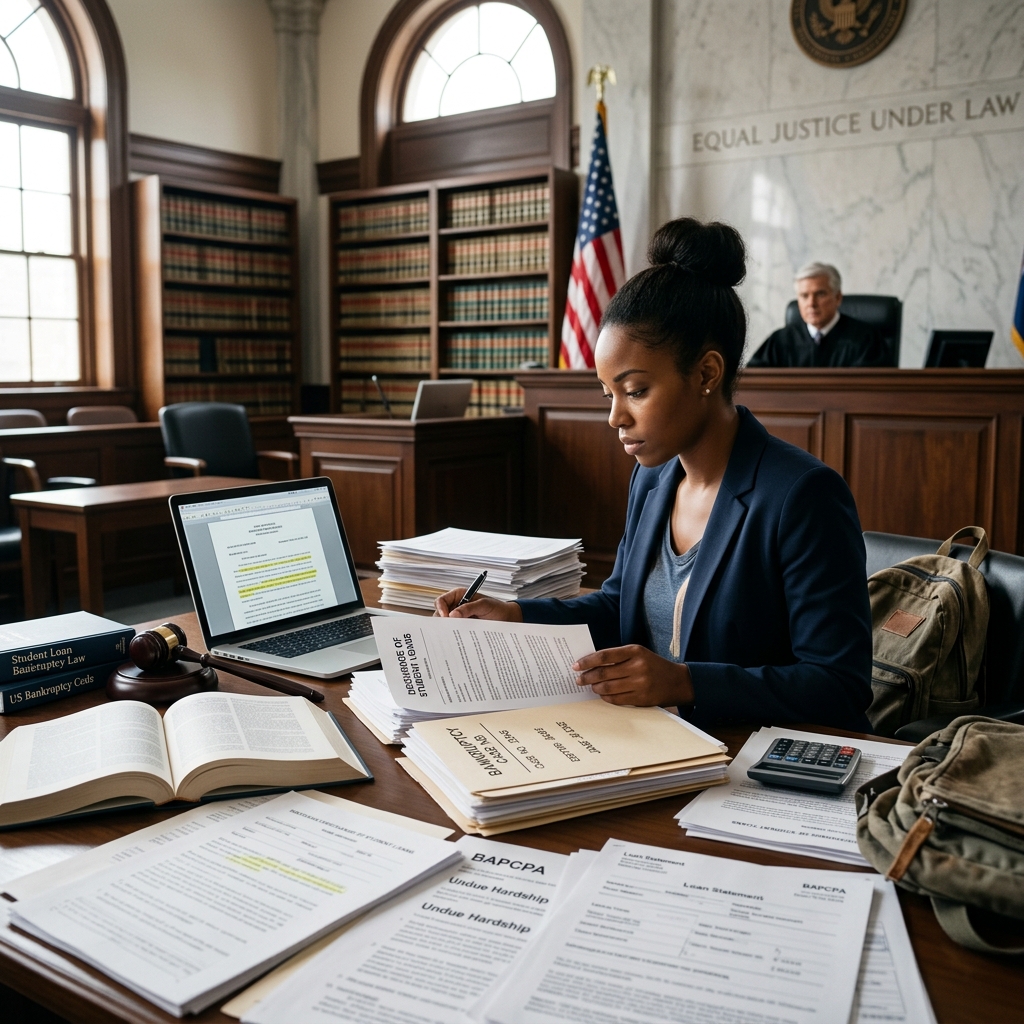
For years, conventional wisdom held that student loans almost never go away in bankruptcy. That belief kept many struggling borrowers from even asking a court for help. Recent data, policy guidance, and court trends paint a much more nuanced picture: student loans remain challenging to discharge, but the path is clearer and more successful than many people realize.
This article explains how student loans work in bankruptcy, what has changed in recent years, and what borrowers should understand before deciding whether to pursue a discharge.
Why Student Loan Bankruptcy Has a Reputation for Being “Impossible”
Unlike most credit card debt, medical bills, or personal loans, student loans are treated differently under U.S. bankruptcy law. Under the Bankruptcy Code, most student loans can only be discharged if a borrower proves that repaying them would create an “undue hardship”.
There are two key reasons this feels nearly impossible to many borrowers:
- Extra procedural step: Discharging student loans requires a separate lawsuit inside the bankruptcy case, called an adversary proceeding, where the debtor sues the lender or the government to obtain a hardship determination.
- Vague legal standard: The Bankruptcy Code does not define “undue hardship,” leaving courts to develop multi-part tests that can be demanding and fact-intensive.
Because of these hurdles, historically only a small fraction of borrowers even tried to get their loans discharged in bankruptcy.
Understanding “Undue Hardship” in Practice
While exact standards vary by jurisdiction, many bankruptcy courts adopt a multi-prong analysis that asks whether the borrower can maintain a minimal standard of living while repaying student loans, whether this difficulty is likely to persist, and whether the borrower has made good faith efforts to repay.
Federal agencies and guidance now generally look at three core themes:
- Current ability to pay: Does the borrower’s income, after reasonable expenses, leave meaningful room for student loan payments?
- Future financial outlook: Are limitations—such as age, disability, long-term income constraints, or family responsibilities—likely to make repayment difficult for much of the remaining loan term?
- Good faith behavior: Has the borrower tried to manage the loans by making payments when possible, seeking relief programs, communicating with servicers, or avoiding unnecessary borrowing?
Undue hardship does not require absolute destitution. Instead, it focuses on whether repayment would prevent a reasonable basic standard of living over time.
Types of Student Loans and Why They Matter in Bankruptcy
Not all education-related debt is treated the same way. How a loan is categorized affects whether the undue hardship standard applies or whether it can be discharged like other consumer debt.
| Loan Type | Common Examples | Bankruptcy Treatment |
|---|---|---|
| Federal student loans | Direct Subsidized/Unsubsidized, PLUS, consolidation | Generally require a finding of undue hardship via adversary proceeding to be discharged. |
| Private student loans (qualified education loans) | Private loans used strictly for cost of attendance at eligible schools | Typically treated like federal loans; require undue hardship to discharge. |
| Other education-related private loans | Loans for unaccredited schools, bar exam prep, residencies, or amounts beyond cost of attendance | Some can be discharged in a normal bankruptcy without proving undue hardship, like most other consumer debt. |
The last category is especially important. The Consumer Financial Protection Bureau (CFPB) has highlighted that some loans marketed as “student loans” are not protected by the undue hardship rule and may already have been discharged in a borrower’s prior bankruptcy without the borrower or lender realizing it.
The Extra Step: What an Adversary Proceeding Involves
To ask a court to wipe out student loans, a debtor must file an adversary proceeding within the bankruptcy case.
Typically, this involves:
- Filing a complaint in the bankruptcy court naming the loan holder (e.g., U.S. Department of Education or private lender) as a defendant.
- Providing detailed information about income, expenses, health, dependents, job prospects, and loan history.
- Participating in discovery, negotiations, or settlement discussions with the lender or the Department of Justice (DOJ) for federal loans.
- Presenting evidence at a hearing if the case does not settle.
This process can be time-consuming and intimidating, which is one reason many borrowers historically did not pursue it. However, recent policy changes are aimed at making this step more standardized and, in many cases, more favorable to borrowers.
New Federal Guidance: A More Structured Path to Relief
In 2022, the U.S. Department of Justice and the U.S. Department of Education introduced new guidance intended to make decisions about discharging federal student loans in bankruptcy more consistent and transparent.
Under this framework:
- Borrowers who file an adversary proceeding complete an attestation form describing their financial circumstances, repayment efforts, and future outlook.
- DOJ attorneys review the attestation, loan information, and other data to assess whether the borrower meets factors that are considered strong indicators of undue hardship.
- If the criteria are satisfied, the DOJ may support a full or partial discharge and stipulate to key facts, recommending that the bankruptcy judge grant relief.
The goal is not to rewrite the Bankruptcy Code, which only Congress can do, but to provide a more predictable way to evaluate hardship and reduce unnecessary litigation in clear cases.
Rising Success Rates: What Recent Data Show
Although student loan discharge is still uncommon compared to other debts, recent research suggests that borrowers who actively pursue discharge are increasingly successful.
- A study published in a bankruptcy law journal found that the success rate for borrowers who filed adversary proceedings to discharge education debt increased from about 40% in 2007 to 61% in 2017 and has recently risen to roughly 87%.
- Analysis of more recent cases indicates that outcomes under the new DOJ process are significantly better than under prior practice, with some reports suggesting very high rates of relief when the new attestation process is used.
These numbers do not mean 87% of all bankrupt student loan borrowers get their loans wiped out. Instead, they show that among those who do bring an undue hardship case, courts and government lawyers are more frequently agreeing to some form of discharge or modification.
What Borrowers Must Still Prove
Even with new guidance, borrowers must provide enough evidence to show that their situation warrants relief. Some of the most common factors considered include:
- Budget constraints: Income that does not cover basic living costs along with student loan payments.
- Health or disability: Physical or mental conditions that limit the borrower’s ability to earn income, especially if long-term.
- Family responsibilities: Caregiving obligations for children, elderly parents, or disabled relatives that materially affect earning capacity or expenses.
- Job prospects: Limited advancement opportunities, low demand for the borrower’s skills, or other career barriers.
- Loan history: Evidence of attempts to pay, seek income-driven repayment, forbearances, or other relief before resorting to bankruptcy.
In some cases, courts or the government may support a partial discharge or a restructuring of terms (such as lower interest rates or extended repayment periods) instead of complete cancellation.
Special Considerations for Private Student Loans
Private student loans add another layer of complexity. Some are “qualified education loans” that receive similar protection from discharge as federal loans. Others, however, fall outside that category and may be treated like regular unsecured debt.
According to the CFPB, borrowers should carefully examine private loans for factors such as:
- Whether the loan amount exceeded the school’s official cost of attendance.
- Whether the school was unaccredited or located outside the United States.
- Whether the funds were used for bar exam preparation, residency expenses, or other professional exam costs.
- Whether the borrower was enrolled less than half-time when taking out the loan.
If a loan falls into one of these categories, it may have been dischargeable in a prior bankruptcy without any special hardship proceeding. In some cases, borrowers continue to be billed for loans that legally were wiped out, underscoring the importance of reviewing old bankruptcy and loan records carefully.
Practical Steps if You Are Considering Bankruptcy for Student Loans
Anyone contemplating bankruptcy with significant student debt should think strategically about timing, documentation, and legal advice. Key steps often include:
- Assess all options first: Explore income-driven repayment plans, forbearance, forgiveness programs, or negotiated settlements where appropriate.
- Gather detailed records: Collect tax returns, pay stubs, budgets, medical records, correspondence with servicers, and prior payment histories.
- Evaluate loan types: Identify which loans are federal, which are private, and whether any might qualify as non-protected education-related debt.
- Consult a bankruptcy professional: An experienced bankruptcy attorney familiar with student loan cases and the latest DOJ guidance can help evaluate the likelihood of success and appropriate strategy.
- Plan the adversary proceeding: If you decide to go forward, be prepared to complete any required attestation forms and present a coherent, documented narrative of your hardship.
Bankruptcy is a serious step with long-term consequences for credit and financial planning, but for some borrowers, it may be the only realistic path to relief.
Common Misconceptions About Student Loan Bankruptcy
Myths about student loans and bankruptcy discourage many borrowers from even seeking advice. Some of the most widespread misunderstandings include:
- “Student loans can never be discharged.” In truth, both federal and private student loans can be discharged if the debtor proves undue hardship, and some private education loans do not require that showing at all.
- “If I file bankruptcy, my loans are automatically gone.” Student loans require affirmative action via an adversary proceeding; they are not eliminated by default when the court enters a general discharge order.
- “Courts never grant student loan discharges.” While still relatively rare in the broader population of borrowers, success rates in actual hardship cases have risen significantly in recent years.
- “Only total disability qualifies for undue hardship.” Disability can be important, but courts and agencies consider a wider set of factors, including income potential, family responsibilities, and overall budget.
Frequently Asked Questions (FAQs)
1. Do I have to be in extreme poverty to qualify for student loan discharge?
No. The standard is “undue hardship,” not absolute poverty. Courts and federal agencies examine whether you can maintain a reasonable minimal standard of living while making loan payments, and whether that hardship is likely to persist.
2. Can I include both federal and private student loans in the same bankruptcy case?
Yes. Both federal and private student loans are part of your overall bankruptcy, but you still must take specific steps—usually an adversary proceeding—to ask the court to discharge them. How the court treats each loan may differ depending on its type and purpose.
3. If I already went through bankruptcy, is it too late to deal with my student loans?
Not necessarily. In some circumstances, you may be able to ask the court to reopen a prior bankruptcy to address student loans or to clarify that certain private education-related debts were already discharged. Legal advice is especially important in this situation.
4. Does the new DOJ guidance guarantee my loans will be discharged?
No. The guidance is designed to make the process more consistent and to recognize hardship in more cases, but each case is still evaluated individually. The DOJ may recommend discharge or partial relief, and the final decision rests with the bankruptcy judge.
5. Is bankruptcy always the best option for dealing with student loans?
Bankruptcy can be a powerful tool, but it is not the right choice for everyone. Some borrowers may be better served by income-driven repayment, forgiveness programs, deferment, forbearance, or negotiated settlements, especially if they have few other debts or expect their income to increase. A thorough review with a qualified professional is essential.
Key Takeaways for Borrowers
- Student loans are harder—but not impossible—to discharge in bankruptcy.
- Recent DOJ and Department of Education guidance has created a more structured and sometimes more borrower-friendly process for federal loans.
- Borrowers who actively pursue undue hardship cases now see significantly higher success rates than in past decades.
- Some private education-related loans may be dischargeable in ordinary bankruptcy without proving undue hardship.
- Careful documentation and experienced legal advice are critical to evaluating whether bankruptcy relief is realistic in your situation.
References
- The Effective but Underutilized Way to Discharge Student Loan Debt in Bankruptcy — Kentucky Law Journal Blog. 2024-04-01. https://www.kentuckylawjournal.org/blog/the-effective-but-underutilized-way-to-discharge-student-loan-debt-in-bankruptcy
- New Process to Discharge Student Loans in Bankruptcy — National Consumer Law Center. 2023-01-10. https://library.nclc.org/article/new-process-discharge-student-loans-bankruptcy
- New Guidelines Make It Easier to Discharge Student Loans in Bankruptcy — American Bankruptcy Institute. 2023-03-06. https://www.abi.org/feed-item/new-guidelines-make-it-easier-to-discharge-student-loans-in-bankruptcy
- Bankruptcy — Student Loan Borrower Assistance (National Consumer Law Center). 2023-08-01. https://www.studentloanborrowerassistance.org/for-borrowers/dealing-with-student-loan-debt/loan-cancellation-forgiveness-bankruptcy/bankruptcy/
- Busting myths about bankruptcy and private student loans — Consumer Financial Protection Bureau. 2022-01-31. https://www.consumerfinance.gov/about-us/blog/busting-myths-about-bankruptcy-and-private-student-loans/
- Discharge in Bankruptcy — Federal Student Aid, U.S. Department of Education. 2023-09-15. https://studentaid.gov/manage-loans/forgiveness-cancellation/bankruptcy
- Student Loan Guidance — U.S. Department of Justice, U.S. Trustee Program. 2022-11-17. https://www.justice.gov/ust/student-loan-guidance
Similar Articles








Read full bio of medha deb




