Student Loan Discharge in Bankruptcy: Current Options
Explore the realistic pathways to eliminate student loan debt through bankruptcy proceedings.
Understanding Student Loan Discharge in Bankruptcy
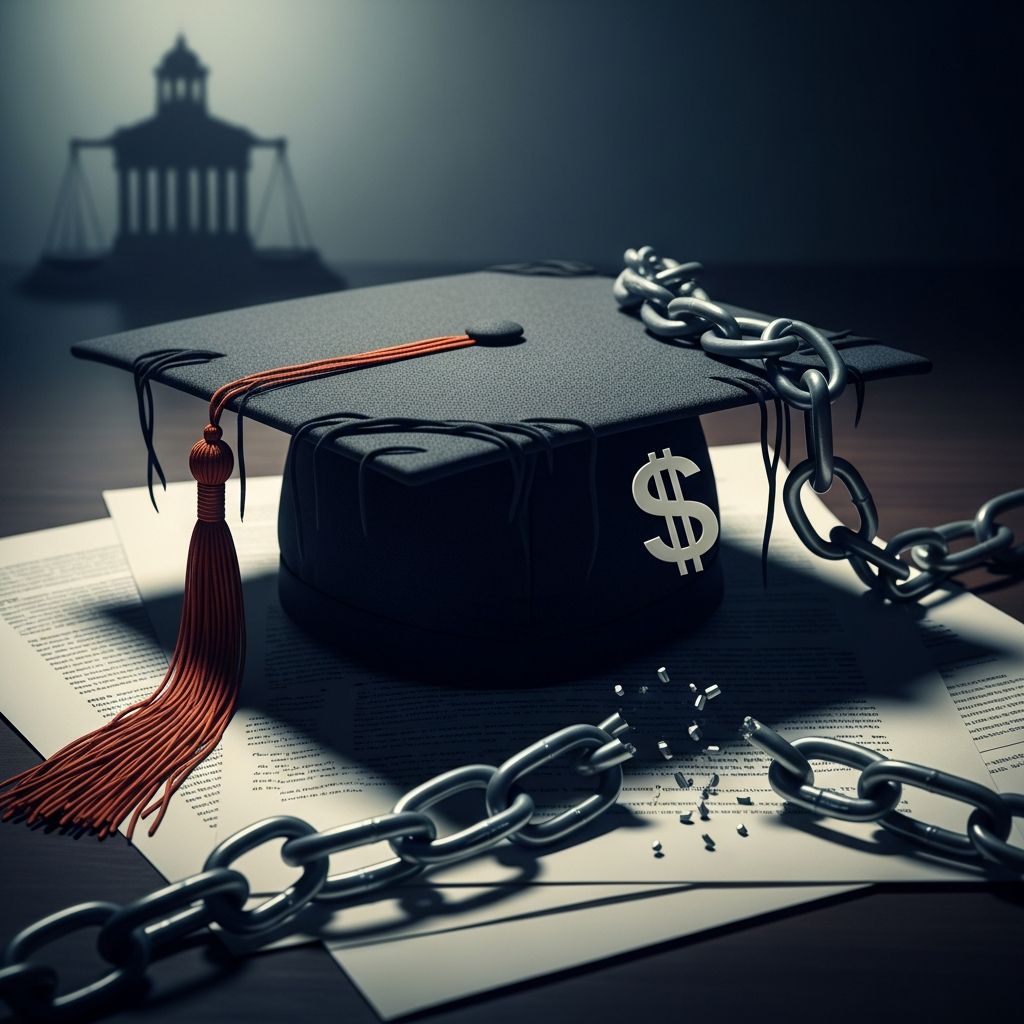
For decades, the prevailing wisdom has been that student loans cannot be discharged through bankruptcy. This belief has discouraged countless borrowers from exploring all available options when facing insurmountable educational debt. However, the reality is more nuanced than this oversimplified narrative suggests. While federal student loans are generally protected from discharge, specific circumstances and recent policy developments have created viable pathways for borrowers seeking relief through the bankruptcy system.
The distinction between what is legally possible and what is commonly known represents a critical gap in financial literacy. Many borrowers abandon hopes of bankruptcy protection without understanding the full scope of options available to them. This article examines the current landscape of student loan discharge in bankruptcy, including the legal standards required, the procedural steps involved, recent changes in how cases are evaluated, and the practical implications for struggling borrowers.
The Legal Framework: Why Student Loans Are Protected
The bankruptcy code contains specific protections for federally guaranteed student loans, distinguishing them from most other consumer debts. Bankruptcy attorney commentary explains that the law designates a narrow group of debts that survive bankruptcy proceedings, with student loans occupying a prominent place in this category. This protective framework was designed to ensure that the federal government maintains access to repayment and to prevent borrowers from discharging educational debt immediately after graduation.
Unlike credit card debt, medical bills, or personal loansndmdash;which typically disappear automatically when bankruptcy concludesndmdash;student loans require borrowers to take an additional legal step known as an adversary proceeding. This proceeding functions as a separate lawsuit filed within the larger bankruptcy case, specifically targeting the student loan debt. Without this critical step, student loans remain fully collectible even after the main bankruptcy case concludes and other debts are discharged.
The Undue Hardship Standard: Meeting the Requirements
Borrowers seeking to discharge student loans through bankruptcy must demonstrate that repayment would cause “undue hardship.” This legal standard has historically been the primary obstacle preventing most borrowers from obtaining relief. The most widely recognized framework for evaluating undue hardship is the Brunner test, which establishes three distinct criteria that must be satisfied simultaneously.
The Three-Part Brunner Test
- Inability to maintain minimal living standards while repaying student loans
- Circumstances indicating the situation will persist for a substantial portion of the loan term
- Demonstrated good-faith efforts to repay loans, with no adequate alternative debt relief options available
Additionally, the circumstances creating hardship must be beyond the debtor’s control. Borrowers cannot intentionally create long-term financial hardship to qualify for discharge; the situation must result from factors such as illness, disability, job loss, or other external events.
Proving undue hardship often requires hiring an expert witness to testify about the borrower’s financial situation and long-term prospects. This expert testimony represents a substantial additional cost for individuals already struggling financially, creating a barrier even for those who might qualify. Courts have discretion in how they apply these criteria, meaning outcomes can vary based on judicial interpretation and the specific circumstances presented.
Possible Outcomes of Hardship Discharge Cases
When borrowers successfully demonstrate undue hardship, courts have multiple options beyond complete discharge. Rather than an all-or-nothing outcome, the judicial system offers flexibility in tailoring relief to individual circumstances.
- Complete discharge of all student loan debt, eliminating the obligation entirely
- Partial discharge, where the borrower remains responsible for a portion of the debt while the remainder is eliminated
- Retention of debt with modified terms, such as reduced interest rates or extended repayment periods
This flexibility reflects the courts’ recognition that student loan debt exists on a spectrum of hardship cases. Some borrowers face circumstances so dire that complete relief is appropriate, while others benefit from restructured repayment terms that make obligations manageable without elimination.
Special Circumstances: When Other Loans Qualify for Discharge
Beyond the undue hardship pathway, certain student loan debts can be discharged through bankruptcy without meeting the Brunner standard. Loans that do not qualify as “qualified education loans” under statutory definitions fall into this category. Examples include loans for attendance at for-profit institutions that closed while the borrower was enrolled, certain trade school financing, and loans from non-accredited institutions.
These exceptions exist because the protective framework was designed specifically for federally supported educational debt and loans meeting certain institutional standards. Loans outside these parameters receive the same treatment as other consumer debts in bankruptcy proceedings.
The Adversary Proceeding: A Step-by-Step Process
Filing for bankruptcy protection from student loans requires understanding the adversary proceedingndmdash;a specialized lawsuit that occurs within the larger bankruptcy case. This process involves distinct phases, each with specific requirements and timelines.
Selecting the Appropriate Bankruptcy Chapter
Most borrowers pursuing student loan discharge choose Chapter 7 bankruptcy, which offers advantages over Chapter 13 proceedings. Chapter 7 cases typically conclude within three to four months, involve lower attorney fees (generally between $1,000 and $2,500), and allow borrowers to move more quickly to the adversary proceeding stage. This efficiency makes Chapter 7 the preferred option for those specifically targeting student loan discharge.
Filing and Initial Response
The adversary proceeding begins when the borrower’s attorney files a complaint against the student loan servicer or guaranty agency. Lenders typically have approximately 30 days to respond to this complaint, outlining their position on whether discharge should be granted.
Discovery Phase
Following the lender’s response, the discovery phase commences. Both parties exchange evidence relevant to the hardship determination, including financial documents, income records, medical reports, employment history, and other materials demonstrating the borrower’s circumstances. A Rule 26(f) conference occurs during this phase, where both sides establish timelines for evidence sharing, agree on procedural rules, and discuss potential settlement options. This conference often signals whether lenders are willing to negotiate or intend to contest the discharge through trial.
Discovery typically extends several months, allowing each side to build a comprehensive evidence record supporting their position.
Settlement and Resolution
After discovery concludes, settlement negotiations typically begin. Recent policy shifts have altered this stage significantly. The Education Department now reviews financial hardship evidence more comprehensively when federal loans are involved, evaluating whether borrowers qualify for full discharge, partial discharge, or continued obligation. Many federal student loan cases now resolve during settlement without proceeding to trial.
For private student loans, negotiations may follow different trajectories, as private lenders lack the policy framework guiding federal loan decisions.
Recent Policy Changes and Approval Trends
Beginning in late 2022, federal agencies implemented significant changes in how student loan bankruptcy cases are reviewed. These revisions were designed to reduce unnecessary procedural barriers and create more realistic evaluation standards for borrowers facing long-term financial hardship. The impact of these changes has been substantial and measurable.
Research analyzing bankruptcy cases filed after the 2022 policy changes reveals approval rates approaching 87 percent among borrowers who filed properly and met applicable requirements. This dramatically contradicts the widespread assumption that student loan discharge through bankruptcy is nearly impossible. The historical narrative of near-certain rejection has not aligned with recent outcomes, suggesting that outdated information rather than legal restrictions represents the primary obstacle.
This data demonstrates that bankruptcy protection for student loans is underutilized rather than unavailable. Borrowers who might qualify for relief often forgo pursuing this option based on incorrect information about approval likelihood.
Student Loans and Co-Debtors: Special Protections
For borrowers with a co-signer or guarantor on their student loan debt, bankruptcy offers specific protections that extend beyond personal debt relief. The Chapter 13 Bankruptcy Code includes a “co-debtor stay” provision that prohibits creditors from contacting or pursuing co-debtors on student loan obligations. For many families where parents have co-signed student loans, this protection provides significant relief independent of whether the primary borrower’s debt is ultimately discharged.
This provision recognizes the reality that co-debtors often bear the collection pressure when primary borrowers cannot pay. By halting collection efforts against co-debtors, bankruptcy provides breathing room for entire families struggling with educational debt.
Alternative Pathways to Loan Relief
Not all borrowers will qualify for student loan discharge through bankruptcy, yet other options exist for managing educational debt without bankruptcy protection. The Department of Education offers several income-based repayment plans designed to align monthly payments with borrowers’ financial capacity:
- Revised Pay As You Earn (REPAYE) ndndash; calculates payments based on discretionary income, potentially resulting in minimal monthly obligations
- Pay As You Earn (PAYE) ndndash; limits payments to 10 percent of discretionary income
- Income-Based Repayment (IBR) ndndash; scales payments to income levels, with consideration for family size
- Income-Contingent Repayment (ICR) ndndash; provides flexible payment calculations based on discretionary income
Beyond income-driven plans, deferment and forbearance options allow borrowers to pause repayment or reduce payments to minimal amounts during periods of financial hardship. These alternatives do not eliminate debt but restructure it to match current financial capacity.
Graduated and extended repayment plans offer additional flexibility by extending the repayment timeline beyond the standard 10-year period, thereby reducing monthly obligations.
Strategic Bankruptcy Considerations for Multi-Debt Situations
Many borrowers approaching bankruptcy carry multiple types of debt beyond student loans. Filing for bankruptcy protection may make strategic sense even if student loan discharge remains uncertain. Bankruptcy courts consider overall financial obligations when reviewing cases, and eliminating or reducing other unsecured debtsndmdash;such as credit card balances or medical billsndmdash;can substantially improve financial outcomes.
Credit card debt, which automatically disappears in bankruptcy, often receives payment priority from struggling borrowers. However, this strategy is counterproductive because credit card debt will be eliminated regardless through bankruptcy, while student loans remain unless specifically addressed through adversary proceedings. Redirecting payment efforts toward student loans before filing allows them to accumulate while unsecured debt diminishes, a mathematically inefficient approach to debt management.
For borrowers with private student loans and insufficient income to satisfy collection efforts, bankruptcy offers additional strategic benefits. Private lenders may file lawsuits seeking wage garnishment or asset seizure. Bankruptcy’s automatic stay provision halts such collection efforts immediately, providing breathing room and potentially enabling settlement negotiations from a position of greater stability.
Practical Implications for Struggling Borrowers
The evolution of student loan bankruptcy law reflects growing recognition that some borrowers genuinely cannot repay educational debt while meeting basic living expenses. This acknowledgment distinguishes between those who choose not to repay and those who lack financial capacity to do so.
Several key takeaways emerge from current law and recent policy developments: student loans may potentially be discharged in bankruptcy; courts have begun approving these cases more frequently than historical norms suggested; extreme financial circumstances are not required to pursue relief; and seeking information about options carries no inherent legal risk.
Bankruptcy exists as a legal mechanism providing financial fresh starts. Student loans, while specially protected, are not automatically excluded from all bankruptcy relief. Understanding available options represents the first step toward informed decision-making about debt management.
Comparing Debt Relief Options
| Relief Option | Application Process | Timeline | Cost | Success Likelihood |
|---|---|---|---|---|
| Bankruptcy with Adversary Proceeding | File through attorney; demonstrate undue hardship | 6 6 months typically | $1,000 6$2,500 attorney fees | ~87% approval rate (post-2022) |
| Income-Driven Repayment Plans | Application to Department of Education | 30 660 days | No application fee | Nearly universal qualification |
| Deferment/Forbearance | Request through servicer | Typically immediate | No cost | Widely available |
| Loan Forgiveness Programs | Varies by program (PSLF, etc.) | Multiple years required | No direct cost | Depends on eligibility criteria |
Frequently Asked Questions
Q: Can federal student loans be discharged in bankruptcy?
A: Federal student loans can be discharged through bankruptcy only when the borrower proves undue hardship using the Brunner test or applicable jurisdictional standards. This requires demonstrating inability to maintain minimal living standards, that circumstances will persist long-term, and good-faith repayment efforts have been made.
Q: What does an adversary proceeding do?
A: An adversary proceeding is a specialized lawsuit filed within a bankruptcy case specifically targeting student loan debt. Without this additional step, student loans remain collectible after the main bankruptcy case concludes. It functions as the mechanism through which student loan discharge is pursued.
Q: How long does the student loan discharge process take?
A: The complete process typically takes 6 to 18 months, depending on whether the case settles or proceeds to trial. Chapter 7 bankruptcy itself concludes in 3 6 months, with the adversary proceeding extending the overall timeline.
Q: Are private student loans treated differently from federal loans?
A: Private student loans not meeting statutory “qualified education loan” definitions may be discharged without proving undue hardship. However, private loans from accredited institutions typically receive the same protection as federal loans and require demonstrating undue hardship.
Q: What happens to co-signers when a borrower files bankruptcy?
A: Chapter 13 bankruptcy includes a co-debtor stay provision that prohibits creditors from contacting or pursuing co-signers on student loan debt, providing significant protection independent of whether the primary borrower’s debt is discharged.
Q: What is the current approval rate for student loan discharge?
A: Research indicates that approximately 87 percent of borrowers who filed bankruptcy seeking student loan discharge after 2022 policy changes were approved, substantially higher than historical rates and suggesting that outdated information represents a greater barrier than legal restrictions.
References
- Can You Discharge Student Loan Debts in Bankruptcy? ndmdash; Super Lawyers. Accessed 2026. https://www.superlawyers.com/resources/bankruptcy/can-you-discharge-student-loans-debts-in-bankruptcy/
- Can You File Bankruptcy on Student Loans? (2026 Guide) ndmdash; Tate & Associates. 2026. https://www.tateesq.com/learn/can-you-file-student-loan-bankruptcy
- Student Loan Bankruptcy Improvement Act of 2025 ndmdash; U.S. House of Representatives, 119th Congress, H.R. 4444. 2025. https://www.congress.gov/bill/119th-congress/house-bill/4444/text
- Can Student Loans Be Discharged in Bankruptcy? New Data Says Yes ndmdash; Walker & Walker Law Offices. January 14, 2026. https://bankruptcytruth.com/blog/can-student-loans-be-discharged-in-bankruptcy-new-data-says-yes/
- Discharge in Bankruptcy ndmdash; Federal Student Aid, U.S. Department of Education. https://studentaid.gov/manage-loans/forgiveness-cancellation/bankruptcy
- Bridging the Student Loan Bankruptcy Gap ndmdash; Jason Iuliano. American Bankruptcy Law Journal, Volume 99, Issue 3. 2025.
Similar Articles








Read full bio of medha deb