
Student Loan Cosigner: How It Works, Risks, And Release Options
Understand how student loan cosigning works, what risks it creates, and how to manage the relationship responsibly.
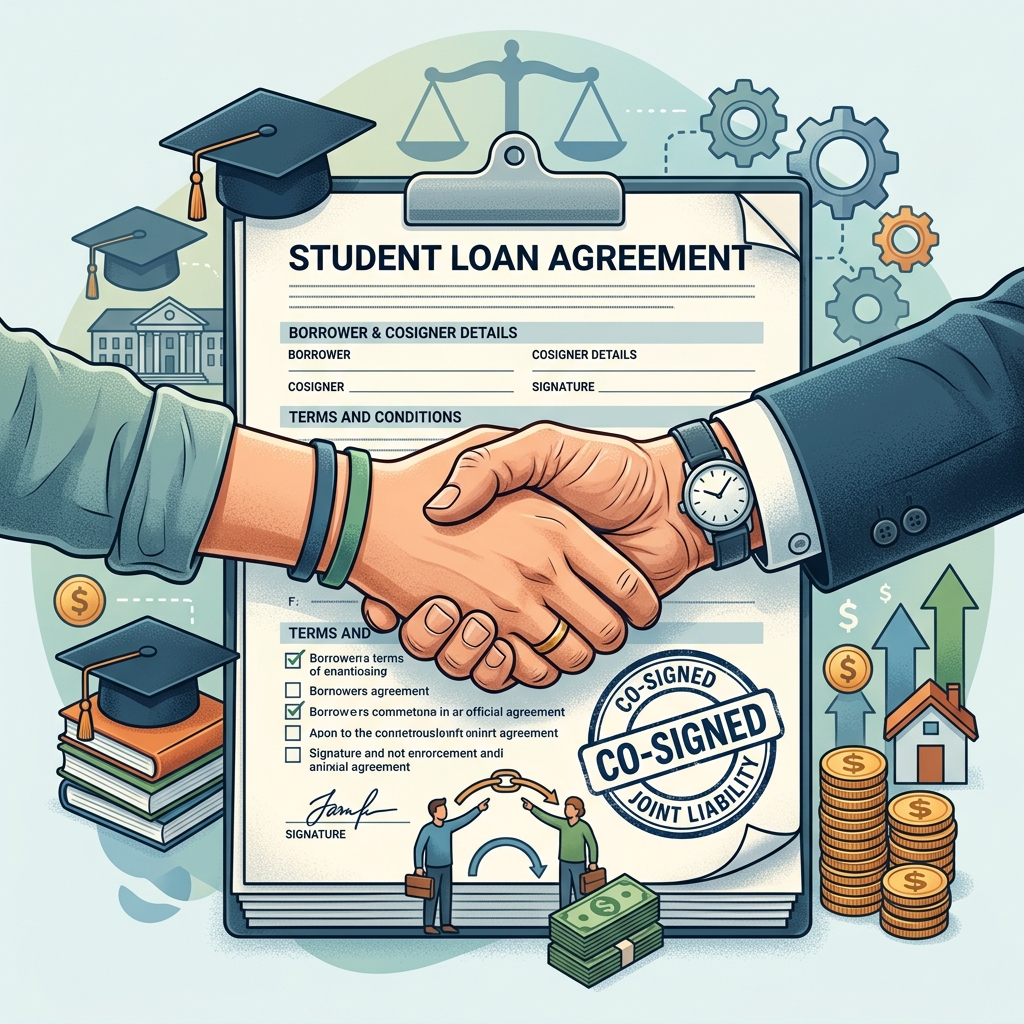
For many students, a cosigner can be the difference between getting approved for a private student loan and being denied. A cosigner adds another person’s credit and income to the application, which can improve approval odds and may lead to better loan terms. But cosigning is not a casual favor. It is a legal commitment that can affect both people’s finances for years.
This guide explains how cosigners work, when they are commonly required, what risks they take on, and how both borrowers and cosigners can make smarter decisions before signing anything.
Why lenders ask for a cosigner
Lenders want confidence that a loan will be repaid. Students often have limited credit histories, lower incomes, or no long-term record of borrowing, which makes them harder to evaluate on their own. A cosigner helps fill that gap by promising to repay the debt if the borrower cannot.
This arrangement is especially common in private student lending. Federal student loans usually do not require a cosigner for undergraduate borrowers, while private loans often do. Some lenders use a cosigner to reduce their risk, and in return they may offer a lower interest rate or approve a larger loan amount.
What a cosigner legally agrees to
Cosigning means more than supporting the borrower morally. The cosigner becomes equally responsible for the loan. If payments are missed, the lender can pursue the cosigner for repayment just as it can pursue the student borrower.
That obligation can last for the full life of the loan unless the lender offers a cosigner release option and the borrower meets all of the required conditions. Until then, the cosigner remains tied to the debt and its consequences.
How a cosigner can help the borrower
A strong cosigner can improve the loan application in several ways:
- It may increase the chance that the loan is approved.
- It may help the borrower qualify for a lower interest rate.
- It may make it possible to borrow more than the student could qualify for alone.
- It may give a borrower access to private financing when no solo application would succeed.
These benefits can be meaningful, but they do not remove the underlying obligation. A better rate or easier approval is useful only if the repayment plan is realistic for the borrower and acceptable to the cosigner.
The main risks for cosigners
The biggest risk is financial responsibility for a debt that is not originally for the cosigner’s own benefit. If the borrower falls behind, the cosigner may have to step in quickly to avoid delinquency and default.
There are also credit consequences. The loan may appear on the cosigner’s credit reports, and late payments can hurt the cosigner’s credit profile. That can make it harder for the cosigner to qualify for other loans, such as a mortgage or auto loan, because the cosigned debt may count in the cosigner’s overall debt picture.
Another risk is relational. Money problems can strain family or personal relationships, especially if the borrower and cosigner never clearly discussed who would make payments, what happens if money gets tight, or how communication would work during hardship.
Questions to answer before anyone signs
Before agreeing to cosign, both people should talk through the loan as if it were their own. A careful conversation can prevent misunderstanding later.
- How much money is being borrowed?
- What is the interest rate, and is it fixed or variable?
- When does repayment begin?
- What monthly payment should be expected?
- Who will make each payment?
- What happens if the borrower cannot pay on time?
- Does the lender offer cosigner release?
- Can the loan be deferred, refinanced, or otherwise adjusted later?
These questions matter because the best time to avoid a bad loan is before it is signed. Once the agreement is in place, changing the terms can be difficult or impossible.
How to compare loan options
Not all private student loans are structured the same way. A borrower who needs a cosigner should compare offers carefully rather than assuming all lenders are equivalent.
| Loan feature | Why it matters | What to look for |
|---|---|---|
| Interest rate | Determines the total cost of borrowing | Fixed versus variable rate, and whether the rate is competitive |
| Repayment term | Affects monthly payment size and total interest paid | Shorter terms lower total cost; longer terms may lower monthly payments |
| Fees | Can raise the true cost of the loan | Origination fees, late fees, or other added charges |
| Cosigner release | Can eventually remove the cosigner from the debt | Clear eligibility rules and a realistic path to qualify |
| Hardship options | Important if the borrower loses income or faces unexpected bills | Forbearance, deferment, or other temporary relief |
A loan that looks attractive at first glance may become expensive if its terms are rigid or if the cosigner release rules are nearly impossible to meet.
Protective habits for borrowers
Borrowers can reduce the burden on a cosigner by treating the loan like a serious long-term obligation from day one. That starts with borrowing only what is needed and avoiding the temptation to take the largest amount available simply because it is offered.
Borrowers should also build a repayment plan early. Even while in school, it is helpful to understand when payments will begin and how much they may be. Setting up automatic payments, if available and affordable, can reduce the chance of missed due dates.
Clear communication is equally important. If a borrower is having trouble making payments, the cosigner should not find out only after the account is already delinquent. Early contact with the lender may open the door to temporary relief or another solution.
Protective habits for cosigners
Cosigners should never sign based only on trust or emotion. They should read the loan agreement, understand the repayment schedule, and make sure they can afford the obligation if the borrower cannot pay.
It is wise for cosigners to keep records of the loan documents, track payment status, and monitor credit reports. That way, if a payment is missed or a problem appears, the cosigner can act quickly rather than reacting after damage has already spread.
Cosigners may also want to discuss an exit plan before signing. If a lender offers cosigner release, the cosigner should know exactly what conditions must be met, how long the borrower must make on-time payments, and what income or credit standards apply.
When a cosigner may not be necessary
Some students may not need a cosigner at all. Federal student loans are often available without one, and those loans may come with more flexible terms than private loans. Students should also consider whether scholarships, grants, work-study, payment plans, or lower-cost schools can reduce the amount that must be borrowed in the first place.
In some cases, waiting to borrow until a later year, building credit, or reducing school costs can remove the need for a cosigner altogether. That option may take more planning, but it can prevent a family member or friend from taking on unnecessary risk.
How to talk to a potential cosigner
Asking someone to cosign is a financial conversation, not just a personal favor. The request should be direct, honest, and complete. The borrower should explain why the loan is needed, how much is being borrowed, and what protections or risks are involved.
It helps to bring documents that show the cost of attendance, other aid already received, and the remaining amount still needed. Transparency gives the potential cosigner the information needed to make an informed decision instead of relying on guesswork.
Borrowers should also be prepared for a refusal. A responsible person may decline to cosign because they cannot afford the risk or do not want their credit tied to the debt. That response should be treated as a financial judgment, not a personal rejection.
Frequently asked questions
What is the difference between a borrower and a cosigner?
The borrower is the person receiving the loan and attending school. The cosigner is a second person who agrees to repay the loan if the borrower does not.
Does a cosigner own part of the loan funds?
No. The cosigner does not receive the education funds or gain ownership rights simply by signing. The role is financial responsibility, not ownership.
Can a cosigner be removed later?
Sometimes. Some lenders offer cosigner release after a series of on-time payments and other qualifications are met. The requirements vary widely, so the borrower should check the lender’s policy before signing.
What happens if the borrower misses payments?
Missed payments can damage the credit of both the borrower and the cosigner. The lender may also charge fees, send the account to collections, or take additional action depending on the loan agreement and the stage of delinquency.
Is cosigning ever a good idea?
It can be, if the borrower has a clear repayment plan, the loan terms are favorable, and the cosigner understands the risks and can afford them. Even then, the decision should be made carefully rather than automatically.
What a careful decision looks like
The best cosigner arrangements are based on realism. The borrower knows how the money will be used, the cosigner understands the full obligation, and both people have discussed repayment before the loan is finalized. That kind of planning does not eliminate risk, but it reduces surprises.
For many families, the central question is not whether a cosigner can help, but whether the loan is affordable and manageable without creating long-term harm. When the answer is uncertain, it is worth slowing down, comparing other options, and choosing the path that creates the least financial strain.
References
- What is a co-signer for a student loan? — Consumer Financial Protection Bureau. 2024-xx-xx. https://www.consumerfinance.gov/ask-cfpb/what-is-a-co-signer-for-a-student-loan-en-565/
- Student loan cosigners — Consumer Financial Protection Bureau. 2024-xx-xx. https://www.consumerfinance.gov/paying-for-college/repay-student-debt/student-loan-cosigners/
- Cosigned Student Loans: Flexible Repayments — Ascent Funding. 2026-xx-xx. https://www.ascentfunding.com/college-loans/cosigner/
- What is a student loan cosigner? — Citizens Bank. 2026-xx-xx. https://www.citizensbank.com/learning/student-loan-cosigner.aspx
- How to Find a Cosigner for a Student Loan — College Ave. 2026-xx-xx. https://www.collegeave.com/articles/how-to-find-a-cosigner/
- Student Loans for Cosigners & Parents — Sallie Mae. 2026-xx-xx. https://www.salliemae.com/student-loans/cosigners-and-parents/
Similar Articles








Read full bio of medha deb




