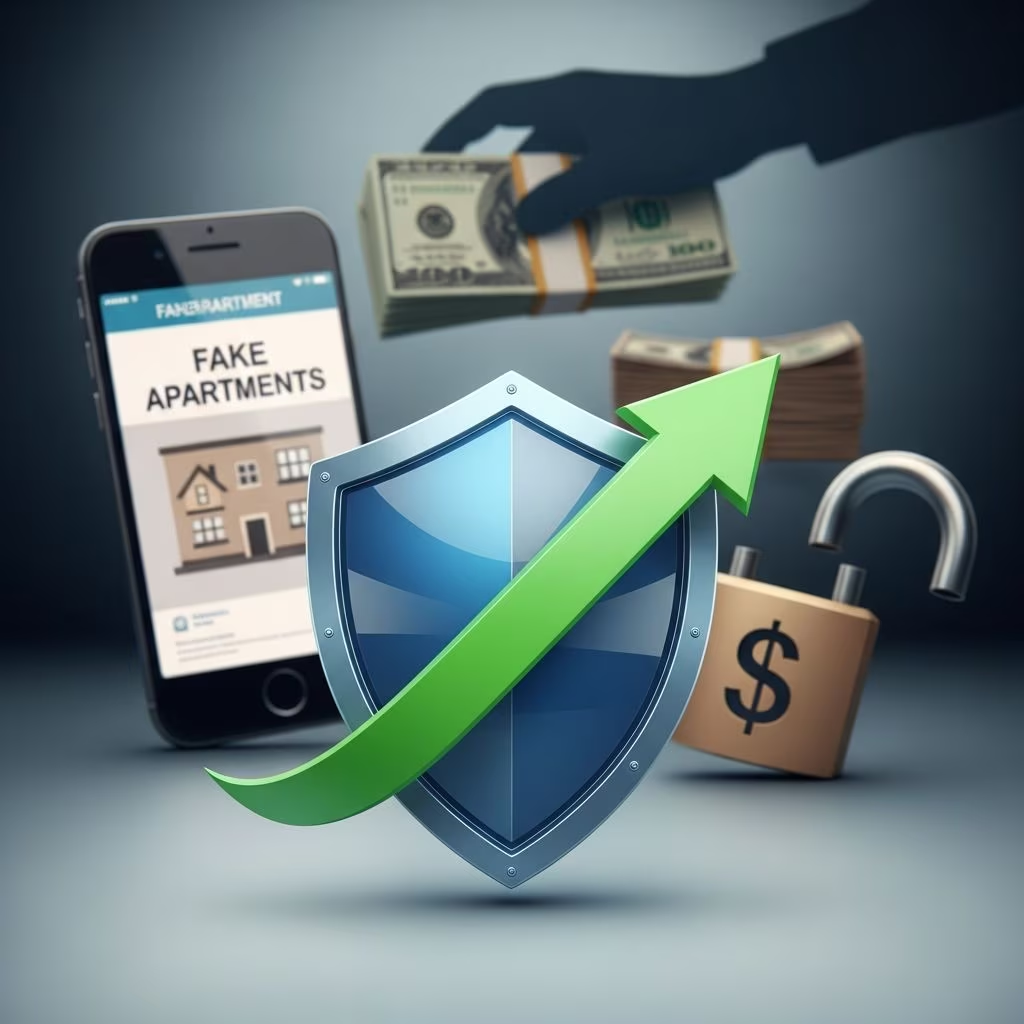
Finding a place to live is stressful enough without scammers hiding behind fake rental listings. Fraudsters copy real ads, invent apartments that do not exist, and pressure you into paying deposits or sharing personal information before you realize there is no real home at the end of the process. This guide explains how these schemes work, how to recognize the warning signs, and what to do if you think you are dealing with a rental scam.
Why Rental Listings Are a Target for Scammers
Online rental markets bring together thousands of renters and property owners, which creates an ideal environment for fraud. Scammers know that:
- People searching for housing are often under time pressure and may rush decisions.
- Many renters are willing to pay deposits quickly so they do not lose what looks like a good deal.
- Most communication now happens through email, text, or listing platforms, making it easier to hide identities.
- Deposits, application fees, and first month’s rent can add up to thousands of dollars.
Because of this, criminals design rental scams to get your money or sensitive data before you have a chance to verify the listing.
Common Types of Rental Listing Scams
Although every scammer has a slightly different story, most rental listing scams fall into a few repeat patterns.
1. Hijacked Legitimate Listings
In a hijacked listing scam, fraudsters take photos and descriptions from a real rental or real estate ad and repost them with their own contact information.
- The property usually exists and may be for sale or rent with a legitimate agent or landlord.
- The scammer often advertises a lower price to attract more responses.
- All emails, calls, or messages from the fake ad go directly to the scammer, not the real owner.
The goal is to collect application fees, deposits, or initial rent before anyone realizes the ad has been stolen from a real listing.
2. Completely Fake or Nonexistent Rentals
Sometimes the property does not exist or is not available for rent at all. Scammers invent apartments or houses, or use photos of places they have no right to rent.
- The ad might include impressive amenities and an unusually low price to make it look like a rare bargain.
- When you ask to tour the property, the scammer may claim to be out of town or overseas, or say they cannot show it for another reason.
- They push you to send money to “hold” the unit or get the keys, even though they cannot actually give you access.
Because there is no real rental, you will never receive keys or a valid lease.
3. Payment-First Schemes
In some scams, the property may be real and available, but the person you are dealing with has no permission to rent it. Their focus is to get money as early as possible:
- They ask for a deposit, application fee, or first month’s rent before you see the property.
- They direct you to pay with methods that are hard to reverse, like wire transfers, gift cards, or cryptocurrency.
- They promise to mail keys or meet you later, but disappear after you pay.
Even if the home is real, the scammer usually has no connection to the lawful owner.
4. Identity Theft Through “Applications”
Another angle is to treat renters as a source of personal data. Application forms collect information that criminals can use for identity theft:
- Full name and date of birth
- Social Security number or other national ID
- Bank accounts or pay stubs
- Previous addresses and employer information
Fraudsters may create convincing application links or documents and charge a fee. Even if they do not get a large deposit, they can misuse your data to open credit accounts or commit other frauds later.
Red Flags That a Rental Listing May Be a Scam
Legitimate rentals share some common characteristics: clear communication, verifiable ownership, and reasonable payment methods. When those are missing, take a closer look. Key warning signs include:
Too Good to Be True Pricing
One of the strongest red flags is a price that is far below similar properties nearby.
- Rent hundreds of dollars below market for the neighborhood.
- High-end amenities or furnishings with no corresponding increase in price.
- Claims of a special discount for quick payment or for renting without viewing the place.
While occasional deals exist, consistently bargain-level pricing should trigger extra research.
Pressure to Pay Before You Can Visit
Scammers try to keep you from taking the time you need to check things out. They often:
- Refuse or delay in-person or virtual tours, often citing travel, illness, or work overseas.
- Insist that many other people are interested and you must send money immediately.
- Ask you to pay before you can see the lease or verify who owns the property.
Legitimate landlords may collect an application fee after you have at least seen the property or confirmed the company, and they should be open to questions about ownership and terms.
Unusual or Unsafe Payment Methods
Many scams rely on forms of payment that are fast and hard to reverse, including:
- Wire transfers and person-to-person transfers to strangers.
- Gift cards where you send the codes by text, email, or messaging app.
- Cryptocurrency like Bitcoin or other digital coins.
These methods function more like cash: once the transfer is complete, your bank, card issuer, or payment app may not be able to recover the funds. Government agencies and consumer protection authorities repeatedly warn that requests for these forms of payment are a classic sign of fraud.
Reluctance to Meet or Verify Ownership
Another red flag is when the supposed landlord avoids normal business steps:
- No in-person meeting or local representative available.
- No verifiable business address, website, or property management company.
- Refusal to share basic proof that they own or manage the property, such as matching name and contact information with public records or the official listing.
While long-distance rentals can be legitimately handled online, you should still be able to independently confirm that the person you are dealing with is connected to the property.
Sloppy or Inconsistent Details
Scam listings are often rushed. Watch for:
- Major errors in the address, number of bedrooms, or rent compared with other sites.
- Photos that look copied from another listing service or show watermarks.
- Typos, odd grammar, or overly generic descriptions copied across multiple ads.
None of these details prove a listing is fake on their own, but together they build a pattern that deserves caution.
Practical Ways to Check Whether a Rental Is Real
Before sending money or personal information, use a few quick checks that make scams much easier to spot.
| Check | What to Do | Why It Helps |
|---|---|---|
| Search the address | Look up the address on multiple reputable rental or real estate sites. | Reveals duplicate listings with different prices or contact details, a hallmark of hijacked ads. |
| Compare contact info | Check whether the phone and email match those on the official property management or brokerage website. | Confirms you are speaking with the legitimate owner or agent, not an imposter. |
| Review local records | In many areas, property ownership is searchable through county or city government sites. | Lets you see whether the name you are given matches recorded ownership. |
| Ask detailed questions | Request specifics about utilities, maintenance, lease terms, and local rules. | Scammers often cannot answer property-specific questions consistently. |
| Request a live tour | Ask for an in-person or real-time virtual tour where you can see both the property and the person showing it. | Helps confirm that the unit exists and that the person has access to it. |
Safer Ways to Pay and Share Information
No payment method is perfectly safe, but you can reduce risk by choosing options with stronger protections and by timing your payments carefully.
Prefer Reversible and Documented Payments
When possible, use methods that provide receipts and dispute options:
- Checks and bank bill-pay that show the recipient and amount.
- Credit cards, which often offer stronger fraud and dispute rights than debit cards if something goes wrong.
- Secure online portals provided by established property management companies or platforms.
Always keep confirmation emails, screenshots, and copies of the listing and messages in case you need to show what you agreed to.
Limit Sensitive Data Until You Verify the Landlord
Application forms typically require private information, but you do not have to hand it over to just anyone. Before sharing:
- Confirm the company or landlord through independent contact details from official websites or directories.
- Check privacy policies for any online application system.
- Ask why each item of data is needed and how it is stored or used.
Being careful about where you enter your Social Security number, ID information, and bank details reduces the risk of identity theft if the listing turns out to be fake.
What to Do If You Suspect a Rental Scam
If something feels wrong, pause before you send more money or information. Acting quickly can limit your losses and help authorities track fraud.
Immediate Steps
- Stop payment if possible. Contact your bank, credit card issuer, or payment app immediately to ask whether a transfer can be reversed or disputed.
- Save all evidence. Keep copies of the rental ad, emails, text messages, receipts, and any IDs or documents you were sent.
- Do not send additional funds. Some scammers ask for more money to “fix” a problem or release your earlier payment.
Report the Fraud
Reporting scams helps enforcement agencies and platforms remove fraudulent listings and may prevent others from losing money. In many countries, consumer protection and law enforcement agencies encourage victims to file complaints so they can track patterns of rental fraud and pursue offenders.
- Report the listing on the website or app where you found it so it can be reviewed and removed.
- Contact relevant consumer protection or competition authorities for your country or region.
- If you shared identity documents or Social Security numbers, consider contacting credit bureaus or equivalent agencies to place fraud alerts or security freezes.
Local police or housing authorities may also accept reports, especially when large sums are involved or multiple victims are affected.
Protecting Yourself When You Are in a Hurry
Housing searches often have hard deadlines: leases ending, new jobs starting, semesters beginning. Scammers exploit that urgency. To stay safe under time pressure, build a short checklist you follow for every rental, even when you feel rushed:
- Search the address and compare listings and prices on more than one platform.
- Verify contact information through a source other than the ad itself.
- Refuse to wire money, pay by gift card, or send cryptocurrency to someone you have never met in person or verified independently.
- View the property, if possible, before paying anything beyond a modest, clearly explained application fee.
- Ask for a written lease and read it carefully before you transfer deposits or rent.
These steps take only a few extra minutes but can protect your savings and personal information.
Frequently Asked Questions (FAQs)
Q: Is it ever safe to pay a deposit before seeing the rental?
A: It is far safer to see the property or at least verify ownership and management through independent sources before paying. If someone refuses a viewing and insists on immediate payment, treat that as a serious warning sign, especially if they ask for wire transfers, gift cards, or cryptocurrency.
Q: How can I tell if a rental ad has been hijacked?
A: Search the address on multiple reputable sites and check whether the photos, description, and price appear elsewhere with different contact information. When details do not match, call the number listed on the most official-looking site (for example, a known brokerage or property management company) to ask which ad is genuine.
Q: I filled out an application for a rental that turned out to be fake. What should I do?
A: If you shared sensitive data such as your Social Security number, bank details, or copies of ID, consider placing a fraud alert or credit freeze with major credit bureaus where available, monitoring your accounts closely, and reporting the incident to appropriate consumer protection or identity theft reporting services.
Q: Are all below-market rentals scams?
A: Not necessarily. Some landlords underprice to rent quickly or because the unit needs work. However, if a listing is significantly cheaper than similar properties, combine that information with other signals: reluctance to show the unit, pressure to pay immediately, or unsafe payment methods. One red flag may be explainable; several together are a strong reason to walk away.
Q: What information is reasonable to give a landlord before signing a lease?
A: Legitimate landlords commonly ask for identification, contact details, employment and income information, rental history, and consent for a background or credit check. Provide such information only after you have verified who they are and how your data will be used, and avoid emailing highly sensitive documents to unverified private addresses.
References
- Rental Listing Scams — Federal Trade Commission. 2022-02-01. https://consumer.ftc.gov/articles/rental-listing-scams
- Rental Scams: How to Recognize and Avoid Rental Fraud — Zillow. 2023-06-15. https://www.zillow.com/learn/how-to-spot-rental-scams/
- Rental Scams: What Landlords and Renters Need to Know — Rentec Direct. 2022-08-10. https://www.rentecdirect.com/blog/rental-scams/
- Common Rental and Landlord Scams — State Farm. 2023-03-01. https://www.statefarm.com/simple-insights/residence/common-rental-and-landlord-scams
- Rental Scams: How to Spot Them and What To Do — Avail. 2023-04-05. https://www.avail.co/education/guides/a-tenants-guide-to-finding-an-apartment/how-to-spot-a-rental-scam