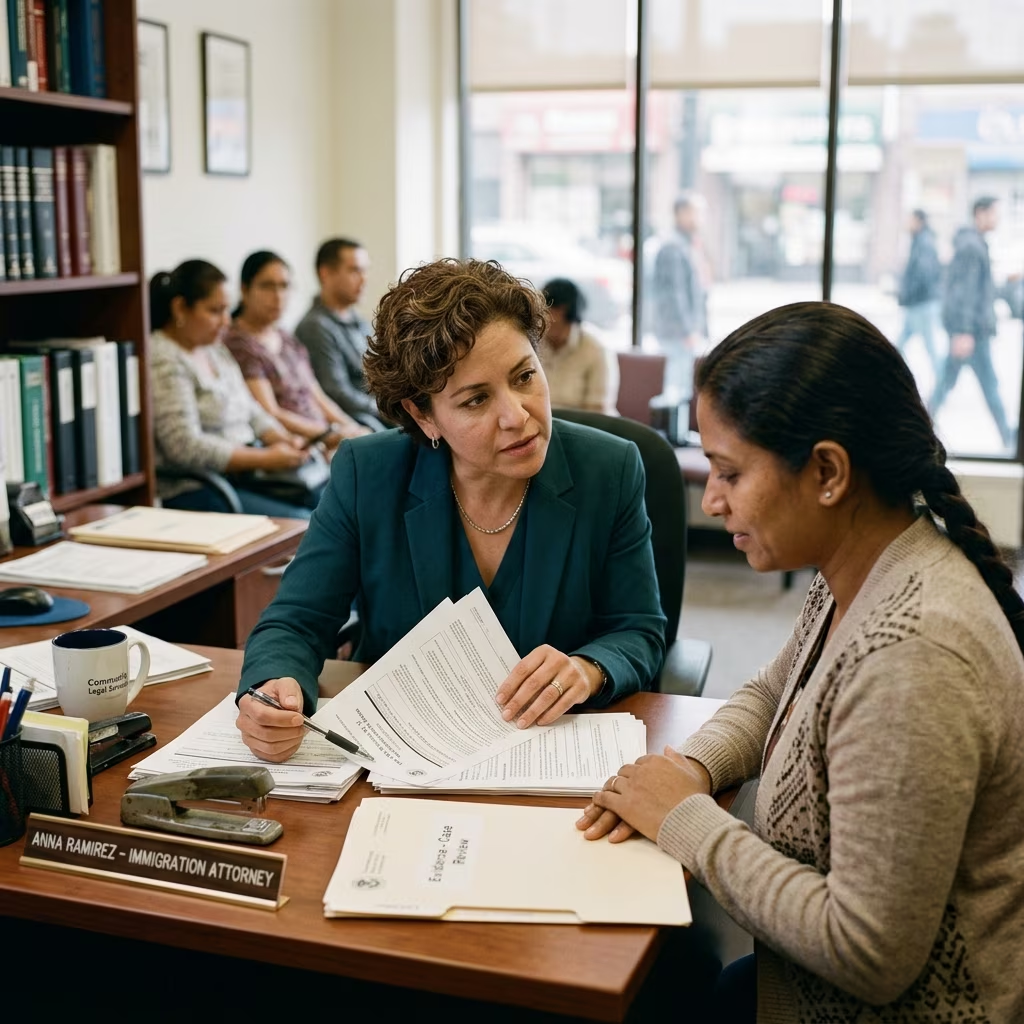
People seeking immigration help are often under stress, facing tight deadlines, language barriers, and fear of losing status. Scammers know this and aggressively target immigrants with false promises, fake fees, and incorrect legal advice. Government agencies in the United States, including the Federal Trade Commission (FTC) and U.S. Citizenship and Immigration Services (USCIS), warn that immigration fraud is a serious and growing problem.
This guide explains how immigration scams work, how to recognize them, how to protect yourself and your family, and where to find legitimate legal help. It is based on guidance from official U.S. government sources and reputable legal organizations, but is written in plain language that anyone can understand.
1. Why Immigrants Are Targeted by Scammers
Immigration law is complex, and small mistakes can have big consequences. That is exactly why dishonest people try to profit from immigrants. They know many newcomers:
- are unfamiliar with U.S. laws and procedures
- may not speak or read English well
- feel pressure to fix their status quickly
- may trust people from their own community who use official-sounding titles
- fear contact with government agencies
Because of these vulnerabilities, the U.S. government repeatedly warns immigrants to be careful about who they trust and where they get information.
2. Who Is Really Allowed to Give Immigration Legal Advice
One of the most important protections is knowing who is legally authorized to give immigration legal advice. In the United States, only two groups can provide immigration legal services for a fee or as part of their official work:
- Licensed attorneys (lawyers) in good standing with a U.S. state or territorial bar
- Department of Justice (DOJ)–accredited representatives working for recognized nonprofit organizations
Everyone else is limited in what they can do. They may be able to translate, type information that you provide, or help you collect documents, but they cannot tell you what to say, what to file, or what strategy to follow.
2.1. Checking credentials safely
To protect yourself, always confirm that a person offering immigration help is truly authorized. Here are key steps recommended by legal aid organizations and rights groups:
- Ask the person whether they are a licensed attorney or a DOJ-accredited representative.
- Request to see their law license or accreditation letter and write down their full name and license number.
- Verify lawyers with the state bar association where they say they are licensed (every U.S. state has a public lawyer search).
- Verify accredited representatives and recognized organizations on the Executive Office for Immigration Review (EOIR) official lists.
- If they refuse to show proof or get angry when you ask questions, walk away.
| Type of Helper | Can Give Legal Advice? | What They May Be Allowed To Do |
|---|---|---|
| Licensed U.S. Attorney | Yes | Advise on options, complete and submit forms, represent you in court or before USCIS. |
| DOJ-Accredited Representative (recognized organization) | Yes | Provide legal advice and represent you before immigration agencies within their accreditation. |
| Notary / Notario / Immigration Consultant | No | Maybe translate, type what you dictate, or help gather documents; cannot advise what to say or file. |
| Friend, family member, community volunteer | No | Offer moral support, help you read or understand instructions, assist with organizing paperwork. |
3. Common Immigration Scams and Red Flags
Scammers use many different tactics, but they share a few characteristics: urgency, secrecy, and promises that sound too good to be true. Government agencies like USCIS and consumer protection offices describe several frequent schemes.
3.1. Fake “notario” or consultant offering legal advice
In some countries, a “notario” is a high-level legal professional, but in the United States a notary public is not a lawyer and cannot give legal advice. Many scammers take advantage of this confusion, advertising as “notarios,” “immigration consultants,” or “paperwork specialists” while illegally providing legal advice.
Warning signs include:
- They advertise themselves as a “notario,” “immigration specialist,” or “immigration consultant” who can handle your case.
- They guarantee results, such as a green card, work permit, or citizenship.
- They ask you to sign blank forms or give them your original documents.
- They refuse to provide a written contract, receipts, or copies of forms filed in your name.
3.2. Government impostor scams
Scammers often pretend to be immigration officers or other government officials. They may call, text, email, or message you on social media saying there is a problem with your case and demanding immediate payment. USCIS and other U.S. agencies emphasize that they do not accept payment over the phone, by email, text, or through gift cards and will not threaten arrest during a call.
Watch for these red flags:
- Unexpected calls, texts, emails, or social media messages claiming to be from USCIS, ICE, or another agency
- Requests for payment via wire transfer, gift card, payment app, or cryptocurrency
- Threats of deportation, arrest, or loss of status if you do not pay immediately
- Requests for personal information such as your full Social Security number, bank account, or passwords
3.3. Charging for free immigration forms or fake fees
USCIS clearly states that immigration forms are free to download from its official website. While there may be filing fees when you submit a completed application, nobody should charge you just to get the blank forms themselves.
Be cautious if someone:
- Sells you copies of standard immigration forms
- Says there is an “extra government fee” that must be paid to them, in cash
- Refuses to provide a receipt or explain in writing what you are paying for
3.4. False promises about special programs or quick approvals
Another common scam involves advertising “new” or “secret” immigration programs that supposedly offer fast benefits, such as instant work permits or guaranteed permanent residence. USCIS and legal aid organizations caution that real programs and policy changes are always announced through official channels, not through social media ads or flyers.
Be skeptical when someone:
- Claims to have insider connections in the government
- Guarantees a specific result or approval
- Pressures you to apply quickly because the program will “end soon”
- Refuses to explain the law or show any official documentation
4. Smart Habits to Protect Yourself and Your Case
Even if you are careful, scammers can be persuasive. Adopting a few simple habits—recommended by consumer protection agencies and immigration rights organizations—can significantly reduce your risk of becoming a victim.
4.1. Keep control of your documents
- Keep your original passports, birth certificates, and identity documents in a safe place.
- Only provide copies of documents unless a government agency specifically requires originals.
- If you must send originals to a government office, use a trackable mail service and keep proof of mailing.
4.2. Never sign what you do not understand
Many victims of immigration fraud sign papers they do not understand, only to find out later that false information was submitted in their name. Legal aid groups strongly advise you to review every document carefully.
- Do not sign blank forms under any circumstances.
- Ask for a translation or explanation of every form and answer in a language you understand.
- Check every page for errors or false information before signing.
- Keep copies of everything you sign, including applications, contracts, and receipts.
4.3. Use safe payment practices
- Ask for a written fee agreement that clearly explains the services and costs.
- Avoid paying only in cash; if you must use cash, insist on a detailed receipt.
- Compare the fees you are charged with the official filing fees listed on the USCIS website or other government guidance.
- Be cautious of unusually high fees for simple tasks like downloading forms.
4.4. Rely on official government information
Accurate information about immigration is always available directly from government sources. USCIS and other agencies provide free online tools, contact centers, and guidance to help you understand official procedures.
- Use only websites that end in .gov for official immigration information.
- Use USCIS online tools to track your case status, check processing times, and confirm forms and fees.
- If you receive conflicting information, contact USCIS through its official contact center for clarification.
5. Where to Find Real Immigration Help
Protecting yourself from scams also means knowing where to find legitimate, affordable help. The U.S. government and nonprofit organizations maintain lists and resources to connect people with qualified providers.
5.1. Licensed immigration attorneys
Legitimate immigration attorneys:
- are licensed by at least one U.S. state or territory
- should be in good standing with their state bar association
- will give you a written agreement describing services and fees
- should answer basic questions about your options and risks
You can usually verify an attorney by using the state bar’s public search or contacting the bar directly.
5.2. DOJ‑accredited representatives and recognized organizations
The U.S. Department of Justice recognizes certain nonprofit organizations and authorizes specific staff members as accredited representatives. These representatives can provide legal services in immigration matters, often at low cost or no cost.
- They must work or volunteer for a recognized nonprofit organization.
- Their accreditation must be current and listed in EOIR records.
- They are allowed to provide advice and represent you in certain immigration matters.
Legal aid websites and national directories can help you locate recognized organizations in your area.
6. What To Do If You Suspect or Experience an Immigration Scam
Reporting scams helps protect your own case and prevents other people from being harmed. U.S. consumer protection agencies encourage victims and witnesses to share information—even if they are worried about their status—because reporting fraud focuses on the scammer, not on immigration enforcement.
6.1. Steps to take right away
- Stop working with the suspected scammer. Do not sign anything else or give them more money.
- Gather evidence: contracts, receipts, text messages, emails, advertisements, and any forms they prepared.
- Consult a legitimate attorney or accredited representative immediately to review your case and correct any false filings.
- Change passwords and monitor your financial accounts if you shared personal or banking information.
6.2. Reporting to government agencies
Multiple government offices accept reports of immigration-related fraud. According to USCIS, the FTC, and state attorneys general, you can usually report a scam without having to reveal your immigration status.
- Report fraud or scams related to immigration services to the Federal Trade Commission (FTC), which collects complaints and shares them with law enforcement partners.
- Contact your state or local consumer protection agency or attorney general’s office; many states have specific resources on immigration scams.
- If the fraud involves representation before an immigration court or the Board of Immigration Appeals, you may also report it to the Executive Office for Immigration Review fraud and abuse prevention program.
When making a report, you can usually provide as much or as little personal information as you feel comfortable sharing. Any details about the scammer—names, addresses, phone numbers, websites, and documents—can help investigators.
7. Practical Checklist Before You Hire Immigration Help
Use the following checklist each time you consider hiring someone for immigration assistance:
- Have I confirmed that this person is a licensed attorney or DOJ‑accredited representative?
- Did I verify their license or accreditation through official channels?
- Did they clearly explain what they will do and how much it will cost?
- Do I have a written agreement or contract in a language I understand?
- Am I getting copies of every document I sign?
- Do I feel pressured to act quickly or keep secrets from my family?
- Does anything they promise sound too good to be true, like guaranteed approval?
- Have I compared their information with what is posted on official government websites?
8. Frequently Asked Questions (FAQ)
8.1. Is it safe to report an immigration scam if I do not have legal status?
Consumer protection complaints focus on the scammer’s conduct, not on a victim’s immigration status. Agencies like the FTC encourage people, including immigrants, to report fraud because it helps them identify trends and take enforcement actions. If you are worried, you can ask a trusted attorney or nonprofit legal organization to help you file the report.
8.2. Can a friend or community member help me fill out forms?
A trusted friend or community member may help you read instructions, translate information, or type answers that you choose. However, they are not allowed to give legal advice about what forms to file, what to say, or what strategy to follow unless they are a licensed attorney or an accredited representative. Be sure you still review every answer and sign only when you understand and agree.
8.3. Are all notaries in the U.S. scammers?
No. A notary public in the United States is a person authorized to witness signatures and verify identities. The problem arises when notaries or “notarios” pretend to be lawyers or give legal advice about immigration, which they are not permitted to do. A legitimate notary will not claim to handle your immigration case or guarantee immigration benefits.
8.4. How can I check if a website is really from the government?
Official U.S. government websites use the .gov domain and usually show clear information about the agency that operates them. USCIS and other agencies advise immigrants to rely on .gov sites for official forms, instructions, and fee information. Be cautious of look‑alike websites that use similar colors or logos but have different addresses, especially if they ask for unusual fees.
8.5. What if I already signed a form with false information?
If you believe false information was submitted in your name, it is important to get professional legal help as soon as possible. Legal aid organizations and immigration attorneys stress that signing documents with incorrect or fraudulent information can harm your case and may have serious consequences. A qualified lawyer or accredited representative can review what was filed and advise you on the safest way to correct the record.
References
- How To Avoid Immigration Scams and Get Real Help — Federal Trade Commission. 2023-08-31. https://consumer.ftc.gov/articles/how-avoid-immigration-scams-and-get-real-help
- Avoid Scams — U.S. Citizenship and Immigration Services (USCIS). 2023-10-02. https://www.uscis.gov/avoid-scams
- How To Avoid Immigration Scams — Oregon Law Help. 2022-05-10. https://oregonlawhelp.org/topics/immigration/immigration-legal-help-and-information/how-avoid-immigration-scams
- Know Your Rights: Avoid Immigration Fraud — National Immigrant Justice Center. 2021-11-15. https://immigrantjustice.org/for-immigrants/know-your-rights/avoid-immigration-fraud
- Consumer Alert: Protect Yourself from Immigration Scams — California Department of Justice. 2020-07-09. https://oag.ca.gov/system/files/attachments/press-docs/Protect%20Yourself%20from%20Immigration%20Scams%5B62%5D.pdf