Stopping Gift Card Scams: A Practical Consumer Guide
Learn how gift card scams work, how to spot the red flags, and what to do fast if a scammer convinces you to pay with a gift card.
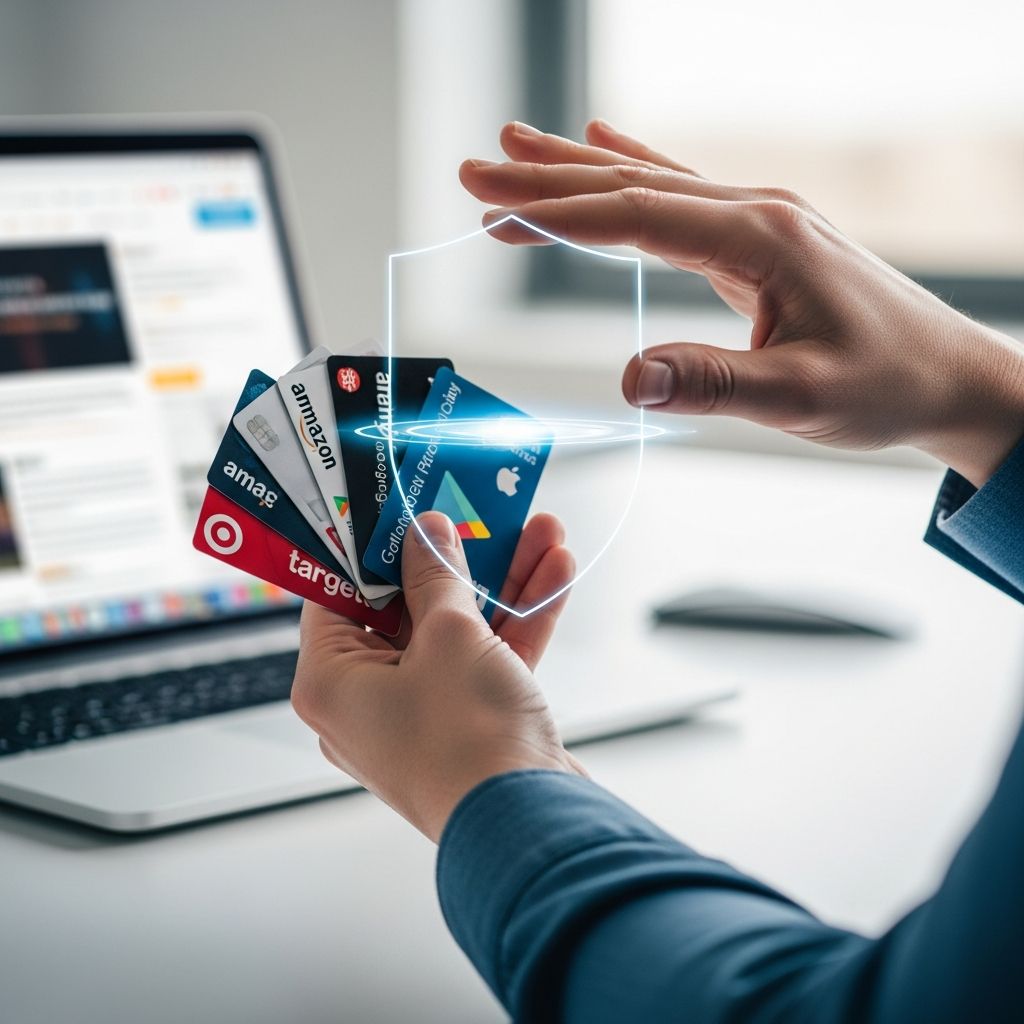
Gift cards are meant to be convenient presents, not instant cash for criminals. Yet scammers increasingly pressure people to pay supposed debts, fees, or emergencies with gift cards because those payments are fast, hard to reverse, and difficult to trace.
This guide explains how gift card scams work, how to protect yourself and your family, and what to do right away if you have already given a scammer a gift card number or PIN. It is inspired by official consumer protection guidance, but written in original language for clarity and ease of use.
Why Scammers Love Gift Cards
Understanding why criminals choose gift cards can help you recognize a scam before you lose money.
- Instant access to your money: Once a card is loaded and the scammer has the number and PIN, they can often spend or transfer the balance within minutes.
- Limited protections: Unlike credit cards, gift cards generally do not come with strong chargeback or fraud-dispute rights for consumers.
- Hard to trace: Scammers can quickly move balances through online purchases or resellers, making it difficult for law enforcement to follow the money.
- Psychological pressure: Criminals know that many people feel less wary about gift cards than bank transfers, so they push this method aggressively.
Typical Gift Card Scam Scenarios
While the details change, the core pattern is usually the same: someone creates urgency, demands payment, and insists on gift cards. Below are common storylines reported to banks and consumer protection agencies.
1. Fake Government or Utility Demands
Someone calls or texts pretending to be from a government agency, law enforcement, the tax authority, or a utility company. They claim you:
- Owe back taxes or unpaid bills
- Missed court or jury duty and now face arrest
- Must pay an immediate “reconnection” or “reinstatement” fee
Then they say the quickest way to solve the problem is to pay with gift cards from specific stores. Real government agencies and utilities do not take gift cards for payments.
2. Tech Support and Account Security Scams
Fraudsters pose as technical support from a major technology company, your internet provider, or even your bank. They may claim:
- Your computer is infected and must be “cleaned” right away
- Your account was hacked and you must move funds to a “safe” place
- You will lose access to your email, cloud storage, or banking service unless you pay a service fee
After gaining your trust, they instruct you to buy gift cards and share the codes as payment or as a way to “secure” your money. Legitimate companies do not fix security issues by asking for gift cards.
3. Romance, Friend, or Family Emergencies
In these scams, criminals exploit emotional connections:
- Romance scams: Someone you met on a dating app or social platform says they urgently need help with a medical bill, flight, or business crisis.
- Imposter family emergencies: A caller claims to be your grandchild, child, or relative in trouble, or a lawyer or doctor speaking on their behalf, demanding quick payment via gift cards.
They will push you not to tell anyone and to act immediately. Demands for secrecy and gift card payments are major red flags.
4. Prize, Investment, and Business Opportunities
Here the hook is the promise of money or rewards:
- “You won a prize, lottery, or sweepstakes, but must pay fees or taxes first using gift cards.”
- “This investment or business offer is time-limited. Reserve your spot by purchasing gift cards now.”
- “You qualify for a grant, but need to pay an application or processing fee with gift cards.”
Legitimate prizes and grants do not require up-front payment with gift cards, and investment opportunities that rely on gift card payments are almost certainly fraud.
Spotting Gift Card Scam Red Flags
Nearly all gift card scams share a cluster of warning signs, regardless of the story used. If you notice even one, stop and double-check before doing anything.
- Payment method is non-negotiable: The caller or sender insists on gift cards only, often specifying a brand or store.
- High-pressure tactics: You are told to act immediately, not hang up, and not talk to anyone else.
- Secrecy: They may say, “Don’t tell the cashier what this is for,” or ask you to lie about why you are buying the cards.
- Unverifiable contact: Calls come from spoofed numbers, messages use generic greetings, or contact is only through text or apps.
- Confusing or threatening explanations: The story sounds complicated, frightening, or too good to be true.
How to Buy Gift Cards Safely
Gift cards themselves are not unsafe, but you should take some basic precautions when buying or receiving them to reduce the risk of fraud or “card draining.”
- Purchase directly from trusted sources:
- Buy in-store from major retailers where cards are stored securely.
- Use official websites or verified mobile apps instead of online marketplaces or resellers, where tampered or stolen cards are more common.
- Inspect physical cards:
- Check that protective stickers, scratch-off panels, or security labels are intact and show no signs of peeling or damage.
- Look for bent, scratched, or mismatched packaging, which can signal tampering.
- Keep receipts and records:
- Save the purchase receipt until the card is fully used; some issuers require it to investigate fraud.
- Record the card number and (if separate) the PIN in a secure place.
- Use cards promptly and monitor balances:
- Redeem or spend the value soon after purchase or receipt to reduce the window for scammers who may have copied numbers.
- Check balance online or by phone periodically until it is fully used.
What To Do If Someone Asks You to Pay With Gift Cards
If you are in a conversation — on the phone, text, email, or social media — and payment with gift cards comes up, follow this checklist.
| Action | Why it matters |
|---|---|
| Stop the conversation immediately | Scammers rely on keeping you on the line so you cannot verify the story. |
| Do not buy any cards yet | As long as you have not purchased or shared codes, you have not lost money. |
| Independently contact the real organization | Use an official phone number or website (from a bill, statement, or official directory), not the contact details the caller gave you. |
| Talk to someone you trust | A friend, family member, or financial institution can help you spot red flags. |
If You Already Paid a Scammer With Gift Cards
If you have already bought gift cards and shared the numbers or PINs with a scammer, act quickly. Speed can make a difference in whether any part of the value can be frozen or recovered.
Step 1: Contact the Gift Card Issuer Immediately
Find the customer service number on the back of the card or the issuer’s official website. When you reach them:
- Explain that you were tricked into giving the card information to a scammer.
- Provide:
- Gift card brand and store
- Card number and PIN
- Purchase receipt details (date, time, store, and amount)
- Ask if they can:
- Freeze the remaining balance
- Reverse any recent transactions on the card
- Issue a replacement card or credit
Not all issuers can refund money lost to scams, but some may be able to stop transactions if you report quickly.
Step 2: Inform the Place Where You Purchased the Cards
Contact the store or website where you bought the gift cards. Give them:
- Receipts and transaction details
- Any written instructions from the scammer (texts, emails, screenshots)
Some retailers have internal fraud teams that track patterns of gift card abuse and can share information with card issuers and law enforcement.
Step 3: Report the Scam to Authorities
Reporting helps enforcement agencies spot trends and may support investigations against organized networks, even if you cannot get your own money back.
- National consumer protection agency: Submit an online complaint to your federal or national consumer protection body (for example, in the United States, the Federal Trade Commission collects fraud reports).
- Local law enforcement: File a report with local police, especially if you lost a large amount or were threatened.
- Your bank or card issuer: If you used a debit or credit card to purchase the gift cards, tell your bank what happened. They may flag your account for suspicious activity or provide additional support.
Step 4: Protect Your Identity and Accounts
Gift card scams can sometimes be part of a larger effort to steal your personal information. If you shared additional details with the scammer (ID photos, bank login, Social Security or national ID number):
- Change passwords and enable multi-factor authentication on important accounts, especially email and banking.
- Consider a credit freeze or fraud alert through your credit bureaus, where available.
- Monitor bank and card statements closely for unfamiliar transactions.
Helping Older Adults and Vulnerable Consumers
Gift card payment scams frequently target older adults, people under financial stress, and individuals who are less comfortable with technology. Helping them understand the signs can prevent large losses.
- Start simple conversations: Explain that any demand for bill payments, taxes, bail, or tech support with gift cards is a scam.
- Post clear reminders: For caregivers and families, consider placing notes near phones or computers saying, “No one legitimate will ever demand gift cards as payment.”
- Encourage a “call-back” rule: Before acting on any urgent request, they should hang up and call a trusted family member or the organization using a verified number.
- Review bank and card activity together: Regularly checking statements can reveal unusual withdrawals or large gift card purchases early.
FAQ: Common Questions About Gift Card Scams
Are gift cards themselves unsafe?
No. Gift cards are widely used and legitimate. The problem arises when someone you do not know convinces you to use them as payment for fees, debts, or emergencies. Treat gift cards like cash: once spent or shared, the money is usually gone.
If I haven’t scratched off the PIN yet, can a scammer still use the card?
If you have not shared the card number and PIN, a remote scammer cannot use your card. However, if the card was tampered with before you bought it (for example, the number was copied in advance), the balance might be drained after activation.
Can I get my money back after a gift card scam?
Recovery is difficult and not guaranteed. Some issuers may freeze unused balances or help if you report immediately with full details, but many purchases cannot be reversed once the card is redeemed.
Is it safe to buy discounted gift cards from online marketplaces?
Discounted cards from unofficial sellers carry higher risk of being stolen, already drained, or later canceled. Buying from the retailer or the official issuer is safer.
How can businesses reduce gift card scam losses?
Retailers can train staff to spot suspicious bulk gift card purchases, set limits on amounts, post warnings at checkout, and use tamper-evident packaging to deter card “draining.”
Key Takeaways to Remember
- No legitimate government agency, law enforcement officer, or utility collects payment with gift cards.
- If someone demands secrecy and gift cards, it is almost certainly a scam.
- Act fast: contact the gift card issuer, the place of purchase, your bank, and consumer protection authorities if you have already paid.
- Share what you know with friends and family, especially older adults, so fewer people fall victim to the same tricks.
References
- How To Protect Yourself From Gift Card Scams — TD Bank. 2024-04-15. https://www.td.com/us/en/personal-banking/learning/how-to-protect-yourself-from-gift-card-scams
- Avoid Gift Card Draining Scams This Holiday Season — National Cybersecurity Alliance (StaySafeOnline). 2023-11-20. https://www.staysafeonline.org/articles/avoid-gift-card-draining-scams-this-holiday-season
- Gift Card Fraud: What It Is & How to Stop It — Arkose Labs. 2023-08-10. https://www.arkoselabs.com/explained/gift-card-fraud/
- Gift Card Draining and the Gift Card Scams Prevention Act of 2024 — Taylor Communications. 2024-02-09. https://www.taylor.com/blog/gift-card-draining-is-a-common-gift-card-scam
- Smart Strategies for Gift Card Fraud Prevention — PLI. 2024-01-18. https://www.plicards.com/card-talk/stay-ahead-of-the-game-smart-strategies-for-gift-card-fraud-prevention-for-2024
Similar Articles








Read full bio of medha deb