
Stepparent Adoption in Massachusetts: Benefits, Risks, and Process
A practical guide to the legal advantages, emotional impact, and common complications of adopting a stepchild in Massachusetts.
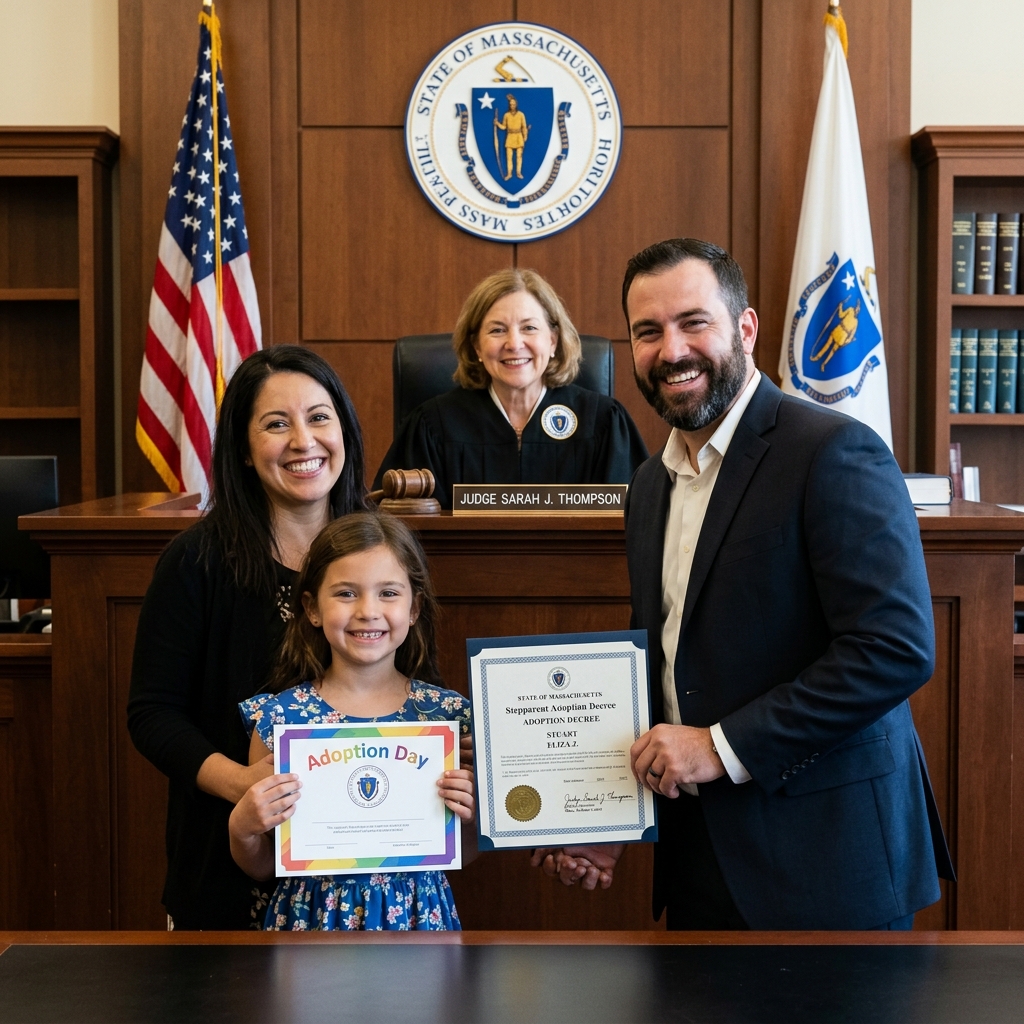
When a stepparent has become a central figure in a child's daily life, formal adoption can offer powerful legal and emotional security. In Massachusetts, however, adopting a stepchild is more than a symbolic gesture; it permanently reshapes the child's legal relationships, inheritance rights, and future support obligations. This guide explains the benefits, complications, and core steps involved so families can make informed decisions.
Understanding Stepparent Adoption
Stepparent adoption occurs when a person married to, or in some cases legally partnered with, a child's legal parent asks the court to become a full legal parent to the child. Once the adoption is approved, the stepparent has the same rights and responsibilities as a biological or previously legal parent under Massachusetts law.
This change is not temporary or conditional. It is intended to be permanent, and in nearly all cases it cannot be undone later, even if the marriage between the stepparent and the child's parent ends in divorce.
Key Legal Effects in Massachusetts
- Creation of a full parent–child relationship between the stepparent and child, including custody and decision-making authority.
- Termination of legal rights of the noncustodial biological parent (except in rare, specially structured situations).
- New obligations for the adoptive parent regarding support, health insurance, and potentially college and other expenses.
- Changes in inheritance rights for both the adopted child and the biological parent whose rights are ended.
Major Benefits of Stepparent Adoption
Families typically consider stepparent adoption for both practical and emotional reasons. The law recognizes adopted stepchildren in the same way as biological children in most areas of life, including custody, inheritance, and benefits.
Legal Authority and Decision-Making
Once an adoption is finalized, a stepparent gains full parental authority. This includes the ability to:
- Consent to routine and emergency medical care for the child.
- Communicate with schools, attend meetings, and make decisions about education.
- Participate in decisions involving mental health treatment and other services.
- Travel with the child and handle documentation issues that may require parental consent.
Without adoption, a stepparent may have limited authority and can be excluded from critical decisions if legal issues arise or the other parent objects.
Security in Case of Death or Disability
Adoption can significantly improve the child's legal and financial security if the stepparent dies, becomes disabled, or the marriage ends.
- Inheritance rights: An adopted child is treated as a legal heir of the adoptive parent, including when that parent dies without a will.
- Benefits eligibility: In many situations, an adopted child can access benefits such as employer-sponsored health insurance or certain Social Security benefits tied to the adoptive parent.[10]
- Protection in divorce: The adoptive parent remains a legal parent during and after a divorce from the child's other parent, which can help maintain continuity of care and support.
Emotional and Family Relationship Advantages
Legal adoption often reflects the reality of day-to-day life and reinforces a child's sense of belonging in their household.
- Formal recognition of the relationship between stepparent and child.
- Shared family identity, often including a revised birth certificate listing the adoptive parent.
- Stability and predictability during future transitions, such as relocation or divorce.
Practical Everyday Advantages
Beyond major life events, adoption can simplify everyday interactions with institutions and agencies.
- Easier enrollment in school or extracurricular activities that ask for parental signatures.
- Greater clarity for doctors, insurers, and administrators when determining who has authority to act.
Significant Complications and Risks
Stepparent adoption also has serious downsides, particularly for the noncustodial biological parent and for the adoptive parent who is assuming long-term responsibilities. These consequences should be fully understood before filing a petition.
Loss of Rights for the Noncustodial Parent
To approve a stepparent adoption, Massachusetts courts generally require that the other legal parent's rights be voluntarily surrendered or terminated due to abandonment, unfitness, or similar grounds.
Once that occurs:
- The former parent loses legal custody and decision-making authority.
- They usually lose the right to seek court-ordered visitation in the future.
- The child generally loses inheritance rights from that parent under intestate succession (where there is no will).
- Child support obligations normally stop after the adoption date.
Some families may prefer to preserve contact with the noncustodial parent through informal arrangements, but once rights are terminated the law no longer guarantees those ties.
Long-Term Support Obligations for the Adoptive Parent
By adopting a stepchild, the stepparent assumes enduring financial obligations similar to those of any legal parent.
- Potential responsibility for child support if the marriage ends and the adoptive parent does not have primary custody.
- Requirements to provide health insurance where available and reasonable.
- Possible duties related to college or post-secondary expenses, depending on court orders and agreements.
These obligations persist even if the relationship with the child's other parent deteriorates or the adoptive parent moves out of the home.
Impact on Benefits and Financial Planning
Adoption can affect some government benefits and financial arrangements, particularly those that hinge on the child's relationship with a deceased or disabled biological parent.
- In certain scenarios, changing the child's legal parentage can alter eligibility for survivor or dependents' benefits, depending on how and why rights were terminated.
- Families should consider how adoption interacts with Social Security rules, life insurance, and estate planning.
Because these impacts can be highly fact-specific, consulting both a family law attorney and, when appropriate, a financial or benefits adviser is recommended.
Core Steps in a Massachusetts Stepparent Adoption
While each case is unique, stepparent adoptions in Massachusetts generally follow a structured process governed by state law and Probate and Family Court procedures.
1. Confirm Eligibility and Living Arrangements
Before filing, families should consider:
- Whether the stepparent has been living with the child and legal parent for a sufficient period to support the petition.
- Whether the child is under 18, and whether the child is over 12 and willing to consent, which is required at that age.
- Whether there are any open custody or care cases involving the child that need to be disclosed to the court.
2. Filing the Adoption Petition
The adoption process formally begins when the stepparent files a petition with the Probate and Family Court. Massachusetts provides standardized forms for adoption petitions and related affidavits.
Common initial filings for a minor include:
- A petition for adoption and affidavit of the petitioner.
- A recent certified copy of the child's birth certificate.
- A child care or custody disclosure affidavit listing other cases involving the child.
Additional documents, such as marriage certificates or proof of termination of parental rights for the other parent, may be requested depending on the circumstances.
3. Consent and Termination of Parental Rights
Consent is a critical part of the process. Massachusetts generally requires written consent from:
- The noncustodial legal parent (unless their rights have already been terminated by a prior court order).
- The child, if aged 12 or older.
- The child's spouse, if the child is married.
If a noncustodial parent cannot be located, courts may require that notice of the adoption be published in a local newspaper before moving forward.
When a parent refuses to consent, the court may hold hearings to determine whether their parental rights should be terminated based on statutory grounds such as unfitness or abandonment.
4. Background Checks and Possible Home Study
Massachusetts courts commonly require background checks for adoptive parents and certain other household members, and may request additional documentation about the home environment.
For younger children, a home study conducted by an agency or the Department of Children and Families is often required but may be waived if one petitioner is already a legal parent and the judge finds that the study is unnecessary.
5. Finalization Hearing and New Birth Certificate
If all legal requirements are met, the court will schedule a finalization hearing. At this hearing, the judge reviews the case, may ask questions of the family, and if satisfied, issues a final decree of adoption.
After the adoption is finalized:
- The child's birth certificate is amended or reissued to list the adoptive parent as a legal parent.
- The adoptive parent obtains full parental status for all future legal matters.
Comparing Legal Status Before and After Adoption
| Issue | Before Stepparent Adoption | After Stepparent Adoption |
|---|---|---|
| Medical and school decisions | Stepparent may have limited or delegated authority; biological parent holds primary rights. | Stepparent has full legal authority comparable to a biological parent. |
| Inheritance from stepparent | Child may not automatically inherit absent a will or trust naming them. | Child is legally recognized as an heir under Massachusetts law. |
| Relationship to noncustodial parent | Legal rights and obligations (support, visitation, inheritance) generally remain. | Rights and obligations are usually severed upon adoption. |
| Obligation of stepparent to support child | Often moral or informal, but not always legally enforceable as a parent. | Adoptive parent may owe child support and other duties if separated or divorced. |
Issues Families Should Discuss Before Filing
Because stepparent adoption can reshape family relationships for decades, careful planning and open communication are essential.
Questions for Parents and Stepparents
- How will the adoption affect the child's relationship with the noncustodial parent and extended family?
- Are all adults prepared for the adoptive parent's long-term financial and legal obligations to the child?
- Is the child old enough to understand the change, and do they feel comfortable with it?
- Have potential impacts on benefits, insurance, and estate plans been reviewed?
Massachusetts courts and state resources strongly recommend consulting an attorney before beginning the adoption process, especially if there are contested issues or complex family histories.
Frequently Asked Questions (FAQs)
Does the noncustodial parent always have to consent?
No. While consent from the noncustodial parent is often required, the court can terminate that parent's rights without consent if statutory grounds such as abandonment or unfitness are proven. These cases are fact-specific and usually require legal representation.
Will the adoption change my child's birth certificate?
Yes. After the adoption is finalized, Massachusetts issues a revised birth certificate listing the adoptive stepparent as a legal parent. This document functions as proof of the parent–child relationship for schools, agencies, and other institutions.
Can a stepparent adoption be undone later?
In practice, stepparent adoptions are intended to be permanent. Once the court grants the adoption, the adoptive parent remains a legal parent even if they divorce the child's other parent or move away. Reversing an adoption is extremely rare and should not be expected as an option.
Does adoption guarantee that the child keeps contact with the other biological parent?
No. After the other parent's rights are terminated, they generally lose the ability to seek court-ordered visitation or custody. The family can agree informally to maintain contact, but the law no longer enforces those arrangements.
Is a home study always required in Massachusetts?
Not always. For many stepparent adoptions, a full home study can be waived at the judge's discretion when one petitioner is already a legal parent and the child is living in a stable environment. Nonetheless, background checks and some documentation will still be required.
Do I need a lawyer for a stepparent adoption?
Massachusetts courts strongly encourage parties to obtain legal counsel because adoption permanently changes parental rights and responsibilities, and because contested cases can be complex. While self-representation is possible, professional guidance can reduce errors and delays.
References
- File for adoption — Massachusetts Trial Court / Mass.gov. 2024-03-01. https://www.mass.gov/how-to/file-for-adoption
- Stepparent Adoption in Massachusetts — Turco Legal, P.C. 2021-08-15. https://turcolegal.com/blog/stepparent-adoption-in-massachusetts/
- Stepparent Adoption — David Olsen & Associates (docatty.com). 2019-11-20. https://www.docatty.com/family-law/stepparent-adoption/
- Can I Adopt My Stepchild? — Percy Law Group, PC. 2023-05-10. https://www.percylawgroup.com/info-center/2023/may/can-i-adopt-my-stepchild-/
- The Benefits and Complications Involved in Adopting a Stepchild — Super Lawyers. 2020-02-14. https://www.superlawyers.com/resources/adoption/massachusetts/benefits-and-complications-of-stepparent-adoption/
Similar Articles








Read full bio of Sneha Tete


