Your credit report influences whether you can get a loan, rent an apartment, or even qualify for some jobs. When that report contains mistakes, it can cost you money and opportunities. Federal law gives you the right to dispute inaccurate information and have it corrected or removed at no cost to you.
This guide explains, in practical terms, how to identify errors, contact the right organizations, write a strong dispute, and follow through until the problem is resolved.
Why Credit Report Accuracy Matters
Credit reports are compiled by nationwide credit reporting companies (often called credit bureaus), such as Equifax, Experian, and TransUnion.
- Credit scores are usually calculated from the data in your credit reports.
- Lenders and landlords use this information to decide whether to approve you and what interest rate to offer.
- Errors can make you look riskier than you are, leading to higher costs or denials.
Because of this, federal law (including the Fair Credit Reporting Act, or FCRA) requires that information in your report be accurate and gives you the right to challenge information you believe is wrong or incomplete.
Common Types of Credit Report Errors
Some mistakes are obvious; others are subtle. When reviewing your reports, watch for these frequent problems:
- Personal information errors
- Misspelled name or wrong middle initial
- Incorrect addresses or phone numbers
- Wrong Social Security number or date of birth
- Account information errors
- Accounts that do not belong to you
- Duplicate listings of the same account
- Wrong balance or credit limit
- Payments reported late that you paid on time
- Public record and collection errors
- Judgments, liens, or collections that are not yours or are too old to be reported
- Debts that should have been removed after bankruptcy discharge
- Identity theft or mixed file issues
- Accounts opened without your knowledge or consent
- Accounts belonging to someone with a similar name mixed into your file
Step 1: Get and Review All of Your Credit Reports
You should review reports from each nationwide credit reporting company, because not all furnishers report to all bureaus and an error may appear in one report but not another.
- Obtain your free reports from the official centralized service designated by federal law.
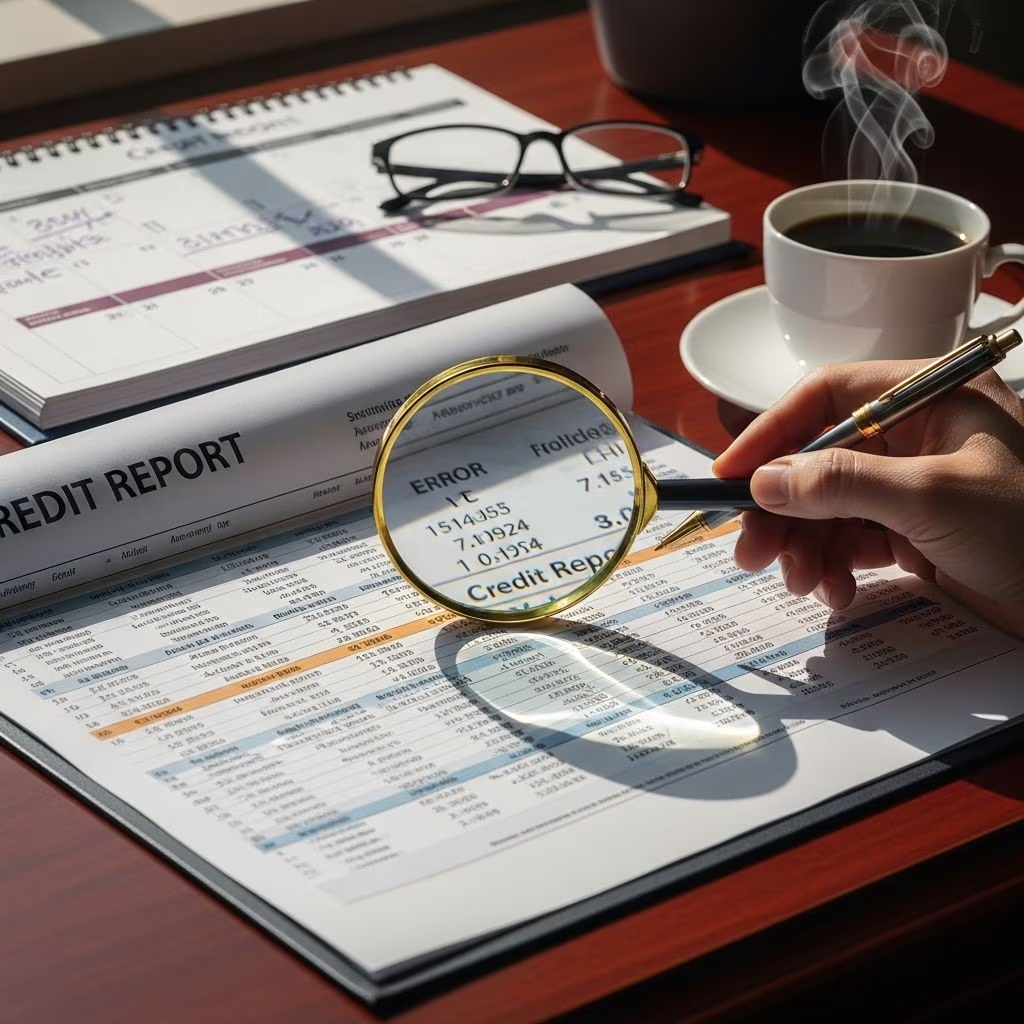
- Check basic identity information first, then carefully review every account, public record, and collection.
- Highlight or note every item you believe is inaccurate, incomplete, or that you do not recognize.
| Area to Review | What to Look For |
|---|---|
| Personal Details | Name, date of birth, addresses, phone numbers, Social Security number variations |
| Account Information | Balances, credit limits, payment history, open/closed status, ownership (individual vs. joint) |
| Public Records/Collections | Bankruptcies, judgments, tax liens, collection accounts and dates |
| Inquiries | New inquiries you do not recognize or did not authorize |
Step 2: Decide Whom to Contact First
You typically have two main options for disputing an error:
- The credit reporting company (credit bureau) that listed the information on your report; and
- The furnisher (the company that provided the information), such as a bank, credit card issuer, collection agency, or lender.
Federal guidance suggests beginning with the credit reporting company, and you may dispute with both the bureau and the furnisher to strengthen your position.
When to Dispute with the Credit Reporting Company
- When the error appears only on certain credit reports.
- When you are not sure which business furnished the information.
- When multiple items in a report need to be corrected at once.
When to Also Contact the Furnisher
- When you clearly know which lender or collector reported the information.
- When the same error keeps reappearing even after a prior dispute.
- When you need documentation or written verification from the company itself.
Step 3: Prepare Your Evidence and Documentation
Stronger documentation increases the likelihood of a quick and favorable outcome. Before you submit a dispute, gather copies (never send originals) of documents that support your case.
- Government-issued ID (driver’s license, passport)
- Proof of address, such as a utility bill or bank statement
- Account statements showing correct balances or payment dates
- Cancelled checks or payment confirmations
- Letters or emails from the creditor acknowledging a correction or error
- Police reports or identity theft reports, if the dispute involves fraud
Mark or label each document so it is clear which disputed item it supports.
Step 4: File a Dispute with the Credit Reporting Company
You can usually dispute with a credit bureau online, by mail, or sometimes by phone. Written disputes provide the strongest paper trail.
Information to Include in a Written Dispute
If you choose to mail a dispute letter to a credit reporting company, make it complete and specific.
- Your full name, current address, and telephone number
- Credit report confirmation number, if available
- Clear identification of each item you dispute (for example, account name and number)
- A brief explanation of why the information is wrong or incomplete
- A statement of what you want done (for example, “Please remove this account” or “Please correct the payment status to current”)
- Copies of any documents that support your dispute
It is often helpful to include a copy of the credit report with the disputed items circled or highlighted so the bureau can easily see what you are challenging.
Mailing tips:
- Use the address listed on the credit report or on the company’s dispute instructions.
- Send your letter by certified mail, return receipt requested, so you can prove when it was received.
- Keep copies of everything you send, including enclosures.
Online Disputes
Most major credit reporting companies offer secure online portals for disputes.
- Log in to your account or create one if needed.
- Select the item you wish to dispute and provide a short explanation.
- Upload digital copies of your supporting documents.
Online disputes can be faster, but you should still save screenshots or download a copy of the confirmation page for your records.
Step 5: Dispute Directly with the Furnisher (Optional but Recommended)
In addition to contacting the credit bureau, you may also dispute directly with the business that reported the information.
Your letter to the furnisher should:
- State clearly that you are disputing information they have reported to credit bureaus.
- Include your full name, address, and account number.
- Identify each specific item you dispute and explain why.
- Attach copies of supporting documents, such as statements, receipts, or prior correspondence.
- Be sent to the address the company designates for credit reporting disputes, if available.
If the furnisher confirms that its information is wrong or incomplete, it is required to update or delete that information and notify any credit reporting companies to which it supplied the data.
What Happens After You File a Dispute
After you submit a dispute, federal law sets clear responsibilities for credit reporting companies and furnishers.
Investigation Timeline
- The credit reporting company typically must investigate your dispute within 30 days of receiving it.
- If you supply additional information during the investigation, the period may extend up to 45 days in some situations.
- The bureau must forward all relevant information you provided to the furnisher that supplied the data.
Outcome of the Investigation
Once the investigation is complete, the credit reporting company must:
- Provide you the results in writing.
- Give you a free copy of your credit report if the dispute results in a change.
- Update or delete any information that is found to be inaccurate, incomplete, or that cannot be verified.
If a furnisher continues to report information you have disputed, it must tell the credit reporting company that the information is disputed so that a notice can be added to your report.
Frivolous or Irrelevant Disputes
A credit reporting company does not have to investigate a dispute it reasonably considers frivolous or irrelevant, such as a dispute that does not include enough detail to identify the problem.
- In such cases, the company must notify you, usually within five business days, that it will not investigate and explain the reason.
- You may submit a new dispute with additional information or clarification.
Next Steps if You Still Disagree
If you do not agree with the results of the investigation, you still have options.
- Submit a new dispute with more detailed explanation or additional documentation.
- Contact the furnisher again and provide any new evidence you have collected.
- Add a brief statement of dispute (often up to 100 words) to your credit file explaining why you believe the information is wrong.
- Consider filing a complaint with a relevant federal or state agency if you believe your rights under federal law are being violated.
While a statement of dispute does not change your score, it can give potential creditors or landlords more context when they review your report.
Best Practices to Protect Your Credit Going Forward
Preventing errors is easier than fixing them after the fact. These habits can help keep your credit file accurate and secure.
- Check your reports regularly to spot mistakes or signs of identity theft early.
- Update your creditors when you move or change your name so they report accurate information.
- Keep organized records of payments, statements, and correspondence with lenders.
- Protect your personal information by using strong passwords and being cautious about sharing your Social Security number.
- Respond quickly to unfamiliar bills, collection notices, or alerts from financial institutions.
Frequently Asked Questions (FAQs)
Q1: Does disputing an error hurt my credit score?
Filing a dispute itself does not damage your credit score. However, the underlying item you are disputing may continue to affect your score until it is corrected or removed, which is why acting quickly is important.
Q2: How long do corrected items stay on my report?
If an item is found to be inaccurate or cannot be verified, it must be removed or fixed and should not reappear unless the furnisher can certify its accuracy. Legitimate negative information that is verified can generally stay on your report for up to seven years in many cases, and some bankruptcies may be reported for up to ten years under federal law.
Q3: Can I dispute the same item more than once?
Yes, you may dispute an item again, especially if you have new information or documents to support your position. Repeating the same dispute without additional evidence, however, may lead the bureau to consider it frivolous.
Q4: Should I use a credit repair company?
Federal agencies emphasize that you can dispute credit report errors on your own for free. Many credit repair companies charge fees for steps you can take yourself by contacting the credit bureaus and furnishers directly, and some make promises they cannot legally keep.
Q5: What if the error is due to identity theft?
If you suspect identity theft, consider placing a fraud alert or credit freeze on your file and filing an identity theft report with appropriate authorities. Provide copies of these reports with your credit disputes, as they can help remove fraudulent accounts and prevent further misuse of your information.
References
- How do I dispute an error on my credit report? — Consumer Financial Protection Bureau. 2023-10-01. https://www.consumerfinance.gov/ask-cfpb/how-do-i-dispute-an-error-on-my-credit-report-en-314/
- Disputing Errors on Your Credit Reports — Federal Trade Commission. 2023-02-08. https://consumer.ftc.gov/consumer-alerts/2012/02/disputing-errors-credit-reports
- Filing a dispute — AnnualCreditReport.com. 2023-06-15. https://www.annualcreditreport.com/filingADispute.action
- How to Dispute Credit Report Information — Experian. 2024-03-21. https://www.experian.com/blogs/ask-experian/credit-education/faqs/how-to-dispute-credit-report-information/
- Dispute errors on your credit report — USA.gov. 2024-01-05. https://www.usa.gov/credit-report-errors
- Disputing Credit Errors — Texas State Law Library. 2023-09-01. https://guides.sll.texas.gov/credit-reports/disputing-credit-errors