Car insurance exists to soften the financial shock of an auto accident, but scammers exploit this system to make money through fraud. These schemes can leave honest drivers facing higher premiums, denied claims, or even criminal investigations if they are drawn into fraud—knowingly or not.
This article explains how car insurance scams work, how to spot the warning signs, and practical steps to protect yourself before and after a crash. It also outlines how to document incidents and report suspected fraud to appropriate authorities so you are less vulnerable to financial loss and legal trouble.
Understanding Car Insurance Fraud
Car insurance fraud is any deliberate deception involving an auto insurance policy or claim that is committed for financial gain. It can be carried out by policyholders, other drivers, repair shops, medical providers, or even fake insurance sellers. Fraud increases costs for insurers and ultimately contributes to higher premiums for everyone.
Key Features of Insurance Fraud
- Intentional deception: The person committing fraud knows the information they are providing is false or misleading.
- Financial motivation: Fraud is done to obtain money, benefits, or coverage that would not be available if the truth were known.
- Impact on others: Fraudulent claims help drive up overall insurance costs, which can lead to higher premiums and stricter claim scrutiny for all policyholders.
Honesty Obligations for Policyholders
Legitimate policyholders also need to be careful not to cross the line into fraud. When applying for coverage or filing a claim, you must accurately report information such as where your vehicle is garaged, your driving record, and what actually happened in a crash. Exaggerating damage, misrepresenting injuries, or hiding relevant facts can expose you to serious consequences, including claim denial or criminal charges.
Common Car Insurance Scam Types
Scammers use a variety of tactics. Some focus on staged crashes, while others target the claims process or sell sham insurance policies. Recognizing the major categories of fraud can help you stay alert on the road and when dealing with paperwork.
1. Staged or Manipulated Accidents
In staged accident scams, fraudsters intentionally create a crash or manipulate traffic to make it appear that you are at fault. They then file exaggerated claims for vehicle damage, medical bills, and lost wages.
- Sudden brake scams: A driver may pull in front of you and slam on the brakes to cause a rear-end collision, then blame you for following too closely.
- Wave-and-crash scenarios: A driver appears to courteously wave you into traffic or out of a parking spot, then hits your vehicle and denies giving you the signal.
- Dual-turn lane collisions: At multi-lane turns, a scammer may drift into your lane while turning, causing an impact and claiming you cut them off.
These situations often happen quickly and can be confusing. Scammers take advantage of that confusion, hoping you will accept blame or sign paperwork without fully understanding what happened.
2. Exaggerated or Fake Injury Claims
After a crash, some individuals or organized rings exaggerate minor injuries or invent medical problems to build large bodily injury claims. They may involve certain clinics, lawyers, or so-called “runners” who show up at accident scenes offering to coordinate treatment and legal representation.
- Minor soreness described as severe long-term disability.
- Multiple people suddenly claiming injuries, even if impact seemed slight.
- Pressure to attend specific medical providers or sign treatment agreements immediately.
3. Auto Repair and Glass Fraud
Fraud can also occur once your vehicle is in the repair shop. Some dishonest collision or glass repair businesses inflate bills, bill for work not performed, use substandard parts, or even damage your vehicle to justify additional repairs.
- Inflated collision repair estimates: Adding unnecessary procedures or parts, or charging for labor that never occurred.
- Airbag scams: Charging for a new airbag but installing a salvaged or counterfeit unit—or no airbag at all.
- Windshield fraud: Aggressive vendors pushing glass replacement or repairs that are not needed, then billing insurance at high rates.
4. Fake Insurance Policies and Premium Diversion
Not all fraud involves accidents. Some scams target your wallet before you ever file a claim. Fraudsters may pose as licensed insurance agents or create bogus companies, collecting premiums for policies that do not actually exist.
- Unlicensed agents: Someone sells you coverage but is not licensed with your state insurance department.
- Fake insurance companies: Bogus insurers take premiums with no intention of paying claims.
- Premium diversion: A legitimate-looking agent pockets your payment instead of sending it to a real insurer, leaving your policy inactive.
Victims often discover the fraud only after an accident, when they learn that their supposed policy was never in force and claims will not be paid.
Red Flags That Signal Possible Insurance Scams
While not every odd situation is fraudulent, certain patterns commonly indicate scam activity. Being aware of these warning signs can help you respond calmly and document what matters.
Suspicious Situations on the Road
- Drivers who brake suddenly without reason in front of you.
- Other motorists who insist you proceed through an intersection or lane change and then collide with you.
- Cars appearing from blind spots or changing lanes aggressively, then quickly blaming you.
- Vehicles that seem to be coordinated, such as multiple cars boxing you in or moving in tandem to set up a collision.
Problematic Behavior After a Crash
- Strangers rushing to the scene offering referrals to specific lawyers or medical providers.
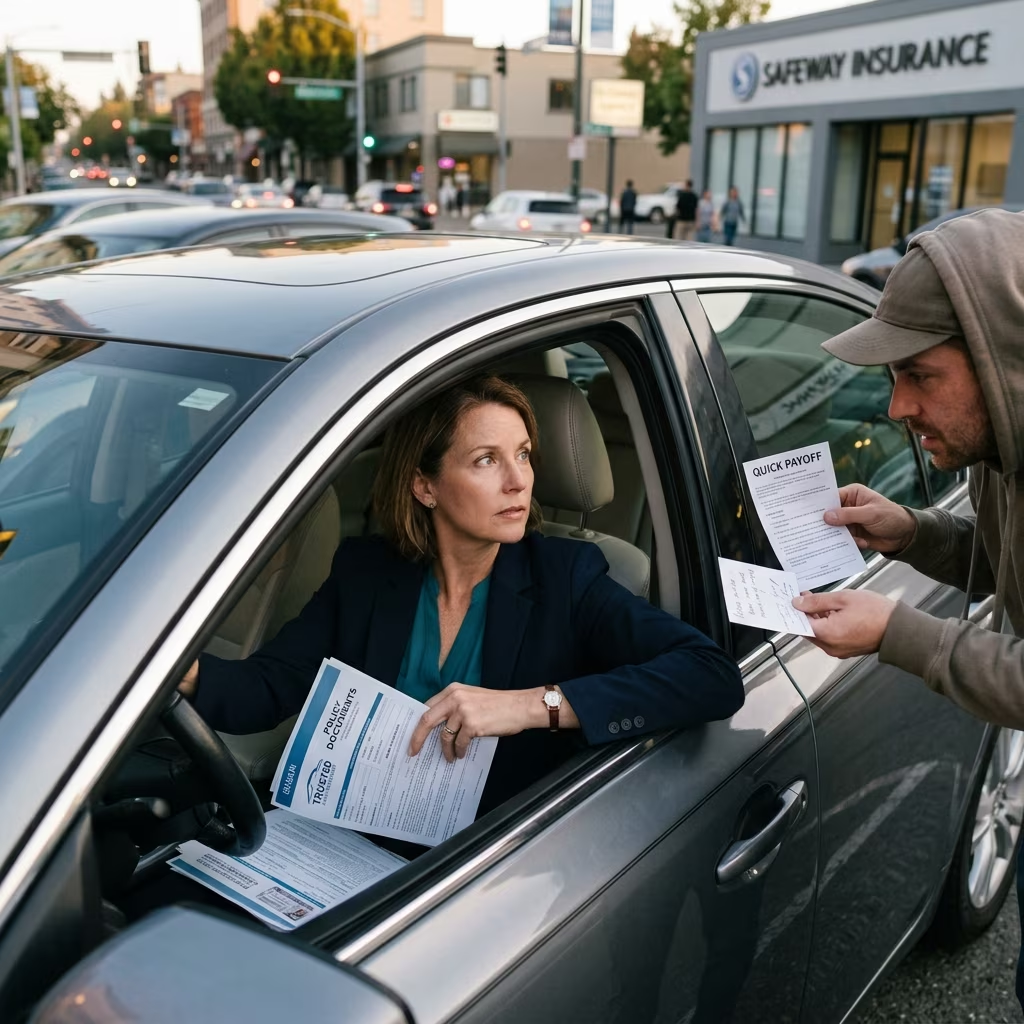
- Pressure to sign documents immediately or accept cash on the spot.
- Requests that you lie about the timing or details of the accident, or omit certain facts when speaking to police or your insurer.
- Reluctance by the other driver to involve law enforcement or insurance companies.
Red Flags With Your Policy or Agent
- You never receive a formal policy, insurance ID card, or written confirmation of coverage.
- Premiums are paid to an individual’s name instead of directly to an insurance company.
- The agent can’t or won’t provide a license number, or your state insurance department cannot verify their authorization.
- Offers that seem too cheap for the coverage promised or require you to sign blank forms.
Practical Steps to Avoid Being Scammed
Preventing insurance scams requires both safe driving habits and good administrative practices. While you can’t control other drivers or dishonest businesses, you can make yourself a harder target and strengthen your position if something suspicious occurs.
Drive Defensively to Reduce Risk
- Maintain safe following distances: Leave ample space so you can react if the car ahead brakes suddenly.
- Stay attentive: Avoid distracted driving and scan ahead for unusual behavior, such as erratic lane changes or vehicles stopping for no reason.
- Be cautious about courtesy waves: Do not rely solely on another driver’s gesture—proceed only when you clearly see that traffic is safe.
- Use a dash camera: Consider installing a dash cam to record your trips. Video footage can provide objective evidence if a crash appears staged.
Choose Reputable Insurance and Repair Providers
- Verify licensing: Contact your state insurance department to confirm that an agent or company is legitimately authorized to sell insurance in your state.
- Pay the insurer directly: Make checks payable to the actual insurance company, not to the agent personally, and retain proof of payment.
- Select trusted repair shops: Use collision shops recommended by your insurer or people you trust, and look for facilities with recognized certifications.
- Demand written documentation: Request written damage reports, detailed invoices, and warranties on repair work.
Handle Paperwork and Information Carefully
- Read every document: Never sign blank forms or paperwork you do not fully understand.
- Protect personal data: Be cautious about sharing sensitive information such as Social Security numbers or banking details unless truly necessary and with trusted entities.
- Keep records organized: Store policy documents, payment receipts, and correspondence where you can quickly access them if a dispute arises.
- Know your coverage: Review your policy so that you understand deductibles, limits, and exclusions; this helps you recognize discrepancies in how a claim is handled.
What to Do Immediately After an Accident
The moments after a crash are critical. You need to prioritize safety while also preserving evidence and avoiding steps that might help scammers. The actions you take at the scene can make a significant difference in how your claim is resolved and whether fraud can be proven or prevented.
Step-by-Step Checklist
| Action | Purpose |
|---|---|
| Ensure safety | Move to a safe location if possible and check for injuries before focusing on documentation. |
| Call emergency services | Contact police and medical assistance when needed; an official report can be invaluable in fraud investigations. |
| Document the scene | Take clear photos and videos of vehicles, damage, road conditions, and any visible injuries. |
| Collect information | Exchange names, contact details, driver’s license numbers, insurance information, and license plate numbers. |
| Note observations | Write down how the accident occurred, including unusual behavior such as sudden braking or courtesy waves. |
| Speak truthfully | Be accurate and honest with law enforcement and your insurer; do not agree to change details at another driver’s request. |
| Contact your insurer promptly | Report the accident as soon as reasonably possible and provide all documentation you gathered. |
Managing Third Parties at the Scene
At some accident scenes, individuals who are not involved in the crash arrive quickly and offer assistance, referrals, or services. While some may be legitimate, others may be connected to organized fraud rings.
- Politely decline unsolicited offers of legal or medical services and avoid signing any agreements at the roadside.
- Provide your insurance information only to other drivers involved and responding officers, not to unrelated bystanders.
- Record names and business cards if someone insists on providing them, but verify their legitimacy later through independent research.
How and Where to Report Suspected Car Insurance Fraud
If you suspect you are the target of a scam or have witnessed insurance fraud, reporting it can help protect you and others. Many states have dedicated fraud units, and national organizations track patterns of fraudulent activity.
Primary Reporting Channels
- Your insurance company: Notify your insurer if you believe an accident was staged or a claim is being inflated. They can investigate and may refer the case to specialized units.
- State insurance department: File complaints against agents or companies and verify licensing information.
- National Insurance Crime Bureau (NICB): Report suspected insurance fraud by calling the NICB hotline at 1-800-TEL-NICB (1-800-835-6422).
- Law enforcement or district attorney: In many jurisdictions, automobile insurance fraud is a criminal offense that can result in prison and probation if proven.
Information to Include in a Fraud Report
- Basic accident details: date, time, location, and parties involved.
- Copies of photos, video footage, and police reports.
- Descriptions of any suspicious behavior, such as sudden braking, conflicting statements, or pressure to lie.
- Names of repair shops, clinics, or lawyers that appeared connected to unusual activity.
- Insurance policy information, including your insurer and policy number.
Frequently Asked Questions About Car Insurance Scams
Are all unusual accidents scams?
No. Not every confusing or unusual collision is fraudulent. Weather, driver error, and mechanical issues can cause legitimate accidents. However, if you notice patterns such as coordinated vehicle behavior, repeated sudden braking, or immediate pressure to accept blame, it is wise to document thoroughly and discuss your concerns with your insurer.
Can I be charged with fraud if I go along with someone else’s false story?
Yes. If you knowingly provide false information to an insurer or law enforcement—such as changing the time of the accident or inventing details—you may expose yourself to accusations of fraud or related offenses. Always insist on reporting events truthfully, even if another driver suggests otherwise.
Is using an unlicensed agent always intentional fraud?
Sometimes consumers unknowingly buy policies from unlicensed sellers. Regardless of intent, the result can be the same: you may have no valid coverage if the agent or company is not authorized. This is why verifying licensing through your state insurance department is essential before purchasing a policy.
What if I suspect my repair shop is inflating my claim?
If you are concerned about an auto repair estimate, discuss it with your insurance adjuster, who can compare it to expected costs and may suggest alternative shops. You can also request detailed written damage reports and inquire about the parts used and labor involved.
Does reporting fraud help keep premiums lower?
Fraud increases costs for insurers, which can translate into higher premiums across the market. Reporting suspected scams helps insurers and authorities identify and stop fraudulent activity, potentially reducing unnecessary costs that affect honest policyholders.
References
- Insurance Fraud — National Association of Insurance Commissioners (NAIC). 2022-05-01. https://content.naic.org/article/consumer-insight-insurance-fraud
- How to Avoid Auto Insurance Fraud — Higginbotham Insurance. 2023-03-15. https://www.higginbotham.com/blog/how-to-avoid-auto-insurance-fraud/
- Avoid Auto Repair Scams — National Insurance Crime Bureau. 2021-11-10. https://www.nicb.org/prevent-fraud-theft/auto-repair-scams
- What Is Car Insurance Fraud? — Progressive. 2023-07-01. https://www.progressive.com/answers/car-insurance-fraud/
- 5 Types of Car Insurance Fraud — Allstate. 2022-09-20. https://www.allstate.com/resources/car-insurance/types-of-car-insurance-fraud
- Automobile Insurance Fraud Information — Office of the District Attorney, Sonoma County. 2020-08-01. https://da.sonomacounty.ca.gov/divisions/insurance-fraud-unit/auto-insurance-fraud-info
- Top Tips for Avoiding Car Insurance Fraud — Insure24. 2023-04-10. https://www.insure24.com/blog/top-tips-for-avoiding-car-insurance-fraud/