
State Supreme Courts: The New Battle for Civil Rights
How reproductive freedom and fair maps reshape state judicial elections.
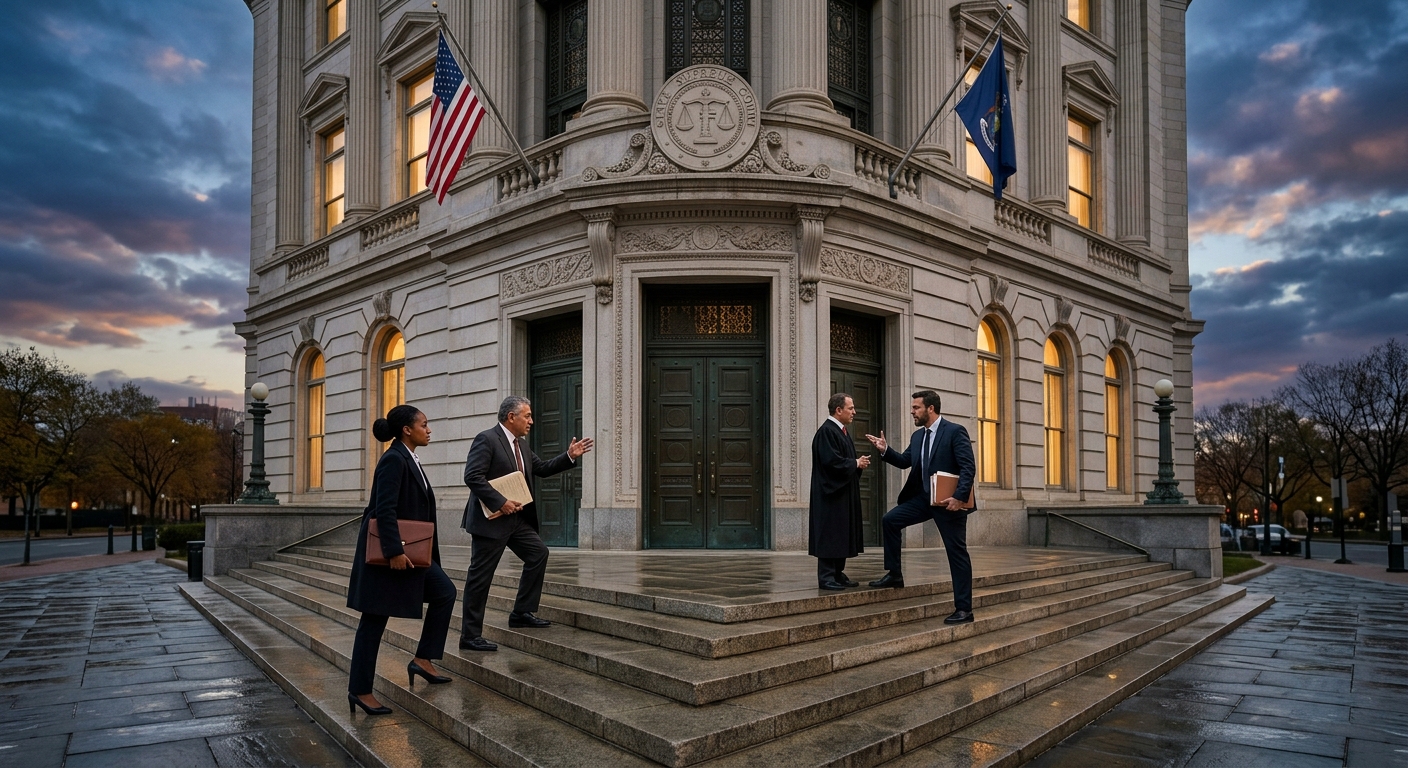
The United States is currently undergoing one of the most significant realignments of legal and political power in its modern history. For nearly half a century, the federal judiciary—culminating in the U.S. Supreme Court—was widely regarded by the public as the primary guarantor of fundamental civil liberties. However, the landmark Dobbs v. Jackson Women’s Health Organization decision in 2022 systematically dismantled that assumption, stripping away the federal constitutional right to abortion and explicitly returning the authority to regulate bodily autonomy to individual states. This seismic shift has abruptly transformed state supreme courts from relatively obscure appellate bodies into the ultimate, high-stakes battlegrounds for democracy and human rights.
As the nation grapples with these cascading legal changes, the spotlight has intensely focused on state-level judicial elections. Historically treated as low-profile, down-ballot contests that generated minimal voter interest or campaign spending, state supreme court races are now widely recognized as the critical frontlines for safeguarding reproductive freedom and ensuring fair democratic representation. This article delves into the unprecedented ways in which grassroots mobilization, the defense of medical privacy, and the fight for un-gerrymandered electoral maps are converging to reshape the American political landscape, drawing critical lessons from the recent surge in off-year voter participation and strategic civic engagement.
The Reawakening of Archaic Laws Post-Dobbs
When the federal scaffolding that protected abortion access collapsed, multiple states experienced an immediate and chaotic regression as trigger laws or centuries-old dormant bans automatically roared back to life. In several regions, statutes drafted during the mid-nineteenth century—long before the advent of modern medicine, women’s suffrage, or the abolition of slavery—were suddenly thrust upon contemporary healthcare systems. A prominent example of this legal whiplash occurred with an 1849 statute in the Midwest, which effectively criminalized the provision of abortion care, casting a shadow of profound uncertainty over medical professionals.
According to comprehensive research published by the Collaborative for Reproductive Equity at the University of Wisconsin-Madison, the sudden enforcement and looming threat of such archaic laws made it exceedingly difficult, and in many cases impossible, for physicians to deliver timely, comprehensive, and evidence-based care to pregnant patients facing medical emergencies. The revival of laws drafted by all-male legislatures prior to the Civil War highlighted a jarring and dangerous disconnect between contemporary societal values and the punitive legal frameworks dictating modern medical protocols.
This abrupt shock to the healthcare infrastructure catalyzed a profound realization among the electorate: the interpretation of their state constitution, and the specific justices elected or appointed to interpret it, held direct, life-or-death consequences. The fight to protect bodily autonomy was no longer a theoretical debate over abstract judicial philosophies; it had morphed into an urgent, grassroots struggle to protect access to basic, life-saving healthcare services. Furthermore, legal scholars have noted that this phenomenon is not isolated. Analysis from the Santa Clara Law Digital Commons emphasizes that in the wake of the Dobbs decision, state supreme courts across the nation are being forced to navigate a deluge of complex challenges regarding state-level constitutional protections and demand-decreasing legislative restrictions.
The Inseparable Link Between Fair Maps and Healthcare
To fully understand the sudden, intense focus on state judicial elections, one must examine the structural democratic barriers that have long insulated partisan state legislatures from the actual will of their constituents. In many states, aggressive and highly sophisticated partisan gerrymandering has created a political environment where legislative majorities are effectively immune to shifts in public opinion. By utilizing tactics such as packing—concentrating the opposing party’s voters into a few districts—and cracking—diluting them across many districts—politicians have engineered electoral maps that guarantee their continued dominance, regardless of statewide vote totals. When electoral maps are severely distorted in this manner, the fundamental mechanism of representative democracy completely breaks down.
This structural democratic deficit is intrinsically and inextricably tied to the loss of reproductive freedoms and other civil liberties. If a state’s population overwhelmingly supports abortion access, but the state is governed by a gerrymandered, unaccountable legislative supermajority that vehemently opposes it, traditional legislative advocacy hits a brick wall. Citizens cannot simply vote them out because the district lines have been drawn to prevent exactly that outcome.
Consequently, the power to overturn unconstitutional medical bans or demand the redrawing of heavily skewed legislative maps shifts entirely to the state supreme court. The battle for bodily autonomy cannot, therefore, be divorced from the battle for fair democratic representation. Voting rights and reproductive justice are essentially two sides of the same coin. Without a fair and equitable democratic process, securing comprehensive civil liberties remains an arduous uphill battle against an entrenched and structurally protected political minority.
Judicial Elections in the National Spotlight
The public’s realization of this deep interconnectedness between fair maps and fundamental rights has radically transformed the nature of state judicial elections. What were once sleepy, low-budget campaigns held in the political off-season have evolved into monumental, highly funded clashes of political will that command national attention.
The sheer scale and speed of this transformation are staggering. According to a detailed analysis by the Brennan Center for Justice covering the 2023-24 election cycle, at least $157.3 million was poured into state supreme court races across thirty-five states. This represents a massive thirty-five percent increase over any prior cycle of judicial elections, shattering previous spending records. This unprecedented influx of financial resources and media attention underscores the newly recognized gravity of these state-level appellate courts.
Outside interest groups, national political action committees, and grassroots organizations alike now clearly recognize that capturing or maintaining a majority on a state supreme court can definitively dictate the trajectory of a state’s civil rights landscape for a decade or more. The electorate, too, has decisively awakened to this new reality. Voters are increasingly viewing judicial candidates not merely as impartial umpires of the law, but as the absolute final safeguard against extreme legislative overreach. This paradigm shift means that modern judicial campaigns now explicitly center around high-stakes, visceral issues like reproductive rights, environmental protections, and democratic integrity, driving voter turnout models that completely defy historical norms for off-year, non-presidential elections.
Grassroots Organizing as a Blueprint for the Nation
The shifting dynamics and record-breaking turnout of recent state supreme court elections are driven not merely by an influx of campaign funding, but by relentless, highly strategic, on-the-ground grassroots organizing. The success of pro-democracy and pro-choice movements in recent election cycles relies heavily on the formation of broad, intersectional coalitions that bridge the traditional gaps between single-issue advocacy groups.
Organizations dedicated to environmental protection, organized labor, racial justice, LGBTQ+ rights, and healthcare access have increasingly begun to pool their resources, data, and volunteer bases. They recognize a shared, fundamental truth: an independent and fair-minded state judiciary is an absolute prerequisite for advancing any of their respective legislative agendas. This intersectional organizing approach has proven remarkably effective at mobilizing key demographics that typically sit out off-year or spring elections—particularly young voters, college students, suburban women, and marginalized communities of color.
By framing judicial elections not as dry, abstract legal contests, but as direct, immediate referendums on abortion access and the right to vote, organizers have successfully translated public outrage over the loss of federal protections into sustained, actionable political momentum. The localized nature of this organizing is critical. Strategies relying on neighbor-to-neighbor canvassing, relational organizing where volunteers leverage their personal networks, and targeted digital outreach have created a robust blueprint that other states are eagerly studying and adapting. It definitively demonstrates that when the stakes are clearly articulated and connected to voters’ daily lives, the electorate will turn out in massive numbers to defend their fundamental rights.
Looking Ahead: The Ripple Effects on State-Level Civil Rights
The repercussions of these high-stakes judicial contests extend far beyond the geographic borders of any single state. They signal a profound and likely permanent realignment in American civil rights strategy. As research from the Brookings Institution suggests, the overarching fight to secure and expand abortion rights is increasingly becoming a decentralized, state-by-state endeavor rather than a federally focused campaign.
A decisive electoral victory for reproductive rights and democratic fairness in one state supreme court provides crucial momentum, strategic insights, and innovative legal precedents that can be cited and replicated by advocates in neighboring jurisdictions. Furthermore, the concerted push for fair electoral maps—which are often ultimately adjudicated by these very same state supreme courts—holds the transformative potential to un-gerrymander heavily skewed state legislatures.
When a state supreme court mandates the drawing of fair, non-partisan maps, it effectively dismantles the anti-democratic structures that allowed extreme, minority-supported laws to be passed in the first place. This creates a powerful, virtuous cycle of democratic restoration: fair maps lead to more competitive elections and more representative legislatures, which in turn pass laws that accurately reflect the true will of the people. This process structurally solidifies state-level protections for bodily autonomy, voting rights, and other fundamental liberties, proving that state courts are the most vital arenas for the future of American democracy.
Actionable Strategies for Civic Engagement
To capitalize on the momentum generated by recent judicial elections and continue safeguarding fundamental rights, sustained civic engagement is essential. The following strategies provide a roadmap for individuals and communities looking to make a tangible impact:
- Prioritize Down-Ballot Races: Local and state-level elections—particularly for judges, prosecutors, and school boards—often have a more immediate impact on daily life and civil liberties than national contests. Educate yourself and others on these candidates.
- Support Intersectional Coalitions: Recognize that voting rights, reproductive justice, and economic equality are interconnected. Donate time or resources to organizations that build broad, multi-issue alliances.
- Engage in Relational Organizing: The most effective way to mobilize voters is through personal networks. Talk to friends, family, and colleagues about the stakes of upcoming state elections and help them formulate a concrete plan to vote.
- Advocate for Structural Reform: Support ballot initiatives and legislative efforts aimed at ending partisan gerrymandering, expanding early voting, and protecting the integrity of the electoral process.
- Stay Informed on State Constitutions: State constitutions often provide broader protections for civil liberties than the federal Constitution. Understanding these unique, state-level rights is crucial for effective political advocacy.
Frequently Asked Questions (FAQ)
What is a trigger law and how does it relate to abortion access?
A trigger law is legislation passed with the specific intent that it will go into effect automatically if a certain legal event occurs. In the context of healthcare, many states passed laws banning abortion that were designed to trigger immediately if the federal protections of Roe v. Wade were ever overturned, leading to sudden shifts in medical legality.
How do state supreme courts influence reproductive rights?
Following the U.S. Supreme Court’s decision in Dobbs v. Jackson, the legality of abortion fell entirely to individual states. State supreme courts are the final authority on interpreting their respective state constitutions. They determine whether state-level laws banning or restricting medical procedures violate state constitutional rights to privacy, liberty, or equal protection.
What is partisan gerrymandering and why does it matter?
Partisan gerrymandering is the practice of drawing electoral district boundaries to disproportionately favor one political party. This structural imbalance often prevents the passage of legislation that reflects the will of the majority, including laws protecting reproductive freedoms, by insulating politicians from electoral accountability.
Why have judicial elections become so expensive recently?
Because state supreme courts now have the ultimate say over highly contentious issues like abortion access and voting maps, political parties and outside interest groups view controlling these courts as absolutely essential. This dynamic has led to a massive influx of campaign spending, transforming traditionally quiet judicial races into multimillion-dollar battlegrounds.
Can state constitutions offer more rights than the U.S. Constitution?
Yes. Under the legal doctrine of independent and adequate state grounds, state constitutions can, and often do, provide broader protections for individual liberties than the federal Constitution. State supreme courts are directly responsible for interpreting and upholding these additional protections.
References
- The Politics of Judicial Elections 2023-24 — Brennan Center for Justice. 2026-02-26. https://www.brennancenter.org/our-work/research-reports/politics-judicial-elections-2023-24
- CORE research: Wisconsin’s 1849 abortion law harmed patients and doctors post-Dobbs — University of Wisconsin-Madison. 2024-12-13. https://core.wisc.edu/2024/12/13/core-research-wisconsins-1849-abortion-law-harmed-patients-and-doctors-post-dobbs/
- STATE CONSTITUTIONS AND STATE ABORTION LAWS AFTER DOBBS — Santa Clara Law Digital Commons. 2024-09-03. https://digitalcommons.law.scu.edu/cgi/viewcontent.cgi?article=3061&context=lawreview
- The right to abortion will be secured before the end of the decade — Brookings Institution. 2023-04-05. https://www.brookings.edu/articles/the-right-to-abortion-will-be-secured-before-the-end-of-the-decade/
Similar Articles








Read full bio of medha deb


