
State Primaries: The New Frontline for Healthcare Rights
Why local primary elections decide the future of your healthcare access.
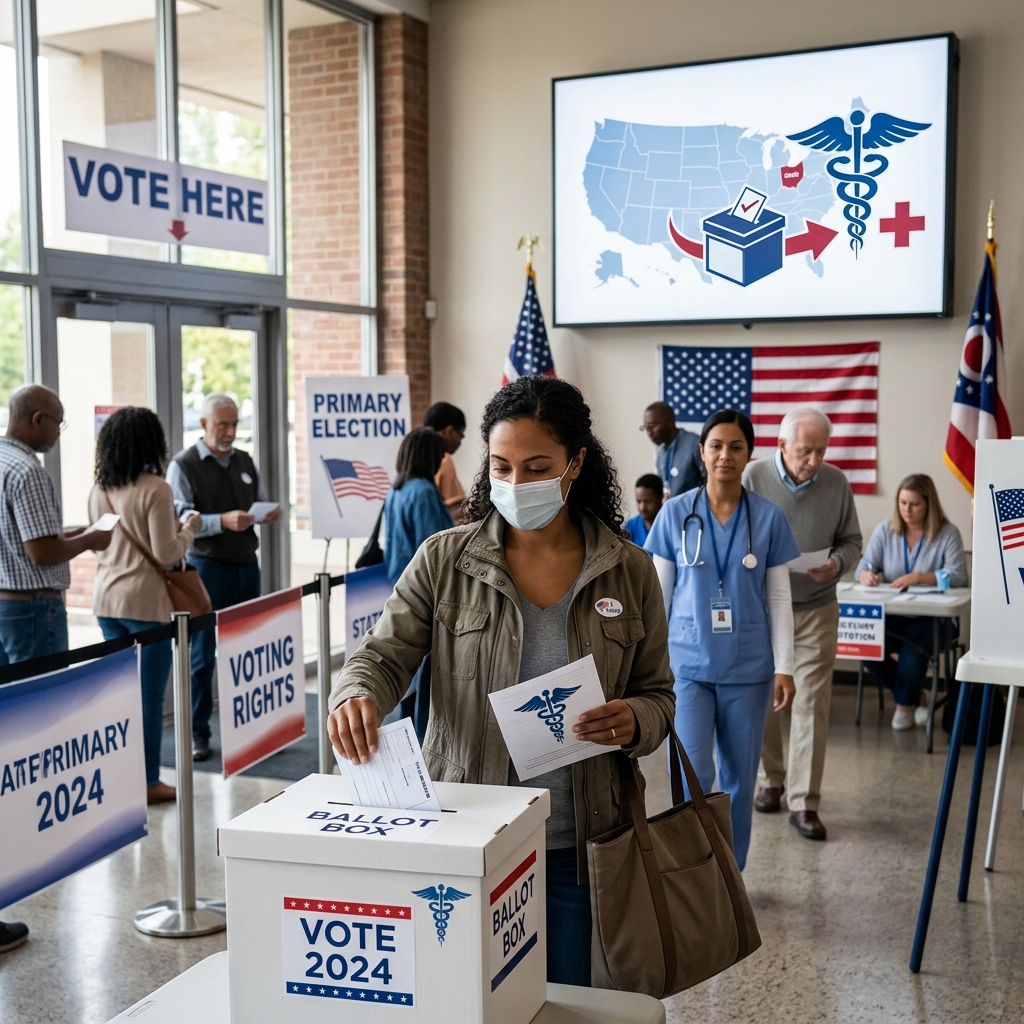
The landscape of medical privacy and bodily autonomy in the United States underwent a seismic shift following the dismantling of federal protections for reproductive rights. As the dust settled, the battleground rapidly migrated from the federal judiciary to state legislative chambers. This decentralization of civil liberties means that state-level lawmakers now hold unprecedented power over access to essential medical services. While presidential and congressional races traditionally dominate headlines and capture the lion’s share of public attention, the most consequential decisions regarding healthcare access are increasingly determined in local arenas.
In an era where federal mandates no longer provide a safety net, the responsibility of defining healthcare parameters has been entirely passed down to the states. This profound shift has activated thousands of local advocates who previously focused their attention solely on Washington, D.C. They now recognize that the state capitol is where the most tangible, immediate changes to medical accessibility are occurring. It is a sobering realization that rights previously thought to be permanently enshrined in the national legal framework can be so swiftly unraveled, requiring an entirely new strategy of civic defense.
Within this new reality, state primary elections have emerged as the quiet frontlines of the fight for reproductive freedom. Because of extreme partisan sorting and district lines drawn to heavily favor one political party over another, the general election in many legislative districts is often a mere formality. Instead, the true contest—and the moment where policy direction is firmly established—occurs during the primary. Understanding the mechanics of these early elections is crucial for anyone invested in the future of healthcare equity, particularly in states functioning as critical access points for patients traveling from regions with severe medical bans.
The Post-Roe Ripple Effect: Why State Governance is Now the Ultimate Decider
For nearly half a century, federal precedent provided a baseline of reproductive healthcare access across the country. The removal of that national floor fractured the American healthcare system into a complex patchwork of localized laws, where a patient’s geographic location dictates their fundamental rights. This fragmentation places enormous legislative responsibility squarely on the shoulders of state representatives, senators, and governors, empowering them to either protect or dismantle clinical infrastructure.
Recent data indicates that despite the introduction of total bans in numerous regions, the overall demand for clinical abortion care has not decreased. In fact, estimates for the year 2025 show that over 1.1 million clinician-provided abortions took place across the United States, a figure that remains largely stable compared to previous years but relies heavily on shifting mechanisms like telehealth and interstate travel. Because conservative states have aggressively moved to criminalize healthcare providers and even out-of-state travel for minors seeking care, protective states must proactively legislate to counteract these efforts. State lawmakers are tasked with drafting complex shield laws, expanding Medicaid funding, and fortifying state constitutions to withstand judicial scrutiny. The individuals elected to champion or oppose these measures are selected directly during the primary election cycles.
Demystifying the Primary Election: The True Battlefield for Partisan Districts
To comprehend why primary elections hold such disproportionate weight, one must examine the structural realities of modern American politics. Through a combination of demographic self-sorting—where individuals increasingly live near like-minded neighbors—and strategic gerrymandering, the vast majority of state legislative districts are overwhelmingly “safe” for either the Democratic or Republican party. In a safely blue district, whoever wins the Democratic primary is virtually guaranteed to win the general election in November. The same holds true for Republican primaries in deeply red districts. The general election simply rubber-stamps the primary’s outcome.
When looking at the broader historical context, midterm and primary elections have notoriously struggled to capture the public imagination. Presidential races possess a certain gravitational pull, dominating airwaves and social media algorithms for months on end. However, the downstream effects of ignoring local primaries are severe. Local officials control state budgets, confirm state judicial nominees, and draw the very district maps that shape future elections. By abdicating their voice in the primary process, voters effectively hand over the keys to their state’s infrastructure to a vocal, highly organized minority.
Despite their importance, primary elections suffer from staggeringly low voter participation. According to nonpartisan analyses of recent election cycles, only about 20% of eligible voters nationwide participate in these early contests. This severe drop-off in civic engagement creates an environment where a remarkably small, often highly ideological subset of the electorate determines the candidate. When moderate or pragmatic voters stay home, candidates are incentivized to appeal exclusively to the most extreme fringes of their party base to secure the nomination. On issues of reproductive rights, this dynamic frequently results in the election of officials who are unwilling to compromise, pushing state legislatures toward either total criminalization or uncompromising protection.
The Disproportionate Power of the Primary Voter
Because so few people cast ballots in these preliminary races, individual votes carry a mathematically heavier impact. A local primary for a state senate seat might be decided by a margin of only a few hundred votes. Those few hundred voters essentially dictate the healthcare policy for hundreds of thousands of residents. For advocacy groups and healthcare providers, mobilizing voters for the primary is often more critical than general election campaigning. A candidate who views reproductive healthcare as a non-negotiable human right can only legislate if they survive the gauntlet of the primary. Therefore, the fight to maintain safe haven states begins months before November even approaches.
New Mexico’s Position as a Regional Lifeline for Healthcare
When analyzing the intersection of primary elections and medical access, the state of New Mexico serves as a prime geographic and political case study. Bordering Texas and Oklahoma—states that have implemented some of the most draconian abortion bans in the industrialized world—New Mexico has organically transformed into a vital sanctuary for reproductive healthcare. Clinics in the state have absorbed massive influxes of out-of-state patients desperate for care they are legally prohibited from receiving in their own communities.
The geography of healthcare access has never been more starkly divided. New Mexico, with its vast landscapes and specific geopolitical positioning, finds itself at the epicenter of this national fracture. The state’s clinics have reported staggering increases in out-of-state patient volumes, straining local resources but providing an absolutely essential service to those fleeing restrictive regimes. This influx is not just a statistical anomaly; it represents hundreds of thousands of individual stories of medical distress, forced travel, and financial hardship. If New Mexico were to fall to anti-healthcare legislative efforts, the ripple effect would be catastrophic for the entire Southwest, creating a sprawling healthcare desert spanning thousands of miles.
However, this safe haven status is not permanently guaranteed. While the state currently has a progressive governing coalition that supports reproductive freedom, local conservative municipalities have aggressively attempted to pass restrictive ordinances. These local measures often rely on antiquated statutes, such as the 1873 Comstock Act, in an attempt to ban the mailing of abortion medications or to zone reproductive clinics out of existence. State constitutional protections are frequently the only bulwark against these local incursions. The ongoing legal and legislative battles emphasize that maintaining protections requires constant vigilance at the ballot box. If the composition of the state legislature were to shift due to unengaged primary voters, New Mexico’s protective laws could be swiftly dismantled.
Key Legislative Tools Protecting Providers and Patients
When voters participate in state primaries, they are selecting the architects of localized healthcare policy. Lawmakers in protective states utilize several specific legal mechanisms to ensure that care remains accessible and that medical professionals are protected from retaliatory litigation originating outside their borders.
- Comprehensive Shield Laws: These critical statutes are designed to protect doctors, nurses, and pharmacists in safe haven states from facing civil or criminal liability initiated by states where abortion is banned. For example, New Mexico’s Reproductive and Gender-Affirming Health Care Protection Act restricts state agencies from complying with out-of-state subpoenas related to legally protected medical care.
- Data Privacy Protections: To prevent anti-abortion states from tracking their residents, forward-thinking state legislatures are enacting digital privacy laws that prohibit tech companies and healthcare networks from sharing location data or electronic medical records pertaining to reproductive care.
- Clinic Funding and Infrastructure: Protective legislation often includes state-level funding to assist clinics with security upgrades and to expand telehealth infrastructure, ensuring that the surge of out-of-state patients does not degrade the quality of care available to local residents.
Understanding these mechanisms is vital because primary candidates frequently differ on the nuances of implementation. While multiple candidates from the same political party may generally support healthcare access, their willingness to aggressively prioritize state funding or confront out-of-state litigation often varies significantly, making the primary choice incredibly consequential.
| Policy Mechanism | Safe Haven States (e.g., New Mexico) | Restrictive States (e.g., Texas) |
|---|---|---|
| Provider Liability | Enacts shield laws to protect medical professionals from out-of-state prosecution and civil suits. | Implements severe felony charges and massive civil fines for clinicians performing abortions. |
| Patient Privacy | Restricts the sharing of electronic medical records related to reproductive or gender-affirming care. | Empowers private citizens to file lawsuits and seek patient records to identify those receiving care. |
| Telehealth Access | Permits the prescription and mailing of medication abortion following remote consultations. | Bans the use of telemedicine for reproductive services and criminalizes the mailing of medications. |
| Funding Initiatives | Allocates state budget surplus to expand clinic infrastructure and support logistical patient needs. | Defunds any organization associated with reproductive counseling, including broad family planning centers. |
Beyond the Top of the Ticket: How Voters Can Take Action
The realization that reproductive rights are heavily dependent on low-turnout local races should serve as a powerful catalyst for civic action. Voting strictly in presidential election years is no longer sufficient to protect fundamental liberties. Citizens must adopt a holistic approach to their civic duties, prioritizing down-ballot races with the same fervor historically reserved for national campaigns.
Preparation is the most effective tool a voter possesses. Before entering the voting booth for a primary election, individuals should rigorously research the legislative history and public statements of state-level candidates. Distinguishing between candidates who offer vague platitudes about healthcare and those who have authored or sponsored concrete protective legislation is critical. Furthermore, paying attention to endorsements from trusted, nonpartisan reproductive health organizations can provide a clear indication of a candidate’s genuine commitment to the issue. Engaging with local politics—by attending town halls, directly questioning candidates on their specific healthcare platforms, and encouraging neighbors to vote in the primary—can radically alter the political landscape. By recognizing the primary election as the ultimate arbiter of state law, voters can effectively safeguard the medical rights of their communities for generations to come.
Frequently Asked Questions (FAQs)
Why are primary elections sometimes considered more important than general elections?
Due to political gerrymandering and demographic trends, many legislative districts heavily favor one political party. In these non-competitive districts, the winner of the dominant party’s primary faces no serious opposition in the general election, meaning the primary effectively decides who will hold the office and shape policy.
What exactly does a “shield law” do in the context of reproductive healthcare?
A shield law is state-level legislation designed to protect healthcare providers, patients, and facilitators from out-of-state legal attacks. If a state where abortion is banned attempts to prosecute a resident for traveling to a safe haven state for care, the shield law prevents the safe haven state’s law enforcement and courts from cooperating with subpoenas, extraditions, or investigations related to that legally provided care.
How does low voter turnout in primaries affect healthcare laws?
When turnout is low, the outcome is decided by a small fraction of highly motivated, often ideologically extreme voters. This can lead to the nomination of candidates who refuse to compromise, resulting in polarized legislation—such as total bans without medical exceptions—rather than nuanced policies that reflect the broader public’s views on healthcare.
What constitutes a “safe haven” or “sanctuary” state?
A safe haven state is a jurisdiction that has not only kept abortion and other reproductive healthcare services legal but has also taken proactive legislative steps to protect access. This includes enacting shield laws, securing data privacy for patients, expanding Medicaid coverage for reproductive care, and explicitly protecting these rights within the state constitution.
Can local city or county ordinances override state protections for medical care?
Generally, state law preempts local ordinances. However, in states like New Mexico, conservative municipalities have attempted to bypass state protections by passing local bans based on interpretations of old federal laws. These local ordinances create legal confusion and hostility for clinics until they are formally challenged and struck down in state courts.
References
- Abortion in the United States Fact Sheet — Guttmacher Institute. 2026-03-24. https://www.guttmacher.org/fact-sheet/induced-abortion-united-states
- Fiscal Impact Report: Senate Bill 13 (Reproductive and Gender-Affirming Health Care Protection Act) — New Mexico Legislature. 2023-03-09. https://www.nmlegis.gov/Sessions/23%20Regular/firs/SB0013.PDF
- New Digital Tool Provides State-by-State Analysis of High Court Rulings on Abortion — Center for Reproductive Rights. 2024-01-30. https://reproductiverights.org/state-constitutions-abortion-rights-map/
- 2022 Primary Turnout: Trends and Lessons for Boosting Participation — Bipartisan Policy Center. 2023-04-01. https://bipartisanpolicy.org/report/2022-primary-turnout/
Similar Articles








Read full bio of Sneha Tete


