
When Major Insurers Scale Back: Understanding State Farm’s Florida Property Shift
What homeowners should know when a large insurer reduces or ends property coverage and how to protect yourself.
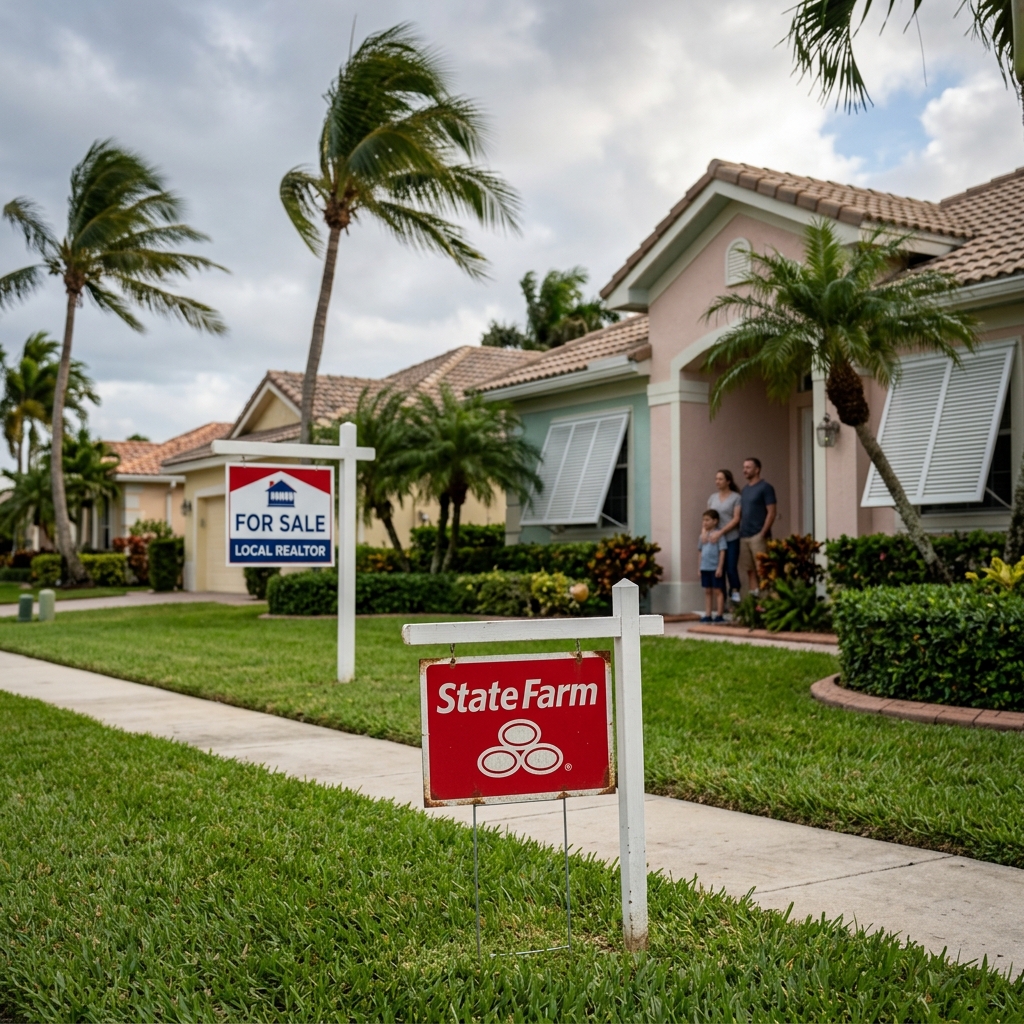
Florida homeowners have faced repeated waves of change in the property insurance market, including decisions by large insurers like State Farm to reduce or restructure their presence in the state. These moves can feel sudden and alarming, but they usually follow a clear regulatory process and reflect deeper issues in Florida’s risk environment and insurance economics. This article explains what happens when a major insurer significantly cuts back property coverage, what it has meant in the case of State Farm’s Florida operations, and how homeowners can respond proactively.
Florida’s Property Insurance Landscape in Context
Florida is one of the most challenging property insurance markets in the United States. The combination of hurricane exposure, high rebuilding costs, and litigation activity has repeatedly strained insurers’ balance sheets and reinsurance arrangements. As a result, insurers may periodically seek rate increases, tighten underwriting, or reduce the number of policies they write.
- High catastrophe risk: Florida’s coastal geography and hurricane history create significant potential losses, which drive up premiums and reinsurance costs.
- Concentrated exposures: Many insurers carry a large portfolio of policies in relatively small geographic areas, so a single storm can affect a large share of their book.
- Regulatory oversight: The Florida Office of Insurance Regulation (OIR) reviews withdrawal plans, rate filings, and market conduct to balance insurer solvency with consumer protection.
Against this backdrop, State Farm’s Florida property decisions are part of a broader pattern of insurers managing risk by adjusting where and how they provide coverage.
State Farm Florida: Subsidiary, Not Full Exit
It is important to distinguish between State Farm’s national brand and its Florida-specific property entity. State Farm Florida Insurance Company is a separate subsidiary created to write property business in the state. That means decisions about Florida property coverage do not necessarily reflect State Farm’s auto, life, or property operations elsewhere.
| Aspect | National State Farm Entities | State Farm Florida Insurance Company |
|---|---|---|
| Scope of business | Multi-state auto, property, life, and other lines | Florida-focused property insurance subsidiary |
| Regulatory oversight | Various state regulators across the U.S. | Florida Office of Insurance Regulation (OIR) |
| Market decisions | Influenced by national risk and capital | Tailored to Florida risk, litigation, and reinsurance costs |
| Exit vs. exposure reduction | Typically maintains presence nationwide | Has pursued plans to reduce property policy counts rather than fully depart the state |
According to regulatory records and subsequent market analysis, State Farm Florida at one point filed a plan to discontinue or significantly reduce its property insurance business over time, leading to negotiated limits on how many policies could be nonrenewed within a given period. Even after implementing reductions, it remained one of the larger private property insurers in Florida.
Why Large Insurers Reduce Property Exposure
When a large insurer scales back property coverage, the move typically reflects a combination of financial, operational, and regulatory factors. For Florida, the most common drivers include:
- Loss experience: Repeated storm losses, roof claims, and litigation can create sustained underwriting losses, prompting insurers to rebalance their portfolios.
- Reinsurance costs: Insurers rely heavily on global reinsurance to manage catastrophe risk; rising reinsurance prices can make certain books of business unaffordable.
- Regulatory rate constraints: If requested rate increases are partially denied or delayed, insurers may view scaling back as the only viable way to stay solvent.
- Capital management: Insurers must maintain minimum capital levels; reducing exposure in high-risk zones can improve solvency metrics and ratings.
In many cases, regulators and insurers negotiate “orderly withdrawal” or “exposure reduction” plans rather than abrupt departures. For State Farm Florida, consent orders allowed a specified number of policy nonrenewals over defined periods, while also approving rate changes across certain homeowner lines.
What Nonrenewal Means for Policyholders
For individual homeowners, the practical impact of a large insurer cutting back is most visible through nonrenewal notices. A nonrenewal means the insurer will not offer to renew the policy at the end of the current term; this is different from cancellation, which ends coverage mid-term.
Typical characteristics of nonrenewal in this context include:
- Advance notice: Florida law requires insurers to provide written notice of nonrenewal well before the policy expiration, giving homeowners time to seek replacement coverage.
- Portfolio-based decisions: Nonrenewals may target certain geographic areas, construction types, or risk profiles, but in large-scale reductions they often follow a numeric cap set by consent orders.
- Agent involvement: Insurers such as State Farm often allow or encourage their agents to help nonrenewed policyholders find coverage with other insurers that the agents represent.
- Access to market assistance: If agents cannot place the risk elsewhere, consumers may be directed to the state’s Market Assistance Plan or to Citizens Property Insurance, Florida’s insurer of last resort.
Nonrenewal can be unsettling, but it does not mean a homeowner is uninsurable. It signals that one insurer has chosen, for its own risk and capital reasons, not to continue that policy. In Florida, alternative carriers and residual market mechanisms exist to help fill those gaps.
How Florida Homeowners Can Respond
If you receive a notice that your property policy with a major carrier is being nonrenewed, there are concrete steps you can take to protect your home and avoid lapses in coverage.
1. Confirm Your Timeline and Current Protections
- Review the nonrenewal letter carefully to identify the exact policy end date.
- Check your current coverage limits, deductibles, and endorsements so you know what you need to replicate.
- Confirm whether your mortgage lender has any minimum coverage requirements you must meet.
2. Work with Your Existing Agent
In arrangements like State Farm Florida’s exposure reduction, many agents hold servicing contracts with other insurers and can help you transition to a new carrier.
- Ask your agent which other insurers they represent for homeowners or dwelling coverage.
- Request quotes from multiple carriers to compare price and coverage, not just one alternative.
- Discuss any home improvements (roof replacement, wind mitigation features, updated electrical) that could improve your insurability.
3. Consider Florida-Focused Carriers and Citizens
Analyses of the Florida market highlight several carriers that specialize in Florida homeowners risks, as well as Citizens Property Insurance Corporation, the state-backed insurer of last resort. While carrier availability and appetite change over time, common categories of options include:
- Regional carriers that primarily write Florida homeowners policies.
- Subsidiaries of national brands created specifically for Florida’s risk environment.
- Citizens Property Insurance, which offers coverage when private carriers are unwilling or priced substantially higher than Citizens.
Working with an independent agent or a State Farm agent who can place business with other carriers can help you identify which of these options are currently available for your home’s location and construction type.
4. Use Market Assistance and Official Resources
If traditional channels fail, Florida maintains mechanisms to help consumers locate coverage.
- Florida’s Market Assistance Plan is designed to connect homeowners with participating insurers when they struggle to find coverage in the private market.
- Citizens Property Insurance provides a safety net when there are no affordable private alternatives within defined thresholds.
- Consumers can consult the OIR’s public information, including rate filings and market reports, to better understand which carriers are actively writing policies.
Accessing these resources may require some effort, but they can be critical for homeowners in high-risk or heavily impacted regions.
Implications for Pricing and Coverage Terms
When a large insurer reduces exposure and obtains approval for rate changes, the impact tends to ripple through the broader market. In the State Farm Florida context, regulatory orders have included capped policy reductions alongside rate increases for certain homeowner and condominium unit owner policies.
Homeowners should expect:
- Premium volatility: As insurers adjust their books and reinsurance, premiums may rise, particularly for homes in coastal or litigation-prone areas.
- Higher hurricane deductibles: Many Florida policies feature separate hurricane deductibles, often expressed as a percentage of the dwelling limit.
- Narrower roof and water damage coverage: Insurers have increasingly refined roof and water damage provisions to limit exposure to certain claim types.
- Stricter underwriting: Homes with older roofs, outdated building systems, or proximity to the coast may face more stringent conditions or inspections before coverage is offered.
These changes do not stem only from one company’s decisions; they reflect systemic pressures in Florida’s property risk environment. Understanding them can help homeowners plan for long-term affordability and resilience.
Auto, Renters, and Other Lines: Not the Same Decision
Consumers sometimes assume that decisions about Florida property coverage mean that State Farm or other large insurers have entirely left the state. In reality, many insurers continue to write auto, renters, and other lines even while reducing certain property exposures.
- Auto policies: State Farm actively supports policy management, claims, and cancellation processes for auto coverage nationwide, including Florida.
- Homeowners in other states: State Farm continues to market homeowners insurance outside Florida, subject to local risk and regulation.
- Florida agents: State Farm maintains agency networks in Florida offering multiple lines of insurance.
For consumers, this means that you may still retain other State Farm policies while needing to move your Florida property coverage to a different carrier. It is often possible to keep auto or life coverage with State Farm while moving the homeowners policy elsewhere.
Risk Management Steps for Florida Homeowners
Beyond shopping for replacement coverage, Florida homeowners can take practical steps to make themselves more attractive risks and potentially reduce premiums.
- Maintain the roof: Keeping the roof in good condition and documenting repairs can improve underwriting outcomes.
- Install wind mitigation features: Shutters, reinforced garage doors, and impact-resistant windows can reduce storm risk and potentially qualify for credits.
- Update critical systems: Modern electrical, plumbing, and HVAC systems can lower the likelihood of non-weather losses.
- Secure property documentation: Maintain an inventory of belongings and photos of the home’s condition to streamline future claims.
- Review deductibles and limits regularly: Ensure coverage keeps pace with construction costs and any renovations.
These steps are valuable regardless of which carrier ultimately insures the home. In a high-risk environment like Florida, proactive mitigation is increasingly central to both insurability and affordability.
FAQs: State Farm and Florida Property Insurance Changes
Is State Farm completely gone from Florida?
No. State Farm continues to operate in Florida, including auto and other lines. The changes discussed here involve its Florida property subsidiary, which has reduced exposure rather than fully withdrawing from the state.
What should I do if my State Farm Florida homeowner policy is nonrenewed?
First, note your expiration date and immediately contact your State Farm agent to request quotes from other carriers they represent. If that fails, explore Florida-focused carriers and, if necessary, Citizens Property Insurance or the Market Assistance Plan for last-resort options.
Is a nonrenewal the same as cancellation?
No. Cancellation ends coverage before the policy term expires, often for specific reasons such as nonpayment or misrepresentation. Nonrenewal means the insurer will not offer a new term after the current policy expires, typically with notice provided well in advance.
Will my premiums always go up when a major insurer reduces exposure?
Premiums often rise in stressed markets, especially when reinsurance costs and loss experience are high. However, shopping around, improving the home’s risk profile, and working with knowledgeable agents can sometimes yield comparable or better coverage at competitive prices.
Can I still file a claim on my existing State Farm Florida policy?
Yes. As long as your policy is in force, you can file claims according to its terms. State Farm maintains claims support for home and property policies, including online and phone options.
References
- State Farm Florida and OIR Resolve Withdrawal Request — Radey Law Firm. 2009-12-16. https://www.radeylaw.com/2009/12/16/state-farm-florida-and-oir-resolve-withdrawal-request/
- Homeowners Insurance: Get a Free Quote Today — State Farm. 2024-01-01 (approx. updated). https://www.statefarm.com/insurance/homeowners
- State Farm Homeowners Insurance Florida: Is It Still Available (2026)? — LatentInsure. 2026-04-10. https://www.latentinsure.com/blog/state-farm-homeowners-florida
- How to Cancel Your State Farm Insurance Policy — State Farm. 2023-06-01 (approx. updated). https://www.statefarm.com/customer-care/manage-your-accounts/cancel-my-policy
- Home & Property Claims — State Farm. 2023-10-01 (approx. updated). https://www.statefarm.com/claims/home-and-property
- Florida Insurance Agents Near You — State Farm. 2024-02-01 (approx. updated). https://www.statefarm.com/agent/us/fl
Similar Articles








Read full bio of medha deb




