
Spousal Maintenance in Kentucky: How Courts Decide Support
Learn when Kentucky courts award spousal maintenance, how amounts and duration are set, and what factors may affect your financial support.
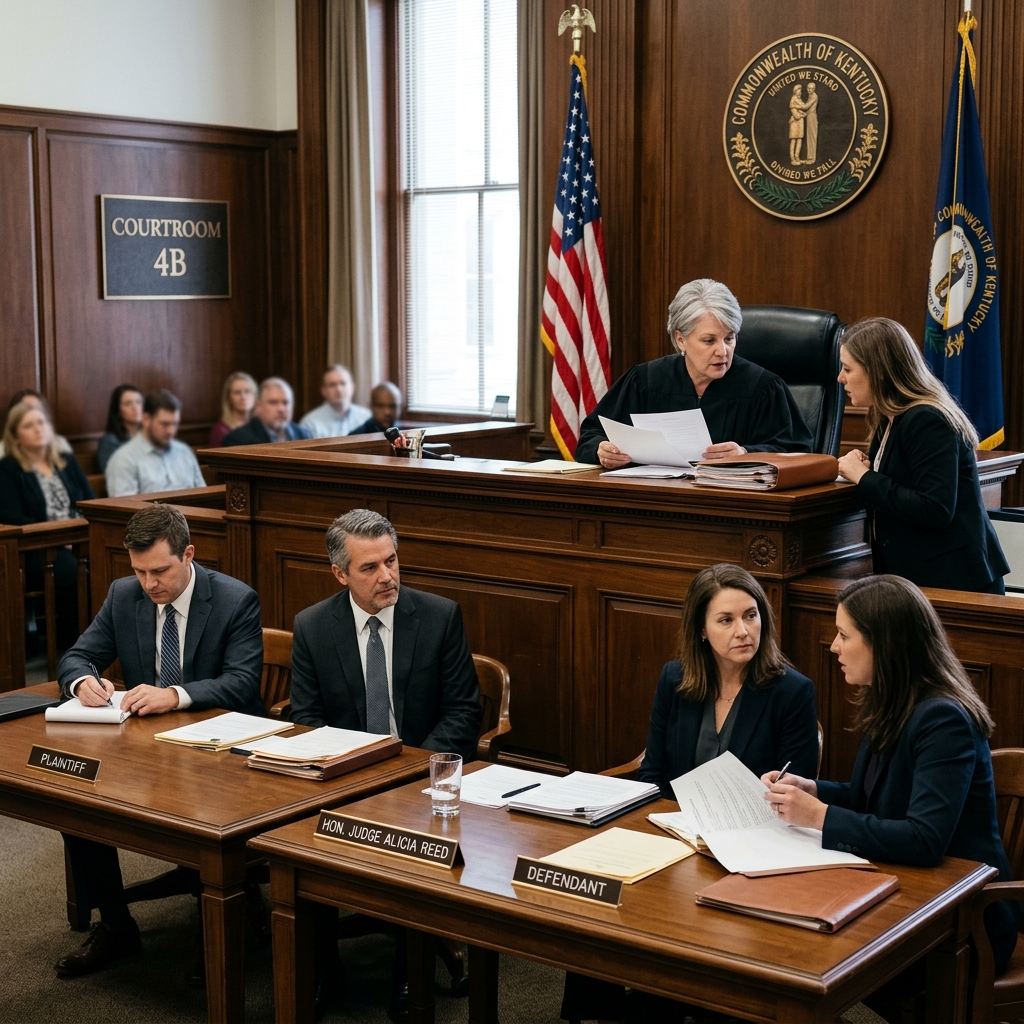
When a marriage ends in Kentucky, one of the most important financial questions is whether one spouse will be required to support the other through spousal maintenance, historically known as alimony. Unlike child support, maintenance is not automatic: a judge must make specific findings under Kentucky law before ordering one spouse to pay ongoing support to the other.
What Is Spousal Maintenance in Kentucky?
Under Kentucky law, spousal maintenance (also called alimony or spousal support) is a court-ordered payment from one former spouse to the other in connection with a divorce, legal separation, or certain post-divorce proceedings. Its purpose is to help a financially dependent spouse meet their reasonable needs, not to punish or reward either party.
Maintenance may be ordered only when the requesting spouse meets the statutory criteria and when the paying spouse has the ability to contribute while still covering their own expenses. Because Kentucky does not use a fixed formula, judges exercise broad discretion in deciding whether maintenance is appropriate, and if so, in what amount and for how long.
- Terminology: Maintenance, alimony, and spousal support all refer to the same concept in Kentucky family law.
- Context: Usually decided during divorce or legal separation, but can sometimes be addressed after a prior divorce decree.
- Goal: Address genuine financial need and support a transition toward self-sufficiency where possible.
Legal Eligibility: The Two-Part Test Under KRS 403.200
Kentucky Revised Statutes (KRS) 403.200 sets out the core legal test a court must apply before awarding maintenance. The judge may grant maintenance only if the spouse seeking support satisfies both of the following requirements:
| Eligibility Requirement | What the Court Looks For |
|---|---|
| Insufficient property | The spouse lacks sufficient assets, including marital property allocated in the divorce, to cover their reasonable living needs. |
| Limited earning ability | The spouse cannot support themselves through appropriate employment, or is caring for a child whose condition or circumstances make it appropriate not to work outside the home. |
Insufficient Property to Meet Reasonable Needs
The first part of the test focuses on whether the requesting spouse has enough property and financial resources to meet their reasonable needs after the divorce. The court will consider:
- Assets awarded in the property division (e.g., home equity, retirement accounts, investments).
- Separate property owned before or outside the marriage.
- Any income streams the spouse already has (such as wages, pensions, or rental income).
- Typical living expenses, including housing, utilities, food, transportation, insurance, and medical costs.
If those resources are not enough to cover a reasonable standard of living—taking into account what was established during the marriage—the spouse may satisfy this first requirement.
Inability to Support Oneself Through Appropriate Employment
The second part of the test addresses whether the spouse can realistically support themselves through appropriate employment or is limited by child-care responsibilities.
A spouse may be considered unable to support themselves if, for example:
- They have been out of the workforce for many years to raise children and lack current, marketable skills.
- They need additional time, education, or training to obtain suitable employment.
- They are physically or mentally unable to work full-time or at a level that covers their expenses.
- They are the custodial parent of a child whose condition or circumstances reasonably require the parent to remain at home.
If the spouse fails either prong of this two-part standard, the court must deny maintenance under KRS 403.200.
How Kentucky Judges Decide Amount and Duration
Once the court finds that the spouse meets the eligibility requirements, it must determine what maintenance order is “just” in light of the couple’s circumstances. Kentucky law does not provide a mathematical formula or set percentage. Instead, KRS 403.200 instructs judges to consider “all relevant factors,” several of which are specifically listed.
Key Factors Courts Consider
- Financial resources of the requesting spouse: including marital property awarded and their ability to meet their own needs.
- Time needed for education or training: how long it will take the spouse to obtain skills for appropriate employment.
- Standard of living during the marriage: what lifestyle the couple maintained while married.
- Length of the marriage: longer marriages often justify longer or more substantial maintenance.
- Age and health of the requesting spouse: including physical and emotional condition.
- Ability of the paying spouse to meet their own needs while paying support.
Judges generally aim to craft an order that balances the dependent spouse’s need with the paying spouse’s capacity, and that supports a path toward self-sufficiency where realistic.
No Fixed Formula: What That Means in Practice
Because Kentucky has no statewide formula for maintenance calculation, two cases with similar incomes can lead to different outcomes depending on the details. Courts look at the whole picture, and the judge’s assessment of fairness plays a significant role. Parties and lawyers often present budgets, earning histories, and expert testimony to help the court understand the financial realities.
Types of Maintenance Commonly Awarded
Although Kentucky statutes do not label specific “types” of maintenance, family law practice in the state typically recognizes several categories, based on timing and purpose.
Temporary (Pendente Lite) Maintenance
Temporary maintenance is support ordered while the divorce or legal separation is still pending. It helps the lower-earning spouse cover immediate living expenses until the court can issue a final judgment. This type of maintenance usually:
- Begins after a motion is filed and the court finds interim need.
- Ends when the divorce decree is entered or replaced by a post-divorce order.
- Is based on short-term cash flow rather than long-term projections.
Rehabilitative or Short-Term Maintenance
Rehabilitative maintenance provides support for a limited period, giving the dependent spouse time to obtain education, job training, or work experience needed to become self-supporting. Courts often favor this approach when:
- The marriage was of moderate length.
- The spouse has realistic prospects of returning to the workforce.
- Additional schooling or training can materially improve earning capacity.
Orders may specify a term tied to the expected duration of a degree program, certification course, or job search.
Long-Term or Ongoing Maintenance
In some cases, the court may award maintenance for a longer or indefinite period, especially when the requesting spouse is older, in poor health, or unlikely to achieve full self-sufficiency. Factors such as a lengthy marriage and significant disparity in earning capacity can support such awards.
Even long-term maintenance, however, may be subject to modification or termination if circumstances change substantially.
Duration and Termination of Maintenance Orders
Maintenance orders specify both the amount and the duration of payments. Kentucky judges have flexibility to set a fixed term, an end date tied to an event, or ongoing support subject to future review.
Statutory Rules on Termination
Under KRS 403.250, unless the parties agree otherwise in writing or the decree explicitly provides a different rule, the obligation to pay future maintenance automatically ends upon the death of either party. Many orders and agreements also address other terminating events, such as remarriage of the recipient, although that specific rule is often set by case law or contract rather than statute.
Modification of Existing Maintenance Orders
Kentucky law allows either spouse to ask the court to change or end a maintenance order in certain circumstances. A party seeking modification typically must show:
- A substantial change in circumstances.
- That the change is continuing, not merely temporary.
- That keeping the current order in place would be “unconscionable” (extremely unfair) in light of the new situation.
Examples might include serious health issues affecting ability to work, loss of a job that was not voluntary, or a major reduction in income that persists over time. The statutory standard for modification sets a high bar; routine fluctuations in income are usually not enough.
Gender, Residency, and Jurisdiction Considerations
Kentucky law expressly allows either spouse—regardless of gender—to request maintenance if they satisfy the statutory criteria. Modern terminology reflects that both former husbands and former wives can be recipients or payors of support.
In terms of jurisdiction, the party seeking maintenance generally must be a Kentucky resident. In some situations, a Kentucky court can order maintenance from a non-resident spouse, particularly when:
- The spouses lived in Kentucky during the marriage and the action is filed within a specified period after the paying spouse relocates.
- The non-resident spouse consents to the court’s jurisdiction, often by formally appearing in the case or signing a waiver.
These jurisdictional rules ensure that Kentucky courts have legal authority over the parties before issuing binding support orders.
Practical Steps If You Are Seeking Maintenance
Spousal maintenance cases are highly fact-specific. If you believe you may need financial support after divorce in Kentucky, it is important to prepare carefully before filing a request.
Information to Gather
- Income documentation: pay stubs, tax returns, benefit statements, and any proof of earnings for both spouses.
- Asset and debt lists: bank accounts, retirement plans, vehicles, mortgages, loans, and credit card balances.
- Monthly budget: realistic estimates of housing, utilities, food, transportation, medical care, insurance, childcare, and other recurring expenses.
- Work history and skills: resumes, licenses, certifications, and records of past employment.
- Medical or caregiving documentation: records showing health limitations or special needs of a child that affect employability.
Working with a Family Law Attorney
Because Kentucky maintenance law is discretionary, experienced legal counsel can be helpful for presenting your case effectively. A family law attorney can:
- Explain how KRS 403.200 and 403.250 apply to your situation.
- Help you evaluate whether you likely meet the statutory eligibility test.
- Prepare financial affidavits and supporting evidence.
- Negotiate settlement terms that address maintenance alongside property division and child support.
- Advise on modification options if your circumstances change in the future.
Low-income individuals may qualify for assistance or information from legal aid organizations or online justice resources focused on Kentucky families and divorce.
Common Myths About Kentucky Spousal Maintenance
Misinformation about maintenance can lead to unrealistic expectations. Understanding what the law actually says helps people navigate divorce more effectively.
- Myth: “Alimony is guaranteed if my spouse earns more.”
Higher income alone does not guarantee maintenance. The requesting spouse must show both insufficient property and inability to support themselves through appropriate employment. - Myth: “Only women can receive maintenance.”
Under Kentucky law, either spouse may be awarded maintenance if they meet the legal criteria. - Myth: “Maintenance lasts forever.”
Many orders are temporary or rehabilitative, and even long-term support can end upon death, may terminate upon events like remarriage, and can sometimes be modified when circumstances change substantially. - Myth: “The court uses a rigid formula.”
There is no fixed statewide formula; judges consider multiple factors and exercise discretion to reach a fair result.
FAQs About Spousal Maintenance in Kentucky
Is spousal maintenance automatic in Kentucky?
No. Kentucky does not automatically award maintenance in every divorce. The spouse seeking support must prove that they lack sufficient property to meet their reasonable needs and cannot support themselves through appropriate employment or must stay home due to a child’s circumstances.
Does the length of the marriage matter?
Yes. The duration of the marriage is one of the factors judges must consider when setting amount and length of maintenance. Generally, longer marriages may support longer or more significant awards, but each case is evaluated individually.
Can maintenance be changed after the divorce is final?
In many cases, yes. Either spouse can ask the court to modify or terminate maintenance, but they must show a substantial and continuing change of circumstances that makes the existing order unconscionable. If the parties agreed that maintenance would be non-modifiable, the court may be bound by that agreement.
What happens to maintenance if the paying spouse dies?
Unless the parties have agreed otherwise or the decree specifically provides a different rule, the obligation to pay future maintenance terminates upon the death of either spouse under KRS 403.250.
Can a stay-at-home parent qualify for maintenance?
Potentially. A custodial parent who must care for a child whose condition or circumstances make it appropriate not to work outside the home may satisfy the second prong of the eligibility test under KRS 403.200. The court will still examine the parent’s property and overall financial situation.
References
- Can I Get Maintenance From My Spouse in Kentucky? — Super Lawyers. 2023-05-01. https://www.superlawyers.com/resources/family-law/kentucky/can-i-get-maintenance-from-my-spouse-in-kentucky/
- 403.200 Maintenance — Court may grant order for either spouse. — Kentucky Revised Statutes, Kentucky Legislature. 2016-01-01. https://statecodesfiles.justia.com/kentucky/2016/chapter-403/section-.200/section-.200.pdf
- Understanding Spousal Support/Maintenance in Kentucky — Reed Law Group. 2022-11-10. https://www.reedlawgroupky.com/blogs/understanding-spousal-support-maintenance-in-kentucky
- Maintenance (Alimony) — Wolfe & Houlehan. 2021-08-15. https://lexingtonkylawfirm.com/legal-services/family-law/divorce-overview/maintenance-alimony/
- Understanding and Calculating Alimony in Kentucky — DivorceNet (Nolo). 2023-04-05. https://www.divorcenet.com/resources/divorce/spousal-support/understanding-and-calculating-alimony-ke
- 403.250 Modification or termination of provisions for maintenance. — Kentucky Revised Statutes, Kentucky Legislature. 2016-01-01. https://apps.legislature.ky.gov/law/statutes/statute.aspx?id=1462
- Maintenance — Kentucky Justice Online. 2020-09-01. https://www.kyjustice.org/topics/families-children-divorce/maintenance
Similar Articles








Read full bio of Sneha Tete


