
Spotting Utility Impostor Scams Before They Steal Your Money
Learn how fake utility representatives trick consumers, demand bogus payments, and how you can confidently shut them down.
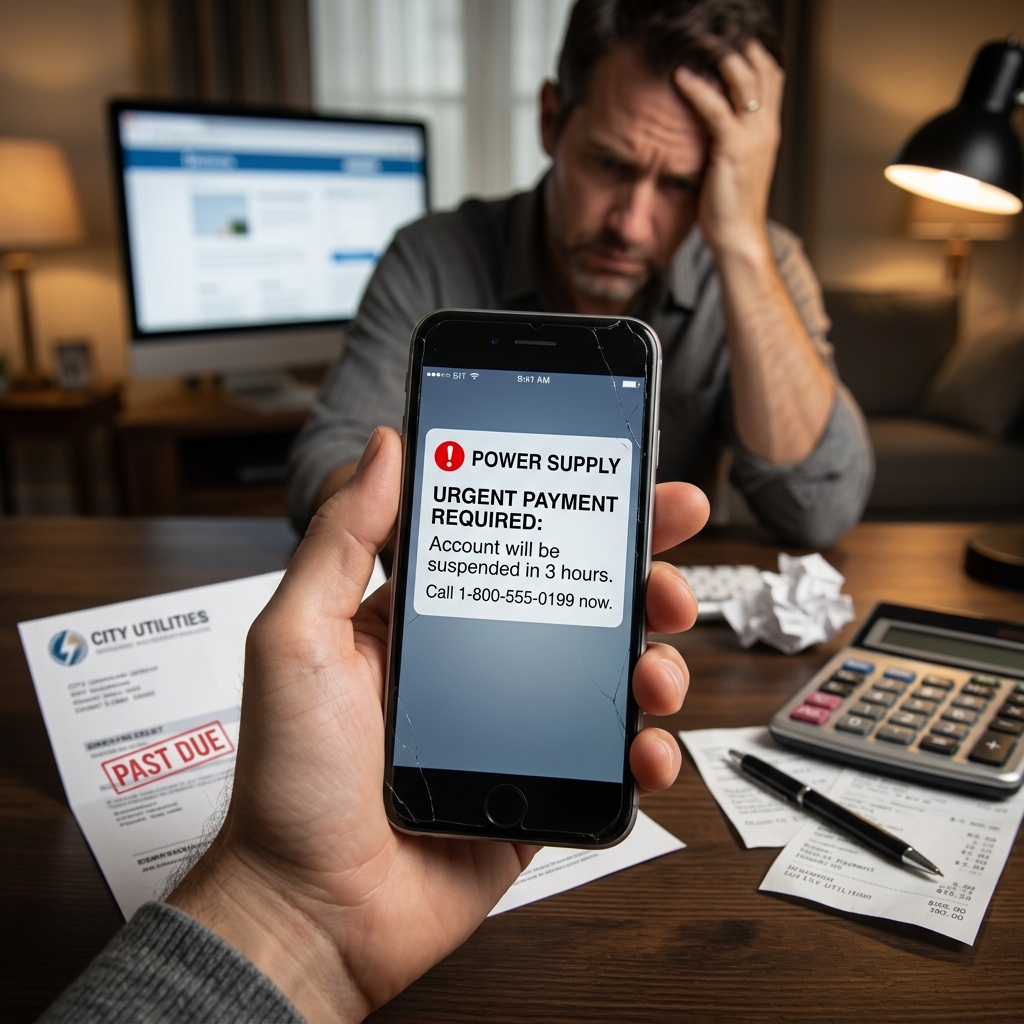
Utility impostor scams target a basic need: keeping your lights on, your heat running, and your water flowing. When someone pretends to be from your gas, electric, or water company, they are counting on fear and urgency to push you into paying immediately. Understanding how these schemes work, what real utilities do and do not do, and how to respond safely can keep your money and personal data out of scammers’ hands.
Why Utility Impostor Scams Are So Effective
Scammers know that most people cannot risk losing essential services, so they design their pitch to feel urgent and threatening. They may claim you are behind on payments, that your account is under investigation, or that a technician is on the way to cut off your service unless you act now. These tactics are effective because they bypass rational thinking and trigger immediate fear.
At the same time, many households interact with their utility company only occasionally. That limited contact makes it easier for impostors to fake authority, mimic customer service language, and use authentic-looking logos or caller ID information. Recognizing that emotional pressure and false familiarity are central to these scams is the first step toward resisting them.
- Fear of shutoff makes people more likely to pay without checking.
- Lack of familiarity with real policies allows scammers to invent fake rules.
- Credible details like account numbers or addresses may be stolen or guessed to sound convincing.
Common Ways Scammers Pretend to Be Your Utility Company
Impostors do not rely on a single method. They adapt to technology and use whatever channels are most likely to reach you quickly. Legitimate utilities may use some of the same channels, but the tone, timing, and payment demands from scammers are very different.
Phone Calls and Text Messages
One of the most frequent approaches is a phone call claiming to be from the billing or collections department. The caller may say your account is overdue and threaten same-day disconnection unless you pay right away. Some scams use automated robocalls; others feature live operators who read scripted threats and respond to questions.
Text messages may include similar threats or links to a supposed payment page. Caller ID and text sender information can be spoofed to resemble a real utility number, which makes these messages look legitimate at first glance.
- Unexpected calls about immediate shutoff if you do not pay now.
- Texts with links to “urgent” payment portals or account verification pages.
- Instructions to call a number you have never seen on your bill.
Emails and Fake Online Portals
Scammers also send emails that resemble official statements or electronic bills. They may copy logos, color schemes, and language from real companies to make the message look familiar. Inside the email, links can lead to a fake website designed to capture your login credentials, card numbers, or bank details.
Fake websites can appear in search results as paid ads when you look up your utility’s name or try to find the payment page. These sites often use lookalike domain names and customer service phone numbers controlled by impostors.
- Emails that request you “verify your account” or “update payment method” immediately.
- Websites reached through ads that are not the domain listed on your bill.
- Pages that push unconventional payment methods like gift cards or cryptocurrency.
In-Person Visits and Door-to-Door Scams
Not all impostor activity happens online or over the phone. Some scammers show up at your door dressed like utility workers, claiming they need to inspect your meter, check for a gas leak, or conduct a free energy audit. Once inside or standing close, they may ask for access to your basement or equipment, request personal details, or pressure you to sign up for a “discount plan” and pay on the spot.
Because many legitimate repairs and inspections are scheduled in advance, unscheduled visits combined with aggressive payment demands are a key warning sign.
- Unannounced visitors who say service will be cut off unless you pay.
- Requests to enter your home without a prior appointment or reported problem.
- Refusal to show official identification or provide a verifiable employee number.
Red Flags That Signal a Utility Scam
Real utility providers follow regulatory rules and internal policies designed to protect customers. They do not suddenly disconnect service without notice, and they offer multiple secure payment options. When a supposed representative breaks from those norms, it is a strong indicator of fraud.
| Suspicious Behavior | Why It’s a Red Flag |
|---|---|
| Threatening same-day shutoff unless you pay immediately | Legitimate utilities provide written notices and timelines before disconnection. |
| Demanding payment only by wire transfer, cryptocurrency, or gift cards | These methods are hard to trace or reverse and are favored by scammers; real companies offer standard billing channels. |
| Insisting you use a phone number or website not listed on your bill | Impostors rely on fake contact details to intercept your payment and data. |
| Unsolicited request for banking or Social Security information | Utilities generally do not ask for sensitive personal data in response to random calls or texts. |
| Pressure to let someone inside your home immediately | Most inspections or repairs are scheduled; high-pressure visits are often scams. |
How Real Utility Companies Handle Bills and Shutoffs
Knowing standard utility practices makes it easier to spot impostors. Genuine providers must comply with state regulations governing how customers are notified about overdue bills, payment options, and service disconnections. While details vary by region and company, several patterns are consistent.
- Advance written notice: Customers behind on payments typically receive mailed or electronic notices, often more than once, before shutoff.
- Multiple payment options: Utilities offer conventional methods such as online portals, phone payment with official numbers, mail-in checks, or in-person payments at authorized locations.
- Customer service verification: Official letters and bills list customer service numbers and web addresses that you can independently verify through known channels such as your bill or the provider’s main website.
- Limited use of unconventional payment methods: Regulated utilities do not require gift cards, cryptocurrency, or peer-to-peer payment apps as the only way to pay.
If someone contacting you contradicts these norms—by refusing normal payment methods, skipping written notices, or demanding sensitive data immediately—treat the interaction as suspicious until you can confirm with the company directly.
Practical Steps to Protect Yourself
When faced with a possible utility impostor, your goal is to slow down the interaction, regain control, and move to channels you trust. The following actions can significantly reduce your risk of losing money or data.
Verify Through Trusted Contact Information
Never rely on phone numbers, email addresses, or website links provided by a caller or in an unsolicited message. Instead, use contact information from your most recent bill or the official company website you type into your browser yourself.
- Hang up on the suspicious call and dial the customer service number printed on your bill.
- Ignore links in texts or emails; manually enter your utility’s known web address.
- If you use a search engine, scroll past ads and choose unpaid results that match the official company name and domain.
Refuse Unconventional Payment Demands
If someone insists that you can only pay with a wire transfer, gift card, cryptocurrency, or a peer-to-peer payment app, you are almost certainly dealing with a scam. These methods are attractive to fraudsters because once money is sent, it is difficult or impossible to recover.
- Decline any request to read gift card numbers over the phone.
- Refuse to send funds through payment apps to individuals you do not know personally.
- Do not share banking details or authorize unusual transfers at the direction of a stranger.
Guard Your Personal Information
Scammers may not only seek payment; they may attempt to harvest personal information they can use for identity theft. Requests for Social Security numbers, full bank account details, driver’s license numbers, or birthdates are warning signs.
- Provide personal data only after you have confirmed you are speaking with your legitimate utility provider.
- Ask why specific information is needed and whether there is an alternative method.
- If in doubt, stop the interaction and call the verified customer service number.
Handle Doorstep Visits with Caution
When someone appears at your home claiming to be a utility representative, remember that you are entitled to proof of identity and genuine need for access.
- Ask to see an official photo ID and compare the logo and company name with your bill.
- Contact the utility’s verified phone number to confirm that a technician was dispatched.
- Do not let anyone into your home if the visit is unscheduled and you cannot confirm their identity.
If You Suspect or Experience a Utility Scam
Responding quickly can limit financial loss and help authorities track patterns of fraud. If you suspect an impostor or realize you have already paid a scammer, take these steps promptly.
- Contact your utility company using a trusted number to report the incident and check your real account status.
- Notify your bank or card issuer if you provided payment details, and ask about dispute options or card replacement.
- Report the scam to the Federal Trade Commission through its official fraud reporting portal, which collects data to support enforcement efforts.
- Inform your state attorney general, who may issue alerts and pursue legal action against organized scam operations.
- Consider informing local law enforcement, especially in cases involving in-person visits or threats.
Beyond official reports, sharing your experience with neighbors, community organizations, and online networks can help others recognize similar tactics before they fall victim.
Frequently Asked Questions About Utility Impostor Scams
1. Can my utility company really disconnect service without warning?
No. In most jurisdictions, utilities must provide notice before disconnection, and there are often protections for vulnerable customers. Sudden threats with no prior written communication are a major red flag.
2. Is it ever legitimate for my utility to ask for payment by gift card or cryptocurrency?
Legitimate utilities do not require gift cards, cryptocurrency, or peer-to-peer payment apps as the only way to pay. Requests focusing exclusively on these methods should be treated as scams.
3. How can I verify a utility email or text is real?
Do not click on links directly. Instead, log into your account via the official website you type into your browser or call the customer service number on your bill. If the message is legitimate, your account information will reflect the issue.
4. What should I do if someone claiming to be a utility worker is at my door?
Ask for official identification, do not allow entry until you have independently confirmed the visit with your utility, and decline any requests for immediate payment. If you feel unsafe, you can refuse the visit and contact local authorities.
5. I already paid someone I now suspect was a scammer. Is there any way to get my money back?
Recovery depends on the payment method. Banks and card issuers may be able to dispute fraudulent card transactions, but wire transfers, gift cards, and some digital payments are difficult to reverse. Contact your financial institution and report the scam as quickly as possible.
References
- Scammers Pretend To Be Your Utility Company — Federal Trade Commission. 2023-11-06. https://consumer.ftc.gov/articles/scammers-pretend-be-your-utility-company
- AG Sunday Warns Pennsylvanians of Scammers Targeting Utility Customers — Pennsylvania Office of Attorney General. 2024-01-29. https://www.attorneygeneral.gov/taking-action/ag-sunday-warns-pennsylvanians-of-scammers-targeting-utility-customers-through-fake-websites-advertisements-and-telephone-numbers/
- Utility Scams — Town of Bedford, Massachusetts. 2022-08-10. https://www.bedfordma.gov/232/Utility-Scams
- Top 10 Impostor Utility Scams to Watch Out For — Entergy Corporation. 2023-07-20. https://www.entergy.com/blog/top-10-impostor-utility-scams-watch-out-for
- Be On The Lookout For Utility Scams — Champions First Credit Union. 2023-06-01. https://championsfirst.org/be-on-the-lookout-for-utility-scams/
- How to Avoid an Energy Scam — SaveOnEnergy.com. 2023-05-15. https://www.saveonenergy.com/resources/door-to-door-energy-scams/
Similar Articles








Read full bio of medha deb




