
IRS Scams: 4 Common Schemes And How To Verify Contact Safely
Learn how IRS really contacts you, how impostors operate, and practical steps to stay safe from tax-related fraud.
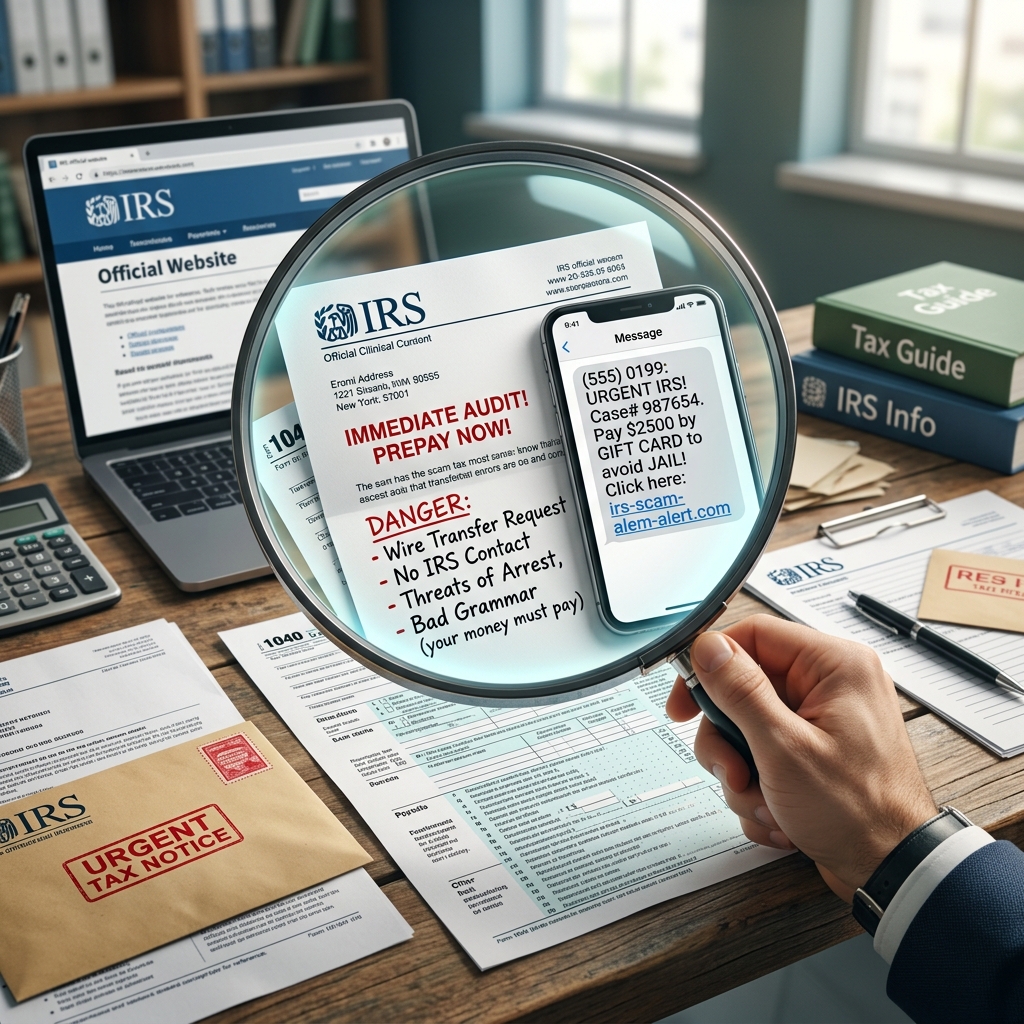
Tax season and year‑round enforcement activity give scammers a perfect excuse to pretend they are from the Internal Revenue Service (IRS) and pressure people into handing over money or personal information. Understanding how the real IRS communicates, and how impostors bend those rules, is one of the most effective ways to protect yourself from tax‑related fraud.
This guide explains common IRS scam tactics, outlines how legitimate IRS contact works, and offers practical steps to verify suspicious messages, avoid identity theft, and respond safely if you’ve already engaged with a scammer.
Why IRS Scams Are So Effective
IRS scams are powerful because they exploit two things: fear of government authority and confusion about complex tax rules. Many people worry about owing back taxes or making a mistake on a return, which makes an urgent call or message from a supposed “agent” feel plausible.
- Authority pressure: Impostors claim to represent the IRS and use official‑sounding language, fake badge numbers, and spoofed phone numbers to appear legitimate.
- Urgency and fear: Scammers threaten arrest, deportation, license suspension, or seizure of assets unless you pay immediately.
- Information advantage: Some fraudsters possess partial data about you (like the last four digits of your Social Security number) obtained from previous breaches, which can make their story seem credible.
When people are surprised by a call or message and told there is no time to think, they may pay or disclose sensitive information before verifying anything. The goal of this article is to help you spot those pressure tactics quickly and step back before responding.
How the Real IRS Contacts Taxpayers
Knowing how legitimate contact works is the foundation for recognizing a scam. The IRS has well‑defined communication rules and rarely deviates from them.
| Channel | What the IRS Does | What Scammers Often Do |
|---|---|---|
| Sends official letters or notices as the first contact about taxes owed or issues with your return. | May send fake letters with threats or unusual payment instructions; sometimes directs you to non‑IRS websites. | |
| Phone | May call after written contact, especially about active cases, but does not demand payment on the spot or threaten arrest. | Calls unexpectedly and claims you owe money immediately, often using prerecorded or highly aggressive messages. |
| Email & Text | Does not initiate contact to request sensitive personal or financial information by email or text. | Sends links, attachments, or login pages requesting Social Security numbers, bank data, or card details. |
| Social Media | Does not reach out through social media direct messages to discuss your tax account. | Uses social media to promote “secret” refunds, fake credits, or to lure you to fraudulent websites. |
If a message claiming to be from the IRS breaks these patterns — for example, if your first contact is a text demanding payment — you should treat it as suspicious and independently verify it using official IRS channels.
Common Types of IRS‑Related Scams
Fraudsters constantly change their stories, but most IRS scams fall into a few recognizable categories. Below are some of the most frequent schemes.
1. Impersonation Calls Demanding Immediate Payment
In phone impersonation scams, callers claim you owe back taxes or penalties and insist that you pay right away to avoid arrest or other severe consequences.
- Calls come unexpectedly and often show up as “IRS” or a government number on caller ID, which may be spoofed.
- The caller refuses to let you hang up, pressures you not to talk to anyone else, and insists you cannot appeal or question the bill.
- Payment methods demanded include gift cards, prepaid debit cards, wire transfers, or instant payment apps — none of which the IRS uses for collection.
Legitimate IRS agents will not demand payment over the phone or ask you to use unconventional payment methods; they direct you to official IRS payment options instead.
2. Text and Email Phishing Attempts
Phishing messages appear to come from the IRS but are designed to steal login credentials, install malware, or capture sensitive data.
- Messages may claim you are owed a refund, must update your account, or need to confirm your information to avoid delays.
- Links lead to look‑alike websites whose addresses are slightly misspelled or use domains other than IRS.gov.
- Attachments may contain malicious software that can capture keystrokes or exfiltrate stored information from your device.
The IRS warns taxpayers not to click links or open attachments in unsolicited messages claiming to be from the agency, and to report suspicious contacts.
3. Fake Tax Notices and Refund Letters
Some scammers send physical letters that mimic IRS notices, complete with logos, official‑sounding codes, and instructions for payment or “refund verification.”
- Letters may tell you to make checks payable to unusual names or to send funds to non‑IRS addresses.
- They can reference forms or notice numbers that do not appear on the IRS website.
- Some fake letters advertise recalculated refunds, stimulus payments, or special credits, and ask for personal data to “process” the amount.
If you receive an unexpected tax letter, you can verify it by comparing the notice type with information on IRS.gov or by contacting the IRS directly using phone numbers published on the official site.
4. Bad Tax Advice and Dishonest Preparers
Not all tax scams come as direct threats; some arrive as advice or offers to help you get a bigger refund than you legitimately deserve. The IRS flags abusive schemes and dishonest tax professionals as a major source of fraud.
- Preparers who promise “huge refunds” or encourage you to claim credits you clearly don’t qualify for.
- Advisers who tell you to lie on tax forms, manipulate income records, or hide assets.
- Return preparers who refuse to sign your return, demand cash payment without receipts, or divert your refund to their own accounts.
While these schemes may not be impersonating the IRS directly, they can still result in serious penalties, audits, and criminal exposure for taxpayers who participate.
Clear Warning Signs That Point to an IRS Scam
Across phone, email, text, and mail scams, certain patterns recur. If you see multiple warning signs at once, treat the contact as fraudulent until you can confirm otherwise.
- Unexpected contact: You receive a call, text, email, or message claiming to be from the IRS without having received an official letter first.
- Immediate payment demands: The caller insists you must pay right now and refuses to allow you to challenge or appeal the amount.
- Threats and intimidation: The person threatens arrest, deportation, driver’s license revocation, or other severe consequences.
- Unusual payment channels: You are told to pay using gift cards, prepaid cards, wire transfers, or peer‑to‑peer payment apps.
- Requests for sensitive information: The message pressures you to disclose Social Security numbers, bank account details, or passwords.
- Suspicious links or domains: Emails or texts contain links that do not lead to IRS.gov or appear misspelled.
- Inconsistent notice details: Letters reference forms or notice codes you cannot verify on the IRS website.
Any single sign might be a mistake; several together almost always indicate a scam.
How to Verify Questionable IRS Contacts
Instead of engaging with potentially fraudulent messages, use independent verification steps. This protects you from being manipulated while still allowing you to resolve legitimate tax issues if they exist.
Step‑by‑Step Verification Checklist
- Pause and disconnect: If you receive a suspicious call, hang up. If it’s a text or email, do not reply, click links, or open attachments.
- Check official correspondence: Review your recent mail for legitimate IRS notices related to the matter being discussed.
- Use IRS.gov only: Manually type IRS.gov into your browser and navigate to contact information or the notices lookup pages; never follow links in unsolicited messages.
- Confirm notice numbers: Compare the letter or notice code you received with the list of official IRS letters published on the IRS website.
- Call published numbers: Use phone numbers listed on IRS.gov to speak with an IRS representative; do not call numbers provided only in a suspicious message.
- Verify agent credentials: If someone claims to be an IRS employee in person, ask to see both their pocket commission and their federal ID card (HSPD‑12) and confirm via official channels.
These steps ensure you deal only with the official tax authority, not impostors who rely on surprise and confusion to succeed.
What to Do If You Suspect or Experience an IRS Scam
Taking quick action can limit damage and help authorities track and shut down fraud operations. The right response depends on whether you only received a message or already paid or shared information.
If You Received a Suspicious Message but Did Not Respond
- Do not engage: Avoid replying to emails, texts, or social media messages and never follow embedded links.
- Report the scam: File a complaint with the Federal Trade Commission (FTC) using its online complaint assistant and note that it involves IRS impostors.
- Notify tax authorities: Alert the IRS using reporting instructions on IRS.gov; if the scam involves state taxes, contact your state tax agency or attorney general.
If You Shared Personal Information
If you gave out your Social Security number, banking information, or other sensitive data, treat the situation as potential identity theft.
- Contact your financial institutions: Inform your bank and card issuers immediately and consider closing or monitoring affected accounts.
- Report identity theft: Use the federal identity theft portal to create a recovery plan and follow recommended steps.
- Notify the IRS: If your Social Security number was compromised, contact the IRS to ask about identity protection options and monitor your tax transcripts for suspicious returns.
- Monitor your credit: Review credit reports for new or unusual accounts and consider placing a fraud alert or security freeze.
If You Already Made a Payment
- Call your bank or card issuer: Request an immediate review of the transaction; in some cases, they may be able to stop or reverse fraudulent transfers.
- Report to law enforcement: File reports with the FTC and, as appropriate, local authorities. Provide all details, including phone numbers, emails, and payment receipts.
- Inform tax authorities: Notify the IRS and, if relevant, your state tax agency so they understand the nature of the fraud and can provide guidance.
Practical Tips to Reduce Your Risk of IRS‑Related Fraud
You cannot stop scammers from sending messages, but you can make it much harder for them to succeed.
- Guard personal data: Only provide Social Security numbers, tax documents, and bank information through secure, trusted channels; avoid emailing unencrypted tax forms.
- Use secure networks: Avoid working on tax returns over public Wi‑Fi and use devices with updated security software.
- Choose reputable tax professionals: Work with preparers who sign returns, explain deductions, and provide receipts; be wary of anyone promising unusually large refunds.
- Learn IRS rules: Familiarize yourself with how the IRS contacts taxpayers and what payment methods it accepts so you can quickly identify inconsistencies.
- Stay skeptical of “too good to be true” offers: Ignore social media posts or unsolicited messages touting secret credits or guaranteed refunds.
Frequently Asked Questions About IRS Scams
Does the IRS ever call people?
Yes, the IRS may call in some situations, particularly if there is an active case or ongoing issue, but those calls typically follow official mail notices and do not involve threats or demands for immediate payment via unconventional methods.
Can the IRS contact me by email or text?
The IRS does not initiate contact with taxpayers by email or text to request personal or financial information. If you receive a message like this claiming to be from the IRS, treat it as suspicious and verify independently through IRS.gov.
How do I know if an IRS letter is real?
Check the notice type and code against information on IRS.gov, confirm that any payment instructions direct you to official IRS payment options, and, if still in doubt, call published IRS phone numbers rather than numbers printed only in the letter.
What should I do if someone threatens to arrest me over taxes?
Hang up immediately; this is a classic sign of an IRS impersonation scam. Legitimate IRS agents do not threaten arrest during phone calls and must follow due process, which includes written communication and the right to appeal.
Is it safe to click links in messages about my refund?
Only access refund information by going directly to IRS.gov in your browser. Avoid clicking links in unsolicited messages about refunds or credits, as they may lead to fraudulent websites or install malware.
References
- Recognize tax scams and fraud — Internal Revenue Service. 2024-02-15. https://www.irs.gov/help/tax-scams/recognize-tax-scams-and-fraud
- Tax scams — Internal Revenue Service. 2024-02-15. https://www.irs.gov/help/tax-scams
- IRS Imposter Scams — Federal Trade Commission. 2018-01-01. https://www.ftc.gov/media/video-0118-irs-imposter-scams
- How to Spot IRS Scams and Help Avoid Tax Fraud — Wells Fargo. 2023-03-01. https://www.wellsfargo.com/privacy-security/fraud/bank-scams/tax-scams/
- Latest IRS Scams: How to Spot Them and Fight Back — NerdWallet. 2024-03-18. https://www.nerdwallet.com/taxes/learn/avoid-irs-scams
- Beware of IRS Tax Scams — DC Department of Insurance, Securities and Banking. 2023-04-10. https://disb.dc.gov/page/beware-irs-tax-scams
- IRS Impersonation Scams Are on the Rise: How to Protect Yourself — Red River Bank. 2023-02-20. https://www.redriverbank.net/blog/irs-impersonation-scams-are-on-the-rise-how-to-protect-yourself
Similar Articles








Read full bio of Sneha Tete




