
Spotting Credit Repair and Counseling Scams
Learn how to recognize, avoid, and report credit repair and counseling scams before they drain your money and damage your financial future.
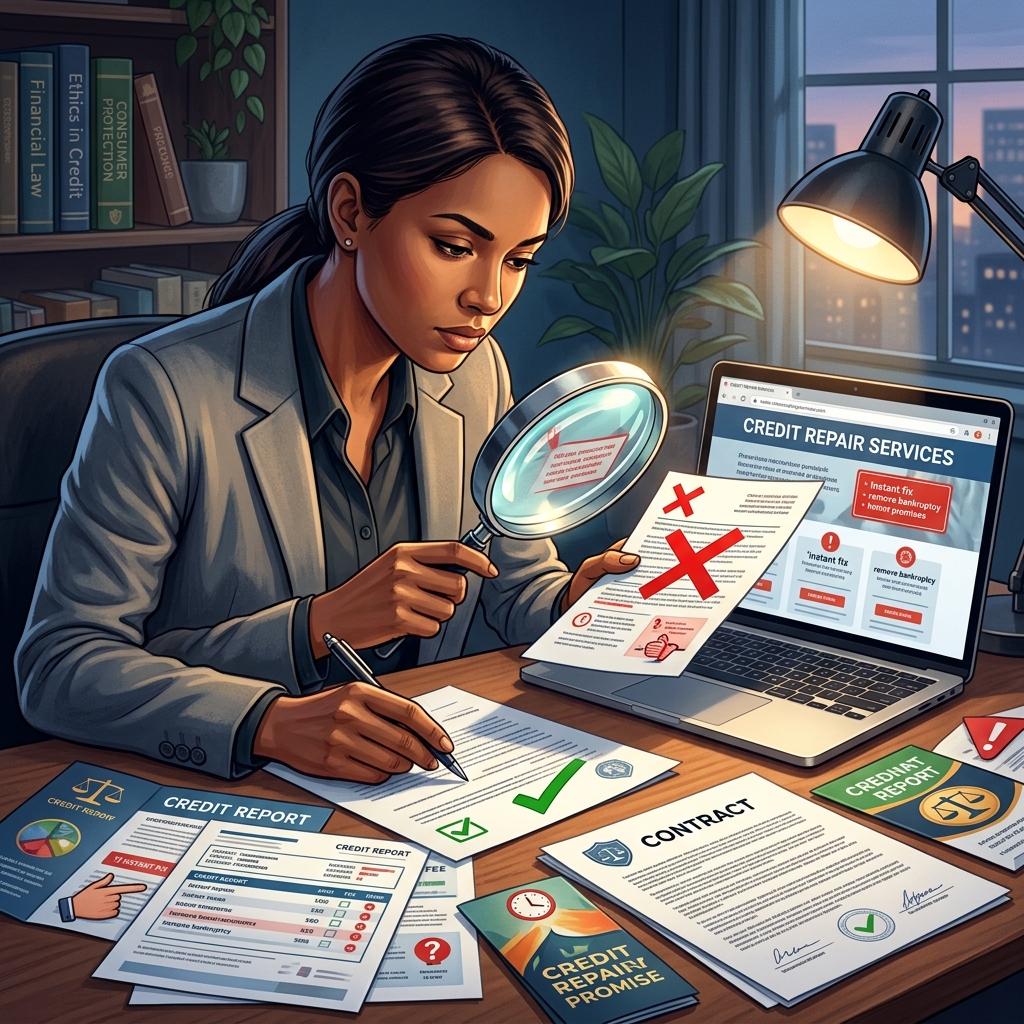
When your credit is damaged and bills feel overwhelming, offers that promise a quick fix can be very tempting. Unfortunately, the credit repair and counseling world is full of scams that target people who are stressed, vulnerable, or facing bankruptcy. This guide explains how these scams work, the warning signs to watch for, your legal rights, and safer ways to rebuild your credit and manage debt.
Why People Are Vulnerable to Credit Repair and Counseling Scams
Credit repair and counseling scams often succeed because they focus on people who feel desperate for relief. If you are behind on payments, rejected for loans, or considering bankruptcy, you may feel that any promised solution is better than your current situation. Scammers exploit that emotion and hide the reality that legitimate credit improvement is usually slow, structured, and grounded in the law.
Understanding your options before you sign up with any company is one of the most effective ways to protect yourself. When you know what can and cannot be done legally, you are much less likely to be misled by impressive-sounding claims.
Credit Repair vs. Credit Counseling: Key Differences
Although scammers operate in both spaces, credit repair and credit counseling are not the same thing. Knowing the distinction helps you evaluate offers more clearly.
| Aspect | Credit Repair Services | Credit Counseling Services |
|---|---|---|
| Primary focus | Changing items on your credit report and improving your credit score | Helping you manage debts, budget, and sometimes set up repayment plans |
| Common promise | “We will remove negative information quickly” | “We will help you pay down debt and avoid default” |
| Legitimate actions | Disputing inaccurate or outdated information with credit bureaus | Negotiating lower interest or payment plans, providing financial education |
| Typical scam angle | Erase accurate negatives, create new identity, demand upfront fees | Hidden fees, unrealistic promises, steering you into costly plans |
Both legitimate credit repair and counseling organizations exist. The challenge is separating lawful, transparent services from operations built around deception and high fees.
Common Red Flags in Credit Repair Scams
Government regulators consistently list similar warning signs for fake or unlawful credit repair operations. If you see any of these, treat them as serious red flags.
- Demanding payment before any work is done. Under federal law, credit repair companies cannot legally charge you until they have completed the services they promised.
- Telling you not to contact credit bureaus directly. Scammers often try to isolate you from TransUnion, Equifax, or Experian so you cannot see what is really happening.
- Promising to remove accurate, current negative information. No one can legally erase correct negative data from your credit report simply because you do not like it.
- Encouraging you to dispute information you know is true. Advising you to challenge accurate debts or late payments can cross the line into fraud.
- Offering a “new credit identity” or urging you to use an Employer Identification Number in place of your Social Security number. This can involve identity fraud and misusing government-issued numbers, both of which are crimes.
- Suggesting you file a false identity theft report. Filing a fabricated report to hide legitimate debt is illegal and may lead to fines or imprisonment.
- Failing to explain your legal rights clearly. Legitimate companies provide written disclosures about what they can do and what the law allows; scammers prefer secrecy.
Any single warning sign is concerning. Multiple red flags usually indicate that you should stop all communication with the company and consider reporting them.
How Credit Counseling Scams Trap Consumers
Credit counseling is supposed to help you understand your finances and create a realistic plan for paying down debt. Many nonprofit agencies do exactly that. However, some “counselors” are little more than sales operations for expensive, poorly structured programs.
Problematic counseling organizations may:
- Charge high monthly fees that exceed the value of any savings they negotiate.
- Push you into one-size-fits-all debt management plans without reviewing your full financial picture.
- Fail to send payments to creditors on time, causing additional late fees and damage to your credit.
- Misrepresent their nonprofit status or claim to be government-approved when they are not.
While the legal framework for credit counseling differs from credit repair, the pattern is similar: bold promises, limited transparency, and a focus on collecting fees rather than solving your underlying problems.
Your Legal Rights When Dealing With Credit Repair Companies
Several federal laws protect consumers who are trying to correct their credit history. Knowing these rights makes it easier to spot illegal behavior.
- Credit Repair Organizations Act (CROA). This law regulates how credit repair companies advertise and charge fees. They must give you a written contract describing the services, the total cost, and how long it will take. They cannot request payment until services are completed.
- Telemarketing Sales Rule. If a company markets its services by phone, it cannot charge fees until at least six months after achieving the promised results and showing proof in a follow-up credit report.
- Fair Credit Reporting Act (FCRA). You have the right to dispute inaccurate or incomplete information on your credit reports for free. The credit bureaus must investigate and correct verified errors.
- Access to free credit reports. You are entitled to one free credit report each year from each of the nationwide credit reporting companies through the government-backed system.
Legitimate organizations will acknowledge these rights and help you exercise them. Scammers either ignore the laws or misrepresent them to convince you that only their paid services can solve your problems.
Safer Ways to Improve Your Credit Legally
Real credit improvement rarely happens overnight. It involves correcting errors, managing current obligations, and building a pattern of reliable payments over time. Regulators consistently emphasize that anything a credit repair company can do legally, you can do yourself for little or no cost.
1. Check Your Credit Reports
Start by ordering your credit reports from the major credit bureaus. Review them for mistakes such as accounts that do not belong to you, incorrect balances, wrong dates, or duplicate listings.
2. Dispute Inaccurate or Outdated Information
Under federal law, you can dispute any item you believe is wrong. Submit disputes in writing or online through the bureau’s official website, explain why the information is incorrect, and include copies of supporting documents. The bureau must investigate and respond, usually within about a month.
3. Focus on Payment History
Your track record of paying bills on time is one of the most important factors in your credit score. Setting up automatic payments, calendar reminders, or talking with creditors about adjusted due dates can help you avoid new delinquencies and gradually rebuild trust.
4. Manage Debt Levels
High balances relative to your credit limits can lower your score. Paying down revolving debt, avoiding unnecessary new accounts, and not maxing out cards are all practical steps that work over time.
5. Consider Legitimate Nonprofit Credit Counseling
If you need help creating a budget or negotiating with creditors, seek nonprofit counseling agencies with a long track record, clear fee structures, and recognition from reputable oversight bodies. Ask detailed questions, request written materials, and avoid anyone who rushes you into a contract.
How to Evaluate a Credit Repair or Counseling Company
Before working with any organization, perform basic checks to reduce your risk.
- Research the organization’s background. Look for complaints with federal regulators, state attorneys general, or local consumer protection offices.
- Read the contract carefully. Legitimate companies provide detailed written agreements describing services, timelines, and cancellation rights.
- Compare costs and services. Ask how fees are calculated, what specific actions they will take, and what you can do on your own for free.
- Watch for time pressure. High-pressure tactics and limited-time offers are common tools scammers use to discourage careful review.
- Check for truthful claims. Be skeptical of anyone who guarantees a specific score increase or promises to remove accurate negatives from your report.
What to Do If You Suspect a Scam
If you think you may be dealing with a fraudulent credit repair or counseling company, taking action quickly can limit financial harm and help authorities stop similar abuses.
- Stop payments immediately. Do not send further money or share additional personal information.
- Collect documentation. Save contracts, emails, invoices, and any advertising materials you received.
- Check your credit reports for unexpected activity. Look for new accounts, inquiries, or changes that you did not authorize.
- Report the company to regulators. You can submit complaints to federal consumer protection agencies and contact your state attorney general or local consumer office.
- Consider identity theft protections. If you shared sensitive data such as Social Security numbers or signed blank forms, you may want to place fraud alerts or freezes on your credit files.
Frequently Asked Questions
Can a credit repair company legally remove accurate negative information?
No. While they can help dispute errors or outdated entries, they cannot erase correct, current negative data like legitimate late payments, collections, or bankruptcies.
Is it ever necessary to pay for credit repair services?
You can perform all legal credit repair steps yourself: ordering reports, identifying errors, and filing disputes. Some people choose to pay for guidance or administrative help, but paying is never required, and you should avoid any company that demands upfront fees or guarantees specific results.
What is the safest way to get help with my debts?
Look for nonprofit, well-established counseling agencies that provide education, transparent fees, and individualized plans. Ask whether they are accredited, how they are funded, and what protections they offer if a repayment plan fails.
How long do negative items stay on my credit report?
Most negative information remains for several years. For example, many types of negative data can stay for about seven years, and bankruptcy can remain for up to ten years, depending on the type and reporting rules.
Will filing bankruptcy automatically repair my credit?
Bankruptcy can provide legal relief from certain debts, but it is itself a serious negative mark on your credit record and does not erase the need to rebuild positive payment history over time. You still need a long-term plan for responsible credit use.
References
- Looking to fix your credit? An illegal credit repair scam isn’t the answer — Federal Trade Commission. 2025-12-10. https://consumer.ftc.gov/consumer-alerts/2025/12/looking-fix-your-credit-illegal-credit-repair-scam-isnt-answer
- How to avoid credit repair service scams — Consumer Financial Protection Bureau. 2023-09-14. https://www.consumerfinance.gov/archive/blog/how-avoid-credit-repair-service-scams/
- Credit Repair Scams — New York City Department of Consumer and Worker Protection. 2024-02-01. https://www.nyc.gov/site/dca/consumers/credit-repair-scams.page
- Credit Repair Scams: 4 Red Flags to Watch For — APGFCU. 2023-06-20. https://www.apgfcu.com/post/credit_repair_scams_4_red_flags_to_watch_for.html
- How To Avoid Credit Repair Scams — Federal Trade Commission (Video Transcript). 2014-05-08. https://www.youtube.com/watch?v=9o-lFh0Asso
Similar Articles








Read full bio of medha deb




